



The Most Researched Peptides and What Scientists Are Investigating
Peptides have become one of the most active and fascinating areas of modern biological research. Once viewed primarily as short chains of amino acids that performed relatively simple signaling functions, peptides are now being investigated as highly specific biological tools capable of influencing receptors, enzymes, cellular communication, metabolism, inflammation, and numerous other processes.
The growing interest is not simply internet hype. Peptide therapeutics have become an established pharmaceutical category. A 2025 review noted that more than 40 peptide drugs had entered clinical use during the preceding decade alone, while researchers continue to investigate ways of improving peptide stability, bioavailability, targeting and delivery.
At the same time, an important distinction must be made between approved peptide medicines, peptides undergoing legitimate clinical investigation, and experimental compounds whose evidence remains largely preclinical.
Understanding those differences is essential when discussing the most researched peptides.
Why Are Scientists So Interested in Peptides?
Proteins perform an extraordinary number of functions throughout the human body. Peptides are smaller chains of amino acids that can sometimes reproduce or influence very specific pieces of biological signaling.
That gives researchers an interesting middle ground.
Traditional small-molecule drugs can penetrate tissues relatively easily but may interact with multiple biological targets. Large biologic medicines can be extremely selective but are considerably more complex.
Peptides can sometimes combine desirable characteristics of both.
Recent scientific reviews describe peptide therapeutics as occupying a useful space between traditional small molecules and large biologics because of their potential for high target specificity and biological activity. Their disadvantages include enzymatic degradation, relatively short half-lives, limited membrane permeability and difficulties with oral bioavailability.
Scientists are therefore researching both new peptides and better ways of engineering existing peptides.
1. GLP-1–Based Peptides
Few peptide research areas have received more attention recently than glucagon-like peptide-1, better known as GLP-1.
GLP-1 is a naturally occurring incretin hormone involved in several metabolic processes. Among other actions, GLP-1 signaling affects insulin secretion, glucagon signaling, gastric emptying, appetite and energy intake.
Researchers eventually learned how to create longer-lasting GLP-1 receptor agonists.
That work helped produce medicines including semaglutide.
But GLP-1 research did not stop there.
Scientists began asking an intriguing question:
What if several complementary metabolic receptors could be targeted simultaneously?
That question produced an entirely new generation of peptide research.
2. GIP/GLP-1 Dual Agonists
Glucose-dependent insulinotropic polypeptide—or GIP—is another incretin hormone.
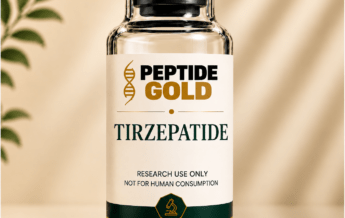
Combining activity at GIP and GLP-1 receptors led researchers toward dual-receptor molecules, most notably tirzepatide.
The scientific significance extends beyond any individual drug.
It demonstrated that a single engineered peptide could potentially coordinate signals through more than one metabolic pathway.
This concept of polyagonism has subsequently become one of the major themes in metabolic peptide research.
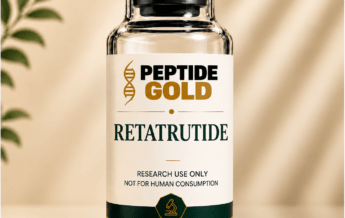
3. Retatrutide
Retatrutide takes the multi-receptor concept another step.
Instead of targeting one or two receptors, retatrutide was designed to activate:
- GLP-1 receptors
- GIP receptors
- glucagon receptors
That makes it a triple-hormone-receptor agonist.
In its published Phase 2 obesity trial, participants receiving the highest studied dose experienced a mean body-weight reduction of 24.2% after 48 weeks, compared with 2.1% with placebo. Researchers noted that average weight loss had not clearly plateaued when the study ended.
Those findings generated considerable scientific interest in whether carefully balancing three receptor pathways could influence appetite, metabolism and energy expenditure more effectively than targeting a single pathway.
Retatrutide nevertheless remains a developing investigational story rather than something that should be treated as interchangeable with an established approved therapy.
4. BPC-157
BPC-157 occupies a very different part of the peptide landscape.
The compound has attracted considerable interest around tissue repair, gastrointestinal biology, inflammation, tendons and wound healing.
However, there is a major difference between interest in a molecule and strong human clinical evidence supporting it.
Much of the research surrounding BPC-157 has historically involved laboratory and animal models.
This makes BPC-157 a useful example of why readers should examine the level of evidence behind a research peptide instead of assuming popularity equals clinical validation.
Promising preclinical observations can justify further investigation, but they do not automatically establish safety or effectiveness in humans.
5. Thymosin Beta-4 and TB-500 Research
Thymosin beta-4 is a naturally occurring peptide associated with actin regulation and cellular processes related to tissue repair.
Researchers have investigated its possible involvement in:
- wound healing
- cell migration
- angiogenesis
- tissue regeneration
- inflammation
TB-500 is frequently discussed alongside thymosin beta-4, although terminology in commercial peptide markets can become confusing.
This highlights another important research principle: the precise chemical identity of the substance being studied matters enormously.
A name on a vial does not establish that a product is chemically identical to the compound used in published scientific research.
6. KPV
KPV is a short three-amino-acid peptide sequence derived from the alpha-melanocyte-stimulating hormone system.
Researchers have investigated KPV because of potential anti-inflammatory activity.
Areas of scientific interest include inflammatory signaling, intestinal inflammation and immune modulation.
KPV demonstrates something particularly interesting about peptide biology: biologically relevant sequences do not necessarily have to be large.
Sometimes a very small fragment of a larger peptide can retain or influence specific biological activity.
7. Semax
Semax is a synthetic peptide originally developed from a fragment associated with adrenocorticotropic hormone.
Research surrounding Semax has explored neurological mechanisms including neuroprotection, neurotrophic signaling, cerebral ischemia and cognitive processes.
It is particularly interesting to peptide researchers because neurological drug delivery is notoriously difficult.
The blood-brain barrier prevents many compounds from reaching brain tissue effectively.
Researchers are therefore investigating alternative peptide-delivery technologies, including intranasal and potential nose-to-brain approaches. A 2025 review identified nasal peptide administration as an important area of future investigation while emphasizing that the mechanisms of direct nose-to-brain delivery remain incompletely understood.
8. Selank
Selank is another synthetic peptide associated primarily with neurological research.
Researchers have investigated potential effects involving anxiety-related behavior, neurotransmitter systems and immune signaling.
Like Semax, however, evidence needs to be evaluated according to study quality, study population and regulatory context.
International research history does not automatically mean that a compound has undergone the same regulatory evaluation required for an FDA-approved medicine in the United States.
9. MOTS-c
MOTS-c has become particularly interesting because it belongs to an unusual category of molecules known as mitochondrial-derived peptides.
Mitochondria are usually introduced simply as the energy-producing structures of cells.
Modern research has revealed a considerably more complicated picture.
Mitochondria participate in cellular signaling and metabolic regulation, and mitochondrial-derived peptides may be part of that communication system.
MOTS-c research has explored areas such as metabolic homeostasis, insulin sensitivity, cellular stress responses, exercise biology and aging.
However, experimental interest should again be separated from proven clinical benefit.
The FDA has also noted that synthetic peptide manufacturing can generate closely related impurities through incomplete coupling, truncation and side reactions, and sophisticated analytical methods may be necessary to identify and quantify them.
10. CJC-1295 and Growth-Hormone-Related Peptides
Another major research category involves peptides interacting with growth hormone signaling.
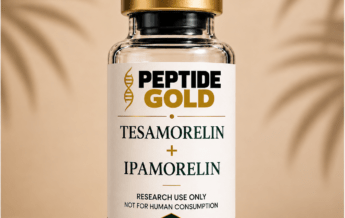
CJC-1295 is associated with growth-hormone-releasing hormone pathways, while compounds such as ipamorelin interact with the ghrelin receptor.
Scientists have investigated these pathways because growth hormone participates in:
- growth
- metabolism
- body composition
- protein turnover
- tissue physiology
These peptides have consequently generated significant interest.
But manipulating endocrine signaling is complicated.
A biological pathway producing a desirable effect in one tissue may produce unwanted effects elsewhere. This is precisely why controlled research is necessary.
The Bigger Story Isn’t One Particular Peptide
It can be tempting to view peptide research as a competition to discover the next popular compound.
The larger scientific story is much more interesting.
Researchers are learning how to design biological signals.
Modern peptide engineering can involve changing amino acids, cyclizing structures, attaching fatty-acid groups, modifying backbones and developing other strategies intended to increase stability or extend biological activity.
Researchers are also using high-throughput technologies to discover peptide structures capable of interacting with targets that conventional medicines have difficulty reaching.
This opens possibilities extending well beyond metabolic research.
Current peptide research includes cancer, infectious disease, immune disorders, neurological disease and targeted drug delivery.
Research Does Not Mean Proven
This may be the most important lesson for anyone learning about research peptides.
Scientific evidence exists on a continuum:
Laboratory experiment → animal research → early human trial → larger controlled clinical trials → regulatory review → approved therapeutic use
A compound producing interesting results near the beginning of that chain should not be described as though it has reached the end.
That distinction becomes especially important online, where exciting preliminary research can quickly become exaggerated into claims the original investigators never made.
The Future of Research Peptides
Peptide science is likely to become substantially more sophisticated.
Researchers are attempting to overcome several historical limitations of peptide therapeutics, particularly poor oral absorption, metabolic instability and short biological half-lives.
New delivery technologies, chemical modifications and computational discovery techniques are expanding what scientists can investigate.
Instead of asking simply, “What does this peptide do?”, tomorrow’s researchers increasingly can ask:
“Can we redesign this peptide so that it does exactly what we want, where we want it, for the amount of time we want?”
That transition—from discovering peptides to engineering them—is one reason the field has become so exciting.
And it suggests that some of the most important peptides of the future may not even exist yet.
I think that is totally fascinating and I have been very interested in peptide research related to longevity and extending quality of life. Probably mainly cause of my age, but just like everyone, I want to live a long, healthy life.
Hi Peptide Gold,
Thanks for sharing this overview—it’s great to see peptide research getting the attention it deserves! The shift from viewing peptides as simple signaling molecules to recognizing them as precision biological tools is really exciting. The fact that over 40 peptide drugs have entered clinical use in just one decade speaks volumes about the momentum in this field.
I’m particularly interested in hearing more about the specific challenges researchers are tackling. You mention improvements to stability, bioavailability, and targeting—these are huge hurdles. Are there particular peptide classes or therapeutic areas you think are closest to breakthrough applications? For instance, I’ve seen mentions of peptides for metabolic disorders and inflammation management, but I’m curious what the research community sees as the most promising near-term opportunities.
Also, for readers wanting to dive deeper into current peptide research trends, it might be helpful to explore what specific modifications or delivery systems are showing the most promise. What would you say are the top 3-5 peptides or peptide categories that researchers are most focused on right now?