


What is a Peptide?
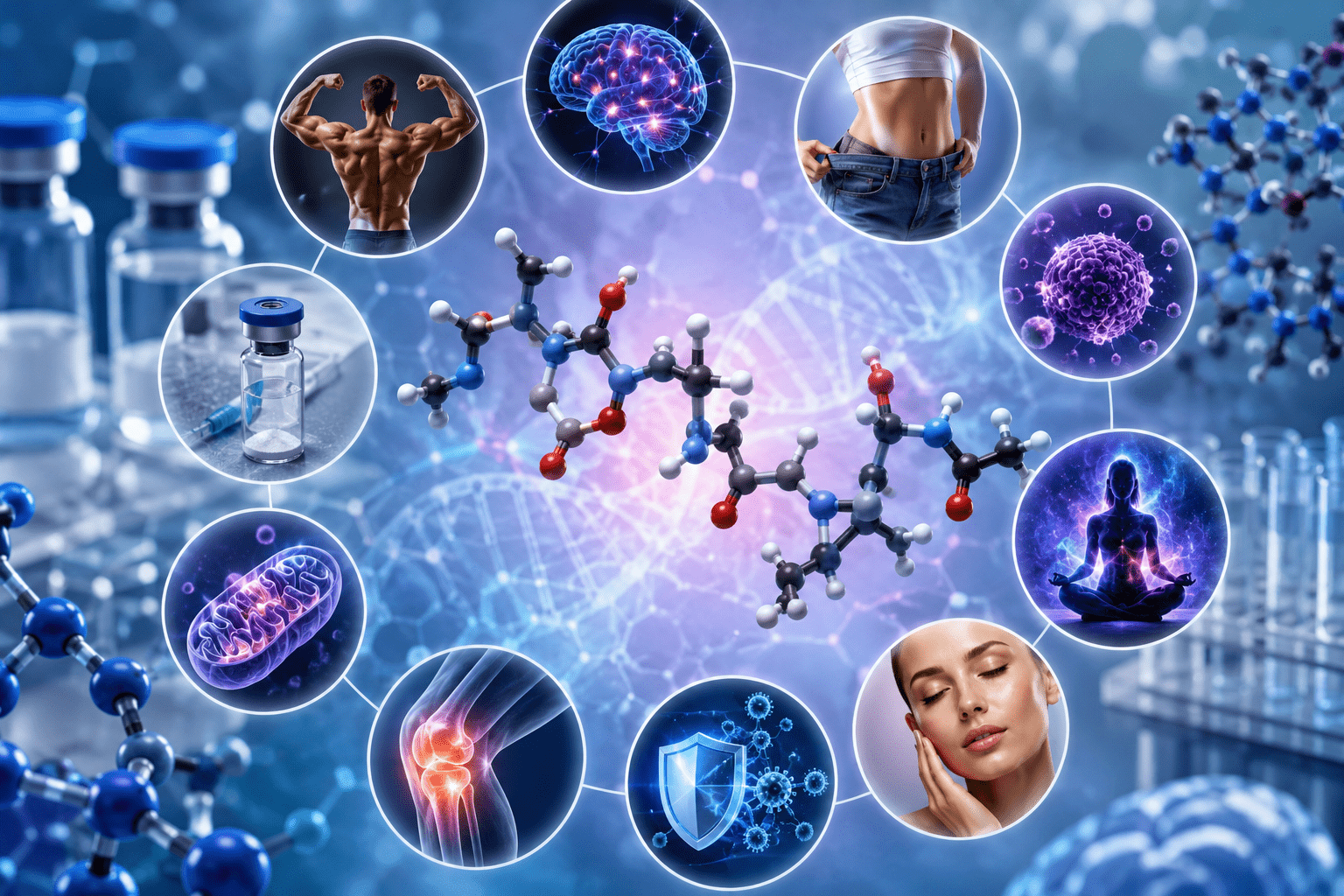
Peptides have become one of the most talked-about areas of modern health and biological research. Once a subject discussed mainly by biochemists and pharmaceutical researchers, peptides are now appearing in conversations about weight management, metabolism, recovery, skin and hair, healthy aging, cognitive function, immunity, muscle growth, sleep and much more.
But what is a peptide, exactly? Why does the human body make peptides? How are scientists studying them, and why has peptide research attracted so much attention?
At the simplest level, a peptide is a chain of amino acids linked together. Amino acids are often described as the building blocks of proteins. When amino acids connect in relatively short chains, the resulting molecules are generally called peptides. Longer and more complex chains are generally classified as proteins, although the exact dividing line can depend on the scientific or regulatory context. For example, FDA guidance concerning synthetic peptides defines polymers of 40 or fewer alpha amino acids as peptides rather than proteins for that regulatory purpose.
That simple definition, however, barely scratches the surface. Peptides can act as biological messengers, hormones, signaling molecules and regulators of important processes throughout the body. Their enormous variety is one reason peptide science has become such an exciting field of research.
Peptides Are Made From Amino Acids
To understand peptides, it helps to first understand amino acids.
Amino acids are small organic molecules that can join together through chemical bonds known as peptide bonds. Imagine individual amino acids as letters. By arranging those letters into different sequences, the body can create an enormous variety of biological messages.
Two amino acids joined together form a dipeptide. Three form a tripeptide. As additional amino acids are added, increasingly complex peptide chains can be created.
The important part isn’t simply how many amino acids are present. The sequence matters.
Changing even a small part of the amino-acid sequence can dramatically alter how a peptide behaves and what biological receptors or pathways it interacts with.
This is one reason peptides are so interesting to researchers: they can provide highly specific biological signals.
Peptides Are Already Part of Your Body
Peptides are sometimes discussed as though they are something entirely new. They aren’t.
The human body naturally produces a tremendous variety of peptides. They participate in processes involving metabolism, hormones, digestion, immune responses, cardiovascular function, neurological signaling and tissue regulation.
Well-known biological molecules such as oxytocin, vasopressin and gonadotropin-releasing hormone (GnRH) are peptide hormones. Insulin, one of the most historically important therapeutic molecules, is another famous example from the broader peptide/protein hormone world. In fact, early therapeutic peptide research grew largely from studying naturally occurring human hormones and their biological activities.
Researchers can therefore begin with an interesting question:
What signals does the body already use to control a particular biological process?
Scientists can identify a naturally occurring peptide involved in that process, determine its amino-acid sequence and investigate exactly how it works.
From there, researchers may also develop modified peptide analogs designed to last longer, bind more selectively to a receptor or produce other useful experimental characteristics.
Why Are Peptides Important?
One of the most interesting characteristics of peptides is their ability to interact with biological targets with considerable specificity.
Think of a receptor as a lock and a signaling molecule as a key. A particular peptide may have a molecular shape that allows it to interact with a particular receptor.
Once that interaction occurs, a biological signal may be generated.
Depending on the peptide, researchers might investigate effects involving appetite, hormone release, inflammation, cellular repair, pigmentation, gastrointestinal function, neurological activity or other biological processes.
This specificity can make peptides attractive candidates for drug development. Reviews of peptide therapeutics note that peptides can occupy useful territory between traditional small-molecule drugs and much larger biological medicines. Researchers are also developing chemical modifications and delivery technologies intended to improve peptide stability and pharmacokinetics.
How Are Peptides Researched?
Peptide research typically progresses through multiple stages.
Researchers may begin by identifying a naturally occurring peptide or designing a new sequence that appears capable of interacting with a biological target.
The peptide can then be synthesized and characterized in the laboratory. Scientists need to confirm its identity, purity, structure, stability and other chemical characteristics.
Next come laboratory experiments.
Researchers may expose cells or isolated biological systems to the peptide to determine how it interacts with receptors and signaling pathways. These experiments can help answer questions such as whether the peptide activates or blocks a receptor, how strongly it binds, what concentration produces an effect and what cellular changes occur afterward.
Promising compounds may progress to preclinical animal research, where researchers can investigate pharmacology, metabolism, distribution, toxicity and biological effects in a living system.
A potential therapeutic that successfully passes the appropriate preclinical requirements may eventually move into human clinical trials. Clinical development is generally performed in phases designed to evaluate safety, dosing, effectiveness and adverse effects in increasingly larger groups of participants.
Importantly, not every experimental peptide reaches clinical trials, and only a fraction of experimental compounds eventually become approved medicines.
Peptide Research Covers Many Categories
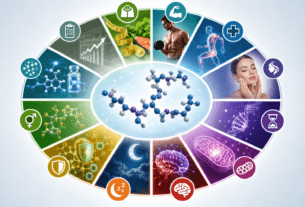
Because peptides participate in so many biological systems, there isn’t really one single “peptide category.” A useful way to understand the field is to organize research compounds according to the biological systems or research questions with which they are most closely associated.
Weight Management & Metabolic
This has become one of the most visible peptide-related categories. Research in this area examines appetite regulation, glucose metabolism, insulin signaling, energy balance and related metabolic pathways.
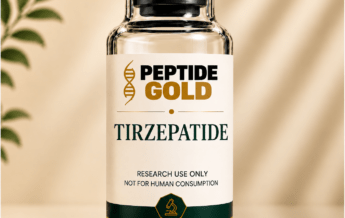
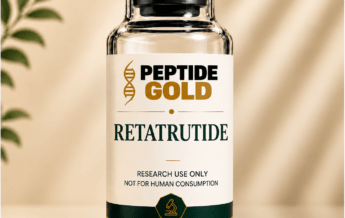
Well-known examples include semaglutide, tirzepatide, retatrutide, cagrilintide and AOD-9604, although these compounds differ substantially in mechanism, development status and evidence.
Growth Hormone & Secretagogues
Researchers also study peptides that interact with growth-hormone-related pathways.
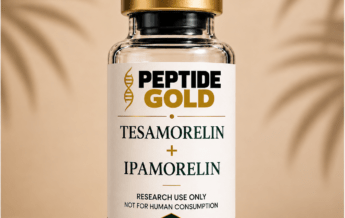
Examples include CJC-1295, ipamorelin, sermorelin, tesamorelin, GHRP-2, GHRP-6 and hexarelin.
Muscle Growth & Growth Factors
Another area investigates growth factors and signaling pathways associated with muscle development, cellular growth and recovery.
Compounds frequently discussed in this category include IGF-1, IGF-1 LR3, MGF and follistatin-related compounds.
Recovery & Tissue Repair
Some experimental peptides have generated interest because of research involving tissue responses, wound healing, inflammatory pathways and cellular repair.
Examples commonly encountered in research discussions include BPC-157, TB-500, GHK-Cu and KPV.
Skin, Hair & Beauty
Peptides are widely studied and used in cosmetic science as well.
GHK-Cu is a particularly well-known copper-binding peptide. Other cosmetic peptides include Matrixyl peptides and Argireline, while melanocortin-related peptides represent another distinct area of pigmentation research.
Longevity & Anti-Aging
Researchers interested in biological aging investigate cellular signaling, mitochondrial function, senescence and other processes associated with aging.
Compounds discussed within this broad area include Epithalon, Humanin and FOXO4-DRI, although the strength and stage of evidence differ considerably between compounds.
Mitochondrial & Cellular Energy
Mitochondria are responsible for much of the energy production occurring inside cells.
Peptides such as MOTS-c, Humanin and SS-31 (elamipretide) have attracted research interest involving mitochondrial biology, metabolism and cellular stress.
Cognitive & Neurological
Peptide research also extends to the brain and nervous system.
Examples include Semax, Selank and various experimental neuroactive peptides. Scientists investigate subjects such as neuroprotection, signaling, cognition and responses to neurological injury or stress.
Sleep & Circadian
Peptides and related signaling molecules can also be studied in connection with sleep and circadian biology. DSIP, or Delta Sleep-Inducing Peptide, is one commonly discussed example.
Immune, Inflammation & Gut Health
Peptides are deeply involved in immune signaling and gastrointestinal biology.
Examples investigated in these areas include Thymosin Alpha-1, KPV, LL-37, BPC-157, larazotide and vasoactive intestinal peptide (VIP).
Sexual Health, Hormonal & Reproductive
Peptides also play major roles in hormonal and reproductive signaling.
This broad category includes compounds such as Kisspeptin, oxytocin, gonadorelin and PT-141/bremelanotide, along with numerous naturally occurring peptide hormones and therapeutic analogs.
Peptide Blends
Research suppliers sometimes combine multiple peptides into blends. Examples may include CJC-1295 + Ipamorelin or BPC-157 + TB-500.
Blend names and formulas are not necessarily standardized, so the individual ingredients and concentrations are more scientifically meaningful than a marketing name.
Why Is There So Much Interest in Peptides Right Now?
Peptides aren’t new. Insulin transformed medicine more than a century ago, and peptide medicines have continued to expand since then. A major review reported that more than 80 peptide drugs had reached the market across diseases ranging from diabetes and osteoporosis to cancer, multiple sclerosis and chronic pain.
What has changed is the technology surrounding them.
Researchers now have increasingly sophisticated methods for discovering, synthesizing, modifying and screening peptides. Modern techniques include improved chemical synthesis, recombinant approaches, display libraries and other high-throughput discovery technologies.
Scientists can also modify peptides to address one of their traditional weaknesses: many natural peptides are rapidly degraded or cleared from the body.
Techniques such as amino-acid substitution, cyclization and the attachment of stabilizing molecular groups can potentially extend activity or improve other pharmaceutical properties. Delivery technology is advancing as well.
The enormous public awareness surrounding newer metabolic medicines has added another layer of attention. Peptide-related compounds are now frequently discussed in mainstream conversations about weight management, longevity, fitness and wellness.
That popularity, however, makes understanding the distinction between established medicine and experimental research especially important.
Not Every Peptide Has the Same Level of Evidence
Perhaps the most important concept for anyone learning about peptides is this:
“Peptide” describes a type of molecule—not a level of medical evidence.
Some peptide medicines have decades of clinical use and extensive human safety data.
Others are undergoing clinical trials.
Others have only been studied in animals or laboratory experiments.
And still others may have very limited published evidence.
These categories should never be treated as interchangeable.
A promising result in cultured cells does not prove that the same effect will occur in humans. Likewise, an interesting animal study is not equivalent to a controlled human clinical trial.
This distinction becomes particularly important when experimental peptides are marketed directly to consumers. Recent mainstream coverage has highlighted concerns surrounding unregulated peptide products, including uncertainty about composition, purity, dosing and long-term safety.
The Future of Peptide Research
Peptide science continues to evolve rapidly.
Researchers are developing longer-lasting molecules, novel delivery systems, highly selective receptor-targeting compounds and new methods for discovering peptide sequences.
Artificial intelligence and computational biology are also increasingly being incorporated into peptide design and drug-development workflows. Recent scientific reviews describe peptide-based medicines as an expanding field spanning metabolic disorders, oncology, rare diseases, targeted drug delivery and even vaccine development.
The goal isn’t simply to discover more peptides. It is to understand biological signaling well enough to design molecules that interact with specific systems in predictable and useful ways.
Understanding the World of Peptides
So, what is a peptide?
At its most basic level, it is a chain of amino acids.
At the biological level, however, peptides can be remarkably sophisticated signaling molecules capable of helping cells and organs communicate.
That combination of relatively simple molecular building blocks and highly specific biological activity is what makes peptides so fascinating.
They are already fundamental components of human biology. They have also contributed to important medicines for generations, while experimental peptides continue to open new questions in metabolism, recovery, neuroscience, immunity, mitochondrial biology, aging and many other areas.
As public interest grows, good peptide education becomes increasingly important. Understanding what a compound is, what category it belongs to, how it works, how far its research has progressed and whether it has actually been approved for medical use provides a much more meaningful picture than simply asking whether something is a “peptide.”
The world of peptides is broad, rapidly developing and full of legitimate scientific possibilities. The key is separating what researchers know, what they are currently investigating, and what remains unproven. That distinction is what turns peptide hype into useful peptide knowledge.