


Research Peptides in 2026: Emerging Areas of Scientific Interest
Research peptides have moved from a specialized corner of biotechnology into one of the most dynamic areas of pharmaceutical and biomedical research.
By 2026, the story is no longer simply about discovering naturally occurring peptides. Scientists increasingly design, modify and optimize peptide molecules to overcome weaknesses that historically limited their usefulness.
Recent scientific literature highlights improvements in synthesis, structural engineering, delivery, pharmacokinetics and peptide discovery.
Here are some of the most important emerging peptide research to watch.
Multi-Receptor Metabolic Peptides
The enormous interest surrounding metabolic peptides has created a race to understand whether several biological pathways can be influenced simultaneously.
Traditional GLP-1 receptor agonism demonstrated the power of one metabolic pathway.
Dual agonists demonstrated that multiple pathways could potentially be combined.
Triple agonists such as retatrutide push the concept further.
Retatrutide simultaneously activates GIP, GLP-1 and glucagon receptors. Its Phase 2 obesity study reported substantial body-weight reductions, making triple-receptor agonism an important research direction.
The broader implication is enormous.
Future metabolic peptides may be designed around combinations involving incretins, glucagon, amylin and other energy-regulating systems.
Peptides for Difficult Biological Targets
Some proteins are extremely difficult to influence using traditional small-molecule drugs.
Peptides may offer another strategy.
Because peptide sequences can be engineered to recognize highly specific molecular surfaces, researchers are investigating their ability to interact with targets previously considered difficult or “undruggable.”
High-throughput display technologies are expanding the number and diversity of potential peptide candidates scientists can evaluate.
Cancer Research
Cancer represents another major frontier.
Peptides are being investigated not only as therapeutic agents themselves but as targeting molecules.
Imagine a peptide engineered to recognize a molecular feature disproportionately expressed by a tumor.
Researchers may potentially attach another therapeutic or diagnostic payload to that peptide.
The peptide effectively becomes part of a molecular delivery system.
Research reviews describe peptides as particularly interesting targeting agents because their structures can be engineered for specific biological interactions.
Brain and Neurological Research
Delivering medicines to the brain remains extremely challenging because of the blood-brain barrier.
Peptides create both an opportunity and a problem.
Their biological specificity can make them attractive neurological candidates, but their size and susceptibility to degradation can make delivery difficult.
Scientists are therefore studying intranasal approaches, transporter mechanisms and chemical modifications designed to improve neurological delivery.
Nose-to-brain peptide delivery has become a particularly interesting research area, although its underlying transport mechanisms still require considerably more investigation.
Oral Peptides
Historically, peptides were poor candidates for oral administration.
The gastrointestinal system is essentially designed to break proteins and peptides apart.
Digestive enzymes degrade peptide bonds, while large hydrophilic molecules generally cross the intestinal wall poorly.
Researchers are attempting to overcome both problems.
Approaches include chemical modification, protective formulations, absorption enhancers and specialized delivery technologies.
Recent reviews describe meaningful advances in oral peptide therapeutics while emphasizing that bioavailability remains a fundamental challenge.
If scientists can reliably solve oral delivery, the impact could extend across numerous peptide categories.
Longer-Lasting Peptides
Another major research objective is straightforward:
Make peptides last longer.
Natural peptides can disappear from circulation extremely quickly.
Researchers can modify peptide structures to resist enzymatic degradation or reduce renal clearance.
Strategies include:
- amino-acid substitutions
- cyclization
- lipidation
- backbone modifications
- conjugation to stabilizing molecules
These engineering strategies can transform a biologically interesting peptide into a much more practical research or therapeutic candidate.
Peptides and Inflammation
Immune-mediated inflammatory disease is another growing field.
Researchers are investigating peptides capable of influencing inflammatory pathways without broadly suppressing the entire immune system.
The possibility of highly targeted immune modulation is attractive because inflammation participates in numerous diseases.
The challenge will be identifying which pathways can be modified safely and selectively.
Mitochondrial-Derived Peptides
Mitochondria are increasingly viewed as signaling centers rather than simple cellular power plants.
Mitochondrial-derived peptides such as MOTS-c have generated interest around metabolism, cellular stress responses and aging biology.
This research remains developing, but it represents an intriguing intersection between mitochondrial biology and peptide signaling.
Artificial Intelligence and Peptide Discovery
One of the most transformative changes may occur before a peptide ever reaches a laboratory bench.
Computational biology and machine learning can help researchers explore enormous numbers of potential amino-acid sequences.
Instead of synthesizing candidates largely through trial and error, researchers can increasingly use computational tools to predict properties such as:
- receptor binding
- structure
- stability
- solubility
- toxicity
- biological activity
The result could be a dramatically faster discovery cycle.
Better Analytical Testing
As peptide molecules become more complex, analytical testing becomes increasingly important.
Traditional purity measurements alone may not tell the entire story.
A peptide sample may contain truncated sequences, deletion products, modified sequences, aggregates or synthesis-related impurities.
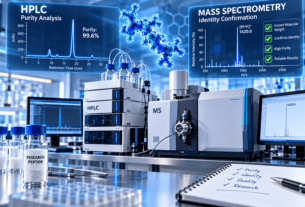
FDA research has demonstrated that higher-resolution LC-MS approaches can detect peptide impurities that conventional analytical methods may not adequately characterize.
That means the future of peptide research isn’t only about creating better molecules.
It also involves measuring them better.
What 2026 Really Represents
The biggest development in peptide science is not one particular molecule.
It is the convergence of several technologies:
better synthesis + better computational design + better analytical testing + better delivery + better molecular engineering
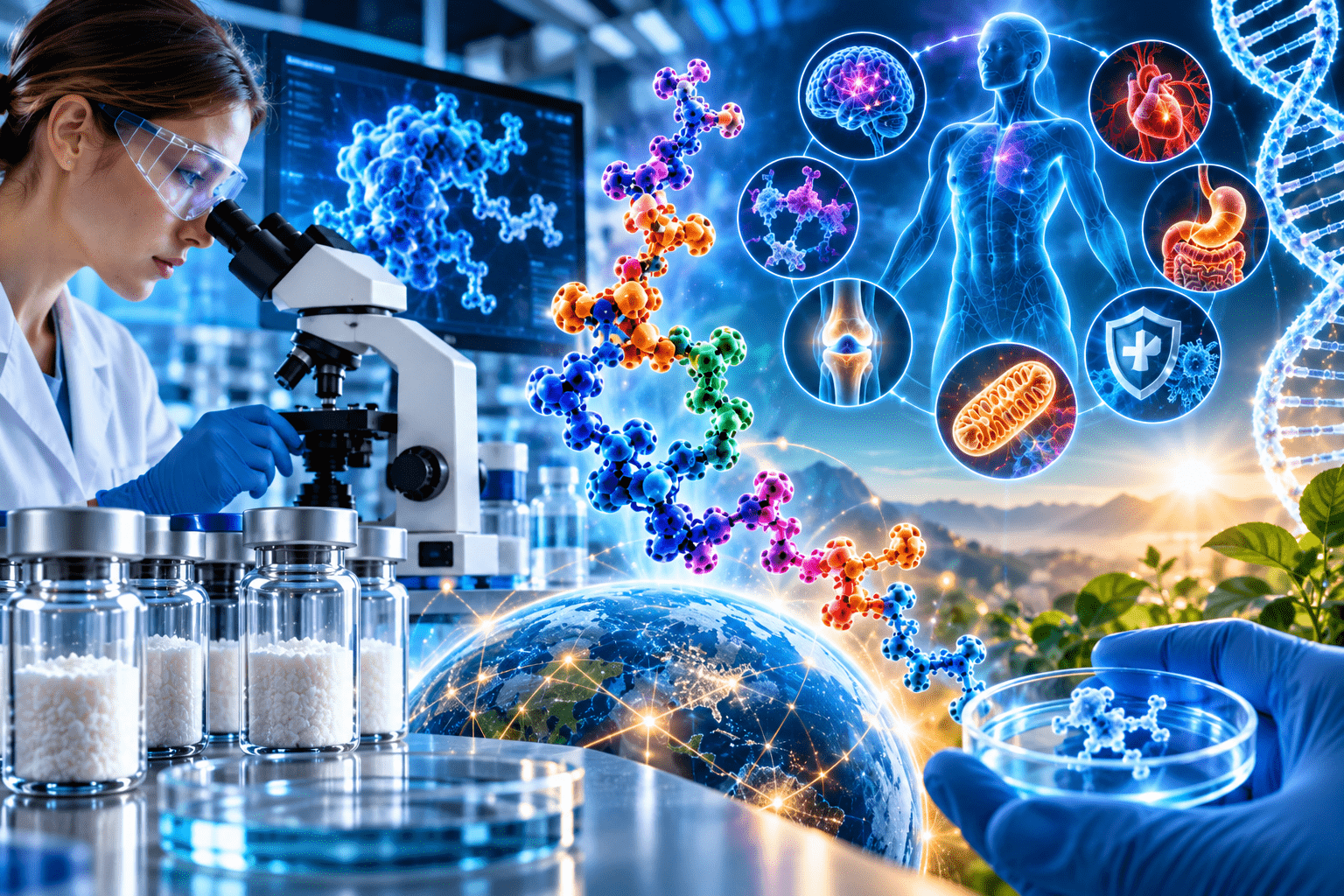
Together, these technologies dramatically expand the number of biological problems peptide researchers can attempt to solve.
Modern research already spans metabolic disorders, cancer, infectious disease, neurological conditions and immune-mediated diseases.
For anyone following the world of peptides, 2026 therefore represents something larger than another year of new compounds.
It represents the continued evolution of peptides from naturally occurring biological messengers into increasingly sophisticated engineered molecular tools.