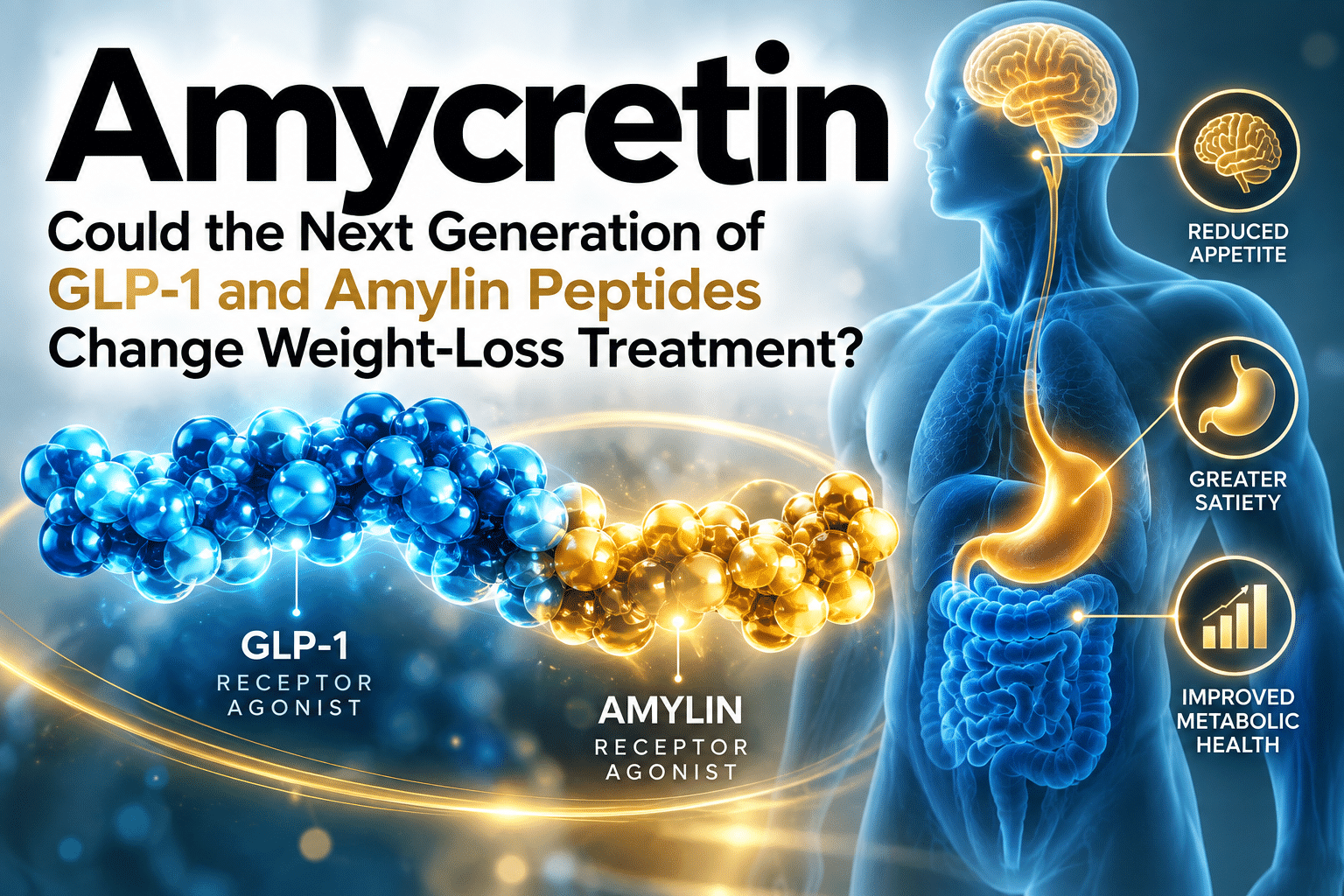


peptide dosages

Peptide Dosages and Titration Guide: Common Doses, Research Protocols, and Community-Reported Schedules

Peptide dosing can be confusing because the term peptide covers everything from fully FDA-approved prescription medications to experimental research compounds that have never completed a human dose-finding study. For that reason, this guide uses three different classifications: FDA-approved dosing means the schedule comes from current pharmaceutical prescribing information. Clinical/research peptide dosages means the amount has […]

Continue Reading
future of peptides

The Future of Peptides: Promising Research and What It Could Mean for Optimizing Human Health

Peptide science is entering one of the most exciting periods in its history and the future of peptides looks bright.. Only a few decades ago, peptides were often viewed as difficult therapeutic molecules. They could be unstable, easily broken down by enzymes, poorly absorbed when taken orally, and challenging to manufacture and deliver effectively. Today, […]

Continue Reading
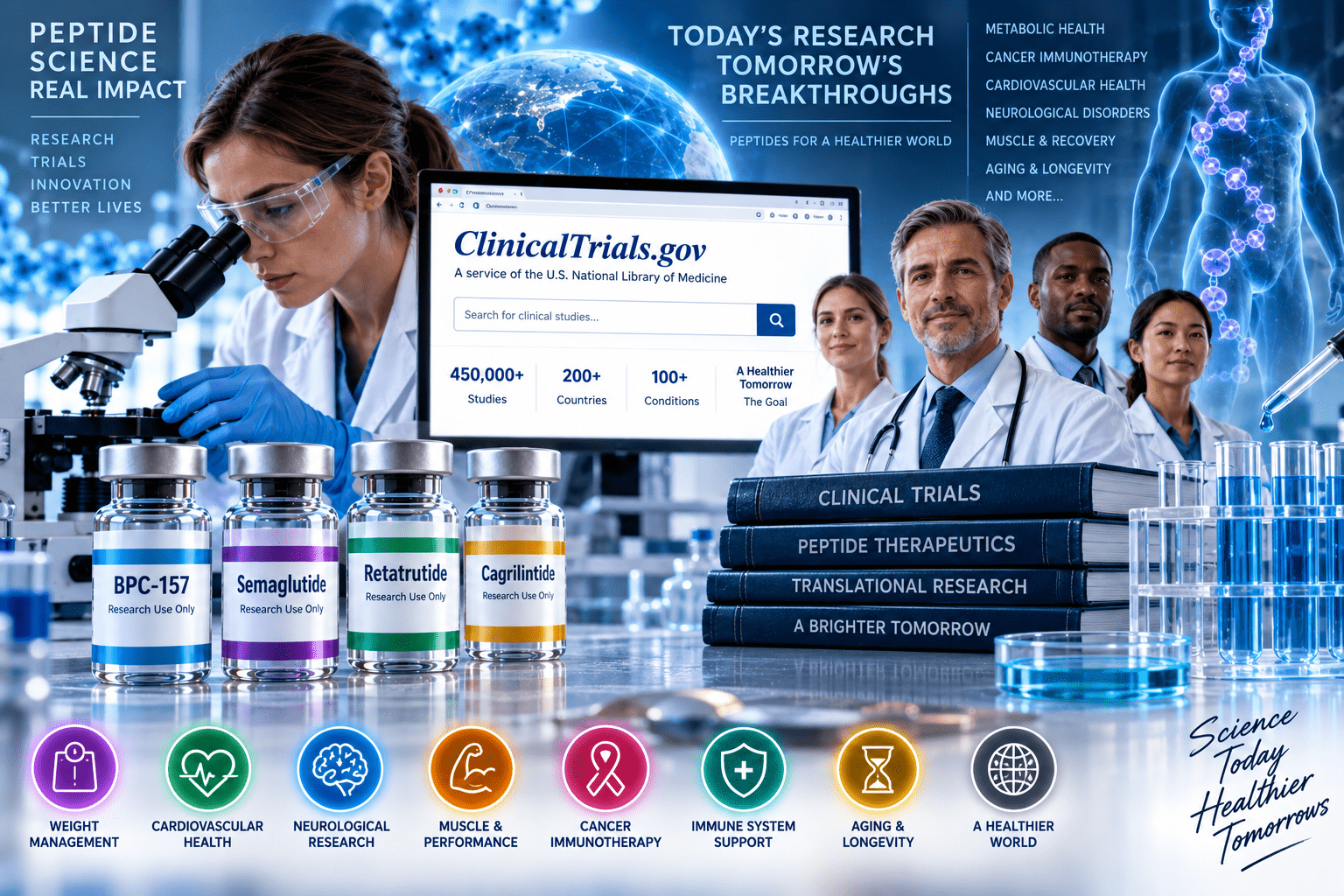
peptides trusted source

Why Trusted Sources Are Important And Who Are They?

The world of peptide research has expanded rapidly in recent years. Researchers are investigating peptides across a wide range of scientific areas, including metabolic signaling, cellular processes, tissue repair, inflammation, neurological pathways, immune function, aging, and molecular biology. As interest has grown, so has the number of companies offering research peptides online. Unfortunately, not every […]

Continue Reading
peptide glossary

Peptide Research Glossary: A Complete A–Z Guide to Peptide Terminology

Peptide research has expanded rapidly across fields including molecular biology, endocrinology, metabolism, regenerative medicine, neuroscience, immunology, and pharmaceutical development. Along with that growth has come an increasingly specialized vocabulary. If you are new to the world of peptides, terms such as agonist, half-life, lyophilization, HPLC, receptor affinity, pharmacokinetics, EC50, reconstitution, and solid-phase peptide synthesis can […]

Continue Reading
What is a Peptide?

What is a Peptide?

Peptides have become one of the most talked-about areas of modern health and biological research. Once a subject discussed mainly by biochemists and pharmaceutical researchers, peptides are now appearing in conversations about weight management, metabolism, recovery, skin and hair, healthy aging, cognitive function, immunity, muscle growth, sleep and much more. But what is a peptide, […]

Continue Reading
Sterile Laboratory Vials and Syringe

Bacteriostatic Water for Peptides: A Lab Protocol Guide

When working with lyophilized peptides in a laboratory setting, researchers frequently encounter another product alongside the peptide vial: bacteriostatic water. Bac water is a sterile preparation of water containing a small amount of antimicrobial preservative. In the United States, commercially manufactured Bacteriostatic Water for Injection typically contains 0.9% benzyl alcohol as the bacteriostatic preservative. DailyMed […]

Continue Reading
Frosty Laboratory Vial Storage

Lyophilized Peptide Storage: Best Conditions and Shelf Life

One of the primary reasons peptides are commonly supplied in lyophilized, or freeze-dried, form is stability. Removing most of the water from a peptide formulation can dramatically slow many of the chemical reactions that contribute to degradation. But lyophilization does not make a peptide indestructible. Temperature, moisture, oxygen, light, packaging, repeated temperature changes, and the […]

Continue Reading
Sterile Pharmaceutical Laboratory Arrangement

The Different Forms of Peptides: Injectables, Capsules, Nasal Sprays, Topicals, and More

Peptides are short chains of amino acids that participate in an enormous range of biological processes. As peptide science has advanced, researchers and pharmaceutical developers have faced an important question: What is the best way to deliver a peptide to its intended destination? Unlike many conventional small-molecule compounds, peptides can be relatively large, water-soluble molecules […]

Continue Reading