

TB-500: A Comprehensive Guide to Uses, Research, Dosing, Forms, and Potential Benefits
TB-500 is an experimental peptide most commonly associated with research involving wound healing, tissue repair, cell migration, angiogenesis, tendon and ligament recovery, muscle injury, and regenerative biology.
It is frequently described online as though it were simply another name for thymosin beta-4, or Tβ4.
That is not technically correct.
Current FDA characterization identifies TB-500 as a seven-amino-acid synthetic fragment of thymosin beta-4, corresponding to amino acids 17 through 23 and containing an N-terminal acetyl group:
Ac-Leu-Lys-Lys-Thr-Glu-Thr-Gln-OH
or:
Ac-LKKTETQ.
Full-length thymosin beta-4 is a naturally occurring 43-amino-acid peptide found throughout mammalian tissues. It has an established role in binding and regulating actin, one of the most important structural proteins inside cells.
The TB-500 fragment contains the central actin-binding region of thymosin beta-4, which is why it has generated interest in regenerative and sports-medicine research.
It is commonly researched for:
- Tendon and ligament repair
- Muscle recovery
- Wound healing
- Cell migration
- Blood-vessel formation
- Soft-tissue injury
- Connective-tissue remodeling
- Inflammatory signaling
- Regenerative medicine
However, there is an important limitation that should guide nearly every discussion of TB-500:
Human clinical evidence for TB-500 itself is essentially absent.
Much of the research commonly attributed to TB-500 actually involves full-length thymosin beta-4, which is a different molecule.
FDA currently states that it has not identified human exposure data for drug products containing the TB-500 fragment.
Therefore, TB-500 is best described as a highly experimental thymosin beta-4 fragment with a plausible tissue-repair mechanism but very limited direct human safety or effectiveness evidence.
What Is Thymosin Beta-4?
To understand TB-500, it is helpful to first understand the larger molecule from which it is derived.
Thymosin beta-4 is a naturally occurring peptide containing 43 amino acids.
It is one of the most abundant beta-thymosins found in mammalian cells.
Its best-established molecular function involves binding G-actin, the free form of actin used to construct the cellular cytoskeleton.
The cytoskeleton helps cells:
maintain their shape
move
divide
respond to injury
and migrate through tissues.
Because tissue repair requires cells to move into damaged areas, thymosin beta-4 became an obvious molecule of interest in wound-healing research.
Modern reviews describe Tβ4 as a multifunctional regulator of cellular homeostasis with effects extending well beyond simple actin sequestration.
What Exactly Is TB-500?
TB-500 represents a short region of thymosin beta-4.
The fragment contains:
Ac-LKKTETQ
and corresponds primarily to the 17-23 region of full-length Tβ4.
A 2012 analytical investigation of a product marketed as TB-500 identified this exact N-terminally acetylated seven-amino-acid fragment. Researchers also developed methods to detect the compound in plasma and urine because of concern regarding its potential use as a doping agent.
The fragment is scientifically important because this portion of thymosin beta-4 includes a major actin-binding domain.
Research on short Tβ4 sequences suggests that the LKKTETQ region can influence:
cell migration
angiogenesis
and wound healing.
This forms the primary biological rationale behind TB-500.
TB-500 Is Not the Same as Full-Length Thymosin Beta-4
This distinction is essential.
Many online descriptions say:
“TB-500 is thymosin beta-4.”
A more accurate statement is:
TB-500 is a synthetic fragment derived from the actin-binding region of thymosin beta-4.
Full-length Tβ4 contains 43 amino acids.
TB-500 contains seven.
The larger molecule contains several biologically active regions beyond the LKKTETQ sequence.
For example, research has identified a separate N-terminal region associated with anti-inflammatory and antifibrotic activity, while other portions appear to influence cell survival.
Therefore, TB-500 cannot automatically be assumed to reproduce every biological effect of full-length Tβ4.
How Does TB-500 Work?
The proposed mechanism centers largely on:
actin regulation
and cell migration.
Actin is one of the most abundant proteins in human cells.
Cells continually reorganize actin fibers whenever they:
move
change shape
divide
or migrate into areas of injury.
During wound healing, numerous cells need to move toward damaged tissue.
These include:
fibroblasts
endothelial cells
immune cells
and other repair-associated cell populations.
Because TB-500 contains the central actin-binding region of thymosin beta-4, researchers hypothesize that it may influence this process.
Research examining short Tβ4 sequences found that the LKKTETQ-containing region was associated with increased:
angiogenesis
cell migration
and wound healing in experimental systems.
TB-500 and Cell Migration
Cell migration is one of the most important processes in tissue repair.
Imagine a skin wound.
Repair requires:
epithelial cells to move across the wound
fibroblasts to enter the area
new blood vessels to grow
and immune cells to coordinate inflammation and cleanup.
Actin remodeling helps drive nearly all of those movements.
This is why a peptide associated with actin dynamics can attract substantial regenerative-medicine interest.
However, demonstrating cell migration in laboratory or animal experiments does not automatically establish that administering TB-500 accelerates injury recovery in humans.
TB-500 and Angiogenesis
Angiogenesis is the formation of new blood vessels.
This process is essential during wound healing because injured tissue needs:
oxygen
nutrients
and a blood supply capable of supporting reconstruction.
The LKKTETQ region contained within TB-500 has been associated experimentally with angiogenic activity.
This provides another possible explanation for tissue-repair effects attributed to Tβ4-related compounds.
But angiogenesis is also a tightly controlled process.
Abnormal angiogenesis can participate in:
cancer
eye disease
and other pathological conditions.
There is no evidence demonstrating that TB-500 causes cancer.
However, any compound proposed to chronically manipulate angiogenic pathways requires proper long-term safety studies.
Those studies do not currently exist for TB-500.
TB-500 and Wound Healing
Wound healing is probably the strongest biological theme associated with thymosin beta-4 research.
Full-length Tβ4 has demonstrated effects involving:
cell migration
collagen deposition
angiogenesis
inflammation
and tissue remodeling.
For example, recombinant human Tβ4 promoted healing of full-thickness skin wounds in mice.
Reviews of full-length thymosin beta-4 research also describe clinical development involving:
dermal wounds
eye injuries
cardiac repair
and neurological injury.
These findings are often used to support TB-500 marketing.
But researchers should remember:
the mouse and clinical studies generally involved full-length thymosin beta-4—not the seven-amino-acid TB-500 fragment.
That distinction substantially weakens claims that TB-500 itself has proven wound-healing benefits.
TB-500 and Tendon Research
TB-500 is particularly popular within sports and orthopedic research communities because tendons can be difficult to heal.
Tendons have relatively limited vascularity compared with many other tissues.
Successful tendon healing involves:
fibroblast migration
collagen deposition
vascular remodeling
and gradual restoration of organized connective tissue.
Theoretical interest in TB-500 comes largely from its potential to influence:
cell migration
and angiogenesis.
However, a 2026 review of peptide therapies for musculoskeletal injuries concluded that TB-500 and thymosin beta-4 show promising preclinical tissue-repair activity but that human orthopedic evidence is lacking.
Therefore, TB-500 should not be described as a clinically proven tendon-healing treatment.
TB-500 and Ligament Recovery
Ligaments are dense connective tissues that stabilize joints.
They also heal slowly after significant injury.
For essentially the same reasons as tendon research, TB-500 is sometimes discussed for:
sprains
ligament tears
and joint-related recovery.
The biological rationale involves:
cell migration
vascular support
and tissue remodeling.
But there are no high-quality human clinical trials demonstrating that TB-500 accelerates healing of ACL injuries, ankle sprains, shoulder ligaments, or other human ligament injuries.
TB-500 and Muscle Injury
Skeletal muscle generally heals better than tendon because it has a richer blood supply.
Still, significant muscle tears require:
inflammatory cleanup
satellite-cell activation
vascular responses
and tissue remodeling.
Full-length thymosin beta-4 has been investigated for tissue repair in several muscle-related experimental settings.
This has generated interest in TB-500 for:
exercise recovery
muscle strains
and soft-tissue injuries.
Again, the evidence for the specific fragment is far weaker than the broader Tβ4 literature.
Does TB-500 Build Muscle?
There is no strong evidence demonstrating that TB-500 directly increases skeletal muscle mass.
It is not a:
growth hormone secretagogue
androgen
or direct anabolic steroid.
Its theoretical role is primarily related to repair and cell migration, not stimulating muscle hypertrophy.
Any claims that TB-500 produces dramatic muscle growth are not supported by current clinical evidence.
Does TB-500 Improve Athletic Performance?
There is no high-quality human evidence demonstrating improved:
strength
speed
endurance
or athletic performance.
The reason athletes may be interested in the compound is primarily the possibility of:
faster injury recovery
and perhaps shorter downtime after training-related injuries.
Those benefits remain unproven in humans.
A 2026 sports-medicine review emphasized that information about peptide indications, dose, frequency, treatment duration, and clinical effectiveness remains inadequate for compounds including TB-500.
TB-500 and Inflammation
Full-length thymosin beta-4 has anti-inflammatory effects.
But these appear to involve multiple regions of the molecule.
For example, the short peptide Ac-SDKP, derived from the N-terminal portion of thymosin beta-4, has been associated with antifibrotic and anti-inflammatory activity.
TB-500 contains a different region.
This means it would be inaccurate to automatically attribute all of Tβ4’s anti-inflammatory effects to TB-500.
The TB-500 fragment is more directly associated with:
actin binding
cell migration
and angiogenic activity.
TB-500 and Fibrosis
Fibrosis occurs when damaged tissue produces excessive scar-like extracellular matrix.
Full-length Tβ4 and its metabolites have attracted significant research interest in fibrosis.
For example, a 2026 review of kidney disease discusses the Tβ4–Ac-SDKP axis as an important regulator of renal injury and repair.
However, this mechanism involves full-length thymosin beta-4 and Ac-SDKP—not necessarily TB-500.
Therefore, claims that TB-500 itself prevents organ fibrosis remain speculative.
What Do People Commonly Research TB-500 For?
Outside formal laboratory research, the compound is most commonly discussed for:
Tendons
Including experimental interest in Achilles, patellar, shoulder, and other tendon injuries.
Ligaments
Including research-oriented discussion around sprains and connective-tissue recovery.
Muscle Strains
Because of its association with tissue repair and cell migration.
Wounds
Based primarily on the broader thymosin beta-4 literature.
General Recovery
Some athletes and peptide communities use the term “recovery peptide” to describe TB-500.
That description reflects its proposed role rather than established clinical efficacy.
TB-500 Dosing Information
There is no FDA-approved human dosage for TB-500.
More importantly, FDA states that it has not identified human exposure data for drug products containing the TB-500 fragment.
Therefore, there is no scientifically established:
starting dose
loading dose
maintenance dose
weekly schedule
cycle length
or maximum safe dose.
Protocols commonly circulated online—often involving several milligrams weekly followed by less frequent dosing—come primarily from:
bodybuilding communities
peptide clinics
research suppliers
and anecdotal use.
They are not derived from controlled clinical trials.
A 2026 orthopedic review specifically concluded that dosing, frequency, and duration remain unknown for experimental injectable peptide therapies such as TB-500.
Why Full-Length Tβ4 Dosing Cannot Be Applied to TB-500
This is an important mistake sometimes made online.
Thymosin beta-4 and TB-500 have different:
molecular weights
amino-acid lengths
metabolism
and potentially different biological activities.
The presence of the LKKTETQ sequence within full-length Tβ4 does not mean the isolated fragment behaves identically in the body.
Therefore, doses used in studies of full-length thymosin beta-4 should not simply be converted into TB-500 dosing.
What Forms Is TB-500 Offered In?
TB-500 is primarily found in the research market in the following forms.
Lyophilized Powder
The most common form is:
freeze-dried, or lyophilized, TB-500.
Removing water can improve peptide stability during storage and transport.
Research Vials
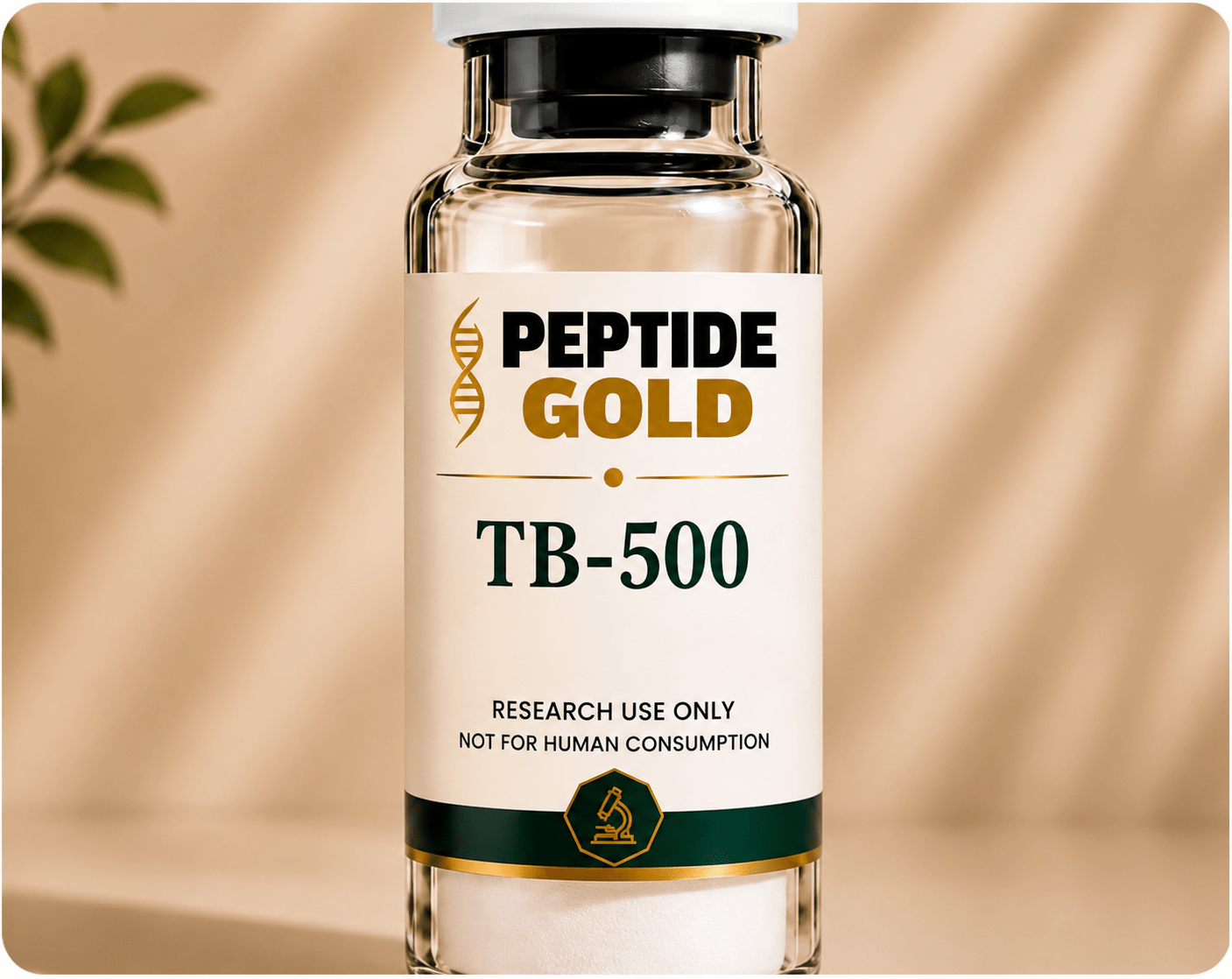
Suppliers commonly package TB-500 into vials labeled with specified milligram quantities.
There is no FDA-approved TB-500 pharmaceutical vial.
TB-500 Acetate
The peptide may be encountered in acetate-salt form.
FDA’s 2026 compounding review specifically considered both:
TB-500 free base
and TB-500 acetate.
Combination Blends
TB-500 also appears in multi-peptide research blends.
Examples include:
GLOW, commonly combining GHK-Cu + BPC-157 + TB-500,
and
These blends have even less direct clinical evidence than TB-500 alone.
Stability of TB-500
FDA’s 2026 technical evaluation notes that TB-500 is sensitive to formulation and environmental conditions and may undergo:
aggregation
and degradation.
For the free-base powder, FDA’s review cited stability conditions involving very cold storage under controlled moisture- and light-protected conditions.
That illustrates an important product-quality issue:
peptides are not automatically stable simply because they arrive as dry powder.
Manufacturing, storage, reconstitution, contamination control, and temperature can all affect peptide integrity.
Potential Side Effects
Because there is essentially no established human clinical exposure database for TB-500 itself, its adverse-event profile is not well characterized.
This means a definitive list of “common side effects” cannot be scientifically established.
Potential concerns include:
immune reactions
injection-site reactions
peptide impurities
aggregation
incorrect concentration
microbial contamination
and unknown biological consequences of altering tissue-repair or angiogenic pathways.
A lack of documented side effects is not evidence that the compound is safe.
It largely reflects the absence of controlled human study.
Immunogenicity
FDA’s primary identified concern is immunogenicity.
The agency states that compounded TB-500 products may present an immune-reaction risk because of:
peptide aggregation
and peptide-related impurities.
Aggregated proteins or peptides can sometimes be recognized more strongly by the immune system.
This could potentially lead to:
antibody formation
allergic reactions
or other immune effects.
The true incidence is unknown because human exposure has not been adequately studied.
Product Identity Is a Major Issue
FDA also identified another unusual TB-500 problem:
the name “TB-500” is not a standardized United States Adopted Name.
FDA has encountered multiple salts, derivatives, and even different active moieties being sold under the same common name.
This creates a serious research and safety problem.
Two products both labeled “TB-500” may not necessarily contain exactly the same chemical substance.
Researchers therefore need proper analytical characterization rather than relying on the product name alone.
Is TB-500 FDA Approved?
No.
TB-500 is not FDA-approved for any medical condition.
There is no approved indication for:
tendon repair
ligament healing
muscle recovery
wound healing
sports injuries
or general tissue regeneration.
There is also no FDA-approved dose or pharmaceutical product.
FDA’s 2026 Compounding Review
TB-500 received renewed regulatory attention in July 2026.
FDA’s Pharmacy Compounding Advisory Committee considered TB-500-related substances in connection with the Section 503A pharmacy-compounding list. FDA’s technical materials described the proposed substance as the seven-amino-acid acetylated thymosin beta-4 fragment.
FDA’s broader safety assessment remains cautious.
The agency states that it has not identified human exposure data for TB-500 products and lacks enough information to determine whether administration could harm humans.
This is much more cautious than many commercial claims presenting TB-500 as an established healing medication.
TB-500 and Competitive Sports
TB-500 has a long association with performance-enhancement concerns.
The peptide was chemically characterized in part because of suspected doping use.
Researchers developed analytical methods capable of identifying the Ac-LKKTETQ peptide in blood and urine.
Modern sports-medicine reviews classify TB-500 among unapproved peptides associated with athletic and regenerative use and note that these thymosin-related compounds remain prohibited in competitive sport.
Competitive athletes should therefore treat TB-500 as an anti-doping concern regardless of whether the intended purpose is injury recovery rather than direct performance enhancement.
TB-500 Versus BPC-157
These two peptides are frequently paired in research markets.
Their proposed mechanisms differ.
TB-500
Primarily associated with:
actin regulation
cell migration
angiogenesis
and wound-healing pathways.
BPC-157
Primarily associated with:
tissue protection
nitric oxide signaling
vascular pathways
tendon and ligament models
and gastrointestinal repair.
The idea behind combining them is that their mechanisms may complement each other.
However, there are no large controlled human trials demonstrating that a TB-500 + BPC-157 combination accelerates healing.
TB-500 Versus GHK-Cu
GHK-Cu is primarily associated with:
collagen
fibroblast activity
extracellular-matrix remodeling
and skin biology.
TB-500 is more closely connected with:
cell migration
and actin-related repair pathways.
This is why both appear in blends such as GLOW.
Again, the theoretical combination makes biological sense, but clinical synergy is unproven.
TB-500 Versus Thymosin Alpha-1
These peptides have very different functions.
Thymosin Alpha-1 is primarily an immune-regulatory peptide associated with T cells and immune signaling.
TB-500 is derived from thymosin beta-4 and associated primarily with cytoskeletal biology and tissue repair.
The similarity in their names does not mean their biological actions are similar.
Current Research in 2026
The most meaningful current research continues to focus on full-length thymosin beta-4, not TB-500 itself.
A 2026 review highlighted potential roles of Tβ4 and its metabolite Ac-SDKP in kidney injury, fibrosis, and repair.
Sports-medicine reviews published in 2026 continue to describe TB-500 as promising but unsupported by adequate human clinical evidence.
That distinction is critical when interpreting claims online.
The broader thymosin beta-4 family has substantial scientific interest.
The isolated TB-500 fragment remains much less clinically characterized.
What Research Is Still Needed?
TB-500 requires basic human pharmacology before strong therapeutic claims can be justified.
Researchers need to establish:
human pharmacokinetics
half-life
bioavailability
dose-response relationships
metabolism
immunogenicity
effects on angiogenesis
long-term safety
and whether the fragment behaves like full-length thymosin beta-4.
Controlled clinical trials would then need to examine specific injuries.
Potential outcomes could include:
tendon-healing time
ligament strength
muscle function
wound closure
pain
return-to-sport timing
and imaging evidence of tissue repair.
A particularly useful study would compare:
placebo
full-length thymosin beta-4
and TB-500
to determine whether the fragment actually reproduces the regenerative properties attributed to the parent molecule.
The Bottom Line
TB-500 is an experimental seven-amino-acid synthetic fragment of thymosin beta-4.
Its sequence is generally characterized as:
Ac-LKKTETQ, corresponding to the central actin-binding region of full-length Tβ4.
That region is biologically interesting because short thymosin beta-4 sequences containing LKKTETQ have demonstrated experimental activity involving:
cell migration
angiogenesis
and wound healing.
This provides a reasonable scientific rationale for studying TB-500 in:
tendon injuries
ligament repair
muscle injuries
wounds
and broader regenerative medicine.
However, the evidence needs to be described accurately.
Much of the impressive wound-healing literature frequently attributed to TB-500 actually involves full-length 43-amino-acid thymosin beta-4, which is not the same molecule. Full-length Tβ4 has been investigated extensively in cell, animal, and some human therapeutic studies.
TB-500 itself has a dramatically smaller evidence base.
FDA states that it has not identified human exposure data from drug products containing the TB-500 fragment.
There is therefore:
no FDA-approved TB-500 medication,
no established human dose,
no validated treatment schedule,
no proven tendon or ligament-healing indication,
and no established long-term safety profile.
FDA also identifies concerns involving:
immunogenicity
peptide aggregation
peptide-related impurities
and inconsistent chemical products being sold under the common TB-500 name.
Perhaps the most accurate description of TB-500 in 2026 is:
an experimental seven-amino-acid fragment of thymosin beta-4 containing an actin-associated region with plausible regenerative activity, but with essentially no established human clinical exposure data and with much of its reputation derived from studies of the larger thymosin beta-4 molecule rather than TB-500 itself.
For researchers, that makes TB-500 particularly interesting.
The scientific question is not simply whether thymosin beta-4 participates in healing—that is already strongly supported.
The more important question is:
does isolating the LKKTETQ region reproduce enough of full-length thymosin beta-4’s biological activity to create a useful, safe therapeutic peptide?
At present, that question remains unanswered.
Educational and research notice: This article is intended for general scientific and educational information only. It is not medical advice or a recommendation for human use of TB-500. There is no FDA-approved human dosage, administration schedule, or medical indication for TB-500. Dosing protocols circulated through research-market, bodybuilding, or peptide-clinic sources should not be treated as validated clinical dosing, and findings involving full-length thymosin beta-4 should not automatically be attributed to the TB-500 fragment.