
BPC-157: A Comprehensive Guide to Uses, Research, Dosing, Forms, and Potential Benefits
Few experimental peptides have developed as much attention within sports medicine, recovery, and regenerative research communities as BPC-157.
BPC-157 is most commonly discussed in connection with tendon and ligament healing, muscle recovery, wound repair, gastrointestinal protection, inflammation, and recovery from musculoskeletal injuries. It has become particularly well known among athletes and fitness communities, where it is sometimes informally called a “healing peptide.”
That nickname, however, can make the evidence sound considerably stronger than it actually is.
BPC-157 has produced interesting results across numerous animal experiments involving tendons, ligaments, muscles, bone, nerves, blood vessels, and the gastrointestinal tract. Recent scientific reviews continue to describe the preclinical findings as promising. At the same time, human evidence remains extremely limited, and BPC-157 has not been approved by the FDA for treating injuries, gastrointestinal disorders, or any other medical condition.
This distinction is especially important because BPC-157 is widely available through the research-chemical market despite the absence of a standardized, FDA-approved pharmaceutical product.
So what exactly is BPC-157, why are researchers interested in it, and what does the science actually show?
What Is BPC-157?
BPC-157 stands for Body Protection Compound-157.
It is a synthetic peptide consisting of 15 amino acids, making it a pentadecapeptide.
Its amino-acid sequence is generally written as:
Gly-Glu-Pro-Pro-Pro-Gly-Lys-Pro-Ala-Asp-Asp-Ala-Gly-Leu-Val
BPC-157 was developed from research involving compounds associated with gastric juice and gastrointestinal cytoprotection. It is often described as a stable gastric pentadecapeptide because it demonstrates unusual stability in gastric environments compared with many peptides.
This stability has contributed to research involving both systemic and gastrointestinal applications.
One of the more interesting aspects of BPC-157 is the sheer variety of tissues investigated in animal models.
Researchers have studied it in connection with:
- Tendons
- Ligaments
- Skeletal muscle
- Bone
- Gastrointestinal tissue
- Skin and wounds
- Blood vessels
- Peripheral nerves
- Corneal injuries
- Tendon-to-bone junctions
Recent reviews continue to report favorable findings across many of these preclinical models while emphasizing that translation into humans remains uncertain.
Why Is BPC-157 Called a “Healing Peptide”?
The term comes primarily from animal research.
BPC-157 has repeatedly been investigated in experimental injury models in which researchers deliberately damage a tendon, ligament, muscle, gastrointestinal structure, or other tissue and then compare healing between treated and untreated animals.
Many of those experiments have reported faster or improved recovery in BPC-157-treated animals.
Researchers have observed changes involving:
angiogenesis
fibroblast activity
collagen organization
blood-vessel formation
inflammatory signaling
nitric oxide pathways
and cellular migration.
Together, these processes are central to tissue repair.
This has led to the hypothesis that BPC-157 may influence several components of the body’s healing response rather than functioning as a simple anti-inflammatory compound.
How Does BPC-157 Work?
There is no single universally established mechanism explaining BPC-157.
Instead, research suggests that it may interact with multiple biological signaling systems.
A 2025 review of BPC-157 in musculoskeletal medicine highlighted several potentially important pathways, including VEGFR2 signaling, the Akt-eNOS pathway, nitric oxide production, ERK1/2 signaling, angiogenesis, fibroblast activity, and inflammatory regulation.
These pathways could potentially explain some of the broad healing effects observed in animal studies.
Blood-Vessel Formation
Healing tissue needs oxygen and nutrients.
One process involved in tissue recovery is angiogenesis, or the formation of new blood vessels.
Research suggests that BPC-157 may influence vascular signaling and promote blood-vessel development in injured tissue.
This is particularly interesting for structures such as tendons and ligaments, which naturally receive relatively limited blood flow.
Poor vascularity is one reason tendon and ligament injuries can take a long time to heal.
If a compound can safely improve vascular support around damaged tissue, researchers theorize that healing could potentially occur more efficiently.
Whether this effect is clinically meaningful in humans remains unknown.
BPC-157 and Tendon Healing
Tendon recovery is probably the application most strongly associated with BPC-157 in fitness and athletic communities.
Tendons connect muscle to bone and are notoriously slow to heal.
Animal studies have examined BPC-157 in models involving:
Achilles tendon injury
tendon transection
tendon-to-bone detachment
and other forms of tendon damage.
One well-known rat experiment involved surgically detaching the Achilles tendon from the heel bone.
Researchers reported that animals receiving BPC-157 demonstrated improvements in functional, biomechanical, and microscopic measures of tendon-to-bone healing. Collagen organization and vascular appearance also improved.
These findings are scientifically interesting because tendon-to-bone healing can be especially difficult.
However, a surgically injured rat tendon is not equivalent to a chronic human rotator cuff injury, Achilles tendinopathy, tennis elbow, or other common sports injury.
The human evidence necessary to establish effectiveness for these conditions remains lacking.
BPC-157 and Ligament Healing
Ligaments connect bone to bone and help stabilize joints.
Like tendons, they can heal slowly because some regions receive limited blood flow.
Preclinical research has suggested that BPC-157 may influence ligament repair through many of the same pathways involved in tendon recovery.
Animal studies have reported improvements involving tissue organization, vascularization, and mechanical strength.
This has generated substantial interest in BPC-157 for injuries involving structures such as the:
ACL
MCL
ankle ligaments
shoulder ligaments
and other connective tissues.
But there are not yet large controlled human studies showing that BPC-157 accelerates recovery from these injuries.
BPC-157 and Muscle Recovery
Muscle injury is another significant area of investigation.
Muscle tissue normally possesses better blood supply than tendons and ligaments, but severe muscle tears can still require weeks or months of recovery.
Animal research has suggested that BPC-157 may influence muscle healing following both direct trauma and systemic injury.
A major scientific review examining BPC-157 and musculoskeletal soft-tissue healing concluded that animal studies had consistently reported favorable healing effects across several injury types, including skeletal muscle damage.
More recent research reviews have continued to identify muscle, tendon, ligament, and junctional healing as major areas of BPC-157 investigation.
This does not establish that BPC-157 makes healthy people build muscle.
It is more accurately described as a tissue-repair research compound rather than an anabolic or muscle-building peptide.
BPC-157 and Bone Healing
Researchers have also investigated whether BPC-157 influences bone repair.
Bone healing requires coordinated interactions between:
blood vessels
osteoblasts
inflammatory cells
collagen
and surrounding connective tissue.
Because BPC-157 appears to influence angiogenesis and several repair pathways, researchers have investigated its effects on bone injuries and the junction where tendons attach to bone.
The animal results have been encouraging enough that bone and tendon-to-bone healing continue to appear in recent reviews of the peptide.
Again, these findings remain predominantly preclinical.
BPC-157 and the Gastrointestinal System
BPC-157 did not originally become interesting because of sports injuries.
Its scientific history is closely connected with the gastrointestinal tract.
Researchers have studied the peptide in models involving:
- Gastric ulcers
- Intestinal injury
- Inflammatory gastrointestinal conditions
- Fistulas
- NSAID-related gastrointestinal damage
- Alcohol-induced gastric injury
- Gastrointestinal mucosal protection
BPC-157 has been described as a possible mediator of cytoprotection, meaning mechanisms that help protect cells and tissues from injury.
Animal studies have reported protective and healing effects throughout the gastrointestinal tract, including experimental fistula models.
These findings led to historical clinical investigation involving inflammatory bowel disease.
However, the human evidence remains too limited to establish BPC-157 as an effective treatment for ulcerative colitis, Crohn’s disease, ulcers, or other gastrointestinal conditions.
BPC-157 and Inflammation
BPC-157 is sometimes casually described as an anti-inflammatory peptide.
That description is somewhat oversimplified.
Research suggests BPC-157 may modulate inflammatory processes associated with tissue injury, but inflammation itself is an important part of normal healing.
The goal of regenerative medicine is generally not to eliminate inflammation completely.
Instead, researchers are interested in whether BPC-157 helps regulate the inflammatory environment in ways that allow damaged tissue to progress more effectively from the inflammatory phase into tissue reconstruction.
Several signaling pathways associated with inflammation and vascular repair appear to be influenced in animal experiments.
BPC-157 and Nitric Oxide
Another interesting area involves nitric oxide, or NO.
Nitric oxide is an important signaling molecule involved in:
blood-vessel dilation
blood flow
vascular health
inflammation
and tissue repair.
Research suggests BPC-157 interacts with the nitric oxide system, including the Akt-eNOS pathway.
This could potentially contribute to some of the vascular and tissue-protective effects observed experimentally.
Because nitric oxide signaling affects many organ systems, however, this mechanism also illustrates why researchers need considerably more human safety data before assuming BPC-157 is harmless.
What Do People Commonly Seek BPC-157 For?
Outside formal research, BPC-157 has become particularly popular among athletes, bodybuilders, fitness enthusiasts, and people dealing with persistent musculoskeletal injuries.
Commonly discussed uses include:
tendon injuries
ligament injuries
muscle strains and tears
joint discomfort
post-exercise recovery
gastrointestinal problems
and general tissue healing.
Some people also discuss it after orthopedic surgery.
These uses should be distinguished from proven medical indications.
BPC-157 is not FDA-approved for any of them.
Anecdotal reports can be useful for generating research hypotheses, but they cannot determine whether a compound actually works because improvements may result from rest, physical therapy, natural healing, placebo effects, other treatments, or combinations of these factors.
What Does the Human Research Show?
This is the greatest limitation surrounding BPC-157.
Human research is extremely sparse.
A 2025 review found only three small pilot human studies, involving knee pain, interstitial cystitis, and intravenous safety/pharmacokinetics. The authors emphasized that large, rigorous clinical trials are still absent.
Another 2025 systematic review of orthopedic and sports-medicine research found that the overwhelming majority of the evidence was preclinical.
One small retrospective human report involved 12 people receiving intra-articular BPC-157 for chronic knee pain. Seven reportedly experienced relief lasting more than six months.
That sounds encouraging, but seven responders in an uncontrolled 12-person report is nowhere near sufficient to establish effectiveness.
There was no large placebo group, no randomized treatment assignment, and insufficient data to establish safety.
This gap between the amount of animal research and the amount of reliable human research is probably the single most important fact to understand about BPC-157.
BPC-157 Dosing Information
BPC-157 does not have an FDA-approved human dosage.
There is no clinically established dose for tendon injuries, ligament damage, muscle injuries, gastrointestinal disorders, or general recovery.
Published animal experiments have used numerous doses and administration routes.
For example, the rat Achilles tendon-to-bone experiment evaluated BPC-157 at 10 micrograms/kg, 10 nanograms/kg, and 10 picograms/kg, administered intraperitoneally once daily.
Other animal experiments have used oral, intragastric, intraperitoneal, topical, or drinking-water administration.
These are animal research protocols, not human dosing recommendations.
Online peptide communities frequently discuss human amounts in the hundreds-of-micrograms range, often administered daily. However, those protocols have not been established through large controlled human trials.
A statement that someone should take a particular number of micrograms per day therefore goes beyond what current clinical evidence can support.
What Forms Is BPC-157 Offered In?
Because BPC-157 is not an FDA-approved pharmaceutical, commercially advertised forms should be understood primarily as research-market formulations.
Lyophilized Powder
One of the most common forms is freeze-dried or lyophilized BPC-157.
Removing water can improve peptide stability during storage.
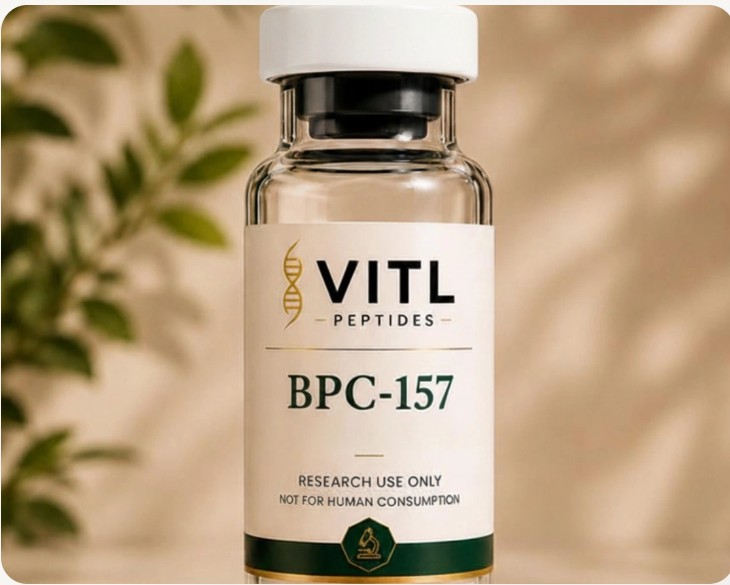
Research suppliers frequently package the material into small laboratory vials containing specified quantities of peptide.
BPC-157 Acetate
BPC-157 is frequently encountered as an acetate salt.
Both BPC-157 free base and BPC-157 acetate have recently been considered by FDA in connection with pharmacy compounding.
Capsules and Oral Preparations
Some suppliers advertise BPC-157 capsules, tablets, liquids, or other oral formulations.
The rationale for oral interest partly comes from BPC-157’s unusual stability in gastric environments.
However, the existence of an oral commercial product does not establish its bioavailability, purity, effectiveness, or appropriate human dosage.
Injectable Research Preparations
BPC-157 is widely discussed as a subcutaneous research preparation.
However, FDA has specifically identified concerns regarding compounded BPC-157, including potential immunogenicity, peptide-related impurities, API characterization, and inadequate human safety information.
A vial containing lyophilized peptide should therefore never automatically be assumed to be sterile, injectable, pharmaceutical grade, or suitable for human administration.
Local Versus Systemic Administration
One of the most common discussions surrounding BPC-157 involves whether it needs to be administered directly near an injury.
Animal research has reported effects following both local and systemic administration.
Recent reviews describe beneficial effects in rat injury models following intraperitoneal, intragastric, drinking-water, and local administration.
This suggests that the peptide’s experimental effects may not depend exclusively upon placement immediately adjacent to injured tissue.
However, there is insufficient human pharmacokinetic research to establish whether local administration is superior to systemic administration—or vice versa.
Potential Side Effects
This area deserves considerable caution.
It is common to encounter statements online claiming that BPC-157 has “no side effects.”
Current science does not justify that conclusion.
The more accurate statement is that we do not yet have enough controlled human data to characterize its safety profile reliably.
The FDA states that it has identified no or only limited safety information for proposed routes of BPC-157 administration and therefore lacks sufficient information to determine whether compounded BPC-157 could cause harm in humans.
Potential concerns include:
immune reactions
product impurities
incorrect concentration
microbial contamination
unknown drug interactions
and unknown consequences of long-term exposure.
Because angiogenesis is one proposed component of BPC-157’s activity, researchers also need more information about the consequences of manipulating vascular-growth pathways over extended periods.
That does not establish that BPC-157 causes cancer or other diseases. It simply illustrates an unanswered safety question requiring proper research.
The FDA’s Current Position
The regulatory picture became particularly noteworthy in July 2026.
FDA’s Pharmacy Compounding Advisory Committee considered both BPC-157 free base and BPC-157 acetate for potential inclusion on the Section 503A Bulks List. The proposed clinical use evaluated by FDA was ulcerative colitis.
FDA has separately identified BPC-157 among substances for which compounded preparations may present significant safety concerns. The agency specifically cites possible immunogenicity, peptide-related impurities, difficulties characterizing the active ingredient, and limited human safety information.
Importantly, regulatory consideration for compounding is not the same as FDA approval of BPC-157 as a drug.
BPC-157 remains unapproved.
BPC-157 and Competitive Sports
Athletes should be especially cautious.
BPC-157 is prohibited in competitive sport under World Anti-Doping Agency rules.
That means an athlete can face anti-doping consequences regardless of whether the compound was being used with the intention of recovering from an injury rather than enhancing performance.
Sports regulations and FDA drug-approval status are separate issues.
Current Research in 2026
Scientific interest in BPC-157 has not disappeared.
In fact, new reviews continue to appear.
A 2026 review examining tendon, ligament, muscle, tendon-to-bone, muscle-to-tendon, and muscle-to-bone injuries concluded that BPC-157 has produced broad favorable results across rat models using multiple administration routes. The researchers emphasized the need for further clinical studies.
This reflects where the science currently stands.
The preclinical evidence is extensive and intriguing.
The human evidence is extremely limited.
Future research needs to determine:
human pharmacokinetics
dose-response relationships
optimal administration routes
short-term safety
long-term safety
immunogenicity
drug interactions
effects on tendon and ligament injuries
effects on muscle injuries
effects on gastrointestinal disease
and whether the impressive findings repeatedly reported in rodents actually translate into meaningful improvements in people.
Large randomized, double-blind, placebo-controlled trials would be particularly valuable.
The Bottom Line
BPC-157 is one of the most fascinating—and simultaneously one of the most overhyped—peptides in regenerative research.
It is a synthetic 15-amino-acid gastric peptide investigated for potential cytoprotective and tissue-repair properties.
Animal research has produced impressive findings involving:
tendon healing
ligament repair
muscle recovery
tendon-to-bone healing
wound repair
vascularization
gastrointestinal protection
and inflammatory regulation.
Recent scientific reviews continue to find substantial preclinical evidence suggesting that BPC-157 influences several important healing pathways, including VEGFR2, Akt-eNOS, nitric oxide, ERK1/2, angiogenesis, and fibroblast activity.
That scientific foundation helps explain why BPC-157 has become so popular among people interested in injury recovery.
But the limitations are equally important.
Human clinical evidence remains extremely limited. A 2025 review identified only a few small human pilot studies, and there are no large, high-quality trials establishing BPC-157 as an effective treatment for common tendon, ligament, muscle, joint, or gastrointestinal conditions.
There is also no FDA-approved BPC-157 medication and no FDA-approved human dosage.
The FDA continues to identify important unanswered questions involving human safety, immunogenicity, peptide impurities, and product characterization.
Consequently, claims that BPC-157 is a proven injury treatment, has no side effects, or has an established human dosing protocol are not supported by the current evidence.
Perhaps the most accurate description of BPC-157 in 2026 is this:
BPC-157 is an experimental regenerative peptide with unusually extensive and promising animal research involving tissue protection and healing, but with a major shortage of rigorous human evidence needed to determine whether those benefits translate safely and reliably into people.
For researchers studying tendon, ligament, muscle, vascular, and gastrointestinal repair, that makes BPC-157 a compelling compound.
For consumers, it makes the distinction between promising research and proven treatment especially important.
Educational and research notice: This article is intended for general scientific and educational information. It is not medical advice or a recommendation for human use of BPC-157. Doses mentioned are descriptions of experimental research and should not be interpreted as personal dosing instructions. BPC-157 is not FDA-approved for treating injuries, gastrointestinal disorders, or any other medical condition.