
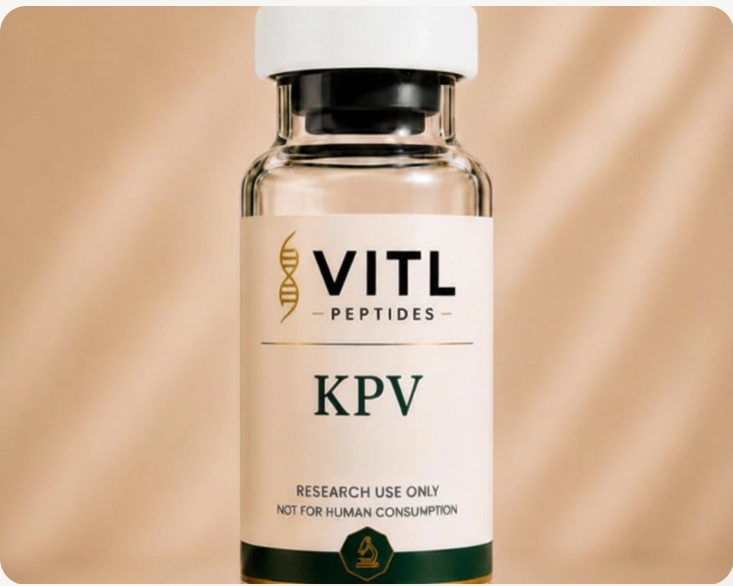
KPV: A Comprehensive Guide to Uses, Research, Dosing, Forms, and Potential Benefits
KPV is a short experimental peptide that has attracted growing interest because of research involving inflammation, gastrointestinal health, skin conditions, immune signaling, wound healing, and antimicrobial activity.
KPV is especially unusual because it is extremely small.
It consists of only three amino acids:
Lysine – Proline – Valine
or simply:
KPV.
The peptide is derived from the C-terminal portion of alpha-melanocyte-stimulating hormone, or α-MSH, a naturally occurring hormone involved in pigmentation, inflammation, immune regulation, and several other physiological processes.
Researchers discovered that the small KPV fragment appears to retain some of the anti-inflammatory activity of α-MSH without producing the same pigment-related effects.
That observation made KPV scientifically interesting.
Over time, researchers have investigated it in experimental models involving:
- Inflammatory bowel disease
- Colitis
- Intestinal inflammation
- Skin inflammation
- Psoriasis-related pathways
- Wound healing
- Bacterial growth
- Candida and other microorganisms
- Immune signaling
- Epithelial barrier function
However, there is an important limitation:
Most KPV research remains preclinical, and there is currently no FDA-approved KPV medication or established human dosing regimen.
The peptide is therefore best understood as an experimental anti-inflammatory and barrier-repair research compound, not a clinically proven treatment.
What Is KPV?
KPV is a naturally occurring three-amino-acid sequence found at the end of α-MSH.
Its sequence is:
Lys-Pro-Val
α-MSH is a peptide hormone produced from a larger precursor protein called proopiomelanocortin, or POMC.
POMC gives rise to several biologically active peptides involved in:
pigmentation
stress responses
immune regulation
appetite
and inflammation.
α-MSH contains 13 amino acids.
Researchers found that its terminal KPV sequence could reproduce some anti-inflammatory effects while lacking many of the broader melanocortin properties of the full hormone.
This makes KPV a useful research tool for studying how very short peptide fragments can preserve specific biological functions.
How Does KPV Work?
The complete mechanism of KPV is not fully understood.
Research suggests that it may influence several inflammatory and immune pathways rather than acting through one single receptor.
Some of the most frequently studied mechanisms involve:
NF-κB signaling
pro-inflammatory cytokines
intestinal epithelial cells
immune-cell activation
and PepT1-mediated transport.
NF-κB is a major transcription factor involved in inflammation.
When activated, it can increase production of inflammatory mediators such as:
TNF-α
IL-1β
and other cytokines.
Experimental studies suggest that KPV may suppress parts of this signaling cascade.
This provides a biological explanation for the anti-inflammatory effects observed in cell and animal models.
KPV and the Gastrointestinal Tract
One of the strongest areas of KPV research involves the gastrointestinal system.
Researchers have investigated KPV in models of:
colitis
inflammatory bowel disease
intestinal epithelial injury
and gut inflammation.
One particularly interesting mechanism involves a transporter called:
PepT1 — peptide transporter 1.
PepT1 is normally expressed in the small intestine and transports small peptides across intestinal epithelial cells.
During inflammatory bowel disease, PepT1 expression can also increase in the colon.
Researchers have investigated whether KPV can use PepT1 to enter inflamed intestinal cells and then exert local anti-inflammatory effects.
This idea has led to experimental delivery systems specifically designed to transport KPV into inflamed gastrointestinal tissue.
KPV and Colitis Research
Animal models of colitis have produced some of the most frequently cited KPV findings.
Researchers have reported that KPV can reduce:
inflammatory cytokines
intestinal tissue damage
immune-cell infiltration
and disease-related inflammation.
Some studies have specifically investigated nanoparticle or hydrogel delivery systems intended to protect KPV in the gastrointestinal tract and deliver it directly to inflamed tissue.
This is important because peptides can be rapidly broken down by digestive enzymes.
By packaging KPV inside specialized drug-delivery systems, researchers hope to improve local intestinal exposure.
These findings have generated substantial interest in KPV as a potential future therapy for inflammatory bowel conditions.
However, this should not be interpreted as evidence that KPV is a proven treatment for:
Crohn’s disease
ulcerative colitis
or other gastrointestinal disorders.
Human clinical evidence remains extremely limited.
KPV and Inflammatory Bowel Disease
Inflammatory bowel disease, or IBD, includes conditions such as:
Crohn’s disease
and
ulcerative colitis.
These disorders involve chronic inflammation of the gastrointestinal tract.
Current treatments include:
corticosteroids
immunomodulators
biologic medications
JAK inhibitors
and other targeted therapies.
KPV is attractive in this field because its anti-inflammatory activity may be relatively localized and may not require broad systemic immune suppression.
In theory, that could offer advantages.
However, controlled human trials are needed before researchers can determine whether this theoretical benefit translates into real clinical outcomes.
KPV and Skin Inflammation
KPV has also been studied in dermatologic research.
Because α-MSH has anti-inflammatory effects in the skin, researchers have investigated whether KPV could preserve those properties in a simpler peptide.
Experimental work suggests KPV may reduce inflammatory signaling in skin cells.
This has generated interest in conditions involving:
dermatitis
eczema
psoriasis
acne-related inflammation
and skin irritation.
Again, these are areas of research rather than FDA-approved indications.
There are no large clinical trials showing that topical or systemic KPV reliably treats these conditions.
KPV and Psoriasis
Psoriasis is a chronic inflammatory skin disorder involving abnormal immune activation and rapid skin-cell turnover.
Researchers have investigated melanocortin-derived peptides because the melanocortin system can influence both immune cells and skin cells.
KPV may suppress inflammatory pathways without stimulating pigmentation to the same degree as full α-MSH.
That makes it an interesting candidate for topical research.
However, it is not currently an established psoriasis therapy.
KPV and Antimicrobial Activity
One of the more surprising areas of KPV research involves antimicrobial effects.
Experimental studies have suggested that KPV may inhibit growth of certain microorganisms.
Researchers have reported activity involving:
Staphylococcus aureus
Candida albicans
and other microbes in laboratory settings.
The mechanism is not completely established.
Some researchers have proposed that the peptide may interfere with microbial membrane function or intracellular processes.
This raises the possibility that KPV could someday be useful in research involving infected wounds or inflammatory conditions complicated by microbial overgrowth.
However, antimicrobial activity observed in a laboratory dish does not automatically mean KPV can replace antibiotics or antifungal medications.
KPV and Candida
Candida albicans is a common yeast that normally lives on human skin and mucosal surfaces.
Under certain circumstances it can overgrow and cause infection.
KPV has demonstrated antifungal activity in some laboratory experiments.
This has contributed to online claims that KPV can treat “Candida overgrowth.”
That conclusion goes well beyond the evidence.
There are no high-quality clinical trials demonstrating that oral or systemic KPV treats candidiasis in humans.
KPV and Wound Healing
Inflammation is a critical part of wound healing.
Too little inflammation can impair repair.
Too much or prolonged inflammation can delay healing and damage tissue.
Because KPV appears to reduce excessive inflammatory signaling, researchers have investigated whether it may help create a more favorable wound-healing environment.
Potential areas of interest include:
skin wounds
burns
intestinal injury
and chronic inflammatory lesions.
Researchers have also explored topical delivery systems that could place KPV directly at sites of tissue damage.
The evidence remains mostly preclinical.
KPV and NF-κB
NF-κB is one of the most important inflammatory signaling systems in the body.
It helps regulate genes involved in:
immune activation
cytokine production
cell survival
and inflammation.
Excessive NF-κB activation is involved in many chronic inflammatory conditions.
Experimental studies suggest that KPV can inhibit NF-κB activation in certain cell types.
This may help explain reductions in inflammatory cytokines seen in KPV-treated experimental models.
However, completely suppressing NF-κB would not necessarily be desirable.
The pathway is essential for normal immunity.
The goal would theoretically be modulation, not total suppression.
What Do People Use KPV For?
Outside formal research, KPV is most commonly discussed for:
Gut Inflammation
This is probably the most common area of interest.
People discuss KPV in relation to:
IBD
intestinal irritation
gut-barrier support
and inflammatory gastrointestinal symptoms.
Skin Conditions
Topical KPV is sometimes discussed for:
eczema
psoriasis
acne
rosacea
and general skin inflammation.
Immune Regulation
Because the peptide may influence inflammatory signaling, it is sometimes marketed as an immune-modulating peptide.
Wound and Tissue Research
KPV is also associated with experimental wound-healing and barrier-repair applications.
Antimicrobial Research
Its reported activity against certain bacteria and fungi has generated interest in infection-related research.
None of these should be treated as established medical indications.
Does KPV Affect Pigmentation?
This is an important distinction from α-MSH.
α-MSH can stimulate melanocortin receptors involved in melanin production and skin pigmentation.
KPV is generally studied because it appears to preserve some of α-MSH’s anti-inflammatory effects without strongly activating the pigmentation pathway.
This is one reason researchers became interested in the fragment.
It suggests that the anti-inflammatory and pigment-related effects of α-MSH may be partially separable.
Does KPV Affect Appetite?
α-MSH is also involved in appetite regulation through melanocortin receptors in the brain.
KPV does not appear to reproduce this appetite-suppressing effect to the same degree.
It is therefore not generally considered a weight-loss peptide.
KPV should not be confused with metabolic peptides such as:
semaglutide
tirzepatide
or retatrutide.
Its primary research focus is inflammation, not appetite regulation.
KPV Dosing Information
There is no FDA-approved human dosage for KPV.
This means no standardized medical regimen exists for:
gut inflammation
skin conditions
wound healing
or any other use.
Published research has used a wide range of experimental concentrations and animal doses.
These often vary depending on:
route of administration
disease model
drug-delivery system
and tissue being studied.
Animal doses should not be directly converted to human doses.
Likewise, online capsule, injectable, or topical dosing protocols are generally based on:
research-market practice
anecdotal use
or extrapolation from preclinical studies.
They should not be treated as validated clinical dosing.
Oral KPV
KPV is unusual because its very small size makes oral and gastrointestinal delivery particularly interesting.
However, peptides are still vulnerable to breakdown by digestive enzymes.
Researchers have therefore investigated:
enteric coatings
nanoparticles
hydrogels
and other specialized delivery systems.
These approaches attempt to protect KPV until it reaches inflamed intestinal tissue.
The presence of an oral KPV capsule on the commercial market does not prove that the peptide reaches effective concentrations in human intestinal tissue.
Human bioavailability data remain limited.
KPV Capsules
Research and peptide suppliers commonly offer KPV in capsule form.
Capsules are generally marketed in connection with gastrointestinal research.
The appeal is straightforward:
if the intended target is the gut, oral delivery may provide local exposure without requiring systemic administration.
However, the effectiveness of any capsule depends on:
peptide stability
capsule formulation
release location
intestinal degradation
and actual absorption.
There is no FDA-approved KPV capsule.
Lyophilized KPV
KPV is also available as:
lyophilized, or freeze-dried, powder.
Lyophilization removes water and can improve peptide stability during storage and shipping.
Research laboratories may use this material for:
cell-culture studies
animal experiments
or formulation research**.**
A research vial should not automatically be assumed to be:
sterile
injectable
pharmaceutical grade
or appropriate for human administration.
Topical KPV
Topical KPV has generated interest for skin research.
Potential formats include:
creams
gels
serums
and experimental wound dressings.
Topical delivery may be especially attractive because it allows researchers to target inflamed skin directly.
However, KPV penetration through intact skin can be limited, and formulation chemistry strongly affects how much peptide reaches the deeper layers of tissue.
There is no FDA-approved topical KPV drug.
Injectable KPV
Injectable KPV is sometimes discussed in peptide communities.
However, this route has an especially weak clinical evidence base.
There is no established human pharmacokinetic profile defining:
absorption
half-life
distribution
clearance
or safe systemic exposure.
Therefore, there is no evidence-based injectable dosing protocol.
Potential Side Effects
Because human trials are limited, KPV’s true adverse-event profile is not well established.
Potential concerns depend heavily on the route.
Oral Exposure
Possible issues could include:
gastrointestinal discomfort
nausea
or unexpected reactions to formulation ingredients.
Topical Exposure
Possible reactions may include:
redness
itching
irritation
or contact sensitivity.
Systemic or Injectable Exposure
Potential concerns include:
immune reactions
product impurities
contamination
unknown drug interactions
and unknown consequences of prolonged immune modulation.
A lack of reported side effects should not be interpreted as proof of long-term safety.
KPV and Immune Suppression
KPV is sometimes described as an “immune suppressant.”
That description is probably too broad.
The available evidence suggests that KPV may reduce excessive inflammatory signaling rather than globally suppress the immune system.
This distinction matters.
An immune suppressant generally reduces overall immune activity and can increase infection risk.
KPV may act more selectively on inflammatory pathways.
However, human clinical research is not sufficient to define this distinction conclusively.
KPV and Autoimmune Conditions
Because KPV influences inflammatory pathways, it has been discussed in connection with autoimmune disease.
This includes conditions such as:
Crohn’s disease
ulcerative colitis
psoriasis
and possibly other immune-mediated disorders.
However, the available evidence does not support replacing standard autoimmune treatments with KPV.
Modern biologic drugs and targeted immune therapies have extensive human data that KPV does not yet possess.
KPV and BPC-157
KPV is sometimes discussed alongside BPC-157 because both are associated with gastrointestinal and tissue-repair research.
The mechanisms are different.
KPV is derived from α-MSH and is primarily associated with anti-inflammatory and immune signaling.
BPC-157 is a synthetic gastric-derived peptide associated more broadly with tissue repair, angiogenesis, and cytoprotection in animal models.
Some research formulations combine them because their mechanisms may be complementary.
However, there are no strong clinical trials demonstrating that a KPV/BPC-157 combination is superior to either peptide alone.
KPV and GHK-Cu
KPV may also appear in skin-oriented research combinations with GHK-Cu.
The rationale is:
KPV → inflammatory modulation
while
GHK-Cu → collagen and tissue remodeling.
Again, this is biologically plausible.
It is not clinically established.
Is KPV FDA Approved?
No.
KPV is not FDA-approved for any medical condition.
There is no approved indication for:
inflammatory bowel disease
Crohn’s disease
ulcerative colitis
eczema
psoriasis
wound healing
Candida
or general inflammation.
There is also no FDA-approved:
KPV capsule
KPV injection
KPV cream
or KPV dosing regimen.
Current Research
Modern KPV research remains focused heavily on drug-delivery technology.
Researchers are particularly interested in ways to deliver KPV directly to inflamed tissues.
Examples include:
nanoparticles
polymeric carriers
hydrogels
enteric delivery systems
and targeted intestinal formulations.
This is especially relevant to inflammatory bowel disease because local delivery could theoretically produce anti-inflammatory effects while minimizing systemic exposure.
Researchers are also investigating KPV’s effects on:
intestinal epithelial cells
cytokines
microbial growth
barrier function
and immune-cell signaling.
These areas may eventually provide more clearly defined therapeutic applications.
What Research Is Still Needed?
Before KPV can become an established medical therapy, researchers need much more human data.
Important questions include:
What is KPV’s human half-life?
How much survives oral administration?
Does it reach inflamed intestinal tissue?
What dose produces meaningful biological effects?
How long do those effects last?
Does it interact with other medications?
Does prolonged exposure affect infection risk?
Can it meaningfully improve IBD symptoms or remission rates?
Is topical KPV effective for specific skin disorders?
The ideal next steps would include:
Phase 1 pharmacokinetic studies
followed by
randomized placebo-controlled clinical trials.
The Bottom Line
KPV is a very small three-amino-acid peptide—Lys-Pro-Val—derived from the C-terminal region of alpha-melanocyte-stimulating hormone.
Despite its tiny size, KPV has generated significant interest because it appears to retain some of α-MSH’s anti-inflammatory properties without strongly reproducing its pigmentation effects.
Preclinical research suggests that KPV may influence:
NF-κB signaling
inflammatory cytokines
intestinal epithelial cells
immune responses
wound healing
and microbial growth.
The gastrointestinal tract is one of the most promising areas of investigation.
Animal and cell studies suggest that KPV may reduce inflammation in experimental colitis and may be transported into inflamed intestinal cells through PepT1.
Researchers are now studying specialized delivery systems designed to protect the peptide and deliver it directly to diseased intestinal tissue.
KPV has also generated interest in:
eczema
psoriasis
skin inflammation
wound repair
and antimicrobial research.
However, the clinical evidence remains limited.
There is currently:
no FDA-approved KPV medication,
no established human dosage,
no standardized oral bioavailability data,
no validated injectable protocol,
and no large clinical evidence base demonstrating effectiveness for inflammatory bowel disease, skin conditions, or infections.
Perhaps the most accurate way to describe KPV in 2026 is:
a promising experimental melanocortin-derived tripeptide with substantial preclinical evidence for anti-inflammatory, barrier-protective, and antimicrobial activity, but with a major shortage of controlled human clinical data needed to establish dosing, effectiveness, and long-term safety.
For researchers studying intestinal inflammation, epithelial biology, skin inflammation, and targeted peptide delivery, KPV is an especially interesting compound because its tiny size and relatively focused biological activity make it an attractive drug-development candidate.
For consumers, however, it is essential to distinguish between:
showing that KPV reduces inflammatory signaling in cells and animals
and
showing that oral, topical, or injectable KPV safely treats inflammatory disease in people.
At present, those are very different levels of evidence.
Educational and research notice: This article is intended for general scientific and educational information. It is not medical advice or a recommendation for human use of KPV. Experimental doses used in laboratory or animal research should not be interpreted as personal dosing instructions. KPV is not FDA-approved for inflammatory bowel disease, Crohn’s disease, ulcerative colitis, psoriasis, eczema, infection, wound healing, or any other medical condition.