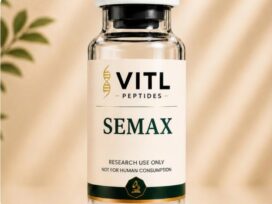



Semax: A Comprehensive Guide to Uses, Research, Dosing, Forms, and Potential Benefits
Interest in peptides has grown rapidly as researchers explore how short chains of amino acids may influence signaling throughout the body. One peptide that has attracted particular attention in the areas of cognition, neurological function, and neuroprotection is Semax.
Semax is unusual because it has a longer history of clinical investigation than many peptides currently discussed in research and longevity communities. It was developed in Russia and has been studied primarily for neurological applications, including ischemic stroke and cognitive dysfunction. At the same time, Semax has become increasingly discussed outside of traditional clinical settings for potential effects involving concentration, memory, mental energy, stress resilience, and overall cognitive performance.
The evidence, however, needs to be viewed in context. Much of the mechanistic research has been conducted in animals, while the human clinical literature is considerably smaller and is concentrated largely in Russia and neighboring countries. Semax is not currently an FDA-approved medication in the United States.
This guide provides an overview of what Semax is, why researchers are interested in it, how it is commonly administered in studies and clinical literature, what forms exist, and where current research appears to be heading.
What Is Semax?
Semax is a synthetic peptide consisting of seven amino acids:
Met-Glu-His-Phe-Pro-Gly-Pro
It is sometimes referred to scientifically as ACTH(4-7)PGP.
The first four amino acids are derived from a fragment of adrenocorticotropic hormone, or ACTH. Researchers added the Pro-Gly-Pro sequence to improve the peptide’s stability and resistance to enzymatic degradation.
Despite being derived from an ACTH fragment, Semax is not simply a miniature version of ACTH. Its neurological activity is the primary reason researchers have been interested in the compound.
The U.S. National Library of Medicine’s MeSH database classifies ACTH(4-7), Pro-Gly-Pro/Semax under pharmacologic actions that include neuroprotective and nootropic agents.
Why Was Semax Developed?
Semax was developed largely as a neurological compound rather than as a conventional stimulant.
Researchers were interested in creating a substance capable of potentially protecting neurons and supporting neurological recovery without producing the traditional hormonal effects associated with full-length ACTH.
This led to considerable research involving cerebral ischemia—the reduction or interruption of blood flow to brain tissue that occurs during ischemic stroke.
Semax has consequently been investigated in connection with neurological conditions involving impaired cerebral circulation and recovery following ischemic injury. A modern review of neuroprotective peptides describes Semax as having been used in neurological practice for acute and chronic cerebrovascular disorders.
Research has subsequently expanded into areas involving learning, memory, neurotrophic signaling, inflammation, stress responses, and neurotransmission.
How Does Semax Work?
Researchers do not yet have a single, complete explanation for Semax’s effects. Instead, evidence suggests that it may influence several interconnected neurological pathways.
One of the most interesting involves neurotrophic factors.
Neurotrophins are proteins involved in the development, maintenance, survival, and adaptability of neurons. Two commonly discussed examples are:
BDNF — Brain-Derived Neurotrophic Factor
and
NGF — Nerve Growth Factor
BDNF in particular plays important roles in synaptic plasticity, learning, memory, and neuronal survival.
Animal studies have found that Semax can alter the expression of genes associated with BDNF, NGF, and their receptors. For example, research involving cerebral ischemia in rats found changes in transcription of several neurotrophins and neurotrophin receptors following Semax administration.
This is one reason Semax is frequently described as a neurotrophic or neuroprotective peptide.
However, increasing BDNF-related signaling in an animal experiment does not automatically mean Semax improves memory, intelligence, or neurological health in healthy humans. That distinction is important when interpreting peptide research.
Semax and Neuroprotection
Neuroprotection remains one of the most scientifically interesting areas surrounding Semax.
During an ischemic stroke, brain tissue experiences inadequate oxygen and glucose. This can initiate numerous damaging processes involving inflammation, oxidative stress, excitotoxicity, and eventually neuronal death.
Animal research suggests Semax may influence some of these processes.
In a rat model of cerebral ischemia-reperfusion, researchers identified hundreds of genes whose expression differed between Semax-treated and control animals. Semax appeared to suppress expression of genes associated with inflammatory processes while increasing expression of genes associated with neurotransmission.
Additional research examining proteins rather than simply gene expression found changes involving proteins associated with inflammation, cell death, neuroprotection, and neurological recovery.
These findings have helped generate interest in Semax as a potential neuroprotective compound.
They should nevertheless be interpreted cautiously because much of this mechanistic work involves animal models rather than large randomized human trials.
Cognitive Performance, Memory, and Learning
Outside of stroke research, Semax is probably best known as a potential nootropic.
Nootropics are substances investigated or used for their potential ability to influence cognitive functions such as:
- Concentration
- Memory
- Learning
- Mental clarity
- Attention
- Mental endurance
Interest in Semax for cognition comes partly from its apparent interaction with neurotrophic pathways.
BDNF is heavily involved in synaptic plasticity—the ability of connections between neurons to strengthen, weaken, and reorganize.
That process is fundamental to learning and memory.
Consequently, researchers have investigated whether Semax’s effects on BDNF and other signaling systems could potentially influence cognitive performance.
The important qualification is that evidence supporting Semax as a general-purpose “brain booster” in healthy adults remains much less established than internet discussions sometimes imply.
Focus and Mental Performance
Another reason Semax has attracted attention is the possibility that it may influence attention and mental performance without functioning exactly like conventional stimulants.
People discussing Semax outside clinical research commonly associate it with increased:
focus, mental clarity, motivation, productivity, and resistance to mental fatigue.
These uses should be distinguished from medically established indications.
Semax does not currently have the kind of large, independent, placebo-controlled clinical trial database that medications approved specifically for ADHD, depression, or other neurological and psychiatric disorders possess.
Consequently, descriptions of Semax as a productivity enhancer or replacement for conventional stimulants go beyond what the current clinical evidence can firmly establish.
Stress and Neurological Resilience
Another interesting research area involves stress.
The brain’s response to prolonged or severe stress involves numerous systems, including neurotransmitters, hormones, inflammatory signaling, and neurotrophic factors.
Because Semax appears capable of modifying some neurological signaling pathways, researchers have investigated whether it may influence behavioral and physiological responses to stress.
This has contributed to its reputation as something of a cognitive “adaptogen.”
Again, however, much of the evidence in this area remains preclinical.
Semax should therefore not be considered an established treatment for anxiety, depression, PTSD, or other psychiatric conditions based on currently available evidence.
Semax and Inflammation
One of the more intriguing discoveries surrounding Semax involves the relationship between the nervous and immune systems.
Researchers studying cerebral ischemia found that Semax altered expression of genes associated with immune responses.
A transcriptomic study involving rats with focal cerebral ischemia found significant changes in immune-related signaling following Semax administration, suggesting that part of Semax’s neuroprotective activity could involve neuroimmune interactions.
Later research similarly found that Semax appeared to suppress certain inflammation-related gene expression patterns following cerebral ischemia-reperfusion.
This does not mean Semax should simply be described as an “anti-inflammatory peptide.” Its biological effects appear considerably more complicated.
Rather, modulation of inflammation may be one component of its overall neurological activity.
How Is Semax Usually Administered?
The form most strongly associated with Semax is intranasal administration.
This usually means either:
nasal drops or nasal spray.
Intranasal delivery is particularly interesting for compounds targeting the nervous system because the nasal cavity may provide pathways for certain molecules to influence the central nervous system while avoiding some of the limitations associated with oral administration.
Peptides are often poor candidates for conventional tablets because digestive enzymes can break peptide bonds apart before the compound reaches systemic circulation.
Consequently, intranasal administration has historically been central to Semax research and clinical use.
Forms of Semax
Depending upon the research or market being examined, Semax may be encountered in several forms.
Nasal Drops
This is one of the historically established forms associated with Semax.
The liquid is administered into the nostrils according to a measured concentration and number of drops.
Nasal Spray
Nasal sprays provide another intranasal delivery method and can potentially make administration more standardized because the spray mechanism delivers a predetermined volume.
Concentration per spray remains extremely important because two products labeled “Semax nasal spray” can contain very different amounts of peptide.
Lyophilized Powder
Semax is also sold by some suppliers as lyophilized, or freeze-dried, powder.
This form is commonly encountered in laboratory peptide research because removing water can improve stability during storage.
Lyophilized Semax may subsequently be reconstituted for appropriate experimental applications.
Importantly, the fact that a peptide is sold in a vial does not mean it is approved, sterile, injectable, or appropriate for human administration.
Semax Acetate
Researchers and compounders may encounter Semax as either the free-base peptide or Semax acetate.
In fact, both Semax free base and Semax acetate have recently been part of FDA discussions concerning potential use as bulk drug substances for pharmacy compounding.
What About Semax Dosing?
Semax dosing deserves particular caution because there is no FDA-approved Semax dosing regimen in the United States.
Published studies have used different concentrations and schedules depending upon the condition being investigated.
For example, one small published human study involving refractory peptic ulcers—not cognitive enhancement—reported intranasal administration of a 1% Semax solution, 2–4 drops three times daily for 10 days, alongside conventional ulcer treatments.
That example illustrates an important point: a dose reported in a research paper should not automatically be interpreted as an appropriate dose for another purpose.
Online peptide communities sometimes describe Semax dosing in micrograms and discuss protocols involving one or several administrations per day. However, concentrations vary enormously between products.
A statement such as “two sprays” therefore tells someone virtually nothing unless the exact amount of Semax delivered per spray is known.
The safest way to discuss Semax dosing is in terms of the specific research protocol, concentration, route of administration, and condition being studied, rather than presenting a universal dosage.
How Long Is Semax Used?
Research protocols have ranged from acute administration to courses lasting several days.
Semax is often discussed as something used in cycles or short courses rather than continuously throughout the year.
There is currently insufficient high-quality evidence to establish an optimal long-term Semax schedule for healthy individuals.
Likewise, the long-term consequences of repeatedly manipulating neurotrophic signaling through Semax have not been adequately characterized in large human populations.
Potential Side Effects
Published experience with Semax has generally portrayed it as relatively well tolerated in studied settings, but the absence of large Western clinical trials limits the certainty of its safety profile.
With intranasal administration, possible complaints may include:
- Nasal irritation
- Nasal dryness or discomfort
- Headache
- Unusual taste or smell
- Temporary changes in alertness
- Dizziness or fatigue
- Sleep disturbance in susceptible individuals
The larger concern outside regulated pharmaceutical systems is often product quality.
An online vial or nasal spray labeled “Semax” may not necessarily contain the stated concentration, purity, or even the correct compound. Unregulated peptide products can also present contamination and sterility concerns. Recent reporting on unregulated peptide markets has highlighted exactly these types of quality-control risks.
Semax’s Regulatory Status in the United States
Semax is not FDA-approved as a medication in the United States.
That distinction is especially important because Semax’s U.S. regulatory situation is currently evolving.
In July 2026, the FDA’s Pharmacy Compounding Advisory Committee considered Semax free base and Semax acetate in connection with the 503A Bulks List, which concerns substances that may potentially be used by qualifying pharmacies for compounding. FDA briefing materials specifically addressed both forms.
The advisory committee subsequently voted to recommend adding Semax to the pharmacy compounding list, but the committee’s recommendation does not itself constitute FDA approval, and the FDA retains authority over the final regulatory decision.
Therefore, Semax should not be described as an FDA-approved treatment simply because it has been considered for pharmacy compounding.
Where Is Semax Research Heading?
The most interesting future research may involve determining whether the molecular effects repeatedly observed in animals translate into meaningful clinical outcomes in humans.
Researchers are particularly interested in Semax’s possible influence on:
BDNF and other neurotrophins
neuroplasticity
neuroinflammation
ischemic brain injury
neurotransmission
learning and memory
cognitive recovery following neurological injury
stress-related neurological changes
Modern transcriptomic and proteomic research has provided researchers with considerably more information about what happens inside brain tissue following Semax exposure.
For example, animal research suggests that Semax can alter pathways associated with inflammation, neurotransmission, cellular stress, neurotrophic signaling, and recovery following ischemic injury.
What remains missing is equally important: large, modern, independent, randomized human trials.
These would be necessary to determine whether Semax’s promising molecular and animal findings translate into clinically significant benefits for specific neurological or cognitive conditions.
The Bottom Line
Semax occupies an interesting position within peptide research.
Unlike many newly popular experimental peptides, Semax has been investigated for decades and has an established scientific literature involving neurological function and cerebral ischemia. Its structure—an ACTH(4-7) fragment combined with Pro-Gly-Pro—was designed to produce a biologically active and relatively stable neurological peptide.
Research suggests that Semax may influence several important neurological pathways, particularly those involving neurotrophic factors, neuroplasticity, inflammation, neurotransmission, and responses to ischemic injury.
These findings help explain why Semax has attracted attention for potential applications involving memory, concentration, learning, neurological recovery, mental performance, and neuroprotection.
But there is an important difference between promising research and proven medical benefit.
A substantial portion of Semax’s mechanistic evidence comes from animal studies, and large independent human clinical trials remain limited. Semax is also not currently an FDA-approved medication in the United States.
For researchers, Semax remains particularly fascinating because it provides a potential window into how small regulatory peptides may influence complex neurological systems.
For consumers, the key is maintaining realistic expectations. Semax should not be presented as a proven cure for neurological disease, a guaranteed cognitive enhancer, or a replacement for established medical treatments.
Instead, it is best understood as a synthetic neuroactive peptide with an unusually interesting research history and promising—but still incomplete—evidence involving neuroprotection, neurotrophic signaling, cognition, and neurological recovery.
As research into peptides, neuroplasticity, and brain signaling continues to expand, Semax will likely remain one of the more closely watched compounds in the emerging field of peptide-based neuroscience.
Educational note: This article is intended to summarize published research and general information about Semax. It is not medical advice or a recommendation to use Semax. Because Semax is not FDA-approved in the United States and standardized human dosing has not been established for general cognitive use, questions about personal use, dosing, interactions, or medical conditions should be discussed with an appropriately qualified healthcare professional.