



Retatrutide: A Comprehensive Guide to Uses, Research, Dosing, Forms, and Potential Benefits
Few experimental metabolic peptides have generated as much attention as retatrutide peptide. Developed by Eli Lilly and Company under the research designation LY3437943, retatrutide is being investigated primarily for obesity and related metabolic conditions.
The excitement surrounding retatrutide peptide comes from its unusual mechanism of action. While semaglutide targets the GLP-1 receptor and tirzepatide targets both the GLP-1 and GIP receptors, retatrutide activates three different metabolic hormone receptors at the same time: GLP-1, GIP, and glucagon.
For this reason, retatrutide peptide is often described as a triple agonist.
Early clinical trials produced unusually large reductions in body weight, and results announced from Phase 3 studies during 2026 have continued to attract considerable attention. In the pivotal TRIUMPH-1 Phase 3 trial, participants receiving the highest studied dose lost an average of approximately 28.3% of their starting body weight after 80 weeks.
Despite these impressive findings, one fact is extremely important: as of August 2026, retatrutide is still investigational and is not approved by the FDA or any other regulatory agency for routine public use. Eli Lilly states that legitimate retatrutide is currently available only through its clinical trials.
Here is what we currently know.
What Is Retatrutide?
Retatrutide peptide is a synthetic peptide designed to activate three hormone receptors involved in appetite, metabolism, blood glucose regulation, and energy balance:
GLP-1 — glucagon-like peptide-1
GIP — glucose-dependent insulinotropic polypeptide
Glucagon
The FDA’s substance database classifies retatrutide as a peptide, and Eli Lilly describes it as a single molecule capable of activating all three receptor systems.
This triple-receptor activity separates retatrutide from current medications such as semaglutide and tirzepatide.
Semaglutide primarily activates GLP-1 receptors.
Tirzepatide activates GLP-1 and GIP receptors.
Retatrutide adds significant glucagon receptor activity to the combination.
Researchers believe that combining these three mechanisms may influence both sides of the body-weight equation: how much energy a person consumes and potentially how much energy the body expends.
How Does Retatrutide Work?
Understanding retatrutide begins with understanding its three targets.
GLP-1
GLP-1 is a naturally occurring hormone released in response to food.
Activation of GLP-1 receptors can:
- Reduce appetite
- Increase feelings of fullness
- Slow gastric emptying
- Stimulate insulin secretion when blood glucose is elevated
- Reduce glucagon secretion under certain conditions
- Improve blood glucose regulation
This mechanism is already well established through medications such as semaglutide.
GIP
GIP is another naturally occurring incretin hormone released following food consumption.
It contributes to insulin secretion and appears to influence fat metabolism and energy regulation.
Combining GIP and GLP-1 receptor activity is central to tirzepatide’s mechanism, and retatrutide incorporates both systems.
Glucagon
The third component is what makes retatrutide especially interesting.
Glucagon is commonly associated with increasing blood glucose because it signals the liver to release stored glucose. However, glucagon also participates in energy expenditure, lipid metabolism, and appetite regulation.
Researchers have therefore investigated whether carefully combining glucagon receptor activation with GLP-1 and GIP activity could produce greater metabolic effects while the incretin components help maintain glucose control.
The result is an experimental compound attempting to reduce energy intake while simultaneously influencing energy utilization.
Why Are Researchers So Interested in Retatrutide?
The primary reason is simple:
The amount of weight loss observed in clinical trials has been remarkable.
The original Phase 2 obesity trial enrolled 338 adults with obesity or overweight plus a weight-related condition.
Participants received weekly retatrutide or placebo for 48 weeks.
Average weight loss at 48 weeks was approximately:
1 mg: 8.7%
4 mg: 17.1%
8 mg: 22.8%
12 mg: 24.2%
The placebo group lost approximately 2.1%.
The results became even more striking when researchers examined the percentage of participants reaching large weight-loss milestones.
Among participants receiving 12 mg, approximately:
100% lost at least 5% of their body weight
93% lost at least 10%
83% lost at least 15%
and approximately 26% lost at least 30% of their body weight during the 48-week study.
These results helped move retatrutide rapidly into larger Phase 3 trials.
The 2026 Phase 3 Results
Retatrutide has now progressed beyond the early Phase 2 research that originally created enthusiasm around the drug.
In May 2026, Eli Lilly announced results from TRIUMPH-1, a pivotal Phase 3 study involving adults with obesity or overweight and at least one weight-related condition who did not have diabetes.
At the highest studied dose of 12 mg, participants lost an average of approximately 70.3 pounds, representing 28.3% of their starting body weight, after 80 weeks.
Perhaps even more striking, approximately 45.3% of participants receiving 12 mg lost at least 30% of their starting body weight.
Among participants with a starting BMI of at least 35 who continued into a longer extension, average weight loss reached approximately 30.3% at 104 weeks.
Those percentages begin to approach the range historically associated with some forms of bariatric surgery, although medication and surgery should not be considered interchangeable treatments.
Retatrutide and Type 2 Diabetes
Weight loss is not the only area being investigated.
Retatrutide has also demonstrated effects on blood glucose.
A Phase 2 trial involving people with type 2 diabetes examined doses up to 12 mg weekly and found substantial reductions in both A1C and body weight. A later review reported A1C reductions of up to approximately 2.2 percentage points along with weight reductions approaching 16.9% in that study.
Phase 3 results have now strengthened those findings.
In July 2026, Lilly announced results from TRIUMPH-2, involving adults with obesity or overweight and type 2 diabetes.
Participants receiving 12 mg lost an average of approximately 49.6 pounds, or 20.8% of body weight, after 80 weeks, while A1C reductions reached approximately 1.6 percentage points.
These results suggest that retatrutide may eventually have applications extending beyond obesity alone.
What Are People Interested in Retatrutide For?
The overwhelming interest in retatrutide revolves around:
Weight Loss
This is its best-studied potential application.
The magnitude of weight reduction seen in clinical trials is the main reason the compound has received widespread attention.
Appetite Reduction
Because of GLP-1 and other central metabolic signaling, participants commonly experience decreased appetite and increased satiety.
Someone may therefore naturally consume fewer calories without experiencing the same degree of hunger normally associated with dieting.
Blood Sugar Control
Retatrutide is being studied extensively in people with type 2 diabetes because of its effects on glucose-dependent insulin secretion and metabolic regulation.
Metabolic Health
Weight loss of 15%, 20%, or more can influence numerous obesity-related metabolic conditions.
Researchers are therefore studying retatrutide’s broader effects on cardiovascular and metabolic health.
Reduction in Visceral and Liver Fat
One particularly interesting area of research involves fat stored around organs and within the liver.
Excess liver fat is closely associated with metabolic dysfunction-associated steatotic liver disease, or MASLD.
Retatrutide peptide is being investigated specifically for MASLD, and Lilly currently lists it among the conditions included in its Phase 3 research program.
Other Conditions Currently Being Studied
Retatrutide’s development program has expanded significantly beyond uncomplicated obesity.
As of 2026, Lilly reports Phase 3 investigations involving:
Obesity
Type 2 diabetes
Knee osteoarthritis pain
Obstructive sleep apnea
Cardiovascular outcomes
Kidney outcomes
Chronic low back pain
and metabolic dysfunction-associated steatotic liver disease.
Some of these benefits may occur indirectly because substantial weight loss reduces mechanical and metabolic stress on the body.
For example, losing significant amounts of body weight may reduce pressure on arthritic knees or improve airway obstruction associated with obesity.
Researchers are investigating whether those changes translate into measurable clinical improvements.
Retatrutide Dosing in Clinical Research
There is currently no FDA-approved retatrutide dosage because the drug itself has not yet been approved.
Published dosing information therefore represents clinical-trial protocols, not personal dosing instructions.
In the major Phase 2 obesity study, participants received retatrutide once weekly by subcutaneous injection.
Maintenance doses studied included:
1 mg weekly
4 mg weekly
8 mg weekly
and 12 mg weekly.
For people assigned to doses of 4 mg or greater, investigators generally used gradual dose escalation rather than immediately starting participants at the final dose.
For example, some participants began at 2 mg before gradually increasing every four weeks toward the assigned maintenance dose.
This escalation strategy is important because gastrointestinal side effects were dose-related.
The researchers found that gastrointestinal adverse events were partially reduced when participants began at 2 mg instead of 4 mg.
Phase 3 studies have similarly evaluated weekly maintenance doses such as 4 mg, 9 mg, and 12 mg, depending upon the particular trial.
These numbers should not be interpreted as instructions for self-administration. The safe commercial starting doses, escalation schedule, contraindications, and labeling will not be established until regulatory review is completed.
Why Dose Escalation Matters
Gradual dose escalation has become familiar with incretin-based obesity medications because the gastrointestinal system often needs time to adapt.
Increasing exposure too rapidly can contribute to:
- Nausea
- Vomiting
- Diarrhea
- Constipation
- Abdominal discomfort
- Reduced appetite severe enough to interfere with normal eating
The Phase 2 retatrutide trial specifically demonstrated that gastrointestinal effects were related to dose and could be partially mitigated through a lower starting dose.
Therefore, simply looking at the highest clinical-trial dose without considering the months-long escalation process gives an inaccurate picture of how the compound has actually been studied.
How Is Retatrutide Administered?
In legitimate human clinical trials, retatrutide is administered as a once-weekly subcutaneous injection.
Subcutaneous injections deliver medication into the fatty tissue beneath the skin.
Retatrutide has been designed with a sufficiently long duration of action to permit weekly administration rather than daily injections.
If approved, the final commercial delivery system has not yet been officially established for consumers.
What Forms Is Retatrutide Offered In?
Retatrutide peptide comes in several forms. This subject requires an important distinction between legitimate clinical retatrutide and products advertised online.
Investigational Injection
The scientifically established form is the injectable formulation used in Eli Lilly clinical trials.
At present, this is the legitimate human formulation being evaluated.
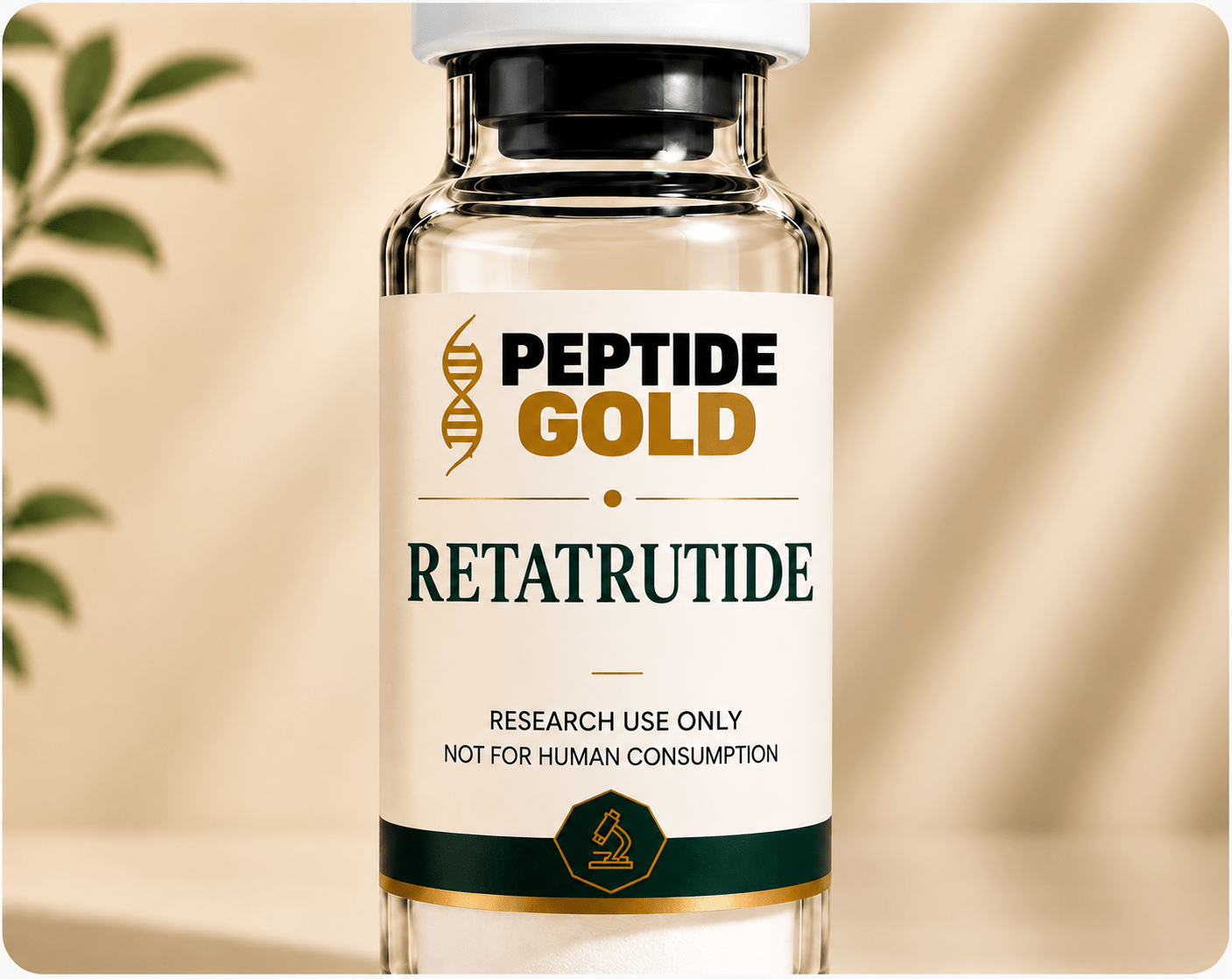
Lyophilized Research Powder
Numerous online suppliers advertise vials supposedly containing freeze-dried, or lyophilized, retatrutide.
These products are frequently marketed as research chemicals.
However, they should not be confused with Eli Lilly’s clinical-trial medication.
Lilly explicitly warns that retatrutide is not available for public use and that products claiming to contain retatrutide outside its clinical trials may contain incorrect concentrations, contaminants, impurities, or entirely different substances.
Pre-Mixed or Pre-Filled Products
Products advertised online as retatrutide injection pens, pre-filled syringes, oral drops, tablets, or other consumer formulations should similarly not be assumed to represent legitimate pharmaceutical retatrutide.
There is currently no FDA-approved retail retatrutide product.
Common Side Effects Seen in Research
The most commonly reported adverse effects have involved the gastrointestinal system.
These include:
- Nausea
- Diarrhea
- Vomiting
- Constipation
- Reduced appetite
- Abdominal discomfort
Most gastrointestinal events in the Phase 2 obesity study were described as mild to moderate, although side effects increased with higher doses.
Researchers also observed dose-dependent increases in heart rate.
Heart-rate increases peaked around week 24 in the Phase 2 study and subsequently declined.
Because retatrutide remains investigational, its complete safety profile—including uncommon and long-term risks—has not yet been established.
What About Muscle Loss?
Whenever substantial weight loss occurs, some lean body mass can be lost along with body fat.
This is not unique to retatrutide peptide.
It can occur during conventional dieting, bariatric surgery, or treatment with GLP-1-based medications.
For this reason, researchers and clinicians increasingly emphasize maintaining:
adequate protein intake
resistance exercise
and appropriate nutritional intake
during significant weight reduction.
Future studies will help clarify how retatrutide influences body composition compared with existing obesity treatments.
How Does Retatrutide Compare With Semaglutide and Tirzepatide?
The simplest comparison involves the number of receptors targeted.
Semaglutide: GLP-1
Tirzepatide: GLP-1 + GIP
Retatrutide: GLP-1 + GIP + glucagon
It is tempting to conclude that three receptors automatically means retatrutide is “better,” but pharmacology is not that simple.
What matters is the balance of receptor activation, dose, tolerability, safety, durability of weight loss, and long-term effects.
Nevertheless, the magnitude of weight loss reported in retatrutide trials has placed it among the most powerful nonsurgical obesity treatments studied to date.
Is Retatrutide FDA Approved?
No.
As of August 2026, retatrutide remains an investigational medication and has not been approved by the FDA or another regulatory agency.
This point is especially important because retatrutide has already developed a substantial online market despite not being commercially released.
Lilly states that authentic retatrutide is currently available only to participants in its clinical trials and specifically warns against products marketed as retatrutide outside those trials.
FDA materials likewise warn generally that unapproved drugs have not undergone regulatory review for safety, effectiveness, manufacturing consistency, or accurate labeling.
When Could Retatrutide Become Available?
Retatrutide’s development is moving rapidly, but regulatory approval still has to occur.
Lilly announced in July 2026 that its Phase 3 program had generated the clinical data package it believes can support global regulatory submissions. The company stated that it plans a U.S. FDA submission in the first quarter of 2027.
That means any actual public launch would depend upon successful regulatory review.
No legitimate retail availability date or final pricing has been established.
The Bottom Line
Retatrutide peptide represents one of the most important experimental developments in modern obesity pharmacology.
It is a synthetic peptide that simultaneously activates the GIP, GLP-1, and glucagon receptors, giving it a broader metabolic mechanism than currently established single- or dual-receptor incretin medications.
Its clinical results have attracted enormous attention.
The original Phase 2 obesity trial demonstrated average weight loss approaching 24% after 48 weeks at the highest studied dose.
The subsequent Phase 3 TRIUMPH-1 trial reported average weight loss of approximately 28.3% after 80 weeks with 12 mg retatrutide, while nearly half of participants receiving that dose lost at least 30% of their starting body weight.
Phase 3 research has also demonstrated substantial weight and A1C reductions among people with obesity and type 2 diabetes.
These findings have prompted researchers to explore retatrutide not merely as a weight-loss drug, but as a potential treatment for a broader group of obesity-related conditions involving diabetes, sleep apnea, osteoarthritis, cardiovascular disease, kidney disease, and metabolic liver disease.
At the same time, enthusiasm should be balanced with the realities of an experimental medication.
Retatrutide is not currently FDA approved, does not yet have an approved commercial dosing protocol, and has not been released as a legitimate retail medication.
Clinical studies have generally used once-weekly subcutaneous administration with gradual dose escalation, with final doses ranging as high as 12 mg weekly. Those trial protocols describe what researchers studied and should not be treated as instructions for personal use.
Perhaps the most accurate way to describe retatrutide in 2026 is as a next-generation triple-hormone metabolic peptide with exceptionally promising late-stage clinical results, but one that is still completing the regulatory process necessary to establish its long-term safety, approved dosing, labeling, and appropriate medical use.
If its Phase 3 findings withstand full regulatory review, retatrutide could represent another major step forward in the medical treatment of obesity and metabolic disease.
Educational note: This article provides general educational and research information and is not medical advice or a recommendation to obtain or use retatrutide. Retatrutide remains investigational as of August 2026. Doses discussed above are clinical-trial doses used by investigators under controlled conditions and should not be interpreted as individualized dosing instructions.