
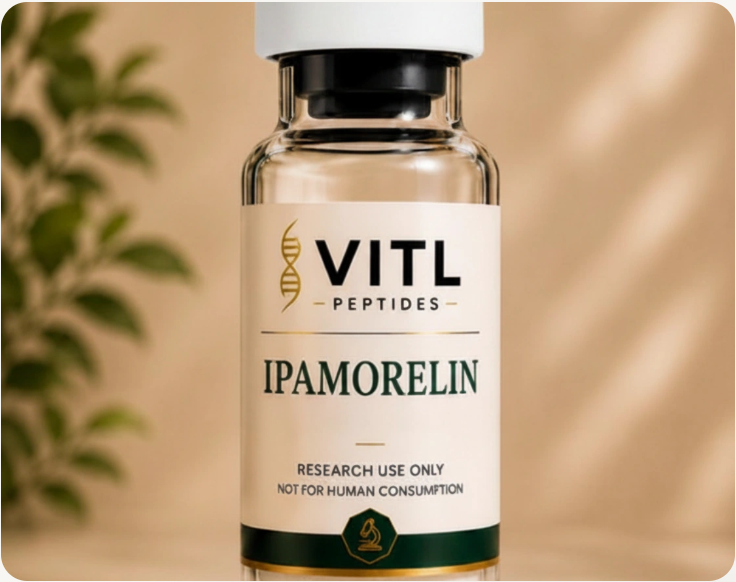
Ipamorelin: A Comprehensive Guide to Uses, Research, Dosing, Forms, and Potential Benefits
Ipamorelin is a synthetic peptide best known for its ability to stimulate the body’s own release of growth hormone, or GH.
It belongs to a class of compounds known as growth hormone secretagogues, meaning that instead of supplying growth hormone directly, the peptide activates receptors involved in signaling the pituitary gland to release endogenous GH.
Ipamorelin has received considerable attention in research and peptide communities because it appears to be relatively selective for growth hormone release compared with some older compounds such as GHRP-2, GHRP-6, and Hexarelin.
It is commonly discussed in connection with:
growth hormone release
exercise recovery
body composition
muscle preservation
fat metabolism
sleep
healthy aging
and sometimes gastrointestinal motility.
However, the strength of the evidence varies enormously depending upon the claim.
Human clinical research clearly demonstrates that Ipamorelin can stimulate a measurable pulse of growth hormone. What has not been established through large controlled trials is that this hormonal effect reliably produces major improvements in muscle mass, fat loss, athletic performance, recovery, sleep quality, or longevity.
Ipamorelin is also not currently an FDA-approved medication, and there is no FDA-approved dosing regimen for general growth-hormone enhancement, bodybuilding, anti-aging, or recovery.
What Is Ipamorelin?
Ipamorelin is a synthetic pentapeptide, meaning it is made from five amino-acid residues.
It was developed as a selective agonist of the growth hormone secretagogue receptor, commonly called:
GHSR-1a.
This is the same receptor activated naturally by the hormone ghrelin.
Ipamorelin belongs to the same broad family as:
GHRP-2
GHRP-6
and Hexarelin.
However, its pharmacological profile differs from those earlier growth hormone-releasing peptides.
One of the characteristics that originally made Ipamorelin interesting was its apparent ability to stimulate GH release with less stimulation of certain other pituitary hormones.
That relative selectivity is still one of the main reasons the compound is discussed today.
What Is Ghrelin?
Ghrelin is a naturally occurring peptide hormone produced primarily in the stomach.
It is commonly called the hunger hormone because circulating ghrelin levels often rise before meals and can stimulate appetite.
However, appetite regulation is only one of ghrelin’s functions.
Ghrelin also acts on the hypothalamus and pituitary gland to influence:
growth hormone release
gastrointestinal motility
energy metabolism
and other physiological processes.
Ghrelin works by activating the GHSR-1a receptor.
Ipamorelin activates this same receptor system, although its biological profile does not completely duplicate natural ghrelin.
How Does Ipamorelin Work?
Ipamorelin binds to GHSR-1a receptors located within the hypothalamic-pituitary system.
Activation of these receptors encourages specialized pituitary cells called somatotrophs to release growth hormone.
The pathway can be simplified as:
Ipamorelin → GHSR-1a → Pituitary → Growth Hormone Release
Growth hormone subsequently acts throughout the body and stimulates production of another important signaling hormone:
IGF-1 — insulin-like growth factor 1.
IGF-1 is produced primarily in the liver but also locally within many tissues.
Together, GH and IGF-1 influence:
- Protein metabolism
- Bone turnover
- Connective tissue
- Muscle maintenance
- Fat metabolism
- Cellular growth
- Glucose regulation
- Tissue repair
This is the biological foundation behind many of the claims surrounding Ipamorelin.
Human Evidence That Ipamorelin Releases Growth Hormone
Unlike some experimental peptides whose mechanisms are based almost entirely on animal studies, Ipamorelin has been directly evaluated in human volunteers.
A 1999 pharmacokinetic and pharmacodynamic study examined Ipamorelin in healthy men using several intravenous infusion doses.
Researchers found that Ipamorelin produced a distinct, dose-related episode of growth hormone secretion.
The GH response peaked approximately:
0.67 hours after administration
or roughly
40 minutes.
After reaching its peak, circulating GH declined rapidly toward baseline.
Researchers also calculated a terminal Ipamorelin half-life of approximately:
2 hours.
This study provides strong evidence for one specific conclusion:
Ipamorelin can stimulate endogenous growth hormone secretion in humans.
That does not automatically establish the wider benefits commonly attributed to it.
Why Is Ipamorelin Considered More Selective?
Older GH secretagogues can stimulate several pituitary hormones in addition to growth hormone.
For example, Hexarelin and some GHRPs may increase:
ACTH
cortisol
and sometimes prolactin.
Ipamorelin was developed partly to improve selectivity.
Preclinical pharmacology suggested that Ipamorelin produced substantial GH release while having relatively little effect on ACTH or cortisol at doses that strongly stimulated growth hormone.
This is why Ipamorelin is sometimes referred to as a more selective growth hormone secretagogue.
However, “more selective” should not be interpreted as “completely specific.”
The endocrine system is interconnected, and effects can depend upon:
dose
route
individual physiology
and duration of exposure.
Ipamorelin Versus Hexarelin
These compounds are often compared because both activate the ghrelin receptor.
Hexarelin
Hexarelin is generally considered:
very potent for GH release
but less selective.
It may produce greater effects on cortisol and prolactin and may demonstrate more pronounced receptor desensitization with repeated exposure.
Ipamorelin
Ipamorelin appears to produce:
a cleaner GH response
with relatively less stimulation of several other pituitary hormones.
That selectivity is one reason Ipamorelin has become more popular in peptide research despite Hexarelin’s strong ability to release GH.
However, neither compound is FDA-approved for performance enhancement or anti-aging.
Ipamorelin Versus GHRP-6
GHRP-6 is one of the oldest commonly discussed growth hormone secretagogues.
It can produce a substantial GH response but is also well known for strongly increasing appetite.
That makes sense because GHRP-6 strongly activates the ghrelin receptor pathway.
Ipamorelin tends to be described as having a less dramatic appetite-stimulating effect than GHRP-6.
For researchers interested primarily in GH release rather than hunger stimulation, this can make Ipamorelin more attractive.
Ipamorelin Versus CJC-1295
These peptides work through different receptors.
Ipamorelin: activates the ghrelin/GHSR-1a receptor.
CJC-1295: activates the GHRH receptor.
Both can promote growth hormone release, but they approach the pituitary through complementary signaling pathways.
This is why Ipamorelin is frequently discussed in combination with CJC-1295.
The theory is that:
GHRH-receptor stimulation + GHSR stimulation
could create a stronger GH pulse than activating either pathway alone.
The physiology behind this concept is reasonable.
However, there are no large clinical trials establishing an FDA-approved CJC-1295 + Ipamorelin regimen for muscle growth, fat loss, recovery, or anti-aging.
What Do People Research Ipamorelin For?
Outside formal clinical development, Ipamorelin is most commonly discussed in several areas.
Growth Hormone Release
This is the best-supported application.
Human research directly demonstrates that Ipamorelin can increase circulating growth hormone.
Exercise Recovery
Growth hormone participates in protein metabolism, collagen biology, and tissue repair.
Because of this, Ipamorelin is frequently associated with:
faster recovery between workouts
connective-tissue support
muscle recovery
and general physical recovery.
These outcomes are biologically plausible.
They have not been established through large controlled trials using Ipamorelin specifically.
Muscle and Lean Body Mass
Growth hormone and IGF-1 participate in muscle metabolism.
This has led to frequent claims that Ipamorelin can support:
lean muscle
muscle preservation
protein synthesis
and body recomposition.
However, a measurable GH pulse does not automatically mean clinically meaningful muscle gain.
There is currently no strong evidence demonstrating that Ipamorelin significantly increases muscle mass in healthy adults.
Fat Metabolism
Growth hormone can promote lipolysis, meaning the breakdown and mobilization of stored fat.
This creates a theoretical connection between GH secretagogues and changes in body fat.
However, Ipamorelin should not be compared with modern obesity medications such as tirzepatide or semaglutide.
Those medications have demonstrated substantial weight reduction in large randomized clinical trials.
Ipamorelin does not have comparable human weight-loss evidence.
Sleep
Natural growth hormone secretion is strongly associated with deep sleep.
One of the largest GH pulses typically occurs during slow-wave sleep.
This has led to interest in Ipamorelin for:
sleep quality
deep sleep
overnight recovery
and morning energy.
But the relationship works both ways: sleep influences GH secretion, and GH-related signaling may influence sleep physiology.
There is not enough controlled evidence to establish Ipamorelin as an effective sleep treatment.
Healthy Aging
Growth hormone and IGF-1 concentrations generally decline with age.
This has contributed to interest in Ipamorelin within longevity and anti-aging communities.
Common proposed benefits include:
energy
better body composition
muscle preservation
sleep
skin quality
and recovery.
However, increasing GH does not equal reversing aging.
There is no evidence that Ipamorelin extends human lifespan.
Ipamorelin and Gastrointestinal Motility
One of the most interesting aspects of Ipamorelin’s clinical history has little to do with bodybuilding.
Because GHSR signaling can affect the gastrointestinal tract, Ipamorelin was investigated as a potential treatment for postoperative ileus.
Postoperative ileus occurs when normal intestinal movement temporarily slows or stops after surgery.
A multicenter Phase 2 trial enrolled 117 people undergoing bowel surgery.
Participants received:
0.03 mg/kg Ipamorelin intravenously twice daily
or placebo for up to seven days.
The median time to tolerating a solid meal was approximately:
25.3 hours with Ipamorelin
versus
32.6 hours with placebo.
However, the difference was not statistically significant.
The study therefore failed to demonstrate a meaningful treatment benefit for its primary endpoint.
This illustrates an important distinction:
A peptide can produce measurable biological effects without necessarily producing a useful clinical outcome.
Ipamorelin Dosing in Research
There is currently no FDA-approved Ipamorelin dose.
Published dosing information should therefore be treated as descriptions of clinical research rather than personal-use recommendations.
The human pharmacokinetic study used five intravenous infusion levels:
4.21 nmol/kg
14.02 nmol/kg
42.13 nmol/kg
84.27 nmol/kg
and
140.45 nmol/kg
administered over approximately 15 minutes.
These exposures allowed researchers to establish the relationship between Ipamorelin concentration and GH release.
The postoperative ileus study used:
0.03 mg/kg intravenously twice daily
for up to seven days.
Neither protocol establishes an appropriate subcutaneous dose for bodybuilding, recovery, anti-aging, or other purposes.
What About Online Microgram Dosing?
Modern peptide websites and clinics commonly discuss Ipamorelin in amounts measured in micrograms, often administered subcutaneously.
The problem is that these protocols largely originate from:
compounding practices
peptide clinics
online communities
and extrapolation from GH-secretagogue pharmacology.
They are not backed by a standardized FDA-approved treatment regimen.
FDA specifically noted during its compounding review that it did not identify adequate safety information for the proposed subcutaneous route of Ipamorelin.
That is especially important because much of modern nonresearch Ipamorelin use involves exactly that route.
How Long Does Ipamorelin Last?
The best human pharmacokinetic evidence estimated a terminal half-life of approximately:
2 hours.
The growth hormone response itself was more short-lived.
GH peaked roughly 40 minutes after administration and then declined.
This distinguishes Ipamorelin from long-acting CJC-1295 with DAC, which can influence the GH-IGF-1 axis for days.
Ipamorelin is better viewed as a peptide that can produce a relatively discrete GH secretory event.
Does Ipamorelin Cause Desensitization?
Repeated stimulation of GHSR receptors can potentially produce reduced responsiveness.
Desensitization has been particularly noticeable with compounds such as Hexarelin.
Ipamorelin is often claimed to produce less desensitization, but long-term controlled human studies are inadequate to establish an optimal administration pattern that completely prevents tolerance.
This is another area where peptide-community practices have developed much faster than the clinical evidence.
What Forms Is Ipamorelin Offered In?
Ipamorelin is primarily encountered through the research and compounding markets.
Lyophilized Powder
One common research format is lyophilized, or freeze-dried, powder.
Lyophilization removes water and can improve stability during transportation and storage.
Ipamorelin Acetate
The peptide is frequently supplied in its acetate salt form.
FDA has specifically evaluated both Ipamorelin free base and Ipamorelin acetate in the pharmacy-compounding context.
Research Vials
Research suppliers commonly package Ipamorelin into small vials containing specified milligram quantities.
These products may be labeled:
research use only
and
not for human consumption.
A lyophilized vial should not automatically be assumed to be sterile, pharmaceutical grade, or approved for injection.
Combination Products
Ipamorelin is frequently combined with:
CJC-1295
or
Modified GRF(1-29).
The exact formulation matters enormously.
A blend containing CJC-1295 with DAC behaves very differently from a blend containing CJC-1295 without DAC.
Potential Side Effects
The true adverse-event profile of routine subcutaneous Ipamorelin use is not well established.
Possible effects associated with GH-secretagogue activity may include:
- Headache
- Flushing
- Dizziness
- Increased appetite
- Water retention
- Tingling
- Joint discomfort
- Fatigue
- Injection-site reactions
- Changes in blood glucose
- Changes in insulin sensitivity
These should not be interpreted as a complete clinical safety profile.
There simply is not enough high-quality long-term human research.
FDA Safety Concerns
FDA’s current position is notably cautious.
The agency lists Ipamorelin acetate among bulk drug substances for which compounded products may present significant safety concerns.
FDA specifically cites:
potential immunogenicity
aggregation
peptide-related impurities
and the complexity created by unnatural amino acids within the molecule.
The agency has also stated that it lacks sufficient safety information concerning certain injectable routes.
During the FDA’s detailed review of Ipamorelin for pharmacy compounding, regulators concluded that available evidence weighed against adding Ipamorelin-related substances to the 503A Bulks List.
What About the Deaths Reported in the Clinical Program?
This issue deserves careful context.
FDA noted that during the postoperative-ileus clinical program, adverse events included:
hypokalemia
insomnia
hyperglycemia
nausea
vomiting
abdominal distention
and deaths.
However, FDA also stated that it was unclear whether the two deaths were caused by Ipamorelin.
The published randomized postoperative ileus study itself described Ipamorelin as generally well tolerated and found treatment-emergent adverse events in both treatment and placebo groups.
Therefore, it would be inaccurate either to claim that Ipamorelin clearly caused the deaths or to ignore the FDA’s safety concern.
Ipamorelin and Blood Sugar
This is an especially important issue with GH-related compounds.
Growth hormone can reduce insulin sensitivity.
Repeatedly increasing GH could therefore potentially affect:
fasting glucose
insulin levels
glucose tolerance
and ultimately diabetes risk in susceptible people.
FDA specifically noted that insufficient evidence exists to conclude that Ipamorelin would be free of glucose-intolerance risks associated with other therapies that stimulate GH release.
Hyperglycemia was also reported during the postoperative clinical program.
This does not mean Ipamorelin inevitably causes diabetes.
It does mean metabolic safety requires proper study.
Ipamorelin and Cortisol
One of Ipamorelin’s most attractive characteristics is its relative GH selectivity compared with older secretagogues.
Preclinical research suggests that Ipamorelin produces less ACTH and cortisol stimulation than compounds such as Hexarelin.
This could theoretically create a more targeted GH response.
However, these differences are relative rather than absolute.
Endocrine responses can vary considerably depending upon dose and individual physiology.
Ipamorelin and Prolactin
Ipamorelin is also generally associated with less prolactin stimulation than some older GHRPs.
This matters because elevated prolactin can affect:
sexual function
libido
reproductive hormones
and other endocrine pathways.
Again, this selectivity is one reason Ipamorelin became popular as an experimental GH secretagogue.
Does Ipamorelin Build Muscle?
This is one of the most common claims surrounding the compound.
The reasoning is:
Ipamorelin → increased GH → potentially increased IGF-1 → potentially increased protein and tissue signaling.
The pathway is biologically plausible.
But the conclusion is not clinically established.
There are no large randomized trials showing that Ipamorelin significantly increases skeletal muscle mass in healthy adults.
Therefore, it is more accurate to say that Ipamorelin is a GH-releasing peptide being investigated in pathways relevant to muscle biology, rather than a proven muscle-building medication.
Does Ipamorelin Burn Fat?
Growth hormone can stimulate lipolysis.
That creates a theoretical basis for fat-related effects.
However, the amount of actual human fat loss attributable specifically to Ipamorelin has not been established.
It should not be compared with obesity medications such as:
tirzepatide
semaglutide
or investigational retatrutide,
which have extensive body-weight outcome data.
Ipamorelin and Cancer Concerns
Growth hormone can increase IGF-1 signaling.
IGF-1 participates in:
cell proliferation
cell survival
and tissue growth.
This does not establish that Ipamorelin causes cancer.
However, chronically stimulating growth-related pathways could be relevant in people with existing malignancy or elevated cancer risk.
Long-term controlled studies are lacking.
Therefore, claims that prolonged Ipamorelin use is completely risk-free are unsupported.
Is Ipamorelin FDA Approved?
No.
Ipamorelin is not an FDA-approved medication.
There is no approved indication for:
growth hormone deficiency
muscle gain
fat loss
anti-aging
sleep improvement
exercise recovery
or postoperative ileus.
The Phase 2 postoperative ileus study did not demonstrate a statistically significant clinical benefit.
FDA’s later compounding review also concluded that insufficient effectiveness and safety evidence weighed against adding Ipamorelin free base or acetate to the relevant 503A compounding list.
Competitive Sports
Competitive athletes should be especially careful with Ipamorelin.
Growth hormone secretagogues fall under anti-doping restrictions because they stimulate endogenous growth hormone release.
Using the compound may therefore create an anti-doping violation even if it is being used with the stated goal of recovery rather than performance enhancement.
Athletes should always check current governing-body and WADA rules.
What Research Is Needed Next?
Despite Ipamorelin’s popularity, several surprisingly basic questions remain unresolved for modern use.
Future research would ideally examine:
subcutaneous pharmacokinetics
dose-response relationships
GH and IGF-1 responses over weeks or months
glucose metabolism
insulin sensitivity
body composition
muscle mass
fat mass
sleep
exercise recovery
receptor desensitization
and long-term safety.
Researchers would also need to determine whether the theoretical advantages of its hormonal selectivity translate into meaningful clinical benefits.
The Bottom Line
Ipamorelin is a synthetic five-amino-acid growth hormone secretagogue that activates the ghrelin/GHSR-1a receptor.
Its strongest established effect is straightforward:
Ipamorelin can stimulate endogenous growth hormone release in humans.
In controlled pharmacokinetic research, GH peaked roughly 40 minutes after exposure, while Ipamorelin itself had an estimated terminal half-life of approximately two hours.
This endocrine activity distinguishes Ipamorelin from many peptides whose effects remain almost entirely theoretical.
Ipamorelin is also particularly interesting because it appears to be more selective for GH release than several older secretagogues.
That has made it popular in research involving:
growth hormone physiology
recovery
muscle biology
fat metabolism
body composition
and healthy aging.
However, the evidence becomes much weaker once claims move beyond hormone measurements.
There are currently no large controlled studies demonstrating that Ipamorelin reliably produces:
major muscle growth
significant fat loss
improved athletic performance
better sleep
faster recovery
or longer lifespan.
Ipamorelin also underwent clinical development for postoperative ileus, but a randomized Phase 2 study involving 117 surgical patients did not significantly improve the primary clinical outcome compared with placebo.
There is therefore:
no FDA-approved Ipamorelin medication,
no FDA-approved human dosage,
no validated protocol for bodybuilding or anti-aging,
and no established long-term safety profile for modern subcutaneous use.
FDA has additionally raised concerns involving peptide aggregation, immunogenicity, impurities, hyperglycemia, and the lack of adequate safety information for commonly proposed injectable routes.
Perhaps the most accurate way to describe Ipamorelin in 2026 is:
a relatively selective experimental ghrelin-receptor agonist with demonstrated human ability to produce a short-lived growth-hormone pulse, but with insufficient clinical evidence to establish the broader muscle-building, fat-loss, recovery, sleep, or anti-aging benefits commonly attributed to it.
For researchers studying growth hormone secretion and ghrelin-receptor biology, Ipamorelin remains an interesting compound.
For consumers, the critical distinction is between:
showing that a peptide increases growth hormone
and
showing that increasing growth hormone with that peptide safely produces a meaningful long-term health or performance benefit.
Those are not currently the same thing.
Educational and research notice: This article is intended for general scientific and educational information. It is not medical advice or a recommendation for human use of Ipamorelin. Doses discussed above describe controlled research protocols and should not be interpreted as personal dosing instructions. Ipamorelin is not FDA-approved for muscle growth, fat loss, recovery, anti-aging, sleep improvement, growth-hormone optimization, or any other medical condition.
Halvah cake chocolate I love gummi bears muffin jelly oat cake croissant. Cookie powder muffin jelly wafer danish.
Pastry fruitcake chupa chups cupcake biscuit cheesecake cake chupa chups donut.