



The Most Researched Peptides and What Scientists Are Investigating

The Most Researched Peptides and What Scientists Are Investigating

Peptides have become one of the most active and fascinating areas of modern biological research. Once viewed primarily as short chains of amino acids that performed relatively simple signaling functions, peptides are now being investigated as highly specific biological tools capable of influencing receptors, enzymes, cellular communication, metabolism, inflammation, and numerous other processes. The growing […]

Continue Reading

Understanding COAs: How to Read a Peptide Certificate of Analysis

Understanding COAs: How to Read a Peptide Certificate of Analysis

When researching peptides, one abbreviation appears again and again: COA. COA stands for Certificate of Analysis. It is one of the most important documents associated with laboratory chemicals, including research peptides. Yet it is also one of the most commonly misunderstood. A COA may contain impressive-looking numbers, chromatograms, molecular weights and claims of 99% or […]

Continue Reading
Retatrutide Research: What Scientists Are Learning About Triple-Receptor Agonism

Retatrutide Research: What Scientists Are Learning About Triple-Receptor Agonism

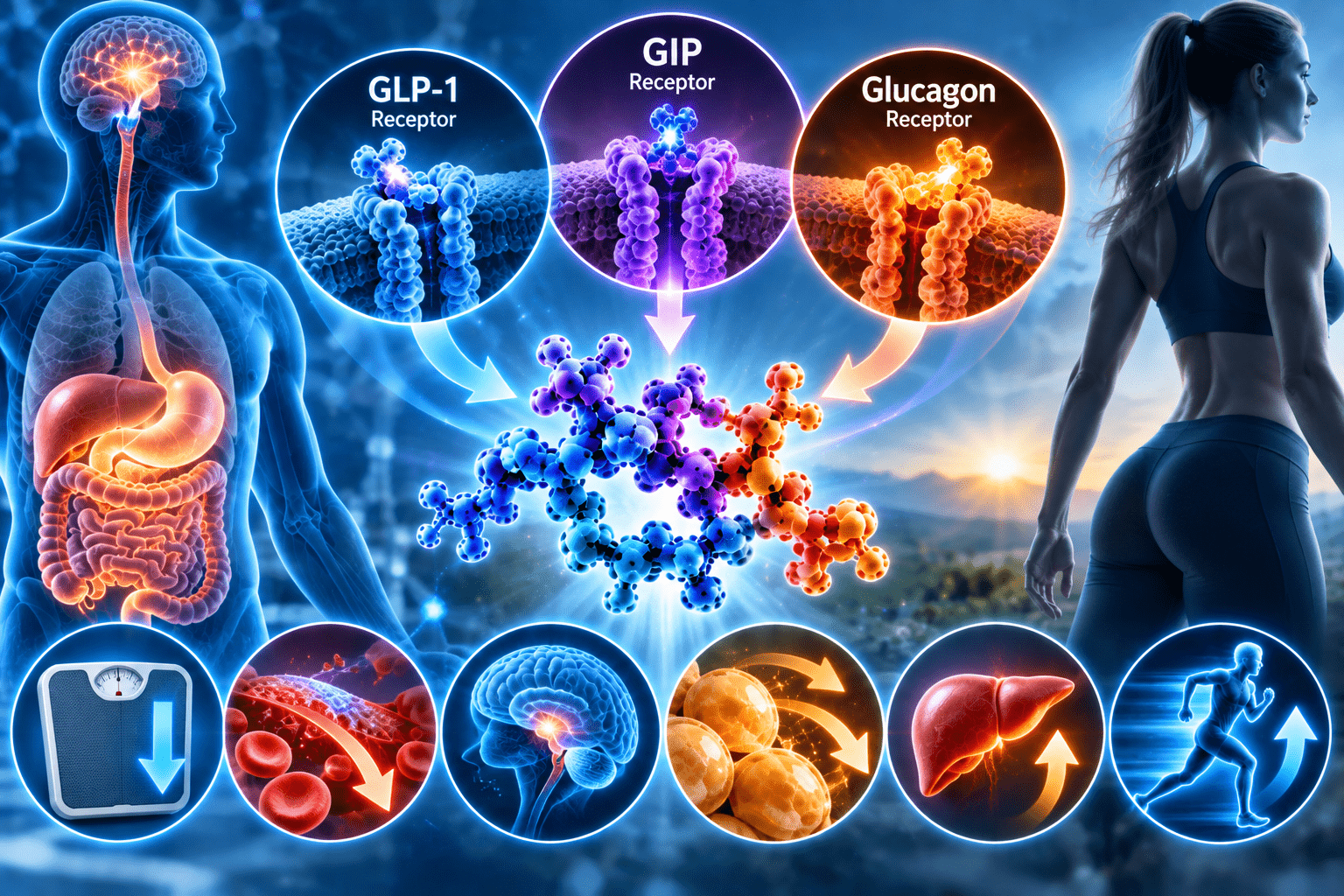
Few investigational peptides have generated as much scientific interest in recent years as retatrutide. Retatrutide represents an important evolution in metabolic peptide research because it was engineered to activate not one, not two, but three hormone receptors involved in metabolism: This makes retatrutide a triple hormone receptor agonist. The idea behind this approach is fascinating. […]

Continue Reading

The Future of Peptide Research: 10 Areas Scientists Are Exploring

Peptide research is entering a remarkable period. Researchers are no longer simply identifying naturally occurring peptides and studying what they do. Increasingly, scientists can design new sequences, modify their structures, predict their behavior computationally and create delivery systems capable of overcoming limitations that once made many peptides impractical. More than 40 peptide medicines entered clinical […]

Continue Reading