

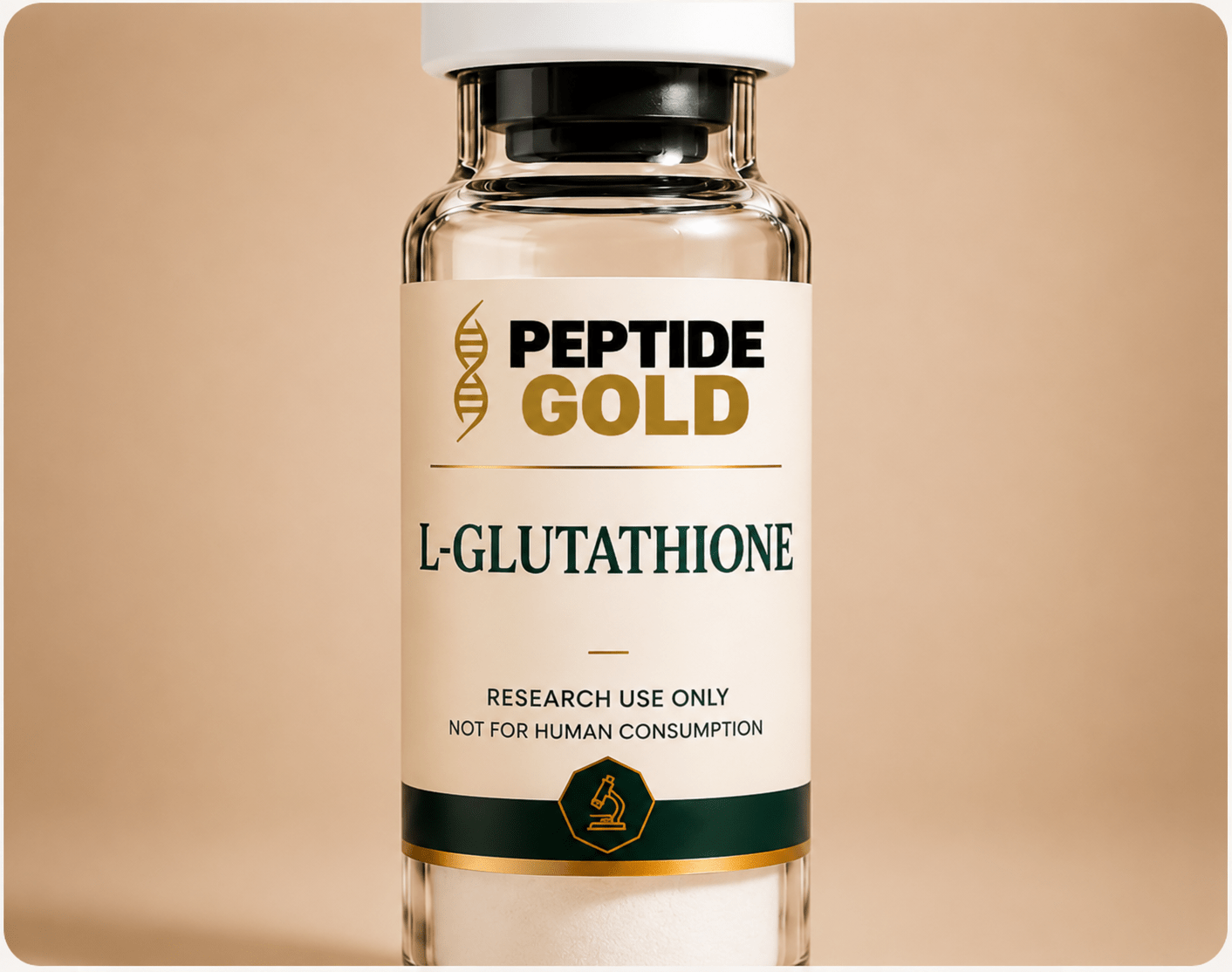
L-Glutathione: A Comprehensive Guide to Uses, Research, Dosing, Forms, and Potential Benefits
L-glutathione, usually shortened simply to glutathione or GSH, is one of the most important antioxidant compounds naturally produced by the human body.
Unlike many experimental peptides, glutathione is not a novel laboratory molecule. It is a naturally occurring tripeptide, meaning it is composed of three amino acids:
Glutamate – Cysteine – Glycine
Glutathione benefits is present in virtually every cell and plays a central role in protecting tissues from oxidative stress, assisting with detoxification, maintaining cellular redox balance, supporting immune function, and helping regenerate other antioxidants.
Because of these roles, glutathione is frequently described as the body’s “master antioxidant.”
That phrase is somewhat simplified, but it reflects how central glutathione is to antioxidant defense.
Interest in supplemental L-glutathione has expanded into areas including:
- Antioxidant support
- Liver and detoxification pathways
- Immune function
- Exercise recovery
- Skin pigmentation and appearance
- Healthy aging
- Oxidative-stress research
- Cellular protection
- Respiratory health
- Neurological research
Glutathione is available in several forms, including oral capsules, tablets, liposomal formulations, sublingual products, topical creams, and compounded injectable preparations.
Importantly, the evidence and safety profile are very different depending upon the route of administration.
Oral glutathione has human supplementation data showing that certain formulations and doses can increase glutathione concentrations in the body. Topical glutathione has limited but growing dermatologic evidence. Intravenous glutathione, especially when used for cosmetic purposes, raises considerably greater safety and quality-control concerns.
What Is L-Glutathione?
Glutathione is a small peptide composed of:
L-glutamate
L-cysteine
and glycine.
Its structure is unusual because glutamate is attached to cysteine through a gamma-glutamyl bond rather than a conventional peptide bond.
This helps make glutathione relatively resistant to some forms of enzymatic degradation and allows it to function in several important metabolic pathways.
The body produces glutathione naturally.
The liver is particularly important in glutathione metabolism because it is constantly exposed to compounds requiring chemical processing and detoxification.
However, glutathione is found throughout the body, including in:
blood
lungs
kidneys
skin
and immune cells.
Reduced Versus Oxidized Glutathione
Glutathione exists primarily in two forms.
Reduced Glutathione — GSH
This is the active antioxidant form.
GSH can donate electrons to neutralize reactive molecules.
Oxidized Glutathione — GSSG
When two glutathione molecules become oxidized, they form glutathione disulfide, abbreviated GSSG.
Cells can recycle GSSG back into GSH using the enzyme glutathione reductase and NADPH.
The balance between:
GSH and GSSG
is often used as an indicator of cellular oxidative stress.
A healthy cell generally maintains a relatively high ratio of reduced to oxidized glutathione.
What Does Glutathione Do?
Glutathione participates in a remarkably large number of biological processes.
Among its best-established roles are:
Antioxidant Defense
Cells constantly produce reactive oxygen species as a normal consequence of metabolism.
Environmental exposure, inflammation, illness, exercise, and toxins can increase this oxidative burden.
Glutathione helps neutralize reactive compounds before they damage:
DNA
proteins
lipids
and cell membranes.
Detoxification
The liver uses glutathione extensively during detoxification.
Enzymes called glutathione S-transferases, or GSTs, attach glutathione to certain chemicals and metabolites.
This makes them easier for the body to process and eliminate.
Recycling Other Antioxidants
Glutathione helps regenerate other antioxidant molecules, including:
vitamin C
and vitamin E.
This means it functions as part of an antioxidant network rather than acting alone.
Immune Function
Immune cells depend on appropriate glutathione concentrations for normal function.
Glutathione helps regulate:
lymphocytes
natural killer cells
cytokine signaling
and inflammatory responses.
Cellular Repair
Glutathione participates in protein function, DNA synthesis, enzyme regulation, and responses to cellular injury.
Why Is Cysteine Important?
Of the three amino acids that make up glutathione, cysteine is often the limiting ingredient.
Glutamate and glycine are usually relatively abundant.
Cysteine contains a sulfur-containing thiol group, and this sulfur is what allows glutathione to participate so effectively in oxidation-reduction reactions.
This is why compounds such as N-acetylcysteine, or NAC, can increase glutathione production.
NAC provides cysteine that cells can use to manufacture their own glutathione.
For some purposes, supplying glutathione precursors may be an alternative to taking glutathione itself.
What Causes Glutathione Levels to Decline?
Glutathione concentrations can vary according to many factors.
Potential contributors to lower glutathione availability include:
aging
oxidative stress
chronic inflammation
poor nutrition
certain diseases
alcohol exposure
some medications
and environmental toxins.
Glutathione can also be consumed rapidly during periods of intense oxidative stress.
That does not mean everyone requires glutathione supplementation.
The body normally synthesizes and recycles glutathione continuously.
L-Glutathione and Oxidative Stress
The most scientifically established role for glutathione is controlling oxidative stress.
Reactive oxygen species are not inherently bad.
Cells use them for signaling, immune defense, and normal metabolic processes.
Problems can arise when reactive molecules are produced faster than antioxidant systems can neutralize them.
This imbalance is called oxidative stress.
Glutathione acts as one of the body’s primary intracellular defenses.
The enzyme glutathione peroxidase uses GSH to neutralize hydrogen peroxide and lipid peroxides.
During this process, GSH becomes oxidized to GSSG.
Glutathione reductase then helps regenerate GSH.
This constant recycling system is one of the reasons glutathione is so important to cell survival.
Can Oral Glutathione Increase Glutathione Levels?
For years, researchers debated whether swallowing glutathione could meaningfully increase body glutathione because peptides can be broken down in the digestive tract.
Human research suggests that the answer is:
yes, at least under some conditions and with some formulations.
A randomized, double-blind, placebo-controlled study followed 54 adults for six months.
Participants received:
250 mg per day
or
1,000 mg per day
of oral glutathione.
By six months, glutathione levels had increased in blood, plasma, red blood cells, lymphocytes, and oral cells.
The higher-dose group experienced approximately 30% to 35% increases in several blood-cell measures, while buccal-cell glutathione increased substantially more.
Levels returned toward baseline after supplementation stopped.
This provides evidence that orally administered glutathione can influence systemic stores.
Newer Oral Bioavailability Research
Modern research is also examining whether certain formulations improve absorption.
A recent randomized crossover study compared:
standard glutathione
liposomal glutathione
and a micellar glutathione formulation.
Researchers measured whole-blood glutathione exposure and related metabolites.
The study found meaningful differences in bioavailability between formulations, suggesting that the delivery system can significantly affect how much glutathione reaches systemic circulation.
This helps explain why two products containing the same milligram amount of glutathione may not produce identical biological exposure.
What Is Liposomal Glutathione?
Liposomal glutathione surrounds glutathione molecules with phospholipid particles called liposomes.
These particles resemble cell membranes.
The goal is to protect glutathione from digestive breakdown and improve intestinal absorption.
Liposomal formulations have become popular because of this potential advantage.
Some human studies have shown increases in glutathione biomarkers following liposomal supplementation.
However, formulation quality varies considerably.
“Liposomal” on a label does not automatically guarantee superior absorption.
Particle size, manufacturing process, stability, and actual phospholipid structure all matter.
What Do People Use L-Glutathione For?
Supplemental glutathione is used or researched for many reasons.
Antioxidant Support
This is the most straightforward application.
People may use glutathione with the goal of supporting the body’s antioxidant defense system.
Liver Support
The liver contains high concentrations of glutathione and uses it extensively during chemical metabolism.
This has led to interest in glutathione for:
oxidative liver stress
alcohol-related stress
medication metabolism
and general liver-health research.
However, glutathione supplements should not be regarded as a universal “detox.”
The liver already possesses extremely sophisticated detoxification systems.
Immune Support
Glutathione participates in immune-cell function.
In the six-month oral supplementation trial, researchers reported increased natural killer cell activity in the higher-dose group at one study point.
This is interesting but does not mean glutathione prevents infections or replaces vaccines or medical treatments.
Exercise and Recovery
Intense exercise temporarily increases oxidative stress.
This has led to interest in glutathione for:
recovery
exercise-related oxidative stress
and cellular protection.
However, oxidative signaling is also part of normal exercise adaptation.
Eliminating oxidative stress completely would not necessarily be beneficial.
Glutathione and Skin Appearance
One of the most commercially popular uses of glutathione involves skin pigmentation.
Glutathione may influence melanin production through several mechanisms.
It may:
reduce oxidative signaling involved in melanogenesis
and potentially favor production of lighter pheomelanin relative to darker eumelanin.
This has resulted in widespread marketing of glutathione for:
skin brightening
hyperpigmentation
melasma
and overall complexion.
This area has actual clinical research, but the results require careful interpretation.
Oral Glutathione and Skin Pigmentation
A 2025 systematic review examined glutathione for skin lightening and melasma.
The authors identified multiple randomized controlled trials using oral doses such as:
250 mg once daily
250 mg twice daily
and
500 mg once daily.
Several studies demonstrated statistically significant reductions in melanin measurements compared with placebo.
However, the review also found substantial variation in study quality and noted that benefits were not necessarily durable after treatment stopped.
This means oral glutathione may have modest pigmentation effects in some people, but claims of dramatic or permanent skin-lightening are unsupported.
Topical Glutathione
Glutathione is also included in:
creams
lotions
serums
face masks
and other topical cosmetic products.
A 2025 systematic review identified five clinical trials of topical glutathione.
The studies suggested possible improvements involving:
hyperpigmentation
melanin index
skin hydration
wrinkles
and UV-related redness.
However, researchers emphasized that the evidence remains limited and that larger trials are needed.
Topical glutathione therefore appears promising but should not be viewed as a guaranteed depigmenting treatment.
Intravenous Glutathione for Skin Lightening
This is where the safety picture changes significantly.
Intravenous glutathione has been promoted in some countries and cosmetic clinics for rapid skin whitening or “brightening.”
The evidence supporting this use is weak.
The 2025 systematic review of glutathione for pigmentation identified only one placebo-controlled study of IV glutathione, and its findings did not provide strong evidence of benefit.
The authors concluded that IV glutathione should not be recommended for skin-lightening because of the combination of insufficient efficacy evidence and potential adverse effects.
This route should not be treated as simply a more powerful version of oral supplementation.
FDA Concerns About Injectable Glutathione
FDA has previously issued warnings regarding compounded injectable glutathione.
In one incident, seven patients receiving compounded IV glutathione developed reactions including:
nausea
vomiting
chills
body aches
and lightheadedness.
One person developed low blood pressure and difficulty breathing and required hospital treatment.
FDA testing found excessive bacterial endotoxin contamination in the glutathione material used for sterile compounding.
This illustrates an important issue:
Injectable products must meet far stricter manufacturing standards than oral dietary supplements.
A powder manufactured for oral supplements should never automatically be considered suitable for sterile injection.
A Very Recent Injectable Glutathione Recall
The concern remains current.
In August 2026, FDA announced a nationwide recall involving certain lots of compounded glutathione injection 200 mg/mL after testing identified elevated bacterial endotoxin.
Reported adverse effects included:
fever
chills
severe headache
nausea
vomiting
pain
and allergy-like reactions.
FDA noted that excessive endotoxin in injected products can potentially cause severe inflammatory reactions, hypotension, shock, and even death.
This does not mean glutathione itself was necessarily responsible for all of those reactions.
It demonstrates why the quality and sterility of injectable products are critically important.
Glutathione and Liver Detoxification
Glutathione plays a real role in detoxification, but the term “detox” is frequently misused.
The liver processes chemicals through several stages.
During Phase II metabolism, glutathione can be attached to reactive compounds.
This reaction is catalyzed by glutathione S-transferase enzymes.
The resulting molecules can then be more easily eliminated.
Glutathione is therefore legitimately involved in detoxification.
However, taking supplemental glutathione does not automatically “flush toxins” from the body.
The actual effect depends upon:
the toxin
liver function
nutritional status
glutathione availability
and many other metabolic factors.
Glutathione and Acetaminophen
One dramatic example of glutathione biology involves acetaminophen overdose.
A small portion of acetaminophen is metabolized into a toxic compound known as NAPQI.
Normally, glutathione rapidly neutralizes NAPQI.
During overdose, liver glutathione becomes depleted and NAPQI begins damaging liver cells.
The medical antidote is N-acetylcysteine, which supplies cysteine and helps restore glutathione production.
This is an excellent demonstration of how essential glutathione is to real-world detoxification.
Glutathione and Healthy Aging
Glutathione levels and redox balance may change with age.
This has led to interest in maintaining glutathione as part of healthy-aging strategies.
A recent systematic review of glutathione in skin aging and tissue regeneration described GSH as a central regulator of:
redox homeostasis
melanogenesis
and cellular repair.
The review found encouraging evidence for some topical and oral applications while emphasizing greater concerns surrounding injectable use.
However, there is no evidence that glutathione supplementation dramatically extends human lifespan.
Supporting antioxidant systems is not the same thing as reversing biological aging.
Glutathione and Neurological Research
The brain is particularly vulnerable to oxidative stress because it consumes large amounts of oxygen and contains lipid-rich tissue.
Changes in glutathione metabolism have been investigated in neurological disorders including:
Parkinson’s disease
Alzheimer’s disease
and other neurodegenerative conditions.
Researchers have examined oral, intravenous, and intranasal glutathione strategies.
However, evidence remains insufficient to establish routine glutathione supplementation as a treatment for neurodegenerative disease.
Glutathione and Respiratory Health
Glutathione is present in the fluid lining the lungs and contributes to respiratory antioxidant defense.
This has led to research involving:
cystic fibrosis
COPD
asthma
and oxidative lung injury.
Some studies have investigated nebulized glutathione.
However, inhaled glutathione is not appropriate for everyone and can potentially provoke bronchospasm in susceptible individuals.
Route matters greatly with glutathione.
L-Glutathione Dosing
Unlike experimental research peptides, glutathione is widely sold as an oral dietary supplement.
There is still no single universally recommended glutathione dose for general antioxidant use.
Human oral studies have used several different amounts.
Common research doses include:
250 mg daily
500 mg daily
and
1,000 mg daily.
The six-month randomized study demonstrating increased body glutathione stores used:
250 mg/day
and
1,000 mg/day.
Skin-pigmentation studies reviewed in 2025 commonly used approximately:
250 to 500 mg/day, with some using 500 mg total as two 250 mg doses.
These figures describe published studies rather than individualized medical recommendations.
Oral Versus IV Dosing
This distinction is extremely important.
A dose measured in milligrams orally cannot simply be assumed to have the same effect as the same dose intravenously.
Oral glutathione must pass through the gastrointestinal tract and liver.
Intravenous glutathione enters systemic circulation immediately.
As a result, the pharmacokinetic exposure is very different.
This is one reason oral-supplement dosing should never be converted directly into an IV protocol.
What Forms of L-Glutathione Are Offered?
Glutathione is available in more forms than most research peptides.
Capsules and Tablets
Standard oral glutathione is widely available as a dietary supplement.
Common strengths include several hundred milligrams per serving.
Reduced Glutathione
Most supplements use reduced glutathione, usually labeled:
L-glutathione reduced
or
GSH.
This is the antioxidant-active form.
Liposomal Glutathione
Liposomal formulations attempt to improve absorption by encapsulating glutathione in phospholipid particles.
Micellar Glutathione
Newer micellar systems are also being studied for improved bioavailability.
A recent crossover trial found that formulation significantly affected systemic glutathione exposure.
Sublingual Glutathione
Some products are designed to dissolve beneath the tongue.
The theoretical goal is partial absorption through oral mucosa.
Human comparative evidence remains smaller than for standard oral formulations.
Topical Glutathione
Creams, lotions, and serums are marketed primarily for:
skin brightening
pigmentation
and antioxidant skin care.
Lyophilized Glutathione
Research and compounding suppliers may offer freeze-dried glutathione powder.
Its suitability depends completely on its intended manufacturing specification.
A lyophilized product intended for dietary or laboratory use should not be assumed suitable for injection.
Compounded Injectable Glutathione
Compounded injectable preparations exist, but they require appropriate sterile pharmaceutical ingredients and manufacturing controls.
FDA’s repeated endotoxin warnings and recalls illustrate the risks associated with improperly manufactured products.
Potential Side Effects of Oral Glutathione
Oral glutathione is generally well tolerated in available supplementation studies.
Possible effects can include:
- Bloating
- Abdominal discomfort
- Loose stool
- Nausea
- Cramping
- Allergic reactions in susceptible individuals
Long-term safety data at very high doses remain more limited.
Potential Side Effects of Topical Glutathione
Topical formulations may cause:
redness
itching
dryness
irritation
or contact dermatitis.
These effects may arise from glutathione itself or from other ingredients in the cosmetic formulation.
Potential Risks of Injectable Glutathione
Injectable administration creates additional risks including:
infection
contamination
endotoxin exposure
allergic reactions
blood-pressure changes
and infusion-related reactions.
The recent FDA recall and historical contamination incidents demonstrate that manufacturing quality can become a major source of risk independently of glutathione’s intrinsic pharmacology.
Is L-Glutathione FDA Approved?
The answer depends on what is meant by “glutathione.”
Glutathione itself is a naturally occurring substance and is widely marketed in dietary supplements and cosmetics.
However, dietary supplements are not FDA-approved drugs.
There is no FDA-approved injectable glutathione product for:
skin whitening
anti-aging
general detoxification
or routine antioxidant enhancement.
Compounded glutathione injections likewise do not receive the same premarket FDA review as approved drugs.
This distinction is especially important when comparing oral supplements with sterile injectable preparations.
Current Research in 2026
Glutathione research remains highly active because redox biology affects nearly every organ system.
Current research is focused on areas including:
better oral delivery systems
micellar and liposomal formulations
skin and pigmentation
tissue regeneration
oxidative stress biomarkers
inflammatory disorders
and cellular aging.
The dermatology literature continues to expand.
A 2025 systematic review found modest evidence supporting oral and topical glutathione for reducing pigmentation, while emphasizing variability in study quality and concern about IV administration.
Another 2025 systematic review of topical glutathione found potential improvements in pigmentation, UV-related redness, hydration, and wrinkles but concluded that larger randomized trials are still needed.
New pharmacokinetic work is also helping researchers determine which oral formulations actually raise circulating glutathione most effectively.
What Research Is Still Needed?
For oral supplementation, future studies should help determine:
which formulation is best absorbed
optimal dose
which populations benefit most
whether benefits translate into meaningful clinical outcomes
and how long supplementation should continue.
For cosmetic applications, researchers need larger studies measuring:
melanin index
melasma severity
skin elasticity
hydration
wrinkles
and durability of results.
For injectable glutathione, safety and manufacturing quality remain major issues.
Studies would need to demonstrate both:
clinical benefit
and a sufficiently favorable risk-to-benefit profile.
The Bottom Line
L-glutathione is one of the body’s most important naturally occurring antioxidant molecules.
It is a three-amino-acid peptide composed of glutamate, cysteine, and glycine.
Its biological roles are extensive.
Glutathione participates in:
antioxidant defense
detoxification
immune function
cellular repair
redox balance
and protection of proteins, membranes, and DNA from oxidative damage.
Unlike many experimental peptides, glutathione’s importance to normal human physiology is not speculative.
The more complicated question is whether supplementing additional glutathione produces useful clinical benefits.
For oral supplementation, the evidence is reasonably encouraging.
A six-month randomized trial demonstrated that 250 mg and 1,000 mg of oral glutathione per day increased glutathione concentrations in several tissues and blood compartments, with larger effects generally occurring with the higher dose.
Newer research also suggests that formulation matters and that micellar or liposomal delivery systems can alter bioavailability.
Dermatologic research suggests oral and topical glutathione may produce modest reductions in skin pigmentation and potentially improve certain measures of skin quality, although results vary and the effects may not persist after treatment stops.
Intravenous glutathione is a very different matter.
Evidence supporting IV glutathione for cosmetic skin lightening is weak, while injectable products carry additional risks involving sterility, contamination, endotoxin exposure, and infusion reactions.
FDA has previously documented serious reactions from endotoxin-contaminated compounded glutathione, and in August 2026 another compounded glutathione injection was recalled nationally because of elevated bacterial endotoxin levels and reported adverse reactions.
Perhaps the most accurate way to describe L-glutathione in 2026 is:
a naturally occurring tripeptide with an unquestionably important role in human antioxidant defense and cellular metabolism, with good evidence that some oral formulations can raise body glutathione stores and emerging evidence for certain dermatologic applications—but with far weaker evidence and substantially greater safety concerns surrounding intravenous cosmetic use.
For researchers, glutathione remains central to the study of oxidative stress, detoxification, aging, immune biology, and cellular repair.
For consumers, the most important distinction is between:
glutathione’s proven importance inside the human body
and
claims that taking increasingly large amounts—or administering it intravenously—necessarily produces greater health, anti-aging, detoxification, or cosmetic benefits.
Those are very different propositions.
Educational notice: This article is intended for general scientific and educational information. It is not medical advice or a recommendation to use a particular glutathione formulation or route. Oral supplement doses discussed are examples from published clinical studies rather than individualized dosing instructions. Injectable or compounded glutathione carries additional sterility, quality-control, and safety considerations and should not be assumed equivalent to oral dietary supplementation.