
GLOW Peptide Blend: A Comprehensive Guide to Components, Uses, Research, Dosing Information, Forms, and Potential Benefits
The GLOW peptide blend has become increasingly popular in peptide research because it combines several compounds associated with skin remodeling, collagen production, wound healing, tissue repair, hair-related research, and recovery.
Unlike compounds such as BPC-157, semaglutide, or CJC-1295, however, GLOW is not a single peptide.
“GLOW” is a commercial or research-market name used for a multi-peptide blend. The formula most commonly marketed under that name combines:
GHK-Cu
BPC-157
and
TB-500
A frequently encountered formulation contains approximately:
50 mg GHK-Cu
10 mg BPC-157
10 mg TB-500
for a total of 70 mg of peptide material in one vial.
However, there is no regulatory definition requiring every product called “GLOW” to contain exactly those ingredients or quantities. Different suppliers can potentially use different ratios or even different ingredients.
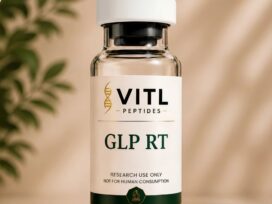
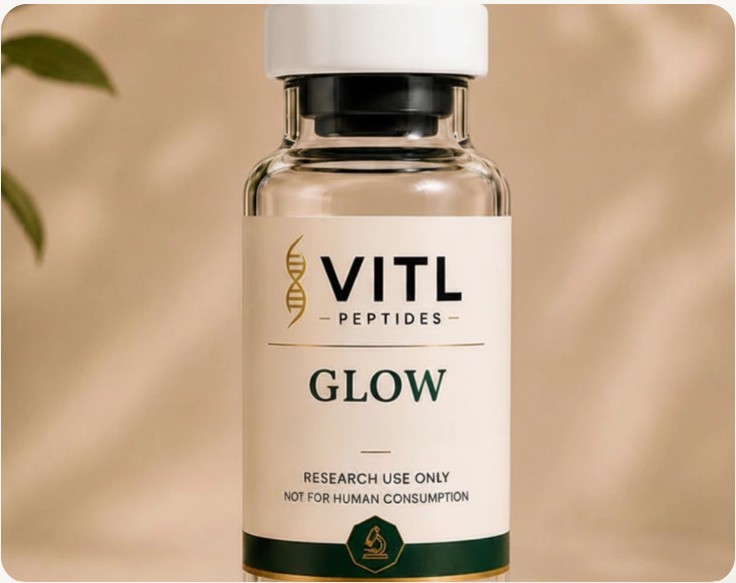
The current VITL Peptides GLOW product is supplied as a 70 mg lyophilized research blend, is described for skin, tissue, collagen-related, and cosmetic pathway research, and is labeled strictly for research use rather than human or veterinary consumption.
The scientific evidence surrounding GLOW requires an important distinction: research exists on the individual components, but there are currently no meaningful human clinical trials testing the three-component GLOW blend itself.
What Is the GLOW Blend?
GLOW is best thought of as a combination research formula rather than an individual drug or peptide.
The name reflects the types of outcomes commonly associated with the blend—particularly skin quality, collagen, tissue remodeling, and appearance.
The three commonly used components have very different biological origins and mechanisms.
GHK-Cu is a naturally occurring copper-binding tripeptide associated with extracellular-matrix remodeling, collagen signaling, wound repair, and skin biology.
BPC-157 is a synthetic 15-amino-acid peptide investigated mainly in animal models involving tissue protection, tendons, ligaments, muscle, blood vessels, and gastrointestinal repair.
TB-500 is a synthetic fragment related to thymosin beta-4 and is investigated for pathways involving actin, cell migration, angiogenesis, and tissue recovery.
The theory behind GLOW is that combining compounds that influence different aspects of tissue repair could create complementary effects.
That idea is biologically interesting.
It has not, however, been clinically demonstrated.
A current research review of the blend notes that published evidence exists primarily at the individual-component level, rather than for GLOW itself as a combined formulation.
Component #1: GHK-Cu
GHK-Cu stands for glycyl-L-histidyl-L-lysine copper complex.
GHK itself is an extremely small peptide consisting of only three amino acids:
Glycine – Histidine – Lysine
It binds copper ions strongly, creating the biologically active complex commonly called GHK-Cu or copper peptide.
GHK was originally identified in human plasma and has subsequently been found in several body fluids.
Researchers became interested in it because its concentration appears to decline with age and because laboratory studies suggest it influences numerous genes and biological processes associated with tissue remodeling.
GHK-Cu has been investigated for:
- Collagen production
- Skin remodeling
- Wound healing
- Fibroblast activity
- Blood-vessel formation
- Inflammation
- Hair-follicle biology
- Extracellular-matrix repair
Of the three components of GLOW, GHK-Cu has perhaps the most obvious connection with the word “glow” because it has a long history in cosmetic and dermatological research.
GHK-Cu and Skin Research
Collagen is one of the primary structural proteins in skin.
With age, collagen production generally declines, while accumulated environmental damage can contribute to:
wrinkles
reduced elasticity
thinner skin
and changes in texture.
GHK-Cu has been studied for its potential ability to influence fibroblasts—the cells responsible for producing collagen and other components of the extracellular matrix.
This has led to its inclusion in numerous topical cosmetic formulations.
Human evidence exists, although it is not uniformly impressive.
For example, a randomized study involving people undergoing CO2 laser skin resurfacing compared postoperative skin-care regimens with and without GHK-Cu.
Researchers found no significant objective difference in erythema resolution, wrinkles, or overall skin quality, although participants using the copper-peptide formulation reported greater subjective satisfaction with skin quality.
This illustrates an important theme throughout peptide research: promising biological mechanisms do not always produce dramatic clinical effects.
GHK-Cu and Wound Repair
GHK-Cu continues to receive substantial research attention for tissue regeneration.
Laboratory and animal studies suggest it may influence:
cell migration
collagen deposition
inflammatory signaling
oxidative stress
and tissue remodeling.
Research published in 2026, for example, investigated a GHK-Cu-containing hydrogel for radiation-induced skin injury. The experimental system promoted tissue repair through mechanisms involving inflammation regulation, cell migration, cellular proliferation, and collagen deposition.
That type of work demonstrates why GHK-Cu continues to be interesting in regenerative-material research.
It does not establish that injecting GHK-Cu produces comparable effects in people.
Component #2: BPC-157
BPC-157 is a synthetic peptide consisting of 15 amino acids.
Its sequence is:
Gly-Glu-Pro-Pro-Pro-Gly-Lys-Pro-Ala-Asp-Asp-Ala-Gly-Leu-Val
BPC stands for Body Protection Compound.
Research on BPC-157 has focused heavily on tissue protection and repair.
Animal experiments have investigated the peptide in models involving:
tendon injuries
ligament damage
muscle injuries
gastrointestinal damage
nerve injury
blood vessels
and wound healing.
One reason BPC-157 is included in GLOW is the possibility that it could complement GHK-Cu’s skin and extracellular-matrix effects with broader tissue-repair signaling.
However, the evidence behind BPC-157 is overwhelmingly preclinical.
Human clinical evidence remains extremely limited.
BPC-157 and Connective Tissue
BPC-157 has produced particularly interesting results in rodent models involving tendons and tendon-to-bone healing.
Researchers have reported effects involving:
angiogenesis
fibroblast activity
collagen organization
nitric-oxide signaling
and improved functional recovery.
These findings have made BPC-157 popular in athletic and recovery communities.
But the gap between animal and human research remains enormous.
The FDA currently states that human safety information for BPC-157 is limited and identifies potential concerns involving peptide impurities, immunogenicity, and active-ingredient characterization.
BPC-157 should therefore be described as a promising experimental repair peptide, not a clinically established healing treatment.
Component #3: TB-500
TB-500 is another commonly misunderstood compound.
It is related to thymosin beta-4, a naturally occurring 43-amino-acid peptide found throughout mammalian tissues.
However, TB-500 itself is a shorter synthetic fragment.
FDA’s 2026 characterization describes TB-500 as a seven-amino-acid synthetic fragment of thymosin beta-4 with an N-terminal acetyl group.
The sequence is associated with thymosin beta-4’s actin-binding region.
Actin is an extremely important cellular protein involved in:
cell structure
cell movement
wound repair
and cell migration.
This provides the biological rationale for studying TB-500 in tissue-repair models.
TB-500 Versus Full-Length Thymosin Beta-4
This distinction is essential.
Many claims about TB-500 are actually based on studies involving full-length thymosin beta-4, which is not the same molecule.
Full-length thymosin beta-4 has undergone considerably more research.
For example, a randomized Phase 2 clinical study involving 73 patients with venous ulcers evaluated topical thymosin beta-4.
Researchers reported an acceptable safety profile and preliminary evidence suggesting that one concentration might accelerate wound healing.
Small human studies have also investigated thymosin beta-4 in chronic corneal injuries.
A Phase 1 trial involving recombinant human thymosin beta-4 found that intravenous doses were generally tolerated in healthy volunteers.
These findings are interesting—but they cannot simply be transferred to TB-500.
FDA specifically states that it has not identified human exposure data for products containing the TB-500 fragment itself.
Why Combine These Three Compounds?
The proposed logic behind GLOW is based on complementary mechanisms.
GHK-Cu is primarily associated with:
collagen
fibroblasts
skin remodeling
extracellular matrix
and copper-dependent signaling.
BPC-157 is associated experimentally with:
tissue protection
angiogenesis
connective-tissue recovery
and cellular repair pathways.
TB-500 is associated with:
actin regulation
cell migration
angiogenesis
and tissue remodeling.
In theory, combining them could influence several different stages of tissue recovery simultaneously.
That could involve:
initial cellular migration
→ vascular support
→ fibroblast activity
→ collagen formation
→ extracellular-matrix remodeling.
This is the scientific rationale behind the blend.
But there is an important distinction between mechanistic plausibility and demonstrated synergy.
There is currently no controlled evidence showing that GHK-Cu, BPC-157, and TB-500 work better together than separately.
What Do People Research GLOW For?
GLOW is primarily associated with several overlapping areas of interest.
Skin Appearance
This is probably the most obvious application.
Researchers are interested in pathways involving:
skin elasticity
collagen
wrinkles
skin texture
and age-related changes.
GHK-Cu is the primary component responsible for this association.
Tissue Repair
Both BPC-157 and TB-500 are widely discussed for experimental tissue-repair research.
This includes models involving:
tendons
ligaments
muscle
skin
and other connective tissues.
Wound Healing
All three components have connections to wound-healing biology.
GHK-Cu influences fibroblasts and collagen.
BPC-157 has demonstrated broad wound-repair effects in animals.
Thymosin beta-4-related research has demonstrated effects involving cellular migration and angiogenesis.
Hair Research
GHK-Cu is frequently investigated and marketed in relation to hair and scalp biology.
The proposed mechanisms include effects involving:
hair follicles
microcirculation
extracellular-matrix signaling
and the cellular environment surrounding follicles.
However, GLOW itself has not been clinically established as a treatment for male or female pattern hair loss.
General Recovery
The inclusion of BPC-157 and TB-500 has also made GLOW popular in research settings associated with general recovery.
This includes interest in:
exercise recovery
soft-tissue recovery
connective tissue
and inflammatory signaling.
Again, these should be viewed as experimental research interests rather than proven medical uses.
Does GLOW Have Anti-Aging Effects?
GLOW is commonly marketed in anti-aging or longevity-oriented settings.
That terminology needs qualification.
A compound that influences collagen or skin appearance can potentially affect visible signs associated with aging.
That is very different from slowing biological aging itself.
There is no evidence showing that GLOW:
extends lifespan
reverses biological aging
or prevents age-related diseases.
A more scientifically defensible description is that individual GLOW components are being investigated for pathways associated with tissue maintenance and remodeling, some of which become less efficient with age.
Is GLOW Proven to Improve Skin?
No controlled clinical trials have evaluated the standard GLOW blend.
Some human research exists for topical GHK-Cu and full-length thymosin beta-4, but that evidence cannot establish the effectiveness of an injectable or lyophilized GLOW blend.
Even the individual GHK-Cu human literature has produced mixed results.
Therefore, claims that GLOW produces dramatically smoother skin, eliminates wrinkles, or reliably reverses visible aging are ahead of the available evidence.
What Does the Current Research Say About the Blend?
This is one of the most important sections.
There is essentially no published clinical evidence evaluating GLOW as the combined three-peptide formulation commonly sold today.
Current research descriptions explicitly note that evidence supporting the formulation is extrapolated from the individual components rather than direct studies of GLOW itself.
This means researchers do not yet know:
- Whether the three compounds interact positively
- Whether one interferes with another
- Whether their pharmacokinetics change when mixed
- Whether the peptides remain equally stable when co-lyophilized
- Whether combination exposure changes immunogenicity
- Whether the mixture produces greater benefits than individual compounds
- What ratio would be optimal
- What long-term safety would look like
Those are significant unanswered questions.
GLOW Dosing Information
There is no FDA-approved human dosage for GLOW.
There is also no published human clinical trial establishing an appropriate dose, administration frequency, treatment duration, or optimal ratio of GHK-Cu, BPC-157, and TB-500.
This is especially important because online protocols often present GLOW dosing as though it were standardized.
It is not.
There is no official:
starting dose
maintenance dose
cycle length
or maximum dose.
Likewise, animal doses from BPC-157 research, human topical concentrations from GHK-Cu research, and thymosin beta-4 clinical doses cannot simply be combined mathematically into a GLOW protocol.
The three compounds have different molecular weights, pharmacokinetics, mechanisms, and evidence bases.
Any fixed human dosing recommendations circulating online therefore represent anecdotal or commercial protocols rather than validated clinical dosing.
What Forms Is GLOW Offered In?
GLOW is most commonly encountered as a lyophilized research blend.
Lyophilized Powder
Lyophilization means freeze-drying.
Removing water can improve stability during storage and transportation.
The individual peptides are combined and freeze-dried into a single vial.
70 mg Research Vials
A common formulation contains:
50 mg GHK-Cu
10 mg BPC-157
10 mg TB-500
for a total of 70 mg.
The current VITL Peptides GLOW listing likewise supplies a 70 mg lyophilized research vial, describes it for skin, tissue, collagen-related, and cosmetic pathway investigation, and states that it is for research use only.
Topical Copper-Peptide Products
GHK-Cu itself is also widely available in topical cosmetic products.
These should not be confused with a GLOW blend.
Topical GHK-Cu has a different route of exposure and a much more established history in cosmetic research than systemic administration of GLOW.
Potential Side Effects and Safety Concerns
Because GLOW itself has not undergone human clinical testing, there is no reliable adverse-event profile for the combination.
That fact is more important than attempting to create a definitive list of side effects.
Potential concerns include reactions related to:
individual peptide pharmacology
immune responses
product impurities
incorrect concentration
microbial contamination
peptide aggregation
and unknown drug or peptide interactions.
There are additional concerns specific to individual components.
FDA identifies BPC-157 as having inadequate human safety information and potential concerns involving immunogenicity and peptide impurities.
FDA similarly states that the TB-500 fragment lacks identified human exposure data and may pose immunogenicity risks related to aggregation and impurities.
GHK-Cu intended for injectable administration has also appeared on FDA lists of bulk substances associated with potential safety concerns.
The safety of topical copper peptides should therefore not automatically be extrapolated to injectable GHK-Cu.
Angiogenesis: Benefit and Unanswered Question
All three components have some connection with angiogenesis, the formation of new blood vessels.
Angiogenesis is extremely important during wound healing because damaged tissue needs oxygen and nutrients.
Promoting appropriate vascular development could therefore theoretically assist tissue repair.
But angiogenesis is also a tightly controlled biological process.
Excessive or inappropriate vascular signaling can be involved in certain diseases.
This does not mean GLOW causes cancer or other angiogenesis-related disorders.
There is no evidence establishing that claim.
It does mean that long-term systemic manipulation of angiogenic pathways deserves proper controlled safety investigation.
Such studies do not currently exist for GLOW.
Is GLOW FDA Approved?
No.
There is no FDA-approved medication called GLOW.
There is no approved:
GLOW injection
GLOW dosage
GLOW treatment protocol
or GLOW medical indication.
The individual components also do not have FDA approval for the common systemic applications attributed to this blend.
In July 2026, FDA’s Pharmacy Compounding Advisory Committee specifically reviewed BPC-157 and TB-500-related substances for possible compounding uses involving ulcerative colitis and wound healing.
Regulatory consideration for compounding does not mean either compound has been approved as a medication.
Current Research in 2026
The most active research continues to occur at the component level.
GHK-Cu continues to be investigated within advanced wound materials, regenerative hydrogels, tissue engineering, collagen signaling, and skin biology.
Full-length thymosin beta-4 has accumulated human clinical data in areas including venous ulcers, corneal healing, and systemic pharmacology.
TB-500 itself has substantially less human evidence.
BPC-157 continues to generate considerable preclinical interest, but the human evidence base remains extremely limited.
What researchers still lack is a proper study of the three compounds together.
What Research Is Needed Next?
The first major step would be basic combination pharmacology.
Researchers would need to establish:
chemical compatibility
stability after combining
pharmacokinetics
dose-response relationships
immune effects
and whether the components interact synergistically or antagonistically.
Human studies could eventually investigate measurable outcomes involving:
skin elasticity
collagen density
wound-healing time
tendon recovery
scar appearance
hair density
and patient-reported skin quality.
Randomized placebo-controlled trials would be needed before claims regarding GLOW’s effectiveness could be considered clinically established.
The Bottom Line
GLOW is an interesting example of how modern peptide research has moved toward multi-compound formulations designed to influence several biological pathways simultaneously.
It is not one peptide.
The version most commonly called GLOW consists of:
GHK-Cu + BPC-157 + TB-500, often in approximately a 50 mg + 10 mg + 10 mg combination totaling 70 mg.
The components were selected because each is associated with different aspects of tissue biology.
GHK-Cu has the strongest connection with skin and cosmetic research and has been investigated for collagen, fibroblast activity, extracellular-matrix remodeling, wound repair, and hair-related biology.
BPC-157 has produced extensive preclinical findings involving tendon, ligament, muscle, gastrointestinal, vascular, and tissue repair.
TB-500 is a synthetic thymosin beta-4 fragment investigated primarily for cell migration, actin-associated signaling, angiogenesis, and tissue recovery.
Together, those mechanisms create a plausible research hypothesis:
perhaps targeting collagen remodeling + tissue protection + cellular migration could produce complementary regenerative effects.
But that hypothesis remains largely untested.
There are currently no high-quality human clinical trials demonstrating that the GLOW blend improves skin, heals injuries, promotes hair growth, accelerates recovery, or produces anti-aging effects.
There is also:
no FDA-approved GLOW product,
no established human dosage,
no validated administration schedule,
and no established long-term safety profile.
Regulatory agencies have additionally identified unresolved safety concerns involving several individual components, particularly BPC-157 and TB-500, including peptide impurities, immunogenicity, and limited or nonexistent human safety information.
The current VITL Peptides formulation reflects the research-market approach to this compound: GLOW is listed as a 70 mg lyophilized, research-use-only blend for skin, tissue, collagen-related, and cosmetic pathway investigation, with batch-specific analytical documentation and an explicit statement that it is not intended for human or veterinary consumption.
Perhaps the most accurate way to describe GLOW in 2026 is:
an experimental multi-peptide research blend combining GHK-Cu, BPC-157, and TB-500 to investigate complementary pathways involving collagen, cellular migration, vascular signaling, skin remodeling, and tissue repair—with promising component-level science but essentially no direct clinical evidence validating the blend itself.
For laboratory researchers, that combination makes GLOW scientifically interesting.
For consumers, the most important distinction is between evidence that individual molecules influence tissue-repair pathways and evidence that a particular three-peptide mixture safely produces visible or clinically meaningful benefits in humans.
At present, those are very different levels of evidence.
Educational and research notice: This article is intended for general scientific and educational information. It is not medical advice or a recommendation for human use of GLOW, GHK-Cu, BPC-157, or TB-500. There is no FDA-approved human GLOW dosage or treatment protocol. Research-market GLOW products, including the VITL Peptides formulation referenced above, are labeled for laboratory research only and not for human or veterinary consumption.

Testing comment count