
GHK-Cu: A Comprehensive Guide to Uses, Research, Dosing, Forms, and Potential Benefits
GHK-Cu, often called the copper peptide, is one of the most widely discussed peptides in skin, wound-healing, hair, and regenerative research.
GHK itself is a very small naturally occurring peptide made of only three amino acids:
Glycine – Histidine – Lysine
When GHK binds a copper ion, it forms the biologically active complex known as GHK-Cu.
Researchers have been interested in this compound for decades because it appears to influence a surprisingly broad range of biological processes, including:
- Collagen production
- Fibroblast activity
- Wound healing
- Extracellular-matrix remodeling
- Skin elasticity
- Blood-vessel formation
- Inflammatory signaling
- Hair-follicle biology
- Oxidative stress
- Gene expression
Of all the peptides discussed in cosmetic and regenerative research, GHK-Cu has one of the strongest historical connections to skin appearance and tissue remodeling.
However, it is important to distinguish between forms of GHK-Cu.
Topical copper peptides have been used for years in cosmetic products and have some human research behind them.
Systemic or injectable GHK-Cu is a much less established concept.
As of 2026, there is no FDA-approved injectable GHK-Cu medication for skin rejuvenation, hair growth, wound healing, anti-aging, or any other medical use.
What Is GHK-Cu?
GHK-Cu is a copper-binding tripeptide complex.
The peptide sequence is:
Gly-His-Lys
or simply:
GHK.
Histidine in the middle of the sequence binds copper strongly, allowing the peptide to form a stable complex with copper ions.
GHK was originally identified in human plasma.
Researchers later found GHK-related activity in several body fluids and tissues.
One of the most interesting observations was that circulating levels appear to be higher in younger people and lower with age.
That contributed to the hypothesis that GHK could participate in tissue maintenance and repair.
Researchers eventually became especially interested in GHK-Cu because copper is itself essential for several enzymes involved in connective tissue, antioxidant defense, and cellular metabolism.
Why Is Copper Important?
Copper is a trace mineral required for normal physiology.
It participates in enzymes involved in:
collagen cross-linking
iron metabolism
mitochondrial energy production
antioxidant defense
and connective-tissue structure.
However, free copper ions can also participate in oxidative reactions.
GHK may function partly as a controlled copper-delivery molecule, binding copper and influencing how it is transported or presented to cells.
This is one reason GHK-Cu can be more biologically interesting than simply applying copper salts to tissue.
The peptide and metal appear to function together as a signaling complex.
How Does GHK-Cu Work?
There is no single mechanism that fully explains GHK-Cu.
Research suggests it influences several interconnected pathways.
These include:
fibroblast stimulation
collagen and elastin production
matrix metalloproteinases
antioxidant signaling
inflammatory pathways
angiogenesis
and changes in gene expression.
One reason GHK-Cu has attracted attention is that it appears to influence tissue remodeling rather than merely stimulating one isolated receptor.
It may help coordinate both breakdown of damaged extracellular matrix and formation of new tissue.
That balance is important.
Healthy tissue repair requires removal of damaged material followed by organized reconstruction.
GHK-Cu and Collagen
Collagen is one of the main structural proteins in:
skin
tendons
ligaments
blood vessels
and other connective tissues.
As people age, collagen production generally decreases while existing collagen can become fragmented or disorganized.
This contributes to:
- Wrinkles
- Reduced skin elasticity
- Thinner skin
- Slower healing
GHK-Cu has been investigated for its ability to stimulate fibroblasts and influence production of collagen and other extracellular-matrix components.
This is the scientific foundation behind its widespread use in skin-care research.
However, collagen stimulation observed in cultured cells does not automatically translate into dramatic visible effects in people.
Human studies provide some support, but the clinical evidence is much smaller than marketing claims sometimes suggest.
GHK-Cu and Skin Rejuvenation
Skin appearance is probably the most familiar application of copper peptides.
Topical GHK-Cu products are commonly marketed for:
fine lines
wrinkles
skin firmness
elasticity
texture
and overall skin quality.
Small clinical studies and older cosmetic research have reported improvements in certain measures of skin thickness, collagen production, elasticity, or appearance.
But not every human study has demonstrated large benefits.
For example, a randomized controlled study involving patients undergoing carbon-dioxide laser resurfacing compared skin-care regimens with and without a GHK-Cu-containing product.
The study did not find significant objective differences in wrinkle appearance or erythema resolution, although participants using the copper-peptide formulation reported greater satisfaction with skin quality.
This illustrates a recurring issue with cosmetic peptide research:
mechanistic evidence is often stronger than the clinical outcome data.
GHK-Cu may influence skin biology without necessarily producing dramatic visible results in every setting.
GHK-Cu and Wound Healing
Wound healing is another major area of interest.
Successful wound repair requires several coordinated stages:
inflammation
cell migration
formation of new blood vessels
fibroblast activity
collagen deposition
and tissue remodeling.
GHK-Cu appears to influence several of these processes.
Laboratory and animal studies suggest that it may support:
fibroblast migration
collagen formation
angiogenesis
and balanced inflammatory signaling.
Researchers have continued developing GHK-Cu-containing dressings, hydrogels, and biomaterials for regenerative applications.
Recent studies have investigated GHK-Cu incorporated into advanced wound-healing systems designed to deliver the peptide directly to damaged tissue.
This is one of the more credible future directions for the compound.
GHK-Cu and Angiogenesis
Angiogenesis means the formation of new blood vessels.
Damaged tissue requires oxygen and nutrients to heal.
Therefore, controlled blood-vessel formation is an essential component of wound repair.
GHK-Cu has been associated with increased expression of factors related to angiogenesis and improved vascular support in experimental tissue models.
This could help explain some of its wound-healing effects.
However, angiogenesis must be tightly regulated.
Abnormal blood-vessel growth is involved in certain diseases.
That does not mean GHK-Cu causes cancer or pathological angiogenesis.
It simply means long-term systemic manipulation of vascular-growth pathways deserves more study than topical cosmetic exposure.
GHK-Cu and Hair Research
Another major area of interest involves hair follicles and scalp biology.
GHK-Cu is commonly marketed in topical hair serums and scalp products.
Researchers have investigated possible effects involving:
hair-follicle size
microcirculation
extracellular-matrix remodeling
inflammatory signaling
and follicular growth cycles.
Some laboratory studies suggest copper peptides can influence dermal papilla cells and other structures important for hair growth.
This has led to frequent claims that GHK-Cu may support:
hair thickness
hair density
follicle health
or reduced shedding.
However, there is currently insufficient high-quality evidence showing that GHK-Cu reliably produces clinically meaningful hair regrowth comparable with established treatments such as minoxidil or finasteride.
It is better described as a promising hair and scalp research peptide than a proven hair-loss treatment.
GHK-Cu and Anti-Aging
GHK-Cu is often described as an “anti-aging peptide.”
That phrase needs some qualification.
There is meaningful research involving cellular pathways associated with aging, particularly:
collagen remodeling
oxidative stress
inflammation
wound repair
and gene-expression changes.
Some researchers have reported that GHK influences hundreds or even thousands of genes involved in tissue maintenance and repair.
These findings have contributed to the idea that GHK-Cu might help shift aging tissues toward a more youthful repair pattern.
However, there is no evidence that GHK-Cu:
extends human lifespan
reverses biological aging
or prevents age-related disease generally.
A more accurate description is that GHK-Cu is being investigated for age-related changes in skin and tissue repair.
GHK-Cu and Gene Expression
One of the more unusual areas of GHK research involves genomic signaling.
Researchers analyzing gene-expression databases have reported that GHK appears capable of changing expression of large numbers of genes.
These include genes associated with:
tissue remodeling
DNA repair
inflammation
antioxidant defenses
and cellular stress responses.
This does not mean GHK-Cu literally “resets genes” or reverses aging.
Gene-expression effects are common among biologically active compounds.
The important question is whether those changes ultimately translate into measurable clinical benefits.
That remains incompletely answered.
GHK-Cu and Inflammation
Inflammation is necessary for normal healing.
Too little inflammation can impair repair.
Too much or prolonged inflammation can damage tissue.
GHK-Cu appears to influence inflammatory signaling in a way that may help move damaged tissue from the inflammatory phase toward reconstruction.
Laboratory studies have reported changes involving inflammatory cytokines and oxidative-stress pathways.
This is one reason GHK-Cu is often included in regenerative skin research.
However, it should not simply be described as a general anti-inflammatory drug.
Its biological effects are broader and more complex.
GHK-Cu and Antioxidant Activity
Copper participates in important antioxidant enzymes such as superoxide dismutase.
GHK-Cu may also influence oxidative-stress pathways more directly.
Experimental studies suggest that GHK-Cu can reduce certain markers of oxidative damage while supporting cellular repair mechanisms.
Because oxidative stress contributes to aging, inflammation, and tissue injury, these findings have added to GHK-Cu’s popularity in longevity and skin research.
Again, however, antioxidant activity in laboratory experiments is not equivalent to proof that a compound slows human aging.
What Do People Use GHK-Cu For?
Outside formal research, GHK-Cu is most commonly discussed for:
Skin Appearance
This is probably its most established commercial use.
People use topical copper-peptide products with the goal of improving:
fine lines
wrinkles
elasticity
skin firmness
and texture.
Hair and Scalp
Copper-peptide scalp products are marketed to support follicle health and hair density.
Wound and Scar Research
GHK-Cu has been studied experimentally for improving tissue remodeling and wound repair.
Tissue Recovery
Some research communities discuss injectable or systemic GHK-Cu in connection with general recovery.
Human evidence supporting systemic use is limited.
Cosmetic and Healthy-Aging Research
Because GHK-Cu influences collagen, extracellular matrix, and age-related cellular pathways, it has become common in experimental anti-aging discussions.
These uses should be separated according to route.
Topical cosmetic exposure has a much larger history than systemic or injectable use.
Topical Versus Injectable GHK-Cu
This distinction is extremely important.
Topical GHK-Cu
Topical copper peptides have been incorporated into:
serums
creams
gels
scalp products
and wound-care materials.
This route has the longest commercial history and the most relevant human cosmetic research.
The peptide is applied directly to the skin.
Injectable GHK-Cu
Injectable GHK-Cu is sometimes discussed in peptide clinics and research communities.
However, systemic administration has a much smaller human evidence base.
There is currently no FDA-approved injectable GHK-Cu medication for cosmetic rejuvenation, hair restoration, wound healing, or anti-aging.
Safety, pharmacokinetics, optimal dosing, and long-term effects have not been established through large clinical trials.
The safety history of topical copper peptides should not automatically be extrapolated to injection.
GHK-Cu Dosing Information
There is no universal dose for GHK-Cu because different routes have entirely different pharmacological profiles.
Topical Concentrations
Cosmetic products commonly use GHK-Cu in relatively low concentrations.
Published skin-care formulations and commercial products vary substantially.
Concentrations may be expressed as:
percentage of product
parts per million
or micrograms per milliliter.
There is no single FDA-approved topical concentration specifically designated for anti-aging.
Injectable Research Dosing
There is no FDA-approved systemic or injectable dosage for GHK-Cu.
Amounts discussed online generally originate from:
compounding practices
research suppliers
peptide clinics
or anecdotal protocols.
They have not been validated through large randomized human clinical trials.
Therefore, presenting a specific injection dose as established medical guidance would be misleading.
What Forms Is GHK-Cu Offered In?
GHK-Cu exists in several different research and cosmetic formats.
Topical Serum
This is one of the most common consumer forms.
GHK-Cu is included in skin-care serums designed for daily topical application.
Creams and Gels
Copper peptides may also be incorporated into moisturizing or wound-oriented creams and gels.
Scalp and Hair Products
GHK-Cu is used in topical scalp serums and hair-care formulations.
Lyophilized Powder
Research suppliers commonly offer GHK-Cu as lyophilized, or freeze-dried, powder.
This material may be supplied in small research vials.
Lyophilization can improve stability during storage.
Research Vials
Research-market GHK-Cu is often sold in milligram quantities.
A vial containing lyophilized material should not automatically be assumed to be:
sterile
pharmaceutical grade
accurately concentrated
or approved for injection.
GHK-Cu in Combination Blends
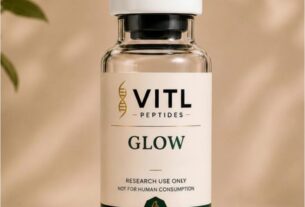
GHK-Cu is also frequently included in research blends such as GLOW, commonly combined with BPC-157 and TB-500.
In those mixtures, GHK-Cu is generally included primarily for its connection with:
skin remodeling
collagen
fibroblast activity
and cosmetic pathways.
There are currently no high-quality clinical trials demonstrating that such multi-peptide blends are more effective than GHK-Cu alone.
Copper Balance and Toxicity
Because GHK-Cu contains copper, an obvious question is whether it can cause copper toxicity.
Copper is essential but potentially toxic in excessive amounts.
Too much systemic copper can affect:
liver function
neurological function
and oxidative balance.
The amount of copper delivered through ordinary topical cosmetic products is generally quite small.
Systemic exposure creates a different question.
Because injectable GHK-Cu has not undergone extensive clinical testing, there is insufficient information to establish how repeated systemic use affects total-body copper balance over time.
People with disorders of copper metabolism would theoretically deserve particular caution.
Potential Side Effects
Potential effects depend strongly on the route.
Topical Products
Possible topical reactions may include:
- Redness
- Irritation
- Itching
- Dryness
- Sensitivity
- Contact dermatitis
Many people tolerate cosmetic copper-peptide products well, but skin sensitivity varies.
Systemic or Injectable Exposure
The adverse-event profile is far less established.
Potential concerns include:
injection-site reactions
immune responses
peptide impurities
incorrect concentration
microbial contamination
and unknown consequences of repeated systemic copper exposure.
FDA has raised broader concerns about certain compounded peptide products, particularly regarding peptide aggregation, immunogenicity, purity, and inadequate clinical safety information.
Those concerns are more relevant to injectable formulations than ordinary topical cosmetic use.
GHK-Cu and Vitamin C
A common cosmetic question involves whether copper peptides can be used together with vitamin C.
Historically, some skin-care companies advised separating strong acidic vitamin C formulations from copper peptides because low pH and reducing agents could theoretically affect the copper complex.
Modern formulations vary substantially.
The practical compatibility depends on the specific product chemistry.
Using the ingredients at different times—such as one in the morning and one in the evening—is sometimes suggested for people who want to avoid formulation interactions or irritation.
This is more a formulation issue than a medical safety issue.
GHK-Cu and Retinoids
Retinoids such as tretinoin are among the most evidence-based topical treatments for photoaging.
GHK-Cu is sometimes combined with retinoids in anti-aging routines.
The main issue is irritation.
Both products can alter skin turnover and tissue signaling.
Using too many active ingredients at once can cause redness and barrier disruption.
There is no strong evidence that copper peptides outperform prescription retinoids for wrinkle reduction.
GHK-Cu is better viewed as a potentially complementary cosmetic ingredient rather than a replacement for established dermatologic therapy.
Does GHK-Cu Help Scars?
Because GHK-Cu influences collagen and wound remodeling, scar research is a logical application.
The effect of a treatment on scars depends heavily on:
scar type
age of the scar
depth of injury
genetics
and whether the scar is hypertrophic, atrophic, or keloid.
There is some experimental rationale for using GHK-Cu in wound and scar-remodeling research.
However, there is insufficient evidence to claim that it reliably removes established scars in humans.
Is GHK-Cu FDA Approved?
There is no FDA-approved prescription drug containing GHK-Cu for anti-aging, hair growth, cosmetic rejuvenation, or systemic wound healing.
Copper peptides can appear legally in cosmetic products because cosmetics do not require the same premarket drug approval process when they are marketed only for cosmetic purposes.
The distinction is important.
A serum marketed to improve the appearance of skin is different from a product marketed to treat a disease or heal an injury.
Similarly, a topical cosmetic product should not be confused with injectable or compounded GHK-Cu.
The systemic form does not have an established FDA-approved indication or dosing regimen.
Current Research
Modern GHK-Cu research continues in several promising directions.
Researchers are particularly interested in incorporating the peptide into:
hydrogels
nanoparticles
wound dressings
biomaterial scaffolds
and controlled-release systems.
These technologies can deliver GHK-Cu directly to damaged tissue while controlling how quickly it is released.
This could eventually prove more useful than simply applying free peptide.
Other areas of active research include:
skin regeneration
radiation injury
diabetic wounds
burn repair
hair follicles
collagen architecture
and regenerative medicine.
These fields may ultimately provide GHK-Cu with more defined medical applications.
What Research Is Still Needed?
For topical cosmetic use, researchers would benefit from larger randomized trials comparing standardized concentrations against placebo and established treatments.
Useful endpoints could include:
collagen density
skin thickness
wrinkle depth
elasticity
hydration
and patient-reported appearance.
For systemic use, basic pharmacology remains necessary.
Researchers need to establish:
absorption
distribution
half-life
metabolism
effective tissue concentration
copper handling
immune effects
and long-term safety.
For hair applications, randomized trials could compare GHK-Cu with:
placebo
minoxidil
and other established hair-loss therapies.
Until those studies exist, many systemic and hair-growth claims remain preliminary.
The Bottom Line
GHK-Cu is one of the most scientifically interesting peptides associated with skin and tissue regeneration.
It consists of the naturally occurring tripeptide:
Gly-His-Lys
bound to a copper ion.
That simple structure appears capable of influencing a surprisingly broad collection of biological pathways.
Research suggests GHK-Cu may influence:
collagen synthesis
fibroblast activity
extracellular-matrix remodeling
angiogenesis
wound repair
inflammation
oxidative stress
gene expression
and hair-follicle biology.
These effects provide a strong biological rationale for its long-standing use in cosmetic and regenerative research.
Of all the proposed applications, topical skin use has the most established history.
Copper-peptide serums and creams have been used for years, and some human research suggests possible improvements in skin quality and repair.
However, the evidence is not strong enough to claim that GHK-Cu dramatically reverses aging or outperforms established treatments such as retinoids.
Hair research is also promising but remains less established than conventional therapies.
Systemic and injectable GHK-Cu require even more caution.
There is:
no FDA-approved injectable GHK-Cu medication,
no established systemic human dosage,
no standardized treatment schedule,
and no large clinical safety database for long-term systemic administration.
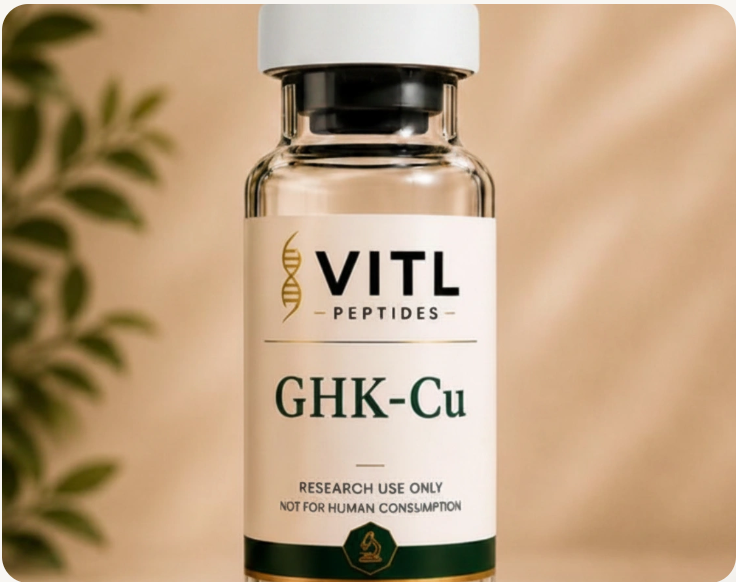
A research vial of lyophilized GHK-Cu is therefore very different from a topical cosmetic copper-peptide serum.
Perhaps the most accurate description of GHK-Cu in 2026 is:
a naturally occurring copper-binding tripeptide with credible biological activity involving collagen, tissue remodeling, wound repair, and skin biology, but with the strongest evidence centered on topical and preclinical research rather than systemic anti-aging or injectable use.
For researchers studying skin regeneration, extracellular matrix, wound repair, biomaterials, and hair follicles, GHK-Cu remains a valuable compound.
For consumers, the most important distinction is between:
evidence that GHK-Cu can influence cellular repair pathways
and
evidence that a particular product or route reliably produces visible or medically meaningful results in humans.
Those two questions are not always answered by the same studies.
Educational and research notice: This article is intended for general scientific and educational information. It is not medical advice or a recommendation for injectable or systemic use of GHK-Cu. There is no FDA-approved systemic GHK-Cu dosage or treatment protocol for anti-aging, hair growth, wound healing, or cosmetic rejuvenation. Topical cosmetic products and research-grade lyophilized GHK-Cu should not be treated as equivalent formulations.