

Oxytocin: A Comprehensive Guide to Uses, Research, Dosing, Forms, and Potential Benefits
Oxytocin is a naturally occurring peptide hormone and neuropeptide that plays important roles in childbirth, breastfeeding, social bonding, sexual behavior, stress regulation, appetite, and emotional processing.
Unlike many experimental peptides, oxytocin is already an established prescription medication.
Synthetic oxytocin has been used medically for decades, primarily in obstetrics to:
- Induce labor when medically appropriate
- Strengthen or augment uterine contractions
- Help manage certain incomplete or inevitable abortions
- Promote uterine contraction after delivery
- Control postpartum bleeding or hemorrhage
FDA-labeled oxytocin injection is used specifically for these obstetric purposes.
At the same time, oxytocin has become increasingly popular in research involving the brain.
Scientists are investigating whether oxytocin nasal spray or other forms of oxytocin might influence:
social cognition
trust
empathy
anxiety
autism-related social behavior
sexual desire
appetite
obesity
and other neurobehavioral conditions.
These experimental uses are very different from FDA-approved obstetric oxytocin.
That distinction is essential.
What Is Oxytocin?
Oxytocin is a naturally occurring peptide made of nine amino acids, making it a nonapeptide.
Its sequence is:
Cys-Tyr-Ile-Gln-Asn-Cys-Pro-Leu-Gly-NH₂
Two cysteine residues form a disulfide bridge, giving oxytocin its characteristic ring-shaped structure.
Oxytocin is produced primarily in neurons located in the hypothalamus, particularly within the:
paraventricular nucleus
and
supraoptic nucleus.
From there, it follows two major pathways.
Some oxytocin travels down nerve fibers to the posterior pituitary gland, where it is released into the bloodstream.
Other oxytocin is released within the brain itself, where it acts as a neurotransmitter or neuromodulator.
This dual role helps explain why oxytocin influences both:
physical processes such as uterine contractions
and
behavioral processes such as social interaction and attachment.
How Does Oxytocin Work?
Oxytocin binds to the oxytocin receptor, or OXTR.
This receptor belongs to the G-protein-coupled receptor family.
Oxytocin receptors are found in many tissues, including:
uterus
breast tissue
brain
heart
gastrointestinal tract
and other organs.
When oxytocin activates its receptor in uterine muscle, intracellular calcium rises.
That causes smooth-muscle contraction.
In the brain, oxytocin signaling affects networks involved in:
reward
social salience
fear
stress
attachment
and emotional learning.
The effects are highly dependent on context.
This is one reason the idea that oxytocin is simply a “love hormone” is misleading.
Why Is Oxytocin Called the “Love Hormone”?
The nickname comes from research showing that endogenous oxytocin can rise during:
physical affection
sexual activity
breastfeeding
parent-infant interaction
and certain forms of social contact.
Oxytocin also influences brain regions involved in:
trust
bond formation
social recognition
and emotional salience.
However, oxytocin does not simply make everyone more loving or trusting.
Its effects depend on:
who the person is interacting with
social context
baseline personality
sex
hormonal state
and possibly genetics.
Modern social-neuroscience research increasingly views oxytocin as a molecule that can increase the salience of social information, rather than one that automatically creates positive feelings.
A 2025 systematic review of oxytocin and social cognition emphasized this complexity and found that responses vary according to dose, outcome, and context.
FDA-Approved Medical Uses of Oxytocin
Synthetic oxytocin injection is a well-established prescription medication.
Its primary FDA-labeled uses involve obstetrics.
Induction of Labor
Oxytocin can be administered to initiate uterine contractions when delivery is medically indicated.
Examples listed in current labeling include circumstances such as:
maternal diabetes
preeclampsia near term
Rh-related concerns
or situations in which membranes have ruptured and delivery is medically indicated.
Augmentation of Labor
Oxytocin may also be used when labor has begun but uterine contractions are inadequate.
Increasing contraction strength and frequency can help labor progress.
Postpartum Bleeding
After delivery, the uterus must contract strongly to compress blood vessels at the placental site.
Oxytocin is commonly used to encourage these contractions and reduce postpartum bleeding.
Current labeling specifically includes use to control postpartum uterine bleeding or hemorrhage.
Oxytocin Dosing for Labor
Unlike experimental peptide applications, oxytocin has established medical dosing for obstetric use.
For labor induction or augmentation, current U.S. labeling describes intravenous infusion under hospital supervision.
A commonly prepared solution contains:
10 units of oxytocin in 1,000 mL of IV fluid, creating a concentration of 10 milliunits per mL.
The recommended initial infusion rate is generally:
1 to 2 milliunits per minute.
The rate may then be increased gradually in increments of no more than:
1 to 2 milliunits per minute
until an appropriate contraction pattern develops.
This is not a medication that should be administered casually.
During labor induction, clinicians monitor:
fetal heart rate
uterine resting tone
contraction frequency
contraction duration
and contraction strength.
If excessive contractions or fetal distress develop, the infusion is stopped.
Postpartum Oxytocin Dosing
For postpartum uterine bleeding, current labeling describes several possible regimens.
For intravenous infusion:
10 to 40 units may be added to 1,000 mL of IV fluid, with the infusion rate adjusted to control uterine atony.
Alternatively:
10 units may be administered intramuscularly after delivery of the placenta.
These are established hospital-based medical uses.
They should not be confused with dosing protocols promoted for mood, sexual function, or social bonding.
Oxytocin Half-Life
Oxytocin has a relatively short plasma half-life.
Current prescribing information reports a half-life of approximately:
3 to 5 minutes after parenteral administration.
This short duration is one reason oxytocin used during labor is delivered as a controlled IV infusion.
The infusion rate can be adjusted rapidly, and its uterine effect falls relatively quickly when the infusion is stopped.
Oxytocin and Breastfeeding
Oxytocin is also essential for normal lactation.
When an infant suckles, sensory signals travel to the hypothalamus.
Oxytocin is released from the posterior pituitary.
This causes specialized cells surrounding the milk-producing glands in the breast to contract.
The result is the:
milk-ejection reflex
or
let-down reflex.
Oxytocin therefore helps move milk toward the nipple.
Another hormone, prolactin, is more directly responsible for milk production itself.
This distinction is important:
prolactin helps make milk
while
oxytocin helps release it.
Oxytocin and Social Bonding
Oxytocin is heavily studied in social neuroscience.
Human studies have investigated whether intranasal oxytocin affects:
trust
emotion recognition
empathy
social learning
eye contact
and responses to social cues.
Some experiments demonstrate measurable changes.
Others show little effect.
A 2025 systematic review examining dose-response relationships in social cognition concluded that oxytocin can influence areas such as emotion recognition, empathy, and trust, but effects are inconsistent and depend substantially on dose and study design.
This is why simplistic claims that oxytocin spray automatically makes people more trusting, affectionate, or socially confident are not scientifically justified.
Oxytocin and Autism
Autism is one of the most extensively studied experimental uses of intranasal oxytocin.
Researchers became interested because oxytocin signaling influences:
social attention
social reward
and the processing of social cues.
A 2025 review found substantial biological evidence implicating the oxytocin system in autism and summarized numerous clinical trials of oxytocin nasal spray.
However, the clinical findings remain inconsistent.
A newer 2026 review concluded that, despite decades of study, intranasal oxytocin has not produced consistent clinical improvements in autistic populations and argued that future research may need biomarker-guided or precision-medicine approaches.
Some meta-analyses suggest particular doses or subgroups might respond better.
For example, a 2025 dose-response meta-analysis found that overall improvement in social impairment was not significant across all trials, although higher daily doses around 48 IU or more showed signals of benefit in some analyses.
These findings remain investigational.
Oxytocin nasal spray is not an established FDA-approved treatment for autism.
Oxytocin and Anxiety
Because oxytocin affects the amygdala and stress-related brain circuits, researchers have investigated it for anxiety.
Some small studies suggest that intranasal oxytocin can alter:
fear processing
social anxiety
stress responses
and attention to emotional stimuli.
However, findings vary considerably.
A 2024 review of oxytocin for anxiety and autism emphasized that results remain inconsistent and that differences in:
dose
frequency
nasal delivery technology
and individual characteristics
may explain some of the conflicting results.
Therefore, oxytocin should not be considered a proven general anti-anxiety medication.
Oxytocin and Sexual Function
Oxytocin has a natural connection with sexual physiology.
Endogenous oxytocin levels may rise during:
sexual arousal
orgasm
and intimate physical contact.
It is involved in both peripheral and central aspects of sexual response.
This has led to experimental interest in oxytocin for:
sexual desire
arousal
orgasmic function
and relationship-related sexual behavior.
However, the effects are not simple.
Sexual function involves:
dopamine
testosterone
estrogen
nitric oxide
serotonin
relationship factors
and psychological state.
Oxytocin interacts with many of these systems but does not function as a simple libido drug.
There is currently no FDA-approved intranasal oxytocin product for sexual enhancement.
Does Oxytocin Increase Attachment?
Possibly in some contexts, but not in the simple way sometimes claimed online.
Oxytocin can strengthen attention toward socially meaningful individuals.
In close relationships, this may contribute to attachment.
But research also suggests it can sometimes increase:
ingroup preference
social vigilance
or emotional responses to negative social cues.
Therefore, oxytocin may amplify the importance of a social relationship rather than universally making interactions more positive.
This is why researchers increasingly describe oxytocin as a social salience modulator rather than simply a bonding hormone.
Oxytocin and Appetite
One of the more unexpected areas of research involves appetite and food intake.
Oxytocin neurons are found in hypothalamic regions involved in energy regulation.
Animal studies show that oxytocin can:
reduce food intake
increase energy expenditure
and influence fat metabolism.
Human experiments have also found that a single intranasal oxytocin dose can reduce caloric intake in some populations. A meta-analysis found significantly reduced food intake in nonpsychiatric participants following acute intranasal oxytocin administration.
This led researchers to investigate oxytocin as a potential obesity treatment.
Oxytocin and Obesity
Early pilot studies generated enthusiasm because intranasal oxytocin appeared capable of reducing food intake.
However, larger and more rigorous results have been less impressive.
A randomized double-blind study involving 61 adults with obesity compared intranasal oxytocin with placebo for eight weeks.
Participants used:
24 IU four times daily.
Oxytocin reduced caloric intake during a laboratory test meal, but it did not significantly reduce body weight, visceral fat, total fat mass, liver fat, or resting energy expenditure compared with placebo.
This is an excellent example of why an appealing mechanism does not guarantee a useful clinical treatment.
Oxytocin may influence appetite without necessarily producing substantial long-term weight loss.
A 2026 review of eating behavior similarly characterized current intranasal effects as generally modest and domain-specific.
Oxytocin Versus GLP-1 Medications
Oxytocin should not be compared directly with modern obesity medications such as:
or investigational retatrutide.
Those drugs have demonstrated large, sustained reductions in body weight in Phase 3 trials.
Oxytocin has not.
Its value in metabolic research is primarily that it helps scientists understand:
satiety
food reward
social eating
and hypothalamic regulation of appetite.
Intranasal Oxytocin
Intranasal oxytocin nasal spray is the most common route used in behavioral and neuroscience research.
The theoretical benefit is that nasal administration may influence central nervous-system pathways more effectively than ordinary systemic injection.
Researchers often use doses expressed in:
International Units, or IU.
Common experimental doses include:
8 IU
24 IU
32 IU
and 48 IU,
depending on the study.
For example, a 2025 randomized study in adults with autism tested single intranasal doses of:
8 IU
24 IU
and 48 IU.
These are experimental research doses.
There is no universal FDA-approved oxytocin nasal spray dose for social behavior, autism, anxiety, sexual function, or appetite suppression.
Does Intranasal Oxytocin Reach the Brain?
This has been an important scientific question.
Human and animal research suggests intranasally administered oxytocin can influence the central nervous system.
Behavioral, neuroimaging, and physiological effects have been observed following nasal administration.
However, exactly how much intact oxytocin reaches specific brain regions remains debated.
Possible pathways include:
direct nose-to-brain transport
systemic absorption
and indirect signaling through peripheral pathways.
The delivery device matters.
A 2024 review emphasized that oxytocin nasal spray design, formulation, dose, and administration technique may all contribute to inconsistent study results.
Oxytocin Nasal Spray Dosing
There is no FDA-approved general oxytocin nasal-spray regimen.
Research protocols vary widely.
Social-neuroscience studies frequently use approximately:
8 to 48 IU per session.
Repeated clinical experiments have used schedules ranging from occasional single doses to daily or twice-daily treatment.
Some autism researchers have proposed that intermediate doses and intermittent administration may be worth studying because repeated exposure could potentially affect receptor responsiveness.
None of these approaches should be interpreted as an established self-use protocol.
Oxytocin Injection
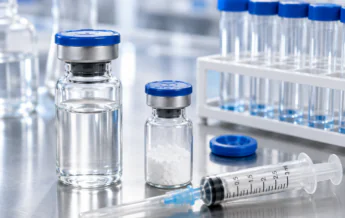
FDA-approved oxytocin is primarily available as a sterile injectable medication.
A common U.S. formulation contains:
10 USP units per mL.
Current DailyMed labeling lists single- and multiple-dose vial presentations at this concentration.
This pharmaceutical oxytocin is manufactured for controlled obstetric use.
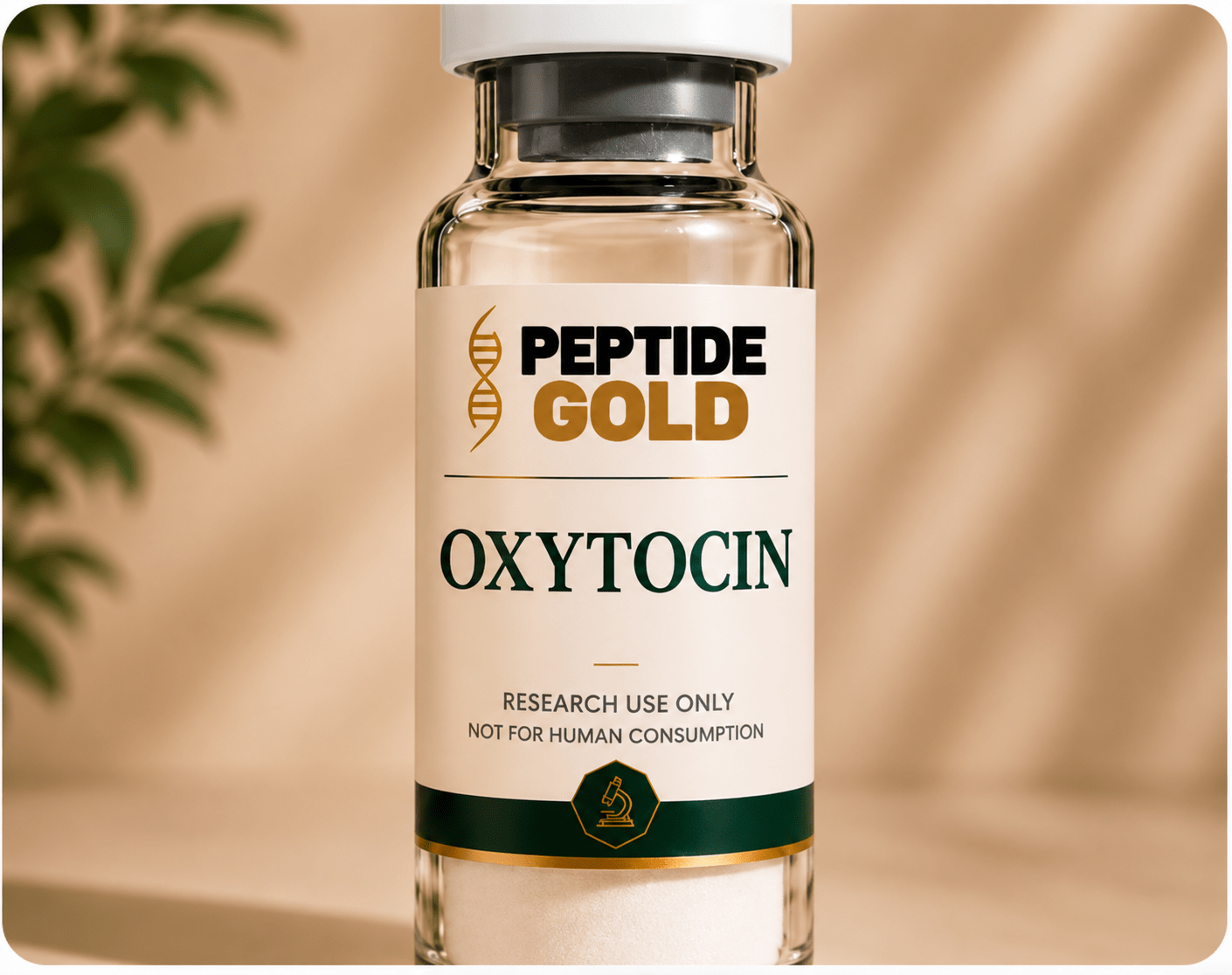
It should not be confused with research-grade lyophilized oxytocin sold online.
Lyophilized Oxytocin
Research suppliers may offer oxytocin as:
lyophilized, or freeze-dried, powder.
This can be useful for laboratory studies because freeze-drying improves storage stability.
However, a research vial labeled oxytocin should not automatically be assumed to have:
pharmaceutical-grade purity
sterility
accurate potency
or appropriate suitability for injection or nasal use.
FDA-approved oxytocin injection is a completely different regulatory and manufacturing category.
Sublingual and Buccal Oxytocin
Some compounded or wellness-oriented products use:
sublingual tablets
troches
or buccal formulations.
The rationale is to allow absorption through oral mucosa.
However, these routes have substantially less clinical evidence than hospital IV oxytocin or experimental intranasal research.
There is no standardized FDA-approved oxytocin troche for social bonding, libido, or anxiety.
Potential Side Effects of Medical Oxytocin
In obstetrics, oxytocin can be extremely useful but also extremely powerful.
Potential complications include:
- Excessively strong uterine contractions
- Excessively frequent contractions
- Fetal distress
- Uterine rupture in rare high-risk situations
- Abnormal fetal heart-rate patterns
- Nausea
- Vomiting
- Cardiovascular effects
- Water intoxication or low sodium with prolonged high-dose infusion
Because of these risks, current labeling states that oxytocin used for labor induction or stimulation must be administered intravenously with adequate medical supervision in a hospital.
Water Intoxication and Hyponatremia
Oxytocin is structurally related to vasopressin, the antidiuretic hormone.
At sufficiently high or prolonged exposure, oxytocin can have antidiuretic activity.
If large quantities of electrolyte-free fluid are given simultaneously, this can contribute to:
water retention
and potentially dangerous hyponatremia.
Severe hyponatremia can cause:
confusion
seizures
or neurological injury.
This is primarily relevant to high-dose or prolonged medical exposure, not ordinary physiological oxytocin release.
Side Effects of Intranasal Oxytocin
Research studies generally report relatively mild short-term adverse effects.
Potential symptoms include:
- Headache
- Nasal irritation
- Fatigue
- Dizziness
- Nausea
- Changes in mood
- Changes in social perception
However, long-term repeated intranasal exposure has not been characterized nearly as thoroughly as established pharmaceutical therapies.
The fact that oxytocin is naturally produced in the body does not mean that repeated pharmacological doses are automatically harmless.
Oxytocin and Pregnancy
This is especially important.
Oxytocin stimulates uterine contraction.
Therefore, unsupervised oxytocin exposure during pregnancy could potentially be dangerous.
Medical oxytocin used to induce or augment labor is carefully titrated under continuous monitoring.
The FDA label lists several situations in which oxytocin induction or augmentation is contraindicated, including certain fetal positions, placenta previa, cord prolapse, and circumstances where vaginal delivery itself is contraindicated.
Research-market oxytocin should never be viewed as a casual pregnancy-related product.
Oxytocin and Men
Oxytocin is not exclusively a female reproductive hormone.
Men produce oxytocin naturally.
It influences:
sexual behavior
ejaculation
social interaction
stress regulation
and potentially certain aspects of sperm and reproductive physiology.
However, oxytocin is not an established testosterone booster and should not be confused with kisspeptin.
Kisspeptin directly regulates the:
GnRH → LH/FSH → testosterone/estrogen axis.
Oxytocin primarily functions through a different neuroendocrine system.
Oxytocin Versus Kisspeptin
These peptides can both influence reproductive behavior but have very different primary roles.
Kisspeptin is an upstream regulator of reproductive hormone secretion.
It stimulates:
GnRH → LH/FSH → testosterone or estrogen.
Oxytocin is more strongly associated with:
labor
milk ejection
social attachment
sexual behavior
and neural responses to social cues.
They are therefore not interchangeable.
Does Oxytocin Improve Relationships?
This is a popular commercial claim, but the science does not support such a simple conclusion.
Oxytocin can affect:
social attention
bonding
emotional processing
and relationship-related behavior.
But no medication can create trust, intimacy, or relationship satisfaction independently of context.
Oxytocin may change how social cues are perceived.
Whether that helps or harms an interaction depends on the individuals and situation.
It should not be thought of as a pharmaceutical shortcut to emotional closeness.
Is Oxytocin FDA Approved?
Yes—but only for specific medical uses.
Synthetic oxytocin injection is FDA-approved and routinely used in obstetrics for purposes including:
medically indicated induction of labor
augmentation of uterine contractions
and control of postpartum bleeding.
However, there is no general FDA approval for oxytocin nasal spray to treat:
autism
anxiety
social difficulties
relationship problems
sexual enhancement
obesity
or appetite suppression.
The distinction between an approved molecule and an approved use is crucial.
Current Research in 2026
Oxytocin remains one of the most actively studied neuropeptides in behavioral science.
Researchers continue to investigate it in:
autism
social cognition
anxiety
sexual behavior
obesity
eating disorders
and broader gut-brain signaling.
Recent autism research has become increasingly cautious.
A 2026 review concluded that conventional intranasal oxytocin has not produced consistent overall benefit in autism and suggested future studies may need to identify biological subgroups most likely to respond.
Metabolic research shows a similarly nuanced picture.
Oxytocin can reduce acute food intake, but the controlled eight-week obesity trial using 24 IU four times daily did not produce meaningful weight loss.
This illustrates the current state of oxytocin research particularly well:
the biology is unquestionably real, but translating that biology into reliable therapies outside obstetrics remains difficult.
What Research Is Still Needed?
For intranasal oxytocin, researchers need better answers regarding:
optimal dose
delivery device
frequency
treatment duration
sex differences
genetic factors
baseline oxytocin function
and which clinical populations are most likely to benefit.
Longer safety studies are also needed.
For autism and social disorders, researchers increasingly believe that treating everyone with the same dose is unlikely to work.
For obesity research, investigators need to determine whether oxytocin might work better:
in specific hypothalamic disorders
alongside other metabolic therapies
or in individuals with documented disruption of the oxytocin system.
The Bottom Line
Oxytocin is a naturally occurring nine-amino-acid peptide hormone and neurotransmitter with major roles in human physiology.
Its established functions include:
uterine contraction
childbirth
milk ejection
and regulation of several social, sexual, emotional, and metabolic pathways.
Unlike most peptides discussed in research markets, synthetic oxytocin is already an FDA-approved prescription drug.
Its established medical uses involve obstetrics, particularly:
labor induction
labor augmentation
and control of postpartum bleeding.
For labor induction, current labeling describes carefully controlled IV infusion beginning around 1 to 2 milliunits per minute, with gradual increases under continuous maternal and fetal monitoring.
For postpartum uterine bleeding, protocols can include 10 to 40 units in an IV infusion or 10 units intramuscularly after delivery of the placenta.
Outside obstetrics, the picture is much less settled.
Intranasal oxytocin has been studied for:
social cognition
autism
anxiety
sexual function
appetite
and obesity.
Some individual studies show measurable effects.
But large-scale results are inconsistent.
A 2026 autism review concluded that intranasal oxytocin has not produced consistent clinical benefit across autistic populations.
Likewise, an eight-week randomized obesity study found that oxytocin reduced calorie intake during a laboratory meal but did not produce significant weight loss.
There is therefore no scientifically established basis for describing oxytocin nasal spray as a proven:
social enhancer
anti-anxiety treatment
libido drug
relationship aid
or weight-loss medication.
Perhaps the most accurate way to describe oxytocin in 2026 is:
a biologically powerful and medically established reproductive hormone with well-defined obstetric uses, alongside a fascinating but still inconsistent experimental research program involving social behavior, brain function, appetite, sexual physiology, and emotional processing.
For researchers, oxytocin remains extraordinarily valuable because it links the endocrine system, brain, behavior, reproduction, and metabolism.
For consumers, the key distinction is between:
oxytocin’s proven medical uses in carefully monitored obstetric care
and
the experimental uses of intranasal or compounded oxytocin promoted for bonding, mood, sexuality, appetite, or social enhancement.
The first is established medicine.
The second remains an active area of research.
Educational and medical notice: This article is intended for general scientific and educational information and is not individualized medical advice. FDA-approved oxytocin injection is a potent prescription medication used primarily in obstetric care and requires appropriate medical supervision. Intranasal, sublingual, research-grade, or compounded oxytocin products should not be assumed to have FDA-approved indications, dosing, safety, or effectiveness for social bonding, anxiety, autism, sexual enhancement, appetite suppression, obesity, or other experimental uses.