


Semax + Selank: A Comprehensive Guide to Uses, Research, Dosing Information, Forms, and Potential Benefits
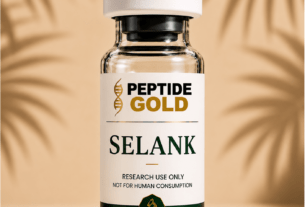
The combination of Semax + Selank has become increasingly popular in peptide and nootropic research because the two compounds are often viewed as complementary.
Semax is generally associated with cognition, attention, neuroprotection, neuroplasticity, BDNF-related signaling, and recovery from neurological stress.
Selank is more strongly associated with anxiety regulation, stress resilience, emotional stability, and GABA/enkephalin-related signaling.
This creates an appealing research concept:
Semax for cognitive activation and neuroplasticity
combined with
Selank for anxiety and stress modulation.
The goal is not necessarily stronger stimulation. Instead, researchers and peptide users are often interested in whether the combination could support a state of improved focus with less anxiety, or enhanced cognitive function without the overstimulation associated with conventional stimulants.
There is, however, a very important limitation:
Semax and Selank have each been studied individually, but the Semax + Selank combination itself has not been established through large randomized controlled human trials.
The biological rationale for combining them is reasonable, and laboratory research even suggests that the two compounds share some biochemical effects, such as inhibition of enzymes that degrade regulatory peptides. But there is no FDA-approved Semax/Selank combination, no standardized clinical ratio, and no validated combined dosing protocol.
As of 2026, neither compound is an FDA-approved drug in the United States. FDA also identifies both Semax and Selank acetate as substances with unresolved safety and product-quality questions in the compounding context.
What Is Semax?
Semax is a synthetic seven-amino-acid peptide, or heptapeptide, derived from a fragment of adrenocorticotropic hormone, or ACTH.
Its commonly cited sequence is:
Met-Glu-His-Phe-Pro-Gly-Pro
Semax was engineered from the ACTH(4-7) region but does not function like full ACTH.
It is not primarily used to stimulate adrenal cortisol production.
Instead, researchers have investigated Semax mainly for its effects on the central nervous system.
Areas of interest include:
- Memory
- Attention
- Learning
- Neuroprotection
- Cerebral ischemia
- Neuroplasticity
- BDNF-related signaling
- Oxidative stress
- Neurological recovery
Semax has a particularly long research history in Russia and related research networks.
Older clinical literature described effects on memory and attention and reported its use in several neurological conditions.
More recent research continues to explore neuroprotective mechanisms.
A 2025 study, for example, investigated Semax in a mouse spinal-cord-injury model and reported functional recovery associated with regulation of the Oprm1 opioid-receptor pathway and protein deubiquitination.
Another 2025 laboratory study found that Semax could bind copper and reduce copper-associated oxidative damage involving amyloid-beta, adding another possible mechanism relevant to neurodegenerative research.
These findings are intriguing, but neither establishes Semax as a proven treatment for spinal cord injury or Alzheimer’s disease in humans.
What Is Selank?
Selank is also a synthetic seven-amino-acid peptide.
Its sequence is:
Thr-Lys-Pro-Arg-Pro-Gly-Pro
It was developed from a naturally occurring peptide related to tuftsin, an immune-regulatory tetrapeptide.
Selank has been investigated primarily for:
anxiety
stress
emotional regulation
cognition
and potential nootropic effects.
Its reputation is very different from that of a conventional tranquilizer.
Rather than strongly sedating the nervous system, Selank has been investigated as an anxiolytic peptide that may reduce anxiety while preserving or potentially supporting cognitive performance.
A review of Selank’s molecular biology describes prolonged anxiolytic and nootropic effects and discusses mechanisms involving GABAergic neurotransmission, gene expression, and neuropeptide systems.
How Does Selank Work?
The complete mechanism of Selank is not established.
Research suggests several possible pathways.
One involves the GABA system.
GABA is the primary inhibitory neurotransmitter in the brain and is heavily involved in:
anxiety regulation
relaxation
sleep
and resistance to excessive neuronal excitation.
Many conventional anxiolytic medications, including benzodiazepines, affect GABA receptors directly.
Selank appears to influence GABA-related biology more indirectly.
Research has also examined effects involving:
serotonin
dopamine
enkephalins
BDNF-related signaling
and gene expression.
This more distributed mechanism is one reason Selank has been investigated as an anxiolytic that might avoid some of the sedation, dependence, and memory impairment associated with conventional benzodiazepines.
That theoretical advantage has not been fully established through large modern clinical trials.
Selank and Enkephalins
One of the more interesting Selank mechanisms involves enkephalins.
Enkephalins are endogenous opioid peptides involved in:
pain
stress
mood
and emotional regulation.
A human biochemical study found that Selank inhibited enzymes responsible for degrading enkephalins.
Researchers suggested that slowing enkephalin breakdown could contribute to its anti-anxiety activity.
Interestingly, Semax appears to have a similar effect.
A laboratory study involving human serum found that both Semax and Selank inhibited enkephalin-degrading enzymes.
This provides at least one biochemical pathway where the two peptides overlap.
Why Combine Semax and Selank?
The combination is primarily based on the idea of complementary neurobehavioral effects.
A simplified model looks like this:
Semax → cognitive activation, neuroplasticity, attention
while
Selank → anxiety reduction, stress regulation, emotional stability.
For someone studying cognition under stress, this combination is conceptually attractive.
A stimulant can improve focus but sometimes worsen anxiety.
A sedative can reduce anxiety but sometimes impair focus.
Semax + Selank is often proposed as a way of approaching both sides of that equation without using either a classic stimulant or a sedative.
However, that remains a hypothesis.
There are no large trials demonstrating that the combination produces a superior “focused but calm” state compared with either peptide alone.
Semax and BDNF
One of the most frequently discussed Semax mechanisms involves brain-derived neurotrophic factor, or BDNF.
BDNF is a growth factor involved in:
synaptic plasticity
learning
memory
neuronal survival
and adaptation of neural circuits.
Changes in BDNF signaling have been implicated in:
depression
neurodegenerative disease
brain injury
and cognitive adaptation.
Semax research has reported changes in BDNF-related pathways, which provides one proposed explanation for its nootropic and neuroprotective effects.
A 2025 review of therapeutic peptides described Semax and Selank among neuroactive peptides associated with neuroplasticity-related signaling, while emphasizing that clinical evidence remains limited.
Selank and Anxiety Research
Selank has actual human clinical literature involving anxiety disorders.
One clinical study compared Selank with the benzodiazepine medazepam in people with generalized anxiety disorder and neurasthenia.
The authors reported broadly similar anxiolytic effects, while Selank was also associated with antiasthenic and psychostimulant effects.
These results are interesting because they support the idea that Selank may reduce anxiety without behaving like a simple sedative.
However, these studies are older, relatively small, and come from a limited research network.
They do not provide the same evidence base available for modern FDA-approved anxiety medications.
Semax and Cognitive Research
Semax has similarly been investigated for cognition.
Older human research reported improvements in:
memory
attention
and cognitive performance under demanding conditions.
Semax has also been studied in neurological diseases.
For example, an open-label trial in motor neuron disease used intranasal Semax but found that it did not meaningfully change the neurological disease course. It did, however, improve some quality-of-life measures related to emotional state and motivation.
This is an important example of why claims surrounding Semax should remain measured.
A compound can influence motivation or subjective well-being without altering the underlying disease.
Semax and Neuroprotection
The term neuroprotection refers to reducing damage to neurons during conditions such as:
ischemia
oxidative stress
trauma
or neurodegenerative disease.
Semax has a considerable preclinical literature involving these pathways.
Recent experimental work includes:
spinal cord injury
amyloid-beta toxicity
and animal models of Alzheimer’s disease.
Researchers have proposed mechanisms involving:
BDNF
oxidative-stress reduction
opioid signaling
inflammatory pathways
and changes in gene expression.
These findings help explain why Semax is often classified as a neuroprotective peptide.
Human clinical confirmation remains much less extensive.
What Do People Research Semax + Selank For?
The combination is most commonly discussed for several overlapping goals.
Focus and Concentration
Semax is the primary component associated with this goal.
Research interest includes:
attention
working memory
mental endurance
and cognitive performance during stress.
Anxiety and Stress
Selank is the primary component associated with anxiety regulation.
It is commonly studied for:
generalized anxiety
stress resilience
emotional tension
and autonomic symptoms associated with anxiety.
Cognitive Performance Under Stress
This is probably the most logical rationale for combining the two.
Stress can impair:
working memory
attention
decision-making
and recall.
Researchers may therefore be interested in whether Selank’s anxiolytic profile can complement Semax’s cognitive effects.
Neuroplasticity
Both peptides have been discussed in connection with neural adaptation.
Semax is more strongly associated with BDNF and neurotrophic signaling.
Selank has also been linked experimentally to changes in expression of genes involved in neurotransmission and neural function.
Mood and Motivation
Semax research has sometimes reported changes in motivation and emotional state.
Selank is more directly associated with anxiety and emotional regulation.
Neither compound should be described as an FDA-approved antidepressant.
Semax + Selank and ADHD
The combination is sometimes marketed informally for ADHD-like symptoms because Semax is associated with attention while Selank may reduce anxiety.
There is currently no strong clinical evidence establishing Semax + Selank as an ADHD treatment.
It has not undergone the type of controlled head-to-head trials required to compare it with established treatments such as:
methylphenidate
amphetamine formulations
atomoxetine
or guanfacine.
Improving attention in a research experiment is not equivalent to treating ADHD.
Semax + Selank and Depression
Both peptides influence signaling systems that overlap with depression research.
Semax has been linked with:
BDNF
dopaminergic signaling
and neuroplasticity.
Selank has been studied in relation to:
serotonin
GABA
enkephalin
and stress pathways.
That makes depression a reasonable research area.
But there is no established Semax + Selank treatment for major depressive disorder.
The combination should not replace evidence-based psychiatric care.
Semax + Selank and Sleep
Selank is sometimes described as calming, but it is not primarily a hypnotic peptide.
Semax may actually be experienced as cognitively activating in some experimental contexts.
Therefore, the combination should not be grouped with direct sleep-oriented compounds such as DSIP.
Some people discuss better sleep indirectly because reduced anxiety can make sleep easier, but there are no large trials showing that Semax + Selank reliably improves insomnia.
What Forms Are Semax + Selank Offered In?
The combination appears primarily through the research market.
Intranasal Spray
The most commonly discussed format is intranasal administration.
This reflects historical Semax and Selank research, both of which have frequently used nasal delivery.
Intranasal administration is attractive for neuroactive peptides because researchers are interested in whether nasal pathways can provide efficient access to central nervous-system signaling.
Separate Nasal Sprays
Semax and Selank may also be supplied separately.
This allows experimental control over the amount or timing of each compound.
Combined Nasal Formulation
Some research suppliers combine Semax and Selank in a single nasal product.
There is no standardized ratio defining an official “Semax + Selank” formula.
Lyophilized Powder
Both peptides can also be supplied as freeze-dried laboratory material.
Lyophilization can improve stability before experimental reconstitution.
A research vial should not automatically be considered:
sterile
pharmaceutical grade
or equivalent to a regulated medicine.
Dosing Information
There is no FDA-approved Semax + Selank dosage.
There is also no validated clinical dose ratio for the combination.
This is important because published research largely evaluates the compounds separately.
Semax studies have used different intranasal concentrations depending on the condition being studied.
For example, one human study of peptic ulcer used a 1% Semax nasal solution, two to four drops three times daily for 10 days as an adjunct to conventional treatment.
Another neurological study used a 1% Semax solution delivering a much larger total daily dose in patients with motor neuron disease.
These differences illustrate that there is no universal Semax dose even within the published research.
Selank clinical studies likewise used intranasal protocols, but the available literature does not establish a universal dose that can simply be combined with Semax.
Specific combined microgram regimens circulated online therefore represent research-market or anecdotal protocols rather than validated medical dosing.
Why the Combination Ratio Matters
Semax and Selank do not have identical pharmacology.
A fixed 1:1 ratio may be convenient, but convenience is not evidence that equal quantities are optimal.
Researchers would need to determine:
dose-response relationships
relative potency
duration of action
and whether combining the peptides changes their absorption or metabolism.
No rigorous study has established the best ratio.
Potential Side Effects
The combination has no established adverse-event profile because it has not undergone a modern clinical safety program.
Potential effects reported or discussed with the individual compounds may include:
- Headache
- Nasal irritation
- Fatigue
- Dizziness
- Restlessness
- Changes in mood
- Temporary changes in alertness
- Unusual taste or nasal discomfort
These should not be treated as a complete list.
Long-term safety is not adequately characterized.
Immunogenicity and Product Quality
FDA has specifically highlighted concerns regarding peptide impurities and possible immunogenicity for both compounds in the compounding context.
For Selank acetate, FDA states that compounded products may present immunogenicity risks related to peptide aggregation and impurities and that the agency lacks important human safety information.
FDA has raised similar concerns for Semax.
This is particularly relevant when a product comes from an unregulated research supplier.
A bottle labeled Semax + Selank does not establish:
identity
purity
concentration
or absence of contaminants.
Are Semax and Selank FDA Approved?
No.
Neither Semax nor Selank is currently an FDA-approved medication in the United States.
FDA states that Semax free base and Semax acetate are not components of an FDA-approved drug.
Semax did receive an important regulatory development in July 2026.
FDA’s Pharmacy Compounding Advisory Committee reviewed Semax for proposed compounding uses involving:
cerebral ischemia
migraine
and trigeminal neuralgia.
The advisory panel voted 8-5 in favor of recommending Semax for inclusion on the 503A Bulks List.
That vote does not make Semax FDA-approved.
It is an advisory recommendation concerning pharmacy compounding, and FDA must complete a separate regulatory process before any final listing decision.
Selank has not received FDA drug approval either.
Does the FDA Advisory Vote Mean Semax Is Proven?
No.
The July 2026 vote should not be interpreted as equivalent to FDA approval for effectiveness.
FDA staff had reviewed Semax for the nominated uses, while the advisory committee ultimately recommended allowing it to move forward in the compounding-list process.
Compounded drugs themselves are not FDA-approved, and FDA does not verify their safety, effectiveness, or quality before marketing in the same way it does approved drugs.
That distinction matters when discussing current U.S. regulatory status.
Current Research in 2026
Research on Semax has recently become more active internationally.
New studies are investigating:
spinal cord injury
Alzheimer’s-related mechanisms
oxidative stress
and neural repair pathways.
Selank research remains more concentrated around:
anxiety
GABA-related signaling
enkephalins
and gene regulation.
What remains notably absent is a robust modern program investigating Semax and Selank together.
What Research Is Needed Next?
The combination would benefit from basic pharmacological research before broad clinical claims could be justified.
Researchers need to determine:
whether the peptides interact pharmacologically
the optimal ratio
intranasal bioavailability
human half-lives
dose-response relationships
effects on BDNF and neurotransmitters
and long-term safety.
A particularly useful study would randomize participants into four groups:
placebo
Semax alone
Selank alone
and
Semax + Selank.
Researchers could then measure:
attention
working memory
anxiety scores
stress responses
mood
and adverse effects.
Without such a study, claims of synergy remain speculative.
The Bottom Line
Semax + Selank is an experimental combination of two Russian-developed neuroactive heptapeptides with complementary research profiles.
Semax is primarily associated with:
attention
memory
neuroplasticity
neuroprotection
and BDNF-related signaling.
Selank is more strongly associated with:
anxiety reduction
stress regulation
GABA-related signaling
and modulation of endogenous regulatory peptides.
Both compounds also appear capable of inhibiting enzymes that degrade enkephalins, providing at least one biochemical pathway shared by the two.
The theoretical combination therefore makes intuitive sense:
Semax may support cognitive activation while Selank may reduce excessive anxiety or stress signaling.
This has led to the popular description of the combination as producing “calm focus.”
Scientifically, however, that phrase remains more hypothesis than established clinical fact.
There are currently:
no large controlled human trials of Semax + Selank as a combination,
no FDA-approved combination product,
no validated dose ratio,
no established long-term safety profile,
and no approved indication for cognition, anxiety, ADHD, depression, or neuroprotection.
The evidence for the individual compounds is considerably stronger than the evidence for the combination.
Semax has older human studies and an expanding modern preclinical literature involving neuroplasticity, oxidative stress, and neural injury. In July 2026, an FDA advisory committee also voted 8-5 to recommend Semax for possible inclusion on the Section 503A pharmacy-compounding list, although this does not constitute FDA drug approval.
Selank has human anxiety research suggesting anxiolytic activity and laboratory evidence involving GABA and enkephalin-related pathways.
Perhaps the most accurate way to describe Semax + Selank in 2026 is:
an experimental neuroactive peptide combination that pairs Semax’s cognitive and neuroplasticity-oriented research profile with Selank’s anxiolytic and stress-regulating profile, creating a plausible strategy for studying cognition under stress—but without the direct controlled clinical evidence necessary to establish true synergy, optimal dosing, or long-term safety.
For researchers studying neuroplasticity, stress, attention, and anxiety, the combination is scientifically interesting precisely because the two peptides appear to influence partially overlapping but distinct neural systems.
For consumers, the critical distinction remains between:
evidence that Semax and Selank each have biological activity
and
evidence that combining them produces a proven, safe, superior cognitive or anxiety treatment.
At present, the first statement has scientific support.
The second remains to be demonstrated.
Educational and research notice: This article is intended for general scientific and educational information only. It is not medical advice or a recommendation for human use of Semax, Selank, or their combination. Research doses and formulations discussed above should not be interpreted as personal dosing instructions. Neither Semax nor Selank is currently an FDA-approved drug in the United States, and there is no FDA-approved Semax + Selank combination or dosing regimen.