





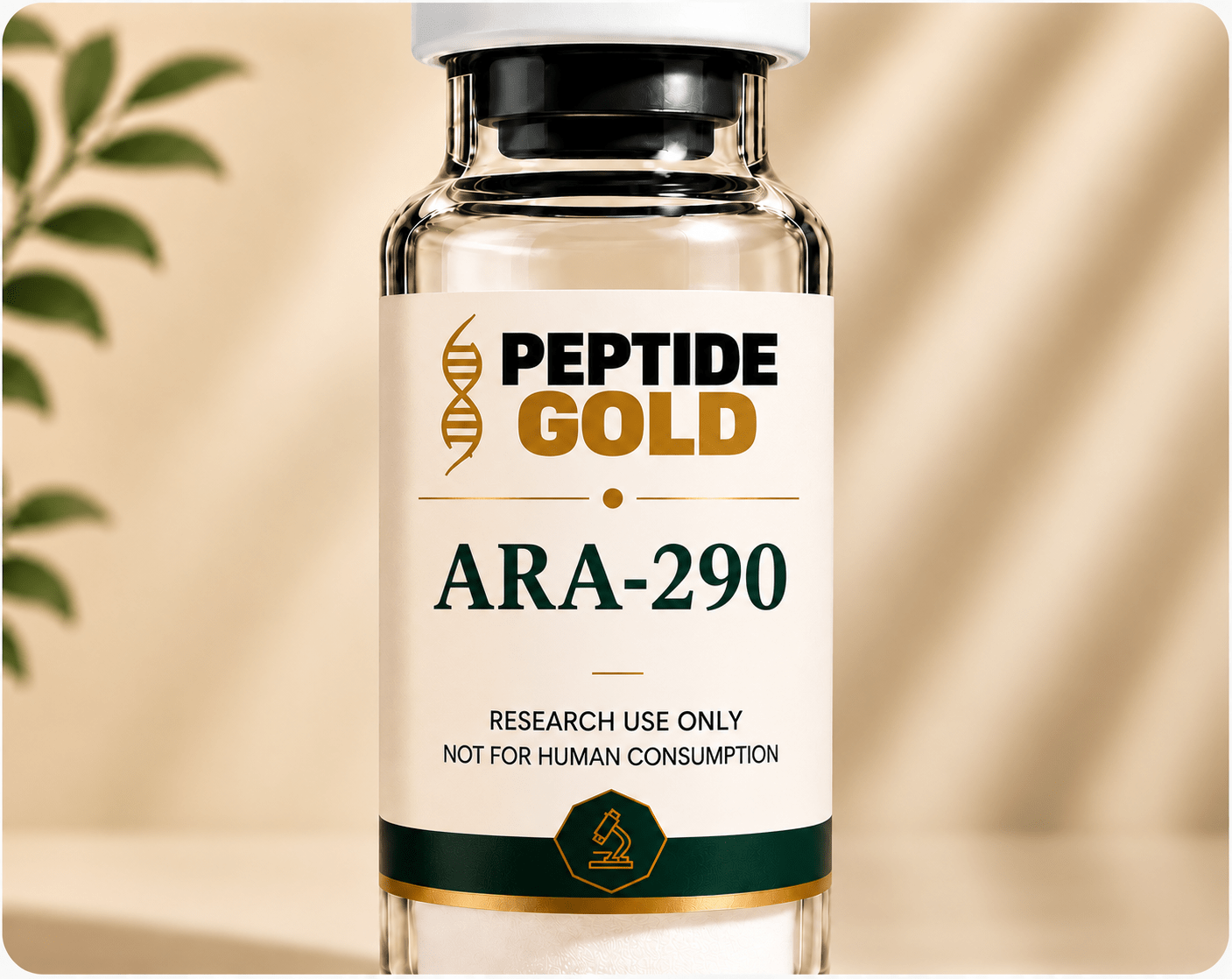
ARA-290: A Comprehensive Guide to Uses, Research, Dosing Information, Forms, and Potential Benefits
ARA-290 is an experimental peptide that has attracted significant scientific interest for a reason that separates it from many compounds in the research-peptide world: it has already been evaluated in controlled human clinical studies.
Also known as cibinetide, ARA-290 has been investigated primarily for its potential anti-inflammatory, tissue-protective and nerve-repair effects. Much of the most interesting research has focused on small-fiber neuropathy, neuropathic symptoms, nerve regeneration, inflammatory disease and metabolic dysfunction.
Rather than functioning like a conventional painkiller that simply attempts to suppress pain perception, ARA-290 was engineered to activate biological pathways involved in protecting injured cells and promoting tissue repair.
That has led researchers to ask an intriguing question:
Could a peptide help the body repair damaged nerves while simultaneously reducing harmful inflammatory signaling?
Early clinical research suggests that this possibility deserves continued investigation.
What Is ARA-290?
ARA-290 is a synthetic peptide derived from research into the structure and tissue-protective effects of erythropoietin, commonly abbreviated EPO.
Its peptide sequence is:
PyroGlu-Glu-Gln-Leu-Glu-Arg-Ala-Leu-Asn-Ser-Ser
ARA-290 therefore consists of 11 amino-acid residues.
The compound has also been known by several names in scientific literature, including:
- ARA-290
- ARA 290
- Cibinetide
- pHBSP
- Pyroglutamate helix B surface peptide
The development of ARA-290 began with an interesting observation about erythropoietin.
EPO is best known as a hormone involved in stimulating production of red blood cells. Researchers discovered, however, that erythropoietin also appeared to have tissue-protective and anti-inflammatory effects that could be separated from its blood-cell-producing activity.
That distinction became extremely important.
If researchers could reproduce EPO’s tissue-protective signaling without significantly stimulating red blood cell production, they might be able to investigate an entirely new class of therapeutic compounds.
ARA-290 was engineered as one such compound.
The Connection Between ARA-290 and Erythropoietin
Erythropoietin is naturally produced primarily by the kidneys and plays a critical role in regulating red blood cell production.
Pharmaceutical EPO has important medical uses, but increasing erythropoietic activity can also create risks when used outside appropriate clinical circumstances.
Researchers therefore became interested in whether EPO’s tissue-protective properties could be separated from its hematopoietic—or blood-producing—effects.
ARA-290 was designed from a specific three-dimensional region of the EPO molecule rather than functioning as full-length erythropoietin.
The resulting peptide is described as nonerythropoietic.
In simple terms:
ARA-290 attempts to reproduce certain protective signals associated with EPO without significantly stimulating production of red blood cells.
That is one of the most important concepts for understanding this peptide.
The Innate Repair Receptor
Much of ARA-290’s proposed biological activity centers around what researchers call the innate repair receptor, or IRR.
This receptor is associated with biological responses to tissue injury.
When tissues become injured or inflamed, the body activates numerous signaling pathways. Some promote inflammation and immune responses, while others attempt to protect cells, limit damage and initiate repair.
ARA-290 was designed to selectively activate this tissue-protective signaling system.
Research suggests activation of the innate repair receptor can influence processes involving:
- Inflammation
- Cellular survival
- Tissue protection
- Nerve repair
- Cellular stress
- Healing responses
- Neuropathic processes
This differs substantially from peptides designed primarily to influence appetite, growth hormone secretion, pigmentation or reproductive hormones.
Why ARA-290 Is Particularly Interesting
Many experimental peptides have extensive discussion online but surprisingly little controlled human research.
ARA-290 is different.
It has progressed through multiple human studies, including randomized, placebo-controlled investigations.
Researchers have studied ARA-290 in conditions involving:
Sarcoidosis-associated small-fiber neuropathy
Type 2 diabetes with painful neuropathy
Peripheral nerve-fiber loss
Metabolic dysfunction
Chronic neuropathic symptoms
These studies remain relatively small compared with the enormous Phase 3 programs used to establish mainstream medications, but they provide considerably more human evidence than exists for many experimental research peptides.
What Is Small-Fiber Neuropathy?
Small-fiber neuropathy, commonly abbreviated SFN, involves damage or dysfunction affecting small sensory and autonomic nerve fibers.
These nerve fibers participate in functions including:
- Pain sensation
- Temperature sensation
- Burning or tingling sensations
- Autonomic regulation
- Sweating
- Cardiovascular responses
- Gastrointestinal function
People with small-fiber neuropathy can experience symptoms such as burning pain, tingling, abnormal sensitivity and autonomic problems.
The condition can occur in association with diabetes, inflammatory diseases and other disorders.
ARA-290 research became particularly focused on small-fiber neuropathy because inflammation and tissue injury appear to play important roles in some forms of the condition.
ARA-290 and Sarcoidosis-Associated Neuropathy
Sarcoidosis is an inflammatory disease capable of affecting numerous organs and tissues.
Small-fiber neuropathy can be a particularly difficult complication.
One early randomized, double-blind pilot study enrolled 22 patients with sarcoidosis and symptoms of small-fiber neuropathy.
Participants received either placebo or:
2 mg ARA-290 intravenously three times per week for four weeks.
Researchers evaluated neuropathic symptoms, pain, quality of life, fatigue and other outcomes.
ARA-290 produced a significantly greater improvement on the Small Fiber Neuropathy Screening List than placebo by week four.
Researchers also observed improvements in certain quality-of-life measurements.
Importantly, repeated intravenous administration did not produce significant safety concerns in the clinical or laboratory assessments used in this small study.
The study was exploratory and involved only a small number of patients, so its results cannot establish definitive clinical efficacy.
Nevertheless, it provided an important signal that ARA-290 was biologically active in humans.
Research Into Nerve-Fiber Regeneration
Perhaps one of the most fascinating areas of ARA-290 research involves objective measurements of small nerve fibers.
Pain studies can be challenging because pain is inherently subjective.
Researchers therefore became interested in whether they could measure actual changes in nerve structures.
One method involves examining tiny nerve fibers in the cornea of the eye using specialized microscopy.
Corneal nerve fibers can provide researchers with a noninvasive window into small-fiber nerve health.
In another controlled study involving sarcoidosis-associated small nerve-fiber loss, daily subcutaneous ARA-290 treatment for 28 days was associated with improvements in neuropathic symptoms and an increase in corneal nerve-fiber density.
Researchers also reported changes in temperature sensitivity and improvement in exercise capacity measured by a six-minute walking test.
These findings were particularly interesting because they suggested something beyond temporary pain suppression.
They raised the possibility that ARA-290 could potentially influence the underlying biology of nerve injury and repair.
That possibility remains under investigation and should not be interpreted as proof that ARA-290 regenerates damaged nerves in all people or all neuropathic conditions.
ARA-290 and Diabetic Neuropathy
Another important Phase 2 study examined ARA-290 in people with type 2 diabetes and painful neuropathy.
Participants received:
4 mg ARA-290 subcutaneously once daily for 28 days
or placebo.
They were then followed for another month after treatment stopped.
Researchers reported improvements in neuropathic symptoms assessed using the PainDetect questionnaire.
Even more interestingly, participants with substantially reduced corneal nerve-fiber density at baseline demonstrated evidence of increased nerve-fiber density following ARA-290 treatment compared with placebo.
This added further support to the hypothesis that the compound might affect nerve repair rather than merely pain perception.
ARA-290 and Metabolic Research
The diabetic neuropathy study produced another intriguing observation.
Researchers reported improvements in measures involving:
- HbA1c
- Lipid profiles
- Metabolic control
These findings generated interest in whether the innate repair receptor might influence metabolic biology in addition to nerve repair.
However, ARA-290 should not be described as an established diabetes medication or glucose-lowering therapy.
The metabolic findings came from relatively small exploratory research and require further confirmation.
ARA-290 is also fundamentally different from metabolic peptides such as semaglutide, tirzepatide or retatrutide.
Those compounds directly target well-characterized metabolic receptor pathways such as GLP-1, GIP and glucagon.
ARA-290 instead targets a tissue-protection and repair pathway.
Potential Anti-Inflammatory Effects
Inflammation is one of the central themes surrounding ARA-290 research.
Inflammation is an essential component of normal immune defense and healing.
Excessive or persistent inflammatory signaling, however, can contribute to tissue damage.
ARA-290 was engineered to activate pathways that appear capable of reducing damaging inflammatory responses while supporting cellular repair.
This has created research interest in ARA-290 beyond neuropathy.
Potential future research areas could involve inflammatory conditions in which tissue injury and repair signaling play important roles.
However, an anti-inflammatory effect demonstrated experimentally should not automatically be interpreted to mean ARA-290 treats every inflammatory disease.
ARA-290 and Pain
ARA-290 has attracted substantial interest within neuropathic pain research.
The important distinction is that researchers do not generally view ARA-290 as simply another conventional analgesic.
Traditional pain medications may work by modifying pain signaling or perception.
ARA-290 research instead investigates whether modifying inflammation and nerve-repair biology can ultimately reduce neuropathic symptoms.
If that mechanism proves clinically effective, it could represent a very different approach to neuropathic pain.
This is why objective nerve-fiber measurements in ARA-290 studies are particularly interesting.
ARA-290 Dosing Information
Unlike many experimental research peptides, ARA-290 has actual dosing information from controlled human clinical trials.
However, these doses must be understood correctly.
They are investigational clinical-trial protocols, not FDA-approved prescribing instructions.
Intravenous Pilot Study
In an early randomized sarcoidosis study, researchers administered:
2 mg intravenously three times per week
for:
4 weeks
This schedule was used specifically within a controlled clinical research protocol.
Subcutaneous Research
Later research increasingly used subcutaneous administration.
A controlled clinical trial investigated:
4 mg subcutaneously once daily for 28 days.
This regimen was evaluated in patients with sarcoidosis-associated small-fiber neuropathy and was subsequently used in research involving diabetic neuropathy.
Dose-Ranging Research
A registered sarcoidosis clinical trial evaluated several subcutaneous doses:
1 mg once daily
4 mg once daily
8 mg once daily
Each was administered for:
28 consecutive days
Researchers used these different dose groups to investigate biological activity and safety.
Is 4 mg the Established ARA-290 Dose?
No.
The fact that 4 mg daily appears repeatedly in ARA-290 clinical research does not make it an FDA-approved or universally recommended dose.
It means researchers selected that dose for specific controlled experimental protocols.
Clinical-trial dosing depends upon:
- The disease being studied
- Patient characteristics
- Route of administration
- Pharmacokinetics
- Study objectives
- Safety monitoring
- Previous dose-ranging research
It would therefore be inaccurate to take the 4 mg clinical-trial dose and present it as a general self-administration protocol.
Does ARA-290 Require Titration?
Published ARA-290 clinical protocols generally did not use the type of progressive weekly titration familiar from medications such as semaglutide or tirzepatide.
For example, participants in some studies received a fixed daily subcutaneous dose for 28 days.
That does not establish that titration is unnecessary in every possible future application.
It simply reflects how the compound was administered within those particular research protocols.
There is currently no FDA-approved ARA-290 titration schedule.
Forms of ARA-290
ARA-290 has appeared in several forms within research.
Subcutaneous Injection
Subcutaneous administration became one of the most important routes used in clinical studies.
Participants in some studies were trained to self-administer study medication subcutaneously under controlled research protocols.
Intravenous Administration
Earlier clinical research used intravenous ARA-290.
One study administered 2 mg intravenously three times weekly.
Lyophilized Research Peptide
ARA-290 may also be encountered commercially as lyophilized research material.
Lyophilization removes water from a peptide preparation through freeze-drying, which can improve stability during storage.
Commercial availability as a lyophilized research product should not be confused with an approved pharmaceutical formulation.
A research vial does not establish pharmaceutical quality, sterility or suitability for human administration.
How Is ARA-290 Different From EPO?
This distinction is fundamental.
EPO strongly stimulates erythropoiesis—the production of red blood cells.
ARA-290 was specifically engineered to preserve certain tissue-protective signaling characteristics without producing substantial erythropoietic activity.
This could theoretically avoid some complications associated with stimulating red blood cell production.
Researchers studying ARA-290 reported no meaningful increase in hemoglobin in the small sarcoidosis trial.
This supports the concept that ARA-290 behaves differently from conventional erythropoietin despite being structurally inspired by it.
Potential Benefits Being Investigated
Current research makes several areas particularly interesting.
1. Small-Fiber Neuropathy
This is probably the strongest area of human ARA-290 research.
Controlled studies have reported improvements in neuropathic symptom scores.
2. Nerve-Fiber Repair
Changes in corneal nerve-fiber measurements have raised the possibility that ARA-290 could influence actual nerve repair or regeneration.
This remains one of the compound’s most exciting research directions.
3. Neuropathic Pain
ARA-290 has produced encouraging findings in experimental models and small human studies involving neuropathic symptoms.
4. Inflammatory Regulation
Activation of the innate repair receptor appears capable of influencing inflammatory signaling.
5. Tissue Protection
ARA-290 was specifically engineered around EPO’s tissue-protective biology.
6. Metabolic Health
Exploratory findings involving HbA1c and lipid profiles in people with type 2 diabetes have generated additional interest, although much more research is needed.
7. Cellular Repair
The broader concept behind ARA-290 involves shifting injured tissue toward protection and repair rather than continuing damaging inflammatory responses.
What Makes ARA-290 Different From Many Research Peptides?
ARA-290 occupies an interesting middle ground.
It is clearly experimental, but it is not a compound supported only by anecdotal reports or laboratory studies.
It has undergone:
- Preclinical research
- Human safety evaluation
- Controlled clinical trials
- Dose-ranging research
- Subcutaneous clinical administration
- Intravenous clinical administration
- Objective nerve-fiber measurements
That gives researchers substantially more information than is available for many peptides commonly discussed online.
At the same time, the clinical development program remains far smaller than those supporting widely approved medications.
Both facts can be true simultaneously:
ARA-290 has legitimate and intriguing human research behind it.
And:
ARA-290 remains investigational rather than an established standard medical treatment.
Safety Research
The available small clinical studies have generally reported encouraging short-term tolerability.
In the early sarcoidosis trial, repeated intravenous administration did not produce significant clinical or laboratory safety concerns.
The Phase 2 diabetic neuropathy study similarly reported no major safety signal attributable to ARA-290 during the study.
However, these studies involved relatively small numbers of participants and relatively short treatment periods.
They cannot establish the safety profile that would come from thousands of patients followed over much longer periods.
Questions that still require continued investigation include:
- Long-term safety
- Rare adverse events
- Drug interactions
- Effects in different patient populations
- Pregnancy-related risks
- Effects of prolonged treatment
- Effects of substantially different doses
ARA-290 and the Future of Nerve-Regeneration Research
Perhaps the most exciting aspect of ARA-290 has little to do with the peptide itself.
It is the broader therapeutic concept.
Neuropathy treatment has traditionally relied heavily on managing symptoms.
A compound capable of encouraging biological repair of damaged small nerve fibers would represent something fundamentally different.
Imagine the difference between:
reducing the sensation of damage
and
helping repair the damaged tissue itself.
Those are two very different therapeutic goals.
ARA-290 research suggests that activation of the innate repair receptor could potentially move treatment toward the second concept.
Whether future larger clinical trials ultimately prove that this approach produces meaningful long-term patient benefits remains unknown.
But scientifically, the possibility is extremely compelling.
What Research Is Still Needed?
Despite encouraging results, many questions remain.
Future studies would ideally include much larger randomized populations and investigate:
- Long-term neuropathy outcomes
- Optimal dosing
- Optimal treatment duration
- Dose-response relationships
- Persistence of nerve-fiber improvements
- Different causes of small-fiber neuropathy
- Diabetic neuropathy
- Autoimmune neuropathies
- Inflammatory neuropathies
- Chronic pain outcomes
- Functional improvements
- Long-term metabolic effects
- Safety over extended treatment periods
Researchers would also need to determine whether improvements in corneal nerve fibers reliably correspond with meaningful improvements elsewhere in the peripheral nervous system.
The Bottom Line on ARA-290
ARA-290—also known as cibinetide—is one of the more scientifically intriguing experimental peptides currently discussed within nerve-repair and anti-inflammatory research.
It is an 11-amino-acid peptide engineered from the tissue-protective region of erythropoietin.
Rather than primarily stimulating red blood cell production like EPO, ARA-290 was designed to activate the innate repair receptor, a signaling system associated with cytoprotection, inflammation control and tissue repair.
Human clinical studies have investigated ARA-290 in people with sarcoidosis-associated small-fiber neuropathy and type 2 diabetes with painful neuropathy.
Research protocols have included:
2 mg intravenously three times weekly for four weeks
and
1 mg, 4 mg or 8 mg subcutaneously once daily for 28 days, depending upon the study.
The frequently studied 4 mg daily subcutaneous regimen is a clinical-research protocol—not an FDA-approved dosing recommendation.
The most intriguing findings include improvements in neuropathic symptoms and evidence of increased corneal small nerve-fiber density in certain studies.
Those findings raise an exciting possibility: rather than merely masking neuropathic pain, future therapies targeting the innate repair receptor might potentially influence the underlying processes of nerve injury and repair.
That possibility has not yet been definitively proven.
ARA-290 remains an investigational compound, and considerably larger and longer clinical trials would be necessary to establish its safety, effectiveness, optimal dosing and appropriate medical applications.
But compared with many experimental peptides, ARA-290 already has something extremely valuable behind it:
controlled human research demonstrating that the biological concept is worth investigating further.
For researchers interested in the future of nerve regeneration, inflammatory regulation and tissue-repair signaling, ARA-290 may be one of the more fascinating peptides to watch.
Disclaimer
This article is provided for educational and informational purposes only. ARA-290/cibinetide remains an investigational compound and the clinical-trial doses discussed above are presented solely to describe published scientific research. They should not be interpreted as prescribing information, personal dosing recommendations, medical advice or instructions for self-administration. Clinical-trial participants received investigational products under defined protocols, eligibility criteria and medical oversight. Commercially available research peptides should not be assumed to have the identity, purity, sterility or pharmaceutical manufacturing standards of investigational products used in clinical trials. Individuals experiencing neuropathy, chronic pain, diabetes or other medical conditions should seek evaluation and treatment from an appropriately licensed healthcare professional.