

BPC-157 + TB-500: A Comprehensive Guide to Uses, Research, Dosing Information, Forms, and Potential Benefits
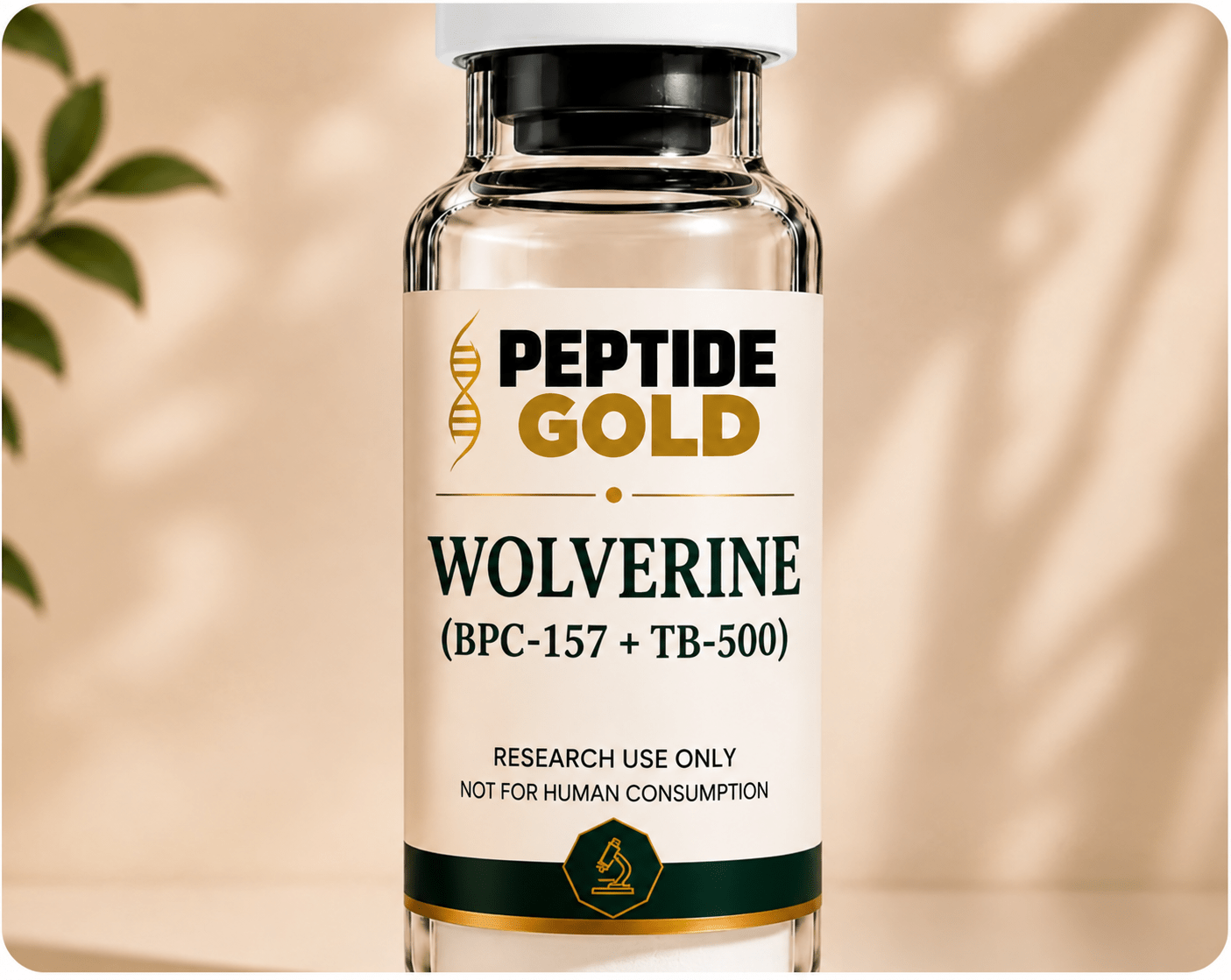
The combination of BPC-157 + TB-500 is one of the most commonly discussed peptide pairings in research involving tendon healing, ligament recovery, muscle injury, wound repair, connective tissue, and general tissue regeneration.
The pairing is popular because the two compounds are thought to act through different but potentially complementary repair pathways.
BPC-157 is primarily associated with:
vascular signaling
nitric oxide pathways
fibroblast activity
tendon and ligament research
gastrointestinal protection
and broader tissue-repair signaling.
TB-500 is a synthetic fragment related to thymosin beta-4 and is primarily associated with:
actin regulation
cell migration
angiogenesis
and wound-healing biology.
The theoretical idea behind combining them is straightforward:
BPC-157 may help regulate the signaling environment around damaged tissue
while
TB-500 may help cells migrate, reorganize, and participate in repair.
That makes the combination scientifically interesting.
However, one of the most important developments in 2026 is that researchers finally published a direct animal study evaluating the two compounds together in Achilles tendon injury.
The result was informative:
both BPC-157 and TB-500 showed favorable tissue-healing signals, but the combination did not outperform the individual compounds.
So while the pairing remains popular, the assumption that the two peptides necessarily create a strong synergistic effect is not currently supported.
What Is BPC-157?
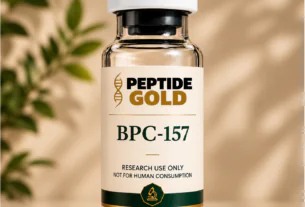
BPC-157 is a synthetic 15-amino-acid peptide.
The name originally refers to:
Body Protection Compound-157.
It was developed from a sequence associated with a gastric protein.
BPC-157 has been researched primarily in animal models involving:
- Tendon injuries
- Ligament injuries
- Muscle injuries
- Gastrointestinal damage
- Wound healing
- Blood-vessel formation
- Nerve injuries
- Inflammation
- Bone repair
Its reputation as a “healing peptide” comes largely from this extensive preclinical literature.
However, the human evidence remains extremely limited.
A 2026 review concluded that despite decades of preclinical research, BPC-157 still has:
no approved pharmaceutical formulation
no validated dosing regimen
and no completed Phase II clinical trial.
That is an important limitation.
What Is TB-500?
TB-500 is commonly confused with full-length thymosin beta-4, but the two are not identical.
Full thymosin beta-4 contains:
43 amino acids.
TB-500 is generally characterized by FDA as the seven-amino-acid fragment:
Ac-LKKTETQ.
This corresponds to the major actin-associated region of thymosin beta-4.
This region is of particular interest because actin is central to:
cell movement
cell shape
wound closure
and tissue remodeling.
When cells need to move into damaged tissue, they reorganize their actin cytoskeleton.
This is one reason TB-500 has become associated with healing research.
Why Are BPC-157 and TB-500 Combined?
The combination is usually based on the idea of attacking the tissue-repair process from more than one angle.
A simplified model might look like:
BPC-157 → signaling, vascular response, fibroblast and tissue-protection pathways
plus
TB-500 → actin dynamics, cell migration, and tissue remodeling.
During a tendon or ligament injury, repair requires several coordinated steps:
inflammation
cell migration
new blood-vessel formation
fibroblast recruitment
collagen deposition
matrix organization
and later remodeling.
The theoretical appeal of the combination is that the two peptides could influence different stages of that process.
However, plausible complementarity is not the same as demonstrated synergy.
The New 2026 Achilles Tendon Study
A particularly relevant 2026 animal study directly evaluated:
BPC-157
TB-500
and
BPC-157 + TB-500
in rats with experimentally injured Achilles tendons.
Researchers examined:
maximum tendon strength
histopathology
collagen organization
and extracellular-matrix characteristics.
The TB-500 group showed a statistically significant increase in maximum load to failure compared with controls.
Both TB-500 and the combination group showed improvements in certain histological scores.
However, the researchers found that:
the combined BPC-157 + TB-500 treatment did not provide additional benefit compared with either peptide alone.
That finding is important because it challenges one of the most common assumptions surrounding this blend.
The combination may still have value, but current evidence does not justify saying it is automatically superior.
Why Might the Combination Not Be Additive?
One possibility is that the two peptides influence overlapping downstream repair pathways.
For example, both may ultimately affect:
angiogenesis
fibroblast migration
collagen remodeling
and inflammatory signaling.
If the same biological repair system has already been maximally stimulated by one peptide, adding another may not produce a larger effect.
The researchers in the 2026 Achilles tendon study suggested that pathway convergence could explain the absence of an additive benefit.
That hypothesis requires additional study.
BPC-157 and Tendon Research
Tendon injuries are one of the most commonly discussed BPC-157 applications.
Animal studies have examined BPC-157 in injured:
Achilles tendons
muscle-tendon junctions
and other connective tissues.
Proposed mechanisms include changes involving:
VEGF-related pathways
nitric oxide
fibroblast activity
and blood-vessel formation.
The result in some animal models has been improved:
collagen organization
tendon structure
and functional healing.
However, these findings have not been validated in large human orthopedic trials.
A 2026 sports-medicine review emphasized the large gap between preclinical enthusiasm for BPC-157 and the lack of rigorous human evidence.
TB-500 and Tendon Research
TB-500 is also commonly studied in relation to tendons because the actin system is important for cell migration.
During tendon healing, fibroblasts must migrate into injured tissue and organize collagen.
In the 2026 rat Achilles study, TB-500 produced the strongest biomechanical result among the treatment groups, with a statistically significant improvement in tendon load-to-failure compared with control animals.
This is an encouraging preclinical finding.
It does not establish that TB-500 improves tendon strength in humans.
BPC-157 + TB-500 and Ligament Injuries
Ligaments and tendons share many structural characteristics.
Both contain dense collagen and have relatively limited blood supply compared with muscle.
This is why the combination is often discussed for:
ACL injuries
ankle sprains
shoulder injuries
and other ligament problems.
Theoretically, BPC-157 could influence tissue signaling while TB-500 could support cell migration.
However, there are no high-quality human clinical trials showing that the combination accelerates ligament healing.
BPC-157 + TB-500 and Muscle Injuries
Muscle tissue heals more efficiently than tendon because it has better blood supply.
Still, significant muscle injury requires:
inflammatory cleanup
satellite-cell activation
vascular repair
and structural remodeling.
BPC-157 has shown experimental activity in muscle-healing models.
Thymosin beta-4-related biology also plays a role in cellular migration and repair.
For that reason, the BPC-157/TB-500 pairing is commonly associated with:
muscle strains
sports injuries
and exercise recovery.
Human evidence remains lacking.
Does the Combination Build Muscle?
No strong evidence supports this claim.
Neither BPC-157 nor TB-500 is primarily an anabolic peptide.
They do not work like:
testosterone
growth hormone
or IGF-1.
The research focus is:
repair
rather than hypertrophy.
If an injured muscle heals more effectively, that could theoretically help a person return to training sooner.
That is different from directly stimulating muscle growth.
BPC-157 + TB-500 and Wound Healing
Wound healing is another logical research area.
The process involves:
cell migration
vascularization
collagen deposition
and matrix remodeling.
TB-500’s relationship to thymosin beta-4 biology makes it especially relevant to wound closure.
BPC-157 has also demonstrated wound-related effects in animal models.
FDA’s July 2026 compounding review specifically evaluated TB-500 for proposed wound-healing use, while BPC-157 was reviewed primarily in relation to ulcerative colitis.
This underscores that wound repair remains a major proposed use for TB-500.
BPC-157 + TB-500 and the Gastrointestinal Tract
BPC-157 has a much stronger connection to gastrointestinal research than TB-500.
Animal studies have investigated BPC-157 in:
gastric ulcers
intestinal injury
colitis
and gastrointestinal inflammation.
TB-500’s involvement is more indirect through cell migration and tissue repair.
The combination is sometimes discussed for gut repair, but there is essentially no controlled evidence showing that BPC-157 + TB-500 together improves gastrointestinal disease.
FDA’s 2026 review specifically evaluated BPC-157 in connection with ulcerative colitis, reflecting where the strongest proposed human rationale currently lies.
BPC-157 and Blood Vessels
One reason BPC-157 is often paired with TB-500 is its connection to vascular signaling.
Injured tissue needs adequate circulation.
Experimental BPC-157 research suggests effects involving:
VEGFR2
Akt
eNOS
and nitric-oxide signaling.
These pathways can influence the formation and function of blood vessels.
TB-500 also has angiogenesis-related biology.
This creates one possible area of mechanistic overlap.
TB-500 and Cell Migration
Cell movement is central to TB-500’s proposed mechanism.
Actin forms the internal scaffolding that allows cells to:
move
change shape
and migrate into wounds.
Fibroblasts and endothelial cells both depend on actin during tissue repair.
This means TB-500 may influence a relatively fundamental stage of the repair process.
That is one reason it can theoretically complement the signaling effects attributed to BPC-157.
Does BPC-157 + TB-500 Reduce Inflammation?
Both compounds may influence inflammatory biology, but neither should be thought of simply as a conventional anti-inflammatory drug.
Inflammation is necessary for healing.
The goal would theoretically be to prevent excessive or prolonged inflammation while still allowing normal repair.
BPC-157 has been associated with changes in inflammatory mediators.
Full-length thymosin beta-4 also has anti-inflammatory properties.
However, TB-500 contains only one fragment of Tβ4 and should not automatically be assumed to reproduce all of the parent molecule’s anti-inflammatory effects.
Dosing Information
There is no FDA-approved dose for either BPC-157 or TB-500, and there is no validated dosing regimen for the combination.
A 2026 review of BPC-157 specifically concluded that no validated dosing regimen exists.
FDA likewise states that it has not identified human exposure data for drug products containing the TB-500 fragment.
Therefore, there is no scientifically established:
starting dose
loading phase
maintenance phase
weekly dose
injury-specific dose
or optimal BPC-to-TB-500 ratio.
Protocols circulating through peptide websites and bodybuilding communities are not equivalent to validated clinical dosing.
Why Combination Dosing Is Especially Uncertain
A blend creates an additional problem.
Even if a researcher eventually established an optimal amount for each peptide individually, the ideal ratio in a combined vial might still be different.
BPC-157 and TB-500 may have different:
half-lives
dose-response relationships
tissue distribution
and optimal exposure patterns.
The new rat Achilles study found no extra benefit from combining them, suggesting that simply increasing exposure to both pathways may not provide additional healing.
What Forms Are BPC-157 + TB-500 Offered In?
The combination is primarily encountered through the research market.
Combined Lyophilized Vials
Some suppliers offer both peptides in one freeze-dried vial.
The exact amount of each peptide varies by product.
Separate Vials
Researchers may also study BPC-157 and TB-500 separately.
This provides more control over:
dose
timing
and experimental design.
BPC-157 Alone
BPC-157 is typically offered as:
lyophilized powder
and sometimes in other research formulations.
TB-500 Alone
TB-500 is also commonly offered as a freeze-dried research peptide.
None of these research-market presentations should automatically be assumed equivalent to a pharmaceutical-grade injectable product.
Product Identity Matters
This is especially important for TB-500.
FDA’s recent compounding work emphasizes that TB-500 refers to a short thymosin beta-4 fragment and that peptide identity and impurities must be carefully characterized.
A vial labeled “TB-500” may not necessarily be equivalent to full-length thymosin beta-4.
Likewise, a blend labeled “BPC-157 + TB-500” does not guarantee:
identity
purity
sterility
or accurate concentration.
Potential Side Effects
Neither peptide has a sufficiently large human safety database to establish a reliable list of common adverse effects.
Potential issues with injectable research products could include:
- Injection-site redness
- Swelling
- Pain
- Allergic reactions
- Immune responses
- Peptide impurities
- Incorrect concentration
- Contamination
- Unexpected systemic effects
FDA’s recent safety reviews emphasize uncertainty rather than a well-characterized safety profile.
Recent FDA Adverse-Event Reports
FDA’s July 2026 briefing materials summarized several adverse-event reports involving BPC-157.
These included:
a patient who developed several days of injection-site redness and swelling,
another patient who developed shortness of breath requiring emergency evaluation,
and a patient using BPC-157 + TB-500 twice daily who developed diffuse hyperpigmentation and darkening of the gums.
The pigmentation changes reportedly returned when the compounds were used again.
However, FDA specifically noted that these reports were difficult to interpret.
Patients were sometimes using multiple products, and voluntary adverse-event reporting cannot prove that BPC-157 or TB-500 caused the reaction.
The reports are therefore signals—not proof of causation.
Immunogenicity
Immunogenicity means that the immune system recognizes a peptide or protein as foreign and develops an immune reaction.
FDA currently identifies immunogenicity as a concern for TB-500 because of:
aggregation
and peptide-related impurities.
Similar product-quality concerns apply broadly to compounded and unregulated peptides.
This is particularly important for combination products, because mixing peptides can introduce additional stability questions.
Could the Two Peptides Interact in the Same Vial?
Possibly.
Combination formulations can create chemical and physical stability issues.
Researchers would need to examine whether BPC-157 and TB-500:
remain stable together
change pH
aggregate
or degrade differently when co-formulated.
There is no standardized FDA-approved combination formulation that has solved these questions.
That makes assumptions about blended research vials especially uncertain.
Is BPC-157 FDA Approved?
No.
BPC-157 is not FDA-approved for any medical condition.
A 2026 scientific review continues to describe it as investigational, with no approved formulation and no completed Phase II development program.
FDA’s Pharmacy Compounding Advisory Committee reviewed BPC-157-related bulk substances in July 2026.
That regulatory review does not constitute drug approval.
Is TB-500 FDA Approved?
No.
TB-500 is not FDA-approved for any medical indication.
FDA identifies it as the thymosin beta-4 fragment LKKTETQ and states that human exposure information is lacking.
There is no approved indication for:
wound healing
tendon repair
ligament recovery
muscle injury
or sports recovery.
Is the BPC-157 + TB-500 Combination FDA Approved?
No.
There is:
no FDA-approved BPC-157 + TB-500 product
no FDA-approved blend ratio
no FDA-approved dosing regimen
and no approved medical indication.
The combination is primarily a research-market and peptide-clinic concept.
Competitive Sports
Competitive athletes should also recognize that both compounds raise anti-doping concerns.
TB-500 and thymosin beta-4-related compounds have a long history in sports-doping investigations.
BPC-157 is also prohibited under current anti-doping rules.
Therefore, an athlete can potentially face sanctions even if the stated purpose is injury recovery rather than performance enhancement.
Current Research in 2026
The most important development is the new Achilles-tendon animal study.
It directly compared:
BPC-157
TB-500
and
BPC-157 + TB-500.
Both peptides produced some favorable tissue-healing signals.
TB-500 produced a significant biomechanical advantage.
But the combination did not outperform the individual therapies.
That result makes the current research picture much more nuanced.
The combination remains biologically plausible, but evidence of true synergy is currently absent.
At the same time, broader sports-medicine reviews published in 2026 continue to classify BPC-157 and TB-500 as promising but unapproved therapies with inadequate human evidence.
What Research Is Still Needed?
The biggest need is controlled human research.
Before injury-related clinical claims can be established, researchers need to determine:
human pharmacokinetics
half-lives
bioavailability
dose-response relationships
short-term safety
long-term safety
and immune responses.
Then randomized trials could evaluate specific injuries.
An ideal tendon study would compare:
placebo
BPC-157 alone
TB-500 alone
and
BPC-157 + TB-500.
Researchers could objectively measure:
tendon thickness
MRI or ultrasound appearance
collagen organization
strength
pain
function
and time to return to activity.
That type of trial would finally establish whether the combination is truly better than either compound by itself.
The Bottom Line
BPC-157 + TB-500 is one of the most popular experimental peptide combinations in tissue-repair and sports-recovery research.
The rationale is understandable.
BPC-157 is associated primarily with:
vascular signaling
nitric-oxide pathways
fibroblasts
tendon and ligament repair
and gastrointestinal tissue protection.
TB-500 is a seven-amino-acid thymosin beta-4 fragment associated primarily with:
actin regulation
cell migration
angiogenesis
and wound-healing biology.
In theory, combining those mechanisms could support multiple stages of healing:
vascular response → cell migration → collagen remodeling → tissue recovery.
Until recently, however, the combination was supported almost entirely by theory and individual-peptide research.
That changed somewhat in 2026.
A new rat Achilles tendon study directly tested BPC-157, TB-500, and their combination.
Researchers found improvements in several tissue-healing measurements, with TB-500 producing a significant increase in biomechanical tendon strength.
However:
BPC-157 + TB-500 did not produce additional benefits compared with the peptides used individually.
That is currently one of the most important findings for anyone evaluating this combination.
It means the common claim that BPC-157 and TB-500 are necessarily “synergistic” is not established.
The broader evidence also remains heavily preclinical.
A 2026 review of BPC-157 concluded that there is still:
no approved formulation
no validated dose
and no completed Phase II clinical trial.
FDA similarly states that it has not identified human exposure data for drug products containing the TB-500 fragment and continues to identify safety uncertainties involving peptide aggregation, impurities, and immunogenicity.
There is therefore:
no FDA-approved BPC-157 + TB-500 medication,
no established human dose,
no validated blend ratio,
no proven tendon- or ligament-healing protocol,
and no established long-term human safety profile.
Perhaps the most accurate description of BPC-157 + TB-500 in 2026 is:
an experimental regenerative-peptide combination built around two biologically plausible but incompletely studied repair mechanisms, with encouraging animal evidence for each compound but no demonstrated additive benefit from combining them and no controlled human evidence establishing safety or effectiveness.
For researchers, the combination remains scientifically interesting because it offers a direct way to test whether different tissue-repair pathways can be manipulated simultaneously.
For consumers, however, the important distinction is between:
evidence that BPC-157 and TB-500 influence repair-related pathways in laboratory and animal models
and
evidence that taking the two together safely accelerates human injury recovery.
The first has meaningful preclinical support.
The second has not yet been demonstrated.
Educational and research notice: This article is intended for general scientific and educational information only. It is not medical advice or a recommendation for human use of BPC-157, TB-500, or their combination. There is no FDA-approved human dosing regimen or approved medical indication for either compound. Research-market combination vials should not be assumed to be sterile, pharmaceutical grade, or clinically validated.