


Where to Buy Retatrutide Peptide in USA
Retatrutide is a research-stage peptide that has drawn attention because it acts on three metabolic hormone receptors: GIP, GLP-1, and glucagon. In the United States, the safest way to think about buying retatrutide peptide is not as a consumer health purchase, but as a research procurement decision: documentation, purity, chain of custody, and lab-use-only compliance matter more than marketing claims. Retatrutide is investigational and not approved for patient use; Lilly states that no one should take anything claiming to be retatrutide outside a Lilly-sponsored clinical trial. (lilly.com)
Where can researchers buy retatrutide peptide in the USA?
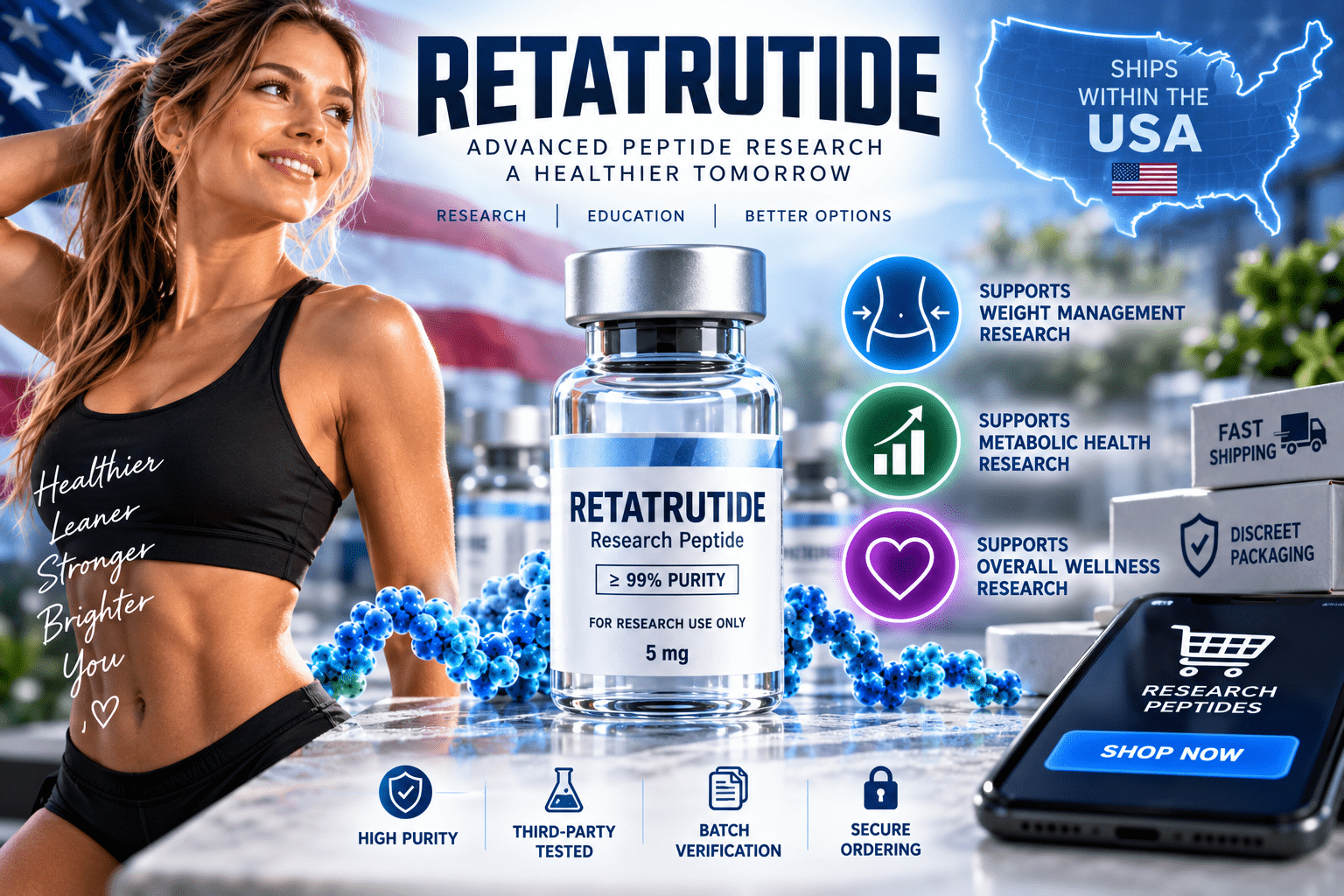
Researchers should buy retatrutide peptide only from a transparent, US-accessible research supplier that sells it as a lab-use-only material and provides batch-specific analytical documentation. A legitimate source should make it easy to verify identity, purity, and handling requirements before purchase, not after the vial arrives. If a website promotes retatrutide as a weight-loss injection, peptide shot, or wellness product for people, treat that as a serious red flag.
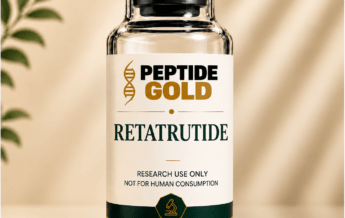
For research-grade sourcing, look for suppliers that clearly state the product is not for human or veterinary use. The listing should identify the material as lyophilized powder, provide available vial sizes, and offer a Certificate of Analysis for the exact batch. Strong documentation usually includes HPLC purity analysis and mass spectrometry confirmation, because researchers need to know both how pure the sample is and whether the molecular identity matches the label.
A practical buying checklist includes:
- Batch-specific COA available before or with shipment
- Third-party or clearly identified analytical testing
- Purity claim stated with a method, such as HPLC
- Mass spectrometry identity confirmation
- Lyophilized powder format rather than ready-to-inject consumer packaging
- Clear “research use only” and “not for human use” language
- Storage and reconstitution guidance for laboratory handling
- Responsive support for documentation and procurement questions
- Transparent policies for shipping, cold-pack handling if applicable, and damaged shipments

Retatrutide is different from common GLP-1 comparisons
Retatrutide is often discussed alongside semaglutide and tirzepatide, but it is not the same type of molecule. Semaglutide is associated with GLP-1 receptor activity, and tirzepatide is known for GLP-1 and GIP receptor activity. Retatrutide adds glucagon receptor activity, which is why it is described as a triple hormone receptor agonist. Lilly describes retatrutide as an investigational once-weekly triple agonist that activates GIP, GLP-1, and glucagon receptors. (lilly.com)
That distinction matters for lab planning. A researcher comparing incretin-related peptides should not treat these materials as interchangeable simply because they appear in the same online discussions. Receptor profile affects experimental design, control selection, interpretation of results, and how carefully documentation must be matched to the protocol.
It also matters for readers arriving from fitness or weight-loss searches. Terms like peptides for men, peptides for testosterone, and peptide for muscle growth often appear in the same internet ecosystem as retatrutide, but they describe very different interests. Retatrutide is not a testosterone product, not a steroid, and not a general bodybuilding peptide. If your real question is “are peptides steroids,” the short answer is no: peptides and steroids are different classes of compounds, though both can be misused when sold with unsupported performance or body-composition claims.
Product forms, purity, and documentation matter
Research retatrutide is commonly presented as a lyophilized powder in sealed vials. Lyophilization helps stabilize the material for storage and shipping, but it also means the powder must be handled carefully in the lab before any in-vitro work. Buyers may see different vial sizes, often ranging from smaller milligram quantities for preliminary work to larger vials for repeated experiments, but the right format depends on the protocol and institutional requirements.
Purity claims should never stand alone. A phrase like “high purity” is less useful than a batch record showing the test method, date, lot number, and result. If a supplier claims 99% or higher purity, the supporting COA should connect that number to the exact vial batch being shipped. Documentation should also show whether the compound identity was confirmed by mass spectrometry, not merely assumed from supplier labeling.
Before ordering, researchers should confirm:
- The product name and sequence or identifier match the intended research material.
- The batch number on the COA matches the vial label.
- The purity result is recent enough for procurement standards.
- The supplier describes storage conditions clearly.
- The product page does not encourage human dosing, self-injection, or off-label medical use.
How should retatrutide be reconstituted and stored for lab use?
Retatrutide supplied as lyophilized powder is typically reconstituted only when the lab protocol is ready for solution handling, using an appropriate sterile diluent such as bacteriostatic water when the protocol calls for it. Once reconstituted peptides are in solution, they are usually more sensitive to time, temperature, contamination, and repeated freeze-thaw cycles than dry powder. Follow the supplier’s COA, safety data sheet, and your lab’s standard operating procedures rather than internet dosing advice.
A plain-language lab workflow looks like this:
- Review the COA, product label, and protocol before opening the vial.
- Allow the sealed vial to equilibrate according to lab practice to reduce condensation risk.
- Use aseptic technique and sterile supplies appropriate for research handling.
- Add diluent slowly down the vial wall rather than forcefully blasting the powder.
- Gently swirl if needed; avoid aggressive shaking unless the protocol permits it.
- Label the reconstituted vial with concentration, diluent, date, lot number, and handler initials.
- Store according to supplier instructions and institutional policy.
- Discard any solution that shows cloudiness, particulates, unexpected color, or compromised sterility.

For unreconstituted material, many research suppliers recommend frozen storage, often around -20°C, while reconstituted material is commonly kept refrigerated for short-term lab use when compatible with the protocol. Avoid assuming every peptide behaves the same way. The phrase reconstituted peptides covers many different molecules, and stability can vary by sequence, buffer, concentration, and storage container.
A research-friendly peptide dosage chart without human dosing
A peptide dosage chart for retatrutide should be understood as a concentration planning aid for controlled research, not a guide for self-administration. Because retatrutide is not approved for personal use, this article does not provide human doses, injection schedules, or medical instructions. Instead, researchers can use basic concentration math to prepare protocol-specific working solutions.
Useful concentration examples include:
- If 10 mg of lyophilized peptide is reconstituted with 1 mL of diluent, the concentration is 10 mg/mL.
- If 10 mg is reconstituted with 2 mL, the concentration is 5 mg/mL.
- If 20 mg is reconstituted with 2 mL, the concentration is 10 mg/mL.
- If 30 mg is reconstituted with 3 mL, the concentration is 10 mg/mL.
- If 60 mg is reconstituted with 6 mL, the concentration is 10 mg/mL.
The formula is simple: total peptide mass divided by final solution volume equals concentration. From there, a lab can calculate aliquots for in-vitro work based on the approved protocol. This is not the same as a peptide shot, and it should not be converted into human injection advice.
Legal and safety red flags are part of smart sourcing
The FDA has repeatedly warned about unapproved GLP-1 products, including products marketed online and compounded products promoted with misleading claims. The agency has stated that compounded drugs are not FDA-approved and has raised concerns about unapproved GLP-1 drugs used for weight loss, including quality and storage problems. (fda.gov)
That context is important because retatrutide’s popularity has created a gray-market problem. A polished website, telehealth-style language, or social media testimonial does not prove a product is legal, sterile, accurately labeled, or safe. Research chemicals are not medicines, and consumer-facing claims can put buyers at legal and health risk.
Avoid sellers that:
- Recommend human dosing or “starter protocols”
- Market retatrutide for weight loss, bodybuilding, testosterone, or longevity
- Sell prefilled pens or ready-to-use injections without approved labeling
- Hide COAs until after purchase
- Use vague claims like “pharmaceutical grade” without documentation
- Offer no lot number, test method, or analytical source
- Suggest their product is equivalent to an FDA-approved medication
The best purchase decision is a documentation decision
The right place to buy retatrutide peptide in the USA is the supplier that can support your research record from order to storage. That means verifiable testing, clear labeling, appropriate lyophilized format, careful shipping practices, and strict research-use-only positioning. It also means walking away from any seller that blurs the line between lab material and personal medical use.
If you are a researcher, start with your protocol, procurement standards, and documentation requirements before comparing vial sizes or prices. If you are a consumer looking for a peptide for muscle growth, peptides for testosterone, or a weight-loss peptide shot, retatrutide sold online is not an approved shortcut and should not be used outside legitimate clinical research. The safest takeaway is simple: buy only for lawful laboratory research, verify every batch, handle reconstituted peptides carefully, and never treat a research vial as a medicine.