




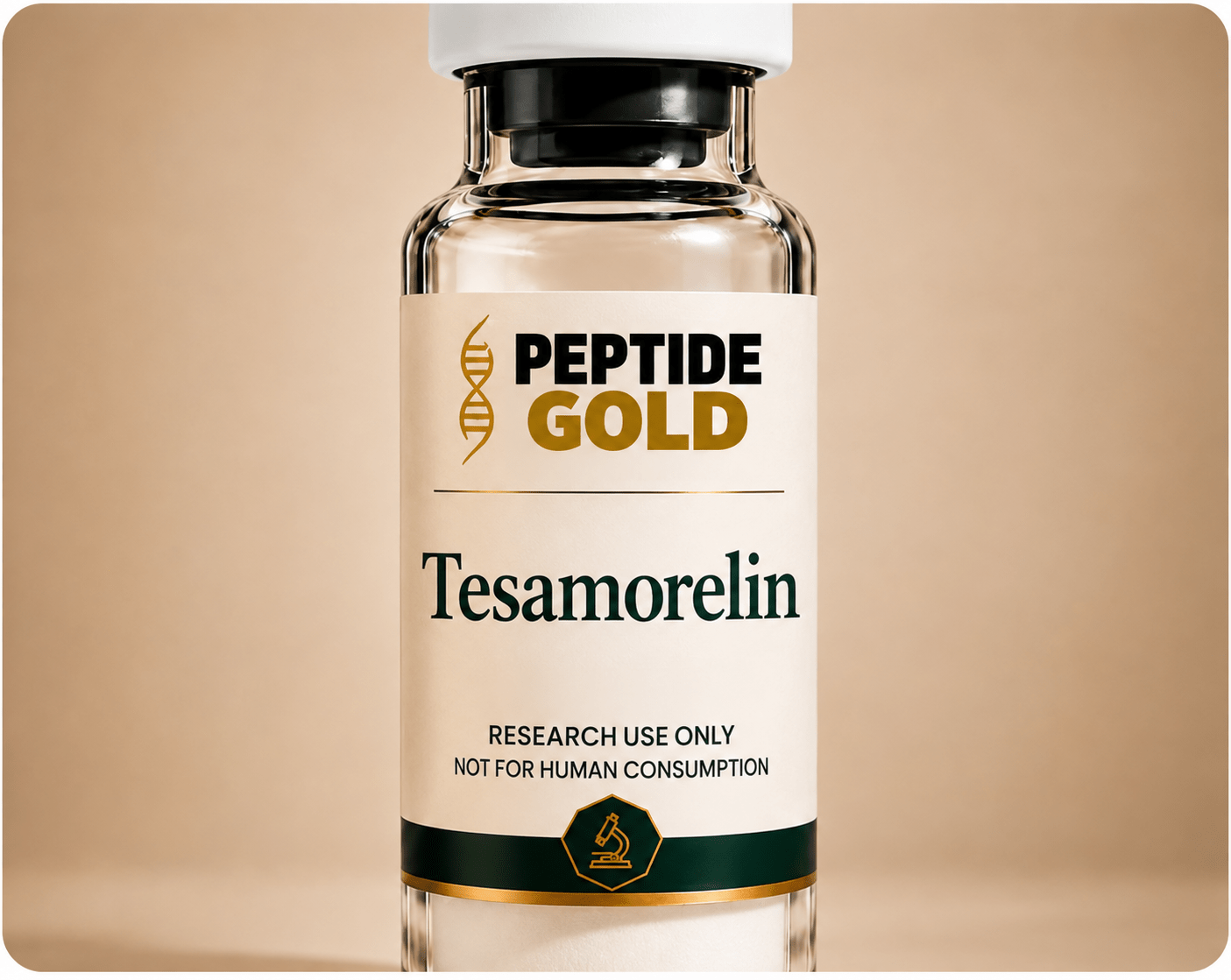
Tesamorelin: A Comprehensive Guide to Uses, Research, Dosing, Forms, and Potential Benefits
Tesamorelin is a synthetic peptide medication that stimulates the body’s own release of growth hormone, or GH, by mimicking natural growth hormone-releasing hormone, or GHRH.
It is particularly interesting because, unlike many peptides discussed in research and wellness settings, tesamorelin is an FDA-approved prescription medication.
In the United States, tesamorelin is marketed as EGRIFTA WR® for the reduction of excess abdominal fat in adults with HIV-associated lipodystrophy. It is not FDA-approved as a general weight-loss medication, bodybuilding peptide, anti-aging treatment, or cosmetic fat-loss drug.
Tesamorelin has been studied for:
- Visceral abdominal fat
- HIV-associated lipodystrophy
- Growth hormone and IGF-1 regulation
- Liver fat
- Metabolic health
- Body composition
- Muscle and lean mass
- Cardiometabolic risk
- Fatty liver research
- Potential applications in metabolic disease
Its biology is well established, and it has substantially more human clinical research than many experimental GHRH-related peptides.
At the same time, tesamorelin raises important questions regarding IGF-1 elevation, glucose regulation, fluid retention, cancer-related risk, and long-term cardiovascular safety.
What Is Tesamorelin?
Tesamorelin is a synthetic analogue of human growth hormone-releasing hormone.
Natural GHRH is produced by the hypothalamus.
It travels to the pituitary gland and binds to GHRH receptors on specialized cells known as somatotrophs.
These cells then release growth hormone.
The pathway can be simplified as:
Hypothalamus → GHRH → Pituitary → Growth Hormone → IGF-1
Tesamorelin acts at the GHRH portion of this pathway.
Instead of providing growth hormone directly, it encourages the pituitary to release more of the body’s own GH.
This distinguishes tesamorelin from recombinant human growth hormone.
How Is Tesamorelin Different From Natural GHRH?
Natural GHRH is broken down rapidly in the circulation.
Tesamorelin was modified to improve its stability.
It is based on the full 44-amino-acid human GHRH sequence but contains a chemical modification at its N-terminal end that makes the molecule more resistant to enzymatic degradation.
This modification allows tesamorelin to remain biologically active long enough to function as a practical medication.
The peptide still acts through the natural GHRH receptor.
How Does Tesamorelin Work?
Tesamorelin binds to GHRH receptors in the anterior pituitary gland.
This stimulates synthesis and release of endogenous growth hormone.
Growth hormone then travels through the bloodstream and stimulates production of:
IGF-1 — insulin-like growth factor 1.
IGF-1 is produced primarily by the liver, although many tissues produce it locally.
The resulting pathway influences:
fat metabolism
protein metabolism
body composition
bone
connective tissue
and cellular growth.
Importantly, tesamorelin works through the body’s own hypothalamic-pituitary system rather than simply supplying large amounts of external GH.
Tesamorelin Versus Growth Hormone
Tesamorelin and recombinant human growth hormone are not the same treatment.
Recombinant Growth Hormone
Growth hormone therapy supplies GH directly.
This bypasses the pituitary.
Tesamorelin
Tesamorelin stimulates the pituitary to release endogenous GH.
Because the normal pituitary remains involved, the secretion pattern may retain more of the body’s physiological regulation.
That does not mean tesamorelin is risk-free.
It still increases GH and IGF-1 activity, sometimes substantially.
What Is HIV-Associated Lipodystrophy?
Tesamorelin’s approved indication relates to a condition called HIV-associated lipodystrophy.
Some people living with HIV, particularly those exposed to certain older antiretroviral treatment regimens, can develop significant changes in body-fat distribution.
These may include:
increased visceral abdominal fat
loss of fat from the arms or legs
facial fat loss
and abnormal fat accumulation in other areas.
Visceral fat is the fat located deep within the abdominal cavity around the organs.
It differs from the softer subcutaneous fat located immediately beneath the skin.
Excess visceral fat is associated with:
insulin resistance
abnormal blood lipids
cardiovascular risk
and inflammatory changes.
Tesamorelin was developed specifically to reduce this excess abdominal visceral fat.
Does Tesamorelin Actually Reduce Visceral Fat?
Yes.
This is one of the peptide’s best-established effects.
In a major randomized trial involving 412 adults with HIV and excess abdominal fat, participants received either 2 mg of tesamorelin or placebo daily for 26 weeks.
Visceral adipose tissue fell by approximately:
15.2% in the tesamorelin group
while increasing by approximately:
5.0% in the placebo group.
Triglycerides also improved, while IGF-1 increased substantially.
The larger registration studies ultimately showed average visceral-fat reductions of approximately 14% to 18% over 26 weeks, depending on the trial.
This is strong direct human evidence.
Does Tesamorelin Reduce Body Weight?
This is where tesamorelin differs dramatically from medications such as semaglutide or tirzepatide.
Tesamorelin can reduce visceral fat without producing major overall weight loss.
In the FDA clinical trials, average body weight changed very little.
One study showed approximately:
−0.4 kg with tesamorelin
versus essentially no change with placebo.
Another showed approximately:
+0.5 kg with tesamorelin
versus +0.3 kg with placebo.
This is why FDA labeling specifically states that EGRIFTA WR is not indicated for weight-loss management.
The medication changes fat distribution and body composition rather than simply driving large decreases on the scale.
Visceral Fat Versus Subcutaneous Fat
Tesamorelin appears to have a relatively selective effect on visceral adipose tissue.
In the original major trial, visceral fat fell substantially while subcutaneous fat changed very little.
This matters because people with HIV-associated lipodystrophy may already have reduced subcutaneous fat in their arms, legs, or face.
A treatment that simply removed more subcutaneous fat could potentially worsen appearance and metabolic problems.
Tesamorelin’s preferential effect on visceral abdominal fat is therefore particularly useful in this population.
Tesamorelin and Waist Circumference
Although total body weight may not change much, waist circumference can decline.
FDA clinical studies showed average decreases in waist circumference of approximately:
2 to 3 centimeters with tesamorelin
compared with around 1 centimeter with placebo over 26 weeks.
This corresponds with the reduction in deep abdominal fat demonstrated on CT imaging.
Tesamorelin and Lean Body Mass
Another interesting finding involves lean body mass.
In the two major clinical studies, tesamorelin increased mean lean body mass by approximately:
1.2 to 1.3 kilograms.
Placebo groups showed essentially no increase or slight decreases.
This provides some evidence that increasing endogenous GH through tesamorelin can alter body composition in more than one way.
However, these findings should not be interpreted as proof that tesamorelin is a bodybuilding drug.
The patients had HIV-associated lipodystrophy, and the trials were not designed to establish muscle-building performance in healthy athletes.
Does Tesamorelin Build Muscle?
Tesamorelin can increase lean body mass in its approved patient population.
But “lean body mass” does not necessarily equal pure skeletal muscle.
It includes:
muscle
water
organs
and other non-fat tissues.
Tesamorelin has not undergone large controlled trials demonstrating that healthy adults gain substantial strength or athletic muscle from treatment.
Therefore, describing it simply as a muscle-building peptide would overstate the evidence.
Tesamorelin and IGF-1
One of the clearest biological effects of tesamorelin is an increase in IGF-1.
In the original NEJM trial, average IGF-1 increased approximately:
81% during tesamorelin treatment.
The larger registration studies likewise showed average increases of more than 100 ng/mL compared with placebo.
This explains much of the peptide’s metabolic activity.
It also creates one of the major reasons tesamorelin requires monitoring.
FDA labeling specifically recommends periodic monitoring of IGF-1 because treatment can produce elevated levels.
Why Is High IGF-1 Important?
IGF-1 is essential for normal physiology.
It contributes to:
protein synthesis
bone health
cell growth
tissue repair
and metabolism.
But persistently excessive IGF-1 is not necessarily desirable.
Very high GH/IGF-1 signaling can contribute to:
fluid retention
joint symptoms
changes in glucose metabolism
and excessive tissue growth.
IGF-1 signaling is also relevant to cancer biology because it can influence cellular proliferation and survival.
That does not mean tesamorelin causes cancer.
It does explain why FDA recommends caution regarding malignancy.
Tesamorelin and Cancer Concerns
EGRIFTA WR is contraindicated in people with active malignancy.
FDA labeling also advises careful consideration in people with a previous history of cancer because HIV-positive populations already have an elevated background risk of certain malignancies.
The concern is biological.
Tesamorelin increases GH and IGF-1, both of which participate in growth signaling.
There is no evidence that every person receiving tesamorelin develops increased cancer risk.
But active cancer is considered an inappropriate setting for stimulating this axis.
Tesamorelin and Liver Fat
One of the most interesting areas beyond the original approval involves hepatic fat.
A randomized clinical trial involving people with HIV and abdominal fat accumulation found that six months of tesamorelin reduced both:
visceral fat
and liver fat.
Median liver-fat percentage decreased by approximately 2 percentage points with tesamorelin while increasing slightly with placebo, producing a net treatment effect around −2.9 percentage points.
This led to substantial interest in tesamorelin for metabolic liver disease.
Tesamorelin and Fatty Liver Disease
Fat accumulation in the liver can contribute to inflammation and eventually fibrosis.
Because tesamorelin reduces visceral fat and may reduce hepatic fat, researchers have investigated whether it could have broader liver applications.
However, the FDA-approved indication remains specifically excess abdominal fat in adults with HIV-associated lipodystrophy.
Tesamorelin should not automatically be described as an approved treatment for general fatty liver disease or MASLD.
The liver findings are promising research rather than a universal approved indication.
Current 2026 Meta-Analysis
Tesamorelin continues to receive research attention.
A 2026 meta-analysis of randomized controlled trials evaluated its effects in people living with HIV-associated lipodystrophy.
The analysis included five randomized trials and examined:
visceral adipose tissue
body composition
hepatic fat
metabolic variables
hormonal markers
and safety outcomes.
A separate systematic review and meta-analysis published in July 2026 similarly reassessed the efficacy and safety of tesamorelin in people living with HIV and lipodystrophy.
The fact that these analyses continue to find enough randomized evidence to review distinguishes tesamorelin from many research-market peptides that have little or no controlled human data.
Does Tesamorelin Improve Cholesterol?
Tesamorelin’s effects on lipids have been studied.
In the original large trial, triglycerides fell by approximately:
50 mg/dL in the tesamorelin group
while increasing by approximately:
9 mg/dL with placebo.
The total cholesterol-to-HDL ratio also improved.
These effects are potentially beneficial.
However, FDA does not label tesamorelin specifically as a cholesterol-lowering medication.
Does Tesamorelin Reduce Cardiovascular Risk?
This remains unknown.
Reducing visceral fat, triglycerides, and abdominal circumference might reasonably be expected to improve cardiovascular risk.
But this has not been proven through cardiovascular outcome trials.
FDA labeling explicitly states:
long-term cardiovascular safety has not been established.
Therefore, it would be inappropriate to claim that tesamorelin prevents heart attacks or strokes based solely on its fat-reducing effects.
Tesamorelin Dosing
Tesamorelin has an FDA-approved dosage.
However, an important formulation change occurred.
The current EGRIFTA WR formulation is supplied as an 11.6 mg multidose vial.
The recommended dosage is:
1.28 mg subcutaneously once daily.
The injection is administered into the abdomen, and sites should be rotated.
It should not be injected into:
scar tissue
bruised areas
or directly into the navel.
Why Do Older Sources Say 2 mg?
This is an important source of confusion.
Most of the original clinical trials used:
2 mg once daily.
Older EGRIFTA formulations were also dosed at 2 mg.
The newer EGRIFTA WR formulation has different bioavailability.
FDA pharmacokinetic data show that:
1.28 mg of EGRIFTA WR
produces systemic exposure similar to the older:
2 mg EGRIFTA formulation.
Therefore:
1.28 mg WR is not simply a lower version of the old dose.
The formulations are not directly interchangeable.
FDA specifically states that EGRIFTA WR and EGRIFTA SV should not be substituted dose-for-dose.
Current EGRIFTA WR Formulation
The current FDA-approved EGRIFTA WR presentation contains:
11.6 mg tesamorelin per vial
as a white to off-white lyophilized powder.
It is supplied with:
30 mL bacteriostatic water for injection
for reconstitution.
A 1.28 mg dose corresponds to:
0.16 mL of the reconstituted solution.
Once reconstituted, current labeling allows the vial to be stored at room temperature and requires the remaining solution to be discarded after seven days.
These instructions apply specifically to FDA-approved EGRIFTA WR and should not be extrapolated to unrelated research formulations.
How Long Does Tesamorelin Stay in the Body?
Tesamorelin itself is cleared rapidly.
For the current EGRIFTA WR formulation, FDA pharmacokinetic data report an average elimination half-life of approximately:
11 minutes.
That can sound surprising for a once-daily medication.
However, the biological effects last much longer than the peptide remains in plasma.
Tesamorelin triggers pituitary GH release, which then produces downstream effects involving IGF-1 and metabolism.
Therefore, plasma half-life and biological duration are not the same thing.
Tesamorelin Versus CJC-1295
Both compounds act through the GHRH pathway.
But their regulatory status and evidence are very different.
Tesamorelin
- FDA approved
- Full-length GHRH analogue
- Extensive human clinical evidence
- Standardized pharmaceutical formulation
- Approved specifically for HIV-associated excess visceral abdominal fat
CJC-1295
- Experimental
- Not FDA approved
- Available in DAC and no-DAC versions
- Much less direct clinical outcome evidence
Tesamorelin therefore has a far stronger established medical evidence base.
Tesamorelin Versus Sermorelin
Sermorelin is another GHRH-related peptide.
It corresponds to the first 29 amino acids of GHRH.
Tesamorelin contains the full GHRH sequence with a stability-enhancing modification.
Both can stimulate growth hormone secretion.
However, tesamorelin has extensive modern human trial data demonstrating visceral-fat reduction in a specific disease population.
Sermorelin does not have an equivalent FDA-approved body-composition indication.
Tesamorelin Versus Ipamorelin
These compounds stimulate GH through different receptors.
Tesamorelin → GHRH receptor
Ipamorelin → ghrelin/GHSR-1a receptor
Both can stimulate endogenous growth hormone.
However, tesamorelin has an FDA-approved medical indication and established pharmaceutical dosing.
Ipamorelin remains experimental and is not FDA approved.
Does Tesamorelin Cause Water Retention?
It can.
Growth-hormone-related therapies may cause:
edema
joint discomfort
muscle pain
and carpal tunnel syndrome.
FDA specifically warns that fluid retention can occur during EGRIFTA WR treatment and may lead to edema, arthralgia, or carpal tunnel symptoms.
These effects are often related to increased GH and IGF-1 signaling.
Tesamorelin and Blood Sugar
This is another important area.
Growth hormone can reduce insulin sensitivity.
Tesamorelin may therefore cause:
glucose intolerance
or potentially contribute to diabetes mellitus in susceptible individuals.
FDA labeling recommends monitoring glucose status and notes that people with preexisting diabetes may require changes in their diabetes medication.
Interestingly, the original major trial did not show a significant overall deterioration in glucose measurements over 26 weeks.
A smaller liver-fat study observed a temporary increase in fasting glucose at two weeks, but no significant treatment difference remained at six months.
This suggests that glucose effects can be complex and may vary by individual.
Injection-Site Reactions
Because tesamorelin is administered daily, local reactions are possible.
FDA labeling describes:
redness
itching
pain
irritation
and bruising.
Rotating injection sites is recommended.
Hypersensitivity and Antibodies
Some patients can develop immune responses to tesamorelin.
In the original clinical trial, antibodies against tesamorelin were detected in a substantial proportion of treated patients.
A small number developed reactions including urticaria.
FDA labeling warns that hypersensitivity reactions including rash and urticaria can occur and advises discontinuation and medical attention if such reactions develop.
Who Should Not Use Tesamorelin?
According to current FDA labeling, EGRIFTA WR is contraindicated in several situations.
These include people with:
active malignancy
pregnancy
known hypersensitivity to tesamorelin
and disruption of the normal hypothalamic-pituitary axis caused by conditions such as:
pituitary surgery
pituitary tumors
hypopituitarism
head irradiation
or significant head trauma.
These contraindications make sense because tesamorelin requires an intact pituitary system to produce its intended effect.
Pregnancy
Tesamorelin is contraindicated during pregnancy.
The FDA notes that reducing visceral fat has no known benefit in pregnancy and that altering maternal metabolic physiology could potentially cause fetal harm.
Treatment should be discontinued if pregnancy occurs.
Tesamorelin and General Obesity
Tesamorelin is sometimes discussed online as though it were a general belly-fat medication.
That is misleading.
Its FDA-approved indication is very specific:
reduction of excess abdominal fat in adults with HIV-associated lipodystrophy.
It has not been established as a substitute for modern obesity medications.
For general obesity, medications such as:
semaglutide
and tirzepatide
have extensive trials showing large reductions in total body weight.
Tesamorelin generally produces little total weight loss.
Its primary effect is redistribution of body composition and reduction of visceral fat in a particular clinical population.
Does the Fat Return When Tesamorelin Is Stopped?
Clinical extension studies provide an important answer.
Patients who continued tesamorelin after the first six months generally maintained more of their visceral-fat reduction.
Patients switched from tesamorelin to placebo tended to regain visceral fat.
This suggests tesamorelin’s effects depend on continued treatment.
It should therefore be viewed more like a chronic metabolic therapy than a permanent one-time fat-removal treatment.
Tesamorelin and Anti-Aging
Tesamorelin sometimes appears in anti-aging clinics because growth hormone secretion declines with age.
Claims may include:
improved body composition
better recovery
more energy
less visceral fat
and higher IGF-1.
However, tesamorelin is not FDA-approved for anti-aging.
Increasing GH or IGF-1 in an older adult is not automatically beneficial.
The GH-IGF-1 system has complex relationships with:
metabolism
cancer
cardiovascular health
and longevity.
There is no evidence that tesamorelin extends human lifespan.
Tesamorelin and Athletic Performance
Tesamorelin’s effects on GH and IGF-1 make it relevant to competitive sports.
Growth hormone-releasing factors are prohibited under anti-doping rules.
Competitive athletes should therefore assume tesamorelin can create serious anti-doping consequences.
Its FDA approval for one medical condition does not mean unrestricted athletic use is permitted.
What Forms Is Tesamorelin Offered In?
EGRIFTA WR
The current FDA-approved formulation is:
EGRIFTA WR
containing 11.6 mg tesamorelin per multidose vial.
It is reconstituted using the supplied bacteriostatic water and dosed at 1.28 mg once daily.
Older EGRIFTA Formulations
Earlier pharmaceutical products and the major clinical trials used 2 mg daily formulations.
These are why older literature frequently refers to “2 mg tesamorelin.”
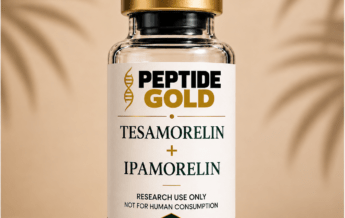
Lyophilized Research Tesamorelin
Research suppliers may offer freeze-dried tesamorelin in different vial sizes.
These products should not automatically be considered equivalent to FDA-approved EGRIFTA.
Pharmaceutical EGRIFTA has standardized:
identity
purity
potency
sterility
stability
and manufacturing controls.
A research-market vial does not automatically have those characteristics.
Is Tesamorelin FDA Approved?
Yes.
Tesamorelin first received U.S. approval in 2010.
The current EGRIFTA WR formulation is FDA approved for:
reduction of excess abdominal fat in HIV-infected adult patients with lipodystrophy.
However, FDA explicitly states that it is:
not indicated for weight-loss management,
and its long-term cardiovascular safety has not been established.
This distinction is especially important when tesamorelin is discussed outside HIV medicine.
Current Research in 2026
Tesamorelin remains scientifically relevant even though it has been available for more than a decade.
A 2026 meta-analysis of randomized trials continues to support its effects on body composition in HIV-associated lipodystrophy while evaluating hepatic, metabolic, and safety outcomes.
A second systematic review published in July 2026 similarly reassessed its effectiveness and safety in people living with HIV.
Researchers remain particularly interested in whether tesamorelin’s ability to reduce visceral and hepatic fat can translate into broader benefits involving:
metabolic liver disease
cardiovascular risk
insulin sensitivity
and inflammatory markers.
But these possible applications need to be distinguished from its established FDA-approved indication.
What Research Is Still Needed?
Tesamorelin already has a comparatively strong evidence base, but important questions remain.
Longer studies are needed to determine:
cardiovascular outcomes
long-term cancer-related safety
effects on diabetes risk
duration of visceral-fat reduction
and whether hepatic fat improvements reduce progression of liver disease.
Researchers also need to determine whether carefully selected populations outside HIV-associated lipodystrophy could benefit from targeted visceral-fat reduction without creating unacceptable GH/IGF-1-related risk.
The Bottom Line
Tesamorelin is a synthetic growth hormone-releasing hormone analogue that stimulates the pituitary gland to release endogenous GH and subsequently increases IGF-1.
Unlike many GHRH-related research peptides, tesamorelin is an FDA-approved prescription medication with extensive human clinical evidence.
Its established role is highly specific:
reducing excess abdominal visceral fat in adults with HIV-associated lipodystrophy.
Large randomized trials demonstrated visceral-fat reductions of approximately 14% to 18% over 26 weeks, while overall body weight changed very little.
In one major trial, visceral fat fell by approximately 15.2% with tesamorelin while increasing 5.0% with placebo, and triglycerides improved substantially.
Tesamorelin can also increase lean body mass and has demonstrated potentially beneficial effects on hepatic fat in research involving people with HIV.
However, it should not be confused with a conventional weight-loss medication.
It is specifically not FDA-approved for general weight management, and clinical trials showed very little change in total body weight.
The current FDA-approved formulation, EGRIFTA WR, is dosed at:
1.28 mg subcutaneously once daily.
This newer formulation produces exposure comparable with the older 2 mg formulation used in the original clinical trials. The two formulations are not dose-for-dose interchangeable.
The medication also requires meaningful safety monitoring because it can increase:
IGF-1
and may contribute to:
fluid retention
joint discomfort
carpal tunnel symptoms
glucose intolerance
injection-site reactions
and hypersensitivity reactions.
It is contraindicated in people with active malignancy, pregnancy, certain disruptions of the hypothalamic-pituitary axis, or known hypersensitivity to tesamorelin.
Perhaps the most accurate way to describe tesamorelin in 2026 is:
a clinically established GHRH analogue that selectively reduces visceral abdominal fat by stimulating endogenous GH and IGF-1 signaling, with strong evidence in HIV-associated lipodystrophy and emerging research involving hepatic fat and metabolic health—but without approval or comparable evidence as a general obesity, bodybuilding, or anti-aging therapy.
For researchers, tesamorelin is particularly important because it demonstrates that manipulating the body’s GHRH-GH-IGF-1 axis can selectively alter visceral fat without requiring major overall weight loss.
For consumers, the key distinction is between:
an FDA-approved tesamorelin pharmaceutical used for a specific medical condition
and
research-market tesamorelin promoted for general fat loss, muscle gain, or anti-aging.
Those are not equivalent uses or evidence bases.
Educational and medical notice: This article is intended for general scientific and educational information and is not individualized medical advice. The 1.28 mg once-daily dosage discussed above applies specifically to the FDA-approved EGRIFTA WR formulation for its labeled indication and should not be applied to unrelated research-grade products. Tesamorelin is not FDA-approved for general weight loss, bodybuilding, athletic performance, or anti-aging.