

PT-141 (Bremelanotide): A Comprehensive Guide to Uses, Research, Dosing, Forms, and Potential Benefits
PT-141, better known by its generic pharmaceutical name bremelanotide, is a synthetic peptide that acts on the body’s melanocortin receptor system.
It is most widely discussed in connection with:
sexual desire
sexual arousal
erectile function
and broader central nervous system pathways involved in sexual response.
PT-141 is particularly interesting because it works very differently from medications such as sildenafil or tadalafil.
Traditional erectile-dysfunction medications primarily act on blood vessels and the nitric-oxide pathway to improve penile blood flow.
PT-141 acts mainly through the brain and central melanocortin system.
That means it can influence the neurological pathways involved in:
sexual motivation
desire
and genital arousal.
PT-141 also differs from many research peptides because one pharmaceutical form of the compound is already FDA-approved.
Bremelanotide is marketed in the United States as Vyleesi®, an FDA-approved prescription medication for certain premenopausal women with acquired, generalized hypoactive sexual desire disorder, or HSDD. It is not approved for men, postmenopausal women, or general enhancement of sexual performance.
At the same time, experimental research involving PT-141 has included both men and women, particularly studies involving erectile dysfunction and sexual arousal.
What Is PT-141?
PT-141 is a synthetic cyclic peptide related to alpha-melanocyte-stimulating hormone, or α-MSH.
It was developed from research involving Melanotan II, another melanocortin peptide.
Researchers studying Melanotan II initially noticed an unexpected side effect:
subjects sometimes developed spontaneous erections and changes in sexual desire.
This suggested that melanocortin pathways were involved not only in pigmentation but also in sexual behavior.
Researchers subsequently developed PT-141 to focus more strongly on those central sexual effects while reducing emphasis on tanning and pigmentation.
The resulting compound became known as:
PT-141
and later:
bremelanotide.
How Does PT-141 Work?
PT-141 is a melanocortin receptor agonist.
Its sexual effects appear to be mediated primarily through:
MC3R — melanocortin-3 receptor
and especially
MC4R — melanocortin-4 receptor.
These receptors are expressed in several areas of the central nervous system involved in:
sexual motivation
reward
autonomic function
and reproductive behavior.
Rather than directly increasing blood flow to genital tissue, PT-141 appears to change neural signaling involved in sexual response.
The basic concept can be simplified as:
PT-141 → melanocortin receptors in the brain → increased sexual signaling → changes in desire and arousal
This makes it fundamentally different from PDE5 inhibitors such as Viagra.
PT-141 Versus Viagra
Sildenafil, marketed as Viagra, inhibits an enzyme called PDE5.
This allows nitric oxide signaling to increase blood flow within erectile tissue.
Therefore:
Viagra primarily acts peripherally on blood vessels.
PT-141 acts primarily:
centrally through the brain’s melanocortin system.
This means the two medications can influence different parts of the sexual response.
Sildenafil can improve erection mechanics but generally does not directly increase libido.
PT-141 may influence both:
sexual desire
and genital arousal.
That distinction is one reason researchers studied PT-141 in men who responded poorly to sildenafil.
PT-141 and Erectile Dysfunction
Some of the earliest human PT-141 studies involved men with erectile dysfunction.
In a controlled trial, healthy men received subcutaneous PT-141 doses ranging from 0.3 mg to 10 mg.
Significant erectile responses were observed at doses above approximately 1 mg.
Researchers then studied men with erectile dysfunction who reported inadequate responses to Viagra.
Those participants received either:
4 mg PT-141
or
6 mg PT-141
subcutaneously.
Both doses produced statistically significant erectile responses compared with placebo.
These findings demonstrated that PT-141 could affect erectile physiology even in men who had not responded adequately to a conventional PDE5 inhibitor.
However, PT-141 is not currently FDA-approved for erectile dysfunction in men.
Intranasal PT-141 Research in Men
Earlier development also investigated an intranasal form of PT-141.
Healthy men and men with mild-to-moderate erectile dysfunction received different intranasal doses.
Researchers found significant erectile responses at doses above approximately 7 mg.
The first erection generally began around:
30 minutes after administration.
The measured half-life ranged from approximately:
1.85 to 2.09 hours.
Flushing and nausea were the most common side effects.
Although this research showed biological activity, the currently FDA-approved product is subcutaneous, not intranasal.
PT-141 Combined With Sildenafil
Because PT-141 and sildenafil work through different pathways, researchers also studied them together.
In one randomized crossover trial, men with erectile dysfunction received:
25 mg sildenafil + 7.5 mg intranasal PT-141
or sildenafil alone.
The combination produced a significantly greater erectile response than sildenafil alone.
This suggests that central melanocortin signaling and peripheral nitric-oxide signaling can complement one another.
However, this was experimental research.
There is no FDA-approved PT-141 plus sildenafil combination regimen.
PT-141 and Female Sexual Desire
The strongest modern clinical evidence for PT-141 involves women with hypoactive sexual desire disorder.
HSDD refers to persistently low sexual desire that causes significant personal distress or relationship difficulty.
For the FDA-approved bremelanotide indication, the condition must be:
acquired, meaning desire was previously normal,
and
generalized, meaning the problem is not limited to one partner, situation, or type of stimulation.
Vyleesi is approved specifically for premenopausal women whose HSDD is not caused by another medical or psychiatric condition, relationship problems, or medication effects.
Phase 3 Research in Women
The pivotal RECONNECT program included two major Phase 3 randomized controlled trials.
A total of more than 1,200 women were included in the efficacy analysis.
Participants received either:
bremelanotide 1.75 mg
or placebo as needed for 24 weeks.
Women receiving bremelanotide experienced statistically significant:
increases in sexual desire
and
reductions in distress related to low sexual desire compared with placebo.
These trials provided the basis for FDA approval.
The improvements were statistically significant but should not be interpreted as creating an overwhelming response in every patient.
Like many therapies for sexual dysfunction, individual responses vary.
How Is FDA-Approved PT-141 Dosed?
Unlike many experimental peptides, bremelanotide has a formal FDA-approved dosage for its approved indication.
The recommended Vyleesi dose is:
1.75 mg subcutaneously
administered in the:
abdomen
or
thigh
at least:
45 minutes before anticipated sexual activity.
Patients should not use:
more than one dose within 24 hours.
Using:
more than eight doses per month is not recommended.
If HSDD symptoms have not improved after approximately eight weeks, the prescribing information recommends discontinuation.
These dosing instructions apply to the FDA-approved pharmaceutical product and its approved population.
They should not automatically be applied to research-grade PT-141 products or to men.
Why Is Dosing Limited to Eight Times Per Month?
One reason is the effect on blood pressure.
Bremelanotide can temporarily increase blood pressure and decrease heart rate following each dose.
These changes usually resolve within approximately:
12 hours.
More frequent exposure would increase the amount of time a patient experiences these cardiovascular effects.
Frequent dosing can also increase the risk of focal hyperpigmentation.
For these reasons, daily use is not recommended.
What Forms Is PT-141 Offered In?
FDA-Approved Autoinjector
Vyleesi is supplied as a single-dose prefilled autoinjector containing:
1.75 mg bremelanotide in 0.3 mL solution.
It is intended for subcutaneous use.
The product is pharmaceutical-grade and manufactured under regulated conditions.
Lyophilized Research Powder
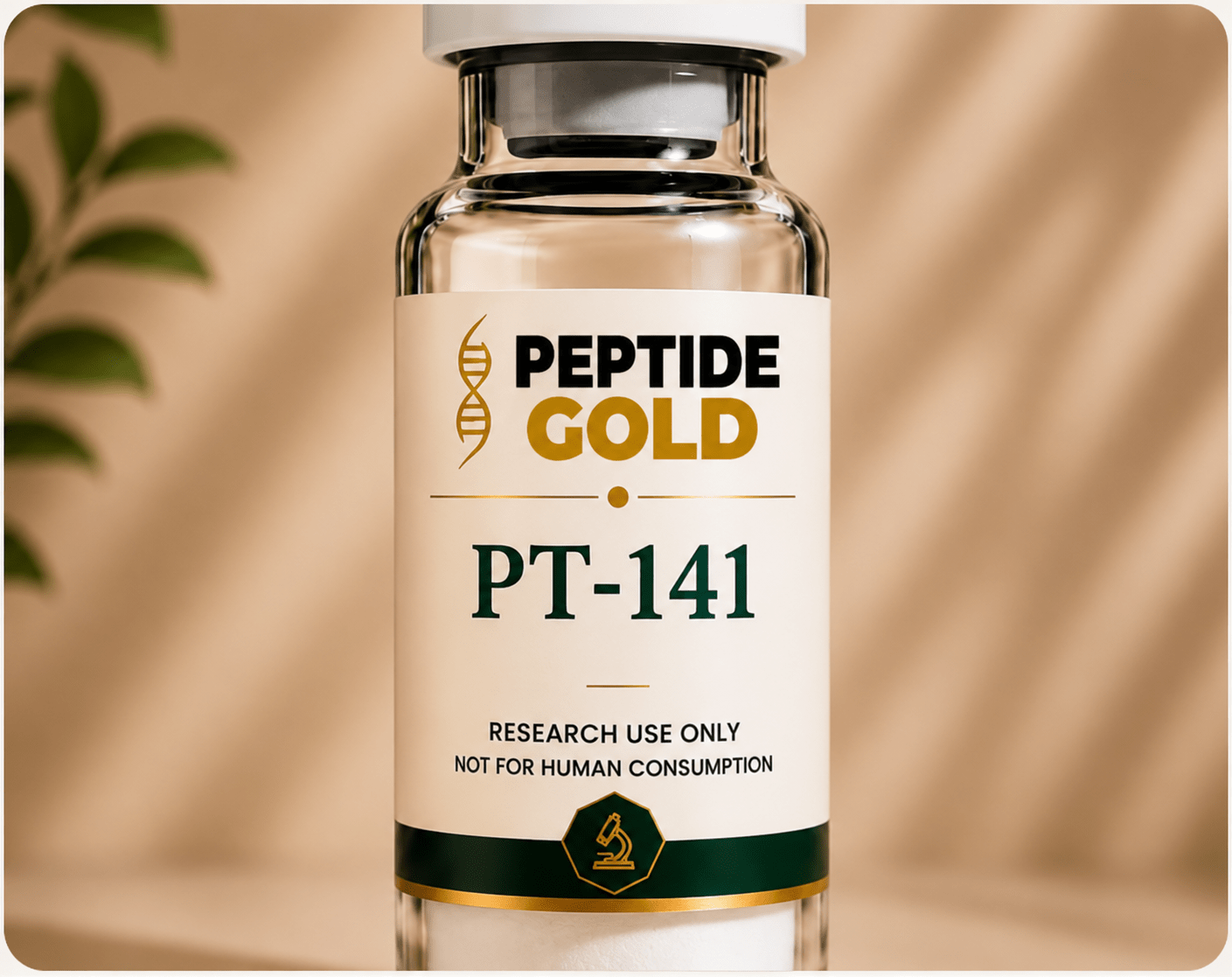
PT-141 is also commonly sold through research suppliers as:
lyophilized, or freeze-dried, powder.
These products may be supplied in small research vials.
A research vial should not automatically be assumed to have the same:
purity
sterility
concentration
stability
or manufacturing controls as Vyleesi.
Intranasal Preparations
Intranasal PT-141 played an important role in early development.
Research showed biological effects through nasal administration.
However, the FDA-approved product is subcutaneous.
Commercial nasal sprays sold outside regulated pharmaceutical channels should not be considered equivalent to FDA-approved bremelanotide.
PT-141 and Sexual Desire Versus Performance
This distinction is particularly important.
Vyleesi is not approved as a general sexual-performance enhancer.
Its approved purpose is to treat clinically defined HSDD in premenopausal women.
A person who already has normal sexual desire should not assume that PT-141 will necessarily improve sexual performance.
The drug affects desire-related signaling, not simply mechanical sexual performance.
How Quickly Does PT-141 Work?
For the approved formulation, the dose is given at least:
45 minutes before anticipated sexual activity.
However, FDA labeling specifically notes that the exact duration of efficacy and ideal timing window are not fully characterized.
Individuals can experience differences in:
onset
duration
and adverse effects.
Earlier male research using intranasal PT-141 observed erectile responses beginning around 30 minutes after exposure.
The route and dose in those experiments were different from current FDA-approved use.
Does PT-141 Increase Testosterone?
PT-141 is not primarily a testosterone-enhancing peptide.
It does not work in the same way as:
hCG
or other compounds that directly influence the hypothalamic-pituitary-gonadal axis.
Its main mechanism is central melanocortin signaling.
A person may experience increased sexual desire without a significant change in testosterone.
This distinction is useful because libido and testosterone are related but not identical.
PT-141 Versus Kisspeptin
Both compounds may influence sexual function but through very different mechanisms.
Kisspeptin stimulates:
GnRH → LH/FSH → reproductive hormones.
It therefore acts directly on the reproductive endocrine axis.
PT-141 activates:
melanocortin receptors in the central nervous system.
Its effects are primarily neurological rather than driven by increased testosterone or estrogen.
These peptides should not be considered interchangeable.
PT-141 Versus Oxytocin
Oxytocin is another neuropeptide associated with intimacy and sexual behavior.
However:
Oxytocin is strongly involved in bonding, childbirth, lactation, and social processing.
PT-141 acts primarily through melanocortin pathways involved in desire and arousal.
Oxytocin is sometimes discussed as a “bonding hormone,” whereas PT-141 has more direct clinical evidence supporting changes in sexual desire.
Common Side Effects
The most common adverse effect of FDA-approved bremelanotide is:
nausea.
In clinical trials, nausea occurred in approximately:
40% of patients.
About:
13% required anti-nausea medication,
and approximately:
8% discontinued treatment because of nausea.
Other common adverse effects include:
- Flushing
- Injection-site reactions
- Headache
- Vomiting
Nausea is often most pronounced following the first dose and may become less severe with later doses.
Blood Pressure Effects
PT-141 can temporarily increase blood pressure.
A decrease in heart rate may occur at the same time.
These effects typically peak relatively soon after administration and generally resolve within approximately 12 hours.
Because of this, Vyleesi is contraindicated in people with uncontrolled hypertension or known cardiovascular disease.
The prescribing information also recommends considering overall cardiovascular risk before treatment.
Hyperpigmentation
Because bremelanotide belongs to the melanocortin family, pigmentation changes are possible.
FDA labeling describes focal hyperpigmentation involving areas such as:
face
gums
and breasts.
This occurred in approximately 1% of patients receiving up to eight doses per month.
The risk appears greater:
with more frequent use
and in people with darker skin pigmentation.
Importantly, some pigmentation changes were not confirmed to completely resolve after treatment stopped.
This is another reason daily or excessive dosing is discouraged.
PT-141 and Melanotan II
PT-141 was developed from research related to Melanotan II.
Both are melanocortin agonists, but they are not identical.
Melanotan II strongly influences:
pigmentation
sexual responses
and appetite.
PT-141 was developed with a stronger therapeutic emphasis on sexual function, eventually becoming bremelanotide.
This development process helped separate sexual melanocortin effects from the tanning-focused application associated with Melanotan compounds.
PT-141 and Appetite
Because melanocortin receptors are involved in appetite regulation, PT-141 may also affect food-related signaling.
However, appetite suppression is not its approved indication.
PT-141 has not demonstrated the type of weight-loss effects seen with:
or retatrutide.
It should not be considered an established obesity peptide.
PT-141 in Men
PT-141 has substantial experimental evidence in men.
Early controlled studies found improved erectile responses in:
healthy men
men with mild-to-moderate erectile dysfunction
and men who reported inadequate responses to sildenafil.
A larger randomized study also investigated intranasal bremelanotide in men who had not responded adequately to sildenafil.
These findings demonstrate genuine male biological activity.
However, the FDA-approved labeling explicitly states that Vyleesi is not indicated for men.
That difference between evidence of activity and regulatory approval is important.
PT-141 in Women
The clinical-development program eventually concentrated on women with HSDD.
A preliminary intranasal study involving 18 premenopausal women found that more women reported moderate or high sexual desire following bremelanotide than after placebo, although objective vaginal blood-flow measurements did not significantly improve.
Later dose-finding trials moved to subcutaneous administration and investigated doses including:
0.75 mg
1.25 mg
and
1.75 mg.
The 1.75 mg dose ultimately became the approved dose.
Long-Term Research
The pivotal Phase 3 studies included an optional open-label extension lasting up to an additional year.
Hundreds of participants entered the extension, providing additional exposure and safety data.
This gives bremelanotide a considerably stronger human evidence base than many compounds typically sold as research peptides.
Still, long-term safety must be viewed in the context of the approved schedule rather than daily or frequent experimental use.
Is PT-141 FDA Approved?
Yes—but for one specific indication.
Bremelanotide was approved by the FDA in 2019 under the brand name:
Vyleesi.
It is approved for:
acquired, generalized hypoactive sexual desire disorder in premenopausal women when low desire causes marked distress or interpersonal difficulty and is not caused by another medical condition, psychiatric condition, relationship issue, or medication.
It is not FDA-approved for:
men,
postmenopausal women,
erectile dysfunction,
general libido enhancement,
or improving sexual performance.
Research-Grade PT-141 Versus Vyleesi
This distinction deserves emphasis.
Vyleesi is an FDA-approved pharmaceutical product with:
verified active ingredient
standardized concentration
sterile manufacturing
validated stability
and FDA-reviewed labeling.
A research-market vial containing PT-141 does not automatically possess these characteristics.
Even if the molecule listed on the label is theoretically identical, the manufacturing and quality-control standards can be completely different.
Therefore, findings from Vyleesi clinical trials cannot automatically establish the quality or safety of an unrelated research product.
Current Research
PT-141’s major pharmaceutical development work has already resulted in an approved product.
Research nevertheless continues into the melanocortin system and how it regulates:
sexual motivation
female sexual dysfunction
erectile function
reward signaling
and potentially other neurobehavioral processes.
The compound is scientifically important because it demonstrated that sexual dysfunction can be treated through a central neural pathway rather than exclusively through genital blood flow or sex-hormone replacement.
That concept could influence future treatments for both male and female sexual dysfunction.
What Research Is Still Needed?
For its approved female indication, bremelanotide already has substantial efficacy and safety data.
Areas that would benefit from additional research include:
which patients respond best
predictors of nausea
long-term pigmentation effects
optimal timing before sexual activity
and whether particular combinations with psychological or relationship therapies improve outcomes.
In men, additional modern research would be needed before PT-141 could become an approved erectile-dysfunction treatment.
Research would need to establish:
optimal subcutaneous dosing
cardiovascular safety
comparative effectiveness against PDE5 inhibitors
and which types of erectile dysfunction are most likely to respond.
The Bottom Line
PT-141, or bremelanotide, is a synthetic cyclic peptide that activates melanocortin receptors in the central nervous system.
Its primary importance lies in the fact that it can influence sexual response through the brain rather than simply increasing genital blood flow.
Human research has demonstrated that PT-141 can influence:
sexual desire
erectile activity
and sexual arousal.
Early studies in men found significant erectile responses after both intranasal and subcutaneous administration, including among men who reported inadequate responses to sildenafil.
Later development focused on women with HSDD.
Two large Phase 3 trials involving more than 1,200 women showed statistically significant improvements in sexual desire and reductions in distress associated with low desire.
Those results led to FDA approval in 2019.
Today, bremelanotide is marketed as Vyleesi, making PT-141 one of the relatively few compounds commonly discussed in peptide communities that also exists as an FDA-approved pharmaceutical.
The approved regimen is:
1.75 mg subcutaneously at least 45 minutes before anticipated sexual activity, with no more than one dose in 24 hours and no more than eight doses per month recommended.
However, approval applies specifically to premenopausal women with acquired, generalized HSDD. The medication is not approved for men, postmenopausal women, or general sexual-performance enhancement.
The most important safety issues include:
nausea
temporary increases in blood pressure
temporary decreases in heart rate
and focal hyperpigmentation.
Vyleesi is contraindicated in people with uncontrolled hypertension or known cardiovascular disease.
Perhaps the most accurate way to describe PT-141 in 2026 is:
a centrally acting melanocortin peptide with genuine human evidence for increasing sexual desire and arousal, an FDA-approved role in treating certain premenopausal women with HSDD, and intriguing but still unapproved evidence for erectile dysfunction and sexual-function applications in men.
For researchers, PT-141 is important because it demonstrated that the melanocortin system is a meaningful biological target for human sexual function.
For consumers, the key distinction is between FDA-approved bremelanotide used according to established prescribing information and research-grade PT-141 products marketed outside that pharmaceutical system.
Those products should not automatically be considered equivalent.
Educational and medical notice: This article is intended for general scientific and educational information and is not individualized medical advice. FDA-approved bremelanotide has specific indications, contraindications, dosing limits, and cardiovascular precautions. Historical male research doses or research-market PT-141 formulations should not be interpreted as personal dosing recommendations or as equivalent to FDA-approved Vyleesi.