





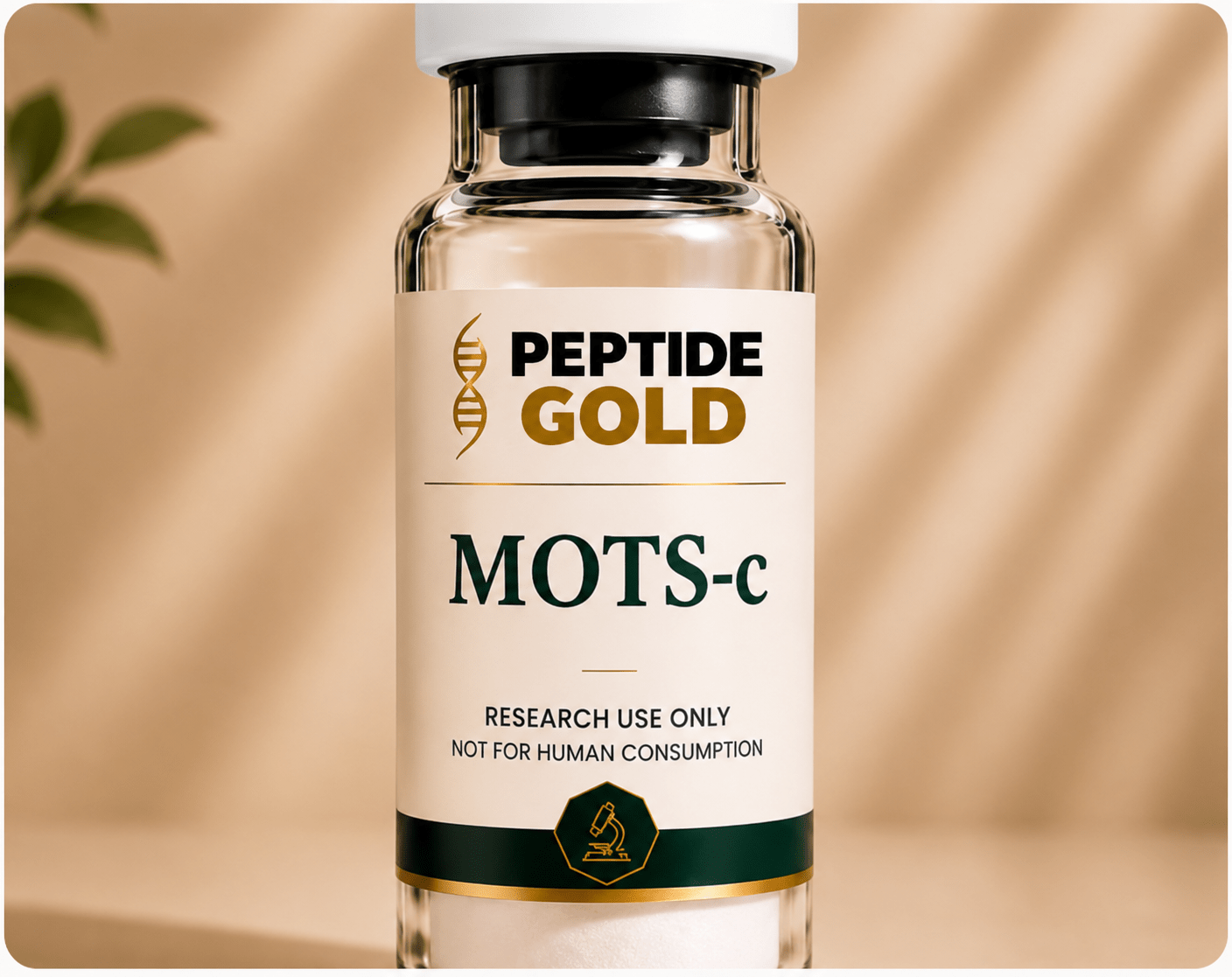
MOTS-c: A Comprehensive Guide to Uses, Research, Dosing, Forms, and Potential Benefits
MOTS-c is an experimental peptide that has generated growing interest in research involving mitochondrial function, insulin sensitivity, glucose metabolism, exercise performance, obesity, metabolic health, inflammation, and aging.
What makes MOTS-c especially unusual is where it comes from.
Most peptides in the body are encoded by genes located in the cell nucleus. MOTS-c is different because it belongs to a relatively new class of signaling molecules known as mitochondrial-derived peptides, or MDPs.
MOTS-c is encoded within mitochondrial DNA itself.
The name stands for:
Mitochondrial Open Reading Frame of the 12S rRNA Type-c
It is a relatively short peptide composed of 16 amino acids.
Since its discovery in 2015, MOTS-c has attracted attention because animal and laboratory research suggests that it may act as a metabolic signaling molecule capable of helping cells respond to energetic stress.
Researchers have investigated MOTS-c for possible effects involving:
- Insulin sensitivity
- Glucose utilization
- Fat metabolism
- Metabolic flexibility
- Exercise adaptation
- Skeletal muscle
- Inflammation
- Mitochondrial stress
- Obesity
- Type 2 diabetes
- Age-related metabolic decline
- Healthy aging
Until very recently, virtually all of this evidence came from laboratory and animal studies.
That situation is beginning to change.
In 2026, a Phase 2a randomized human clinical trial began evaluating subcutaneous MOTS-c in adults with prediabetes and overweight or obesity. The study is designed specifically to determine whether MOTS-c can improve insulin sensitivity and cardiometabolic markers in people.
However, no efficacy results from that trial are available yet.
Therefore, despite the considerable excitement surrounding MOTS-c, it remains an investigational peptide with no FDA-approved medical indication and no established human treatment dose.
What Is MOTS-c?
MOTS-c is a 16-amino-acid mitochondrial-derived peptide.
It is encoded within the mitochondrial 12S ribosomal RNA gene, rather than one of the conventional protein-coding genes found in nuclear DNA.
This discovery was important because mitochondria were traditionally viewed mainly as cellular structures responsible for producing energy.
Scientists now understand that mitochondria do considerably more.
They also communicate with the rest of the cell.
Mitochondrial-derived peptides such as MOTS-c appear to function as signaling molecules that tell cells about:
energy availability
metabolic stress
oxidative stress
and potentially mitochondrial health.
Other mitochondrial-derived peptides include:
Humanin
and several small humanin-like peptides, or SHLPs.
Together, these molecules have helped create an entirely new area of mitochondrial biology.
What Do Mitochondria Do?
Mitochondria are often described as the powerhouses of the cell.
That description is accurate but incomplete.
Their best-known job is generating ATP, the energy currency cells use to perform biological work.
Mitochondria also participate in:
fat metabolism
glucose metabolism
calcium signaling
cellular stress responses
apoptosis
reactive oxygen species production
and immune signaling.
Changes in mitochondrial function are associated with numerous age-related and metabolic disorders.
This includes:
insulin resistance
type 2 diabetes
obesity
cardiovascular disease
muscle decline
and several neurodegenerative conditions.
Researchers therefore became very interested when they discovered that mitochondria themselves could produce signaling peptides such as MOTS-c.
How Does MOTS-c Work?
MOTS-c appears to influence several pathways involved in cellular energy regulation.
One of the most important is:
AMPK — AMP-activated protein kinase.
AMPK acts like a cellular fuel sensor.
When cellular energy becomes low, AMPK helps shift metabolism toward generating more ATP.
It can encourage:
glucose uptake
fatty-acid oxidation
and more efficient energy utilization,
while reducing certain energy-intensive processes.
Reviews of MOTS-c research identify the folate-AICAR-AMPK pathway as one of its primary proposed mechanisms.
This has created interest in MOTS-c as a possible future therapy for metabolic dysfunction.
MOTS-c and the Cell Nucleus
One of the most fascinating aspects of MOTS-c is that it may move from mitochondria into the cell nucleus under conditions of stress.
This is unusual.
Research suggests that when cells experience metabolic or oxidative stress, MOTS-c can translocate into the nucleus and influence expression of genes involved in:
stress resistance
antioxidant defense
metabolism
and cellular adaptation.
This process is known as mitochondrial retrograde signaling.
Normally, people think of the nucleus as sending instructions to mitochondria.
MOTS-c provides an example of mitochondria apparently sending information back to the nucleus.
That makes the peptide especially interesting from a basic biological perspective.
MOTS-c and Insulin Sensitivity
One of the strongest areas of MOTS-c research involves insulin sensitivity.
Insulin allows cells to take glucose out of the bloodstream and use or store it.
When tissues become resistant to insulin, the pancreas must produce increasingly large amounts to maintain normal blood glucose.
Over time, this can contribute to:
prediabetes
type 2 diabetes
fatty liver
and other metabolic problems.
Animal research suggests MOTS-c may improve insulin sensitivity and glucose utilization, particularly within skeletal muscle.
Reviews of mitochondrial-derived peptides consistently identify improved insulin action and metabolic homeostasis as central findings in MOTS-c research.
This is also why insulin sensitivity is the primary endpoint in the first major modern human MOTS-c trial.
The 2026 Human MOTS-c Trial
One of the most important developments in MOTS-c research occurred in 2026.
A Phase 2a randomized, double-blind, placebo-controlled clinical trial called MOTS-MET began enrolling adults with:
prediabetes
and overweight or obesity.
The study plans to enroll approximately 120 participants.
Participants receive either MOTS-c or placebo by subcutaneous injection once daily for 12 weeks.
Researchers are measuring:
insulin sensitivity
HbA1c
fasting glucose
two-hour glucose following an oral glucose tolerance test
blood lipids
body weight
and waist circumference.
Safety monitoring includes:
adverse events
vital signs
ECG testing
laboratory testing
and possible anti-drug antibodies.
The study began in February 2026.
Primary completion is currently estimated for 2027, with overall completion expected later.
As of August 2026, no clinical efficacy results have been reported.
This is an important milestone because it represents a transition from primarily animal research toward actual therapeutic testing in humans.
MOTS-c and Type 2 Diabetes
MOTS-c has generated considerable interest as a potential metabolic therapy because of its relationship with insulin sensitivity.
Animal research suggests it may influence:
glucose uptake
insulin signaling
skeletal-muscle metabolism
and pancreatic function.
A 2025 study investigated MOTS-c in pancreatic islet cells and experimental diabetes models.
Researchers reported that MOTS-c reduced cellular senescence in pancreatic islets and delayed diabetes-related changes in the experimental models.
These findings are particularly interesting because pancreatic beta-cell aging and dysfunction contribute to type 2 diabetes.
However, this remains preclinical evidence.
The ongoing Phase 2a trial should begin answering whether metabolic improvements observed in animals translate into people.
MOTS-c and Body Weight
MOTS-c is often marketed online as a weight-loss peptide.
That description is premature.
Animal research suggests the peptide can influence:
fat metabolism
energy expenditure
glucose utilization
and resistance to diet-induced obesity.
This provides a legitimate research rationale.
However, MOTS-c does not have the kind of clinical weight-loss evidence available for medications such as:
or investigational retatrutide.
The current Phase 2a trial is measuring body weight and waist circumference as secondary metabolic endpoints, but its primary purpose is assessing insulin sensitivity, not producing extreme weight loss.
Until those results are available, claims that MOTS-c causes substantial human fat loss remain unsupported.
MOTS-c and Fat Metabolism
MOTS-c appears to influence the way cells use fatty acids.
Through AMPK and related metabolic pathways, experimental research suggests that MOTS-c may increase fatty-acid oxidation.
Fatty-acid oxidation is the process of breaking down fats to generate cellular energy.
A 2026 scientific review described MOTS-c as potentially increasing metabolic flexibility through effects on:
AMPK activation
fatty-acid oxidation
glucose utilization
and insulin sensitivity.
This mechanism is one reason the peptide attracts attention in both metabolic and exercise research.
MOTS-c and Exercise
Exercise appears to interact naturally with the MOTS-c system.
Studies of endogenous MOTS-c suggest that exercise and metabolic stress can influence its expression.
Research has found that mitochondrial-derived peptide expression changes in response to physiological stressors such as exercise.
One human observational study examining people with and without polycystic ovary syndrome found that circulating MOTS-c concentrations changed in response to lipid exposure, insulin, and an eight-week exercise intervention.
These participants were producing their own MOTS-c naturally.
They were not receiving MOTS-c as a drug.
That distinction is important.
Nevertheless, the findings support the idea that MOTS-c participates in normal metabolic adaptation to exercise.
MOTS-c and Exercise Performance
Animal studies have generated significant interest in MOTS-c for physical performance.
Research in mice has reported improvements involving:
exercise endurance
skeletal-muscle metabolism
and resistance to age-related physical decline.
A 2026 review summarized animal findings suggesting that MOTS-c can improve exercise endurance and support muscle function in aging models.
These results have led some peptide communities to describe MOTS-c as an “exercise mimetic.”
That description should be used cautiously.
No published human trial has demonstrated that injected MOTS-c improves:
running performance
strength
VO2 max
muscle mass
or athletic endurance.
The current human trial focuses on insulin sensitivity rather than athletic performance.
MOTS-c and Skeletal Muscle
Skeletal muscle appears to be an especially important target tissue for MOTS-c.
Muscle is one of the largest consumers of glucose in the body.
Improving skeletal-muscle glucose utilization can therefore have major effects on whole-body insulin sensitivity.
MOTS-c appears to influence:
AMPK activity
glucose transport
mitochondrial metabolism
and stress-response genes in muscle.
This provides a potential link between:
exercise
metabolism
and aging.
Researchers are particularly interested in whether MOTS-c could eventually help address age-related metabolic and muscular decline.
MOTS-c and Aging
MOTS-c has become widely associated with longevity and healthy-aging research.
Several observations contribute to this interest.
First, circulating MOTS-c levels appear to change with age.
Second, mitochondria become less efficient in several ways during aging.
Third, MOTS-c appears to regulate cellular pathways involved in:
metabolic stress
insulin sensitivity
inflammation
and stress resistance.
Reviews have reported that circulating MOTS-c tends to decline with age and have proposed that this reduction could contribute to age-related metabolic dysfunction.
However, there is currently no evidence that administering MOTS-c extends human lifespan.
Is MOTS-c a Longevity Peptide?
Calling MOTS-c a “longevity peptide” goes beyond the current evidence.
The more accurate description is:
MOTS-c is a mitochondrial-derived peptide being studied in pathways relevant to metabolic aging.
These pathways include:
mitochondrial function
insulin sensitivity
skeletal-muscle metabolism
inflammation
and stress resistance.
Animal research suggests potential benefits against certain age-related metabolic changes.
That does not establish that MOTS-c slows biological aging or makes humans live longer.
MOTS-c and Cellular Senescence
Cellular senescence is another area of research.
Senescent cells stop dividing but remain metabolically active and can produce inflammatory signals.
These cells accumulate during aging and in several chronic diseases.
The 2025 pancreatic study found that MOTS-c reduced senescence-related changes in pancreatic islet cells in experimental models.
This adds another possible connection between MOTS-c and age-related metabolic disease.
But again, whether the peptide can meaningfully reduce senescence in humans remains unknown.
MOTS-c and Inflammation
Metabolic dysfunction and chronic inflammation frequently occur together.
Obesity, insulin resistance, and aging can all increase low-grade inflammatory signaling.
Preclinical research suggests MOTS-c may influence:
inflammatory pathways
oxidative stress
and cellular stress responses.
This has generated interest in MOTS-c beyond diabetes.
Researchers are investigating possible relevance to:
cardiovascular disease
neurodegeneration
muscle aging
and other age-related disorders.
None of these currently represents an established clinical use.
MOTS-c and the Brain
Mitochondrial dysfunction is involved in several neurological disorders.
Because MOTS-c influences cellular energy and stress pathways, researchers have investigated potential neuroprotective effects in experimental models.
Reviews have discussed possible relevance to:
Alzheimer’s disease
cognitive aging
and neuroinflammation.
This remains mainly preclinical.
There is no established evidence that administering MOTS-c improves memory, prevents dementia, or treats Alzheimer’s disease in humans.
MOTS-c Dosing Information
There is currently no FDA-approved human dose of MOTS-c.
Until 2026, essentially all dosing information came from animal studies and unregulated experimental use.
The new Phase 2a human trial provides an important development because it uses a controlled clinical protocol.
Participants receive:
a fixed dose of MOTS-c once daily by subcutaneous injection for 12 weeks.
However, the public ClinicalTrials.gov record does not disclose the actual numerical fixed dose.
Therefore, there is currently no scientifically defensible published clinical dose that should be presented as a general human MOTS-c regimen.
Specific microgram or milligram protocols circulating online generally come from:
peptide clinics
research suppliers
online communities
or extrapolation from animal research.
They are not FDA-approved dosing instructions.
Why Animal Doses Cannot Be Converted Directly
MOTS-c experiments in mice have used several different dosing strategies.
These depend on the model being investigated.
A direct conversion based simply on body weight would be inappropriate.
Mice and humans differ in:
metabolism
peptide clearance
body-surface area
receptor biology
and mitochondrial physiology.
The purpose of human Phase 1 and Phase 2 research is precisely to establish safe biological exposure rather than guessing from animal doses.
What Forms Is MOTS-c Offered In?
MOTS-c is primarily encountered as a research peptide.
Lyophilized Powder
The most common research format is freeze-dried or lyophilized MOTS-c.
Lyophilization can improve stability during transportation and storage.
MOTS-c Acetate
Research suppliers may offer MOTS-c as an acetate salt.
Both MOTS-c free base and MOTS-c acetate have been considered by FDA in connection with pharmacy compounding.
Research Vials
MOTS-c may be packaged into research vials containing specific milligram quantities.
A research vial should not automatically be assumed to be:
sterile
pharmaceutical grade
accurately concentrated
or suitable for human administration.
Clinical-Trial Injection
The current Phase 2a trial uses a controlled subcutaneous investigational formulation administered once daily.
That clinical material should not be assumed equivalent to research-market MOTS-c.
Potential Side Effects
At present, the biggest safety issue surrounding MOTS-c is not a known list of side effects.
It is the absence of sufficient human exposure data.
FDA currently states that it has not identified adequate human exposure data for drug products containing MOTS-c and lacks sufficient information to determine whether administration could harm humans.
Potential concerns include:
immune reactions
peptide-related impurities
aggregation
incorrect concentration
injection-site reactions
and unanticipated metabolic effects.
Because MOTS-c may influence glucose regulation, researchers must also determine whether excessive exposure could have unwanted effects on metabolic homeostasis.
The ongoing Phase 2a trial is specifically monitoring adverse events, laboratory values, ECGs, vital signs, and possible anti-drug antibodies.
FDA Position on MOTS-c
MOTS-c is not FDA approved.
FDA’s recent compounding review identified substantial information gaps.
The agency stated that:
- MOTS-c is not a component of an FDA-approved drug.
- Human safety and effectiveness data are lacking.
- Potential peptide impurities and aggregates may create immunogenicity concerns.
- Human pharmacologic effects are not sufficiently characterized.
FDA therefore emphasizes that currently available research or compounded products should not be treated as though MOTS-c has an established human safety profile.
MOTS-c and Competitive Sports
Competitive athletes should pay particular attention to MOTS-c.
MOTS-c is prohibited under anti-doping rules because of its relationship with AMPK activation and metabolic modulation.
USADA specifically identifies MOTS-c as prohibited at all times under the World Anti-Doping Agency category for metabolic modulators.
This means an athlete can face anti-doping consequences regardless of whether the peptide is being used with the stated goal of:
recovery
metabolic health
or exercise performance.
Is MOTS-c FDA Approved?
No.
MOTS-c is not currently FDA-approved for any medical condition.
There is no approved indication for:
prediabetes
diabetes
obesity
weight loss
exercise performance
anti-aging
insulin resistance
or mitochondrial dysfunction.
The peptide is now entering more meaningful human clinical development, but this does not make it an approved therapy.
The ongoing Phase 2a study is explicitly described as an investigational clinical trial.
Current Research in 2026
MOTS-c research is entering an especially interesting period.
For more than a decade, the compound was primarily a preclinical research peptide.
Now researchers are beginning to test whether those findings translate to humans.
The ongoing Phase 2a study is investigating whether MOTS-c improves:
insulin sensitivity
fasting glucose
HbA1c
glucose tolerance
lipids
weight
and waist circumference in adults with early metabolic dysfunction.
At the same time, new animal and cellular research continues.
The 2025 pancreatic study suggests that MOTS-c may influence beta-cell aging and senescence, potentially providing another pathway by which the peptide could affect diabetes development.
Recent reviews continue to focus on its potential roles in:
exercise adaptation
metabolic flexibility
sarcopenia
cardiovascular health
neuroprotection
and aging biology.
What Research Is Still Needed?
Many fundamental questions remain unanswered.
Researchers need to determine:
human pharmacokinetics
half-life
bioavailability
dose-response relationships
optimal administration frequency
long-term safety
immune responses
effects on glucose metabolism
effects on body composition
and whether repeated administration creates lasting metabolic changes.
If the current trial demonstrates improvement in insulin sensitivity, larger Phase 2b or Phase 3 studies would likely be necessary.
Those studies would need to determine whether biochemical changes translate into meaningful clinical benefits such as:
lower diabetes risk
improved glycemic control
reduced metabolic disease
or healthier body composition.
The Bottom Line
MOTS-c is one of the most unusual peptides currently being investigated in metabolic medicine.
It is a 16-amino-acid mitochondrial-derived peptide encoded within the mitochondrial 12S ribosomal RNA region.
This means MOTS-c comes from the mitochondrial genome rather than the conventional nuclear genetic system responsible for most human peptides.
Its biology appears to connect mitochondria with the rest of the cell.
Experimental research suggests MOTS-c can influence:
AMPK signaling
glucose uptake
insulin sensitivity
fatty-acid metabolism
stress-response genes
inflammation
and skeletal-muscle metabolism.
Animal studies have generated particular interest in:
diabetes
obesity
exercise adaptation
age-related physical decline
and healthy aging.
Recent research has even suggested that MOTS-c may help reduce pancreatic beta-cell senescence in experimental diabetes models.
However, the critical limitation has always been the shortage of human intervention data.
That is finally beginning to change.
In 2026, a randomized Phase 2a clinical trial began administering subcutaneous MOTS-c once daily for 12 weeks to adults with prediabetes and overweight or obesity. Researchers are evaluating insulin sensitivity, blood glucose, HbA1c, lipids, body weight, waist circumference, and safety.
No efficacy results are available yet.
Therefore, there is currently:
no FDA-approved MOTS-c product,
no FDA-approved dosing regimen,
no proven human weight-loss benefit,
no proven athletic-performance benefit,
and no evidence that MOTS-c extends human lifespan.
FDA also continues to identify substantial safety uncertainties, including possible immunogenicity and peptide-impurity concerns, while emphasizing the historical absence of adequate human exposure data.
Perhaps the most accurate description of MOTS-c in 2026 is:
an experimental mitochondrial-derived metabolic signaling peptide with compelling preclinical evidence involving AMPK, insulin sensitivity, muscle metabolism, and cellular stress adaptation that has now entered controlled human testing—but whose clinical effectiveness, optimal dosing, and long-term safety remain unproven.
For researchers studying mitochondrial communication, diabetes, metabolic aging, and exercise physiology, MOTS-c is especially interesting because it represents an entirely different therapeutic concept.
Rather than targeting appetite receptors, growth hormone pathways, or tissue-repair mechanisms, MOTS-c appears to influence the cell’s internal energy-sensing machinery itself.
Whether that translates into a useful future medicine will depend heavily on the human clinical data now beginning to emerge.
Educational and research notice: This article is intended for general scientific and educational information. It is not medical advice or a recommendation for human use of MOTS-c. There is currently no FDA-approved MOTS-c dosage or medical indication. Numerical dosing protocols circulating outside controlled research should not be treated as established human dosing. Competitive athletes should also be aware that MOTS-c is prohibited under current anti-doping rules.