

Thymosin Alpha-1: A Comprehensive Guide to Uses, Research, Dosing, Forms, and Potential Benefits
Thymosin Alpha-1, commonly abbreviated Tα1 or TA1, is a synthetic version of a naturally occurring peptide involved in immune regulation.
It is best known for research involving:
T-cell function
immune recovery
chronic infections
sepsis
cancer immunotherapy
immune suppression
and broader immune-system modulation.
Unlike growth-hormone peptides, metabolic peptides, or repair-focused compounds such as BPC-157, Thymosin Alpha-1 primarily acts on the immune system.
It is also one of the more extensively studied peptides commonly discussed in research markets.
Human clinical research includes thousands of participants across studies involving infections, cancer, critical illness, hepatitis, and immune dysfunction. A 2024 review summarized more than 30 clinical trials and over 11,000 human participants, although the quality and indications of those studies vary considerably.
Thymosin Alpha-1 is marketed internationally under names including thymalfasin and has been used clinically in a number of countries. However, it is not an FDA-approved drug in the United States, and FDA continues to raise safety and quality questions regarding compounded Tα1 preparations.
What Is Thymosin Alpha-1?
Thymosin Alpha-1 is a peptide consisting of 28 amino acids.
It is derived naturally from a larger protein called:
prothymosin alpha.
Early research associated thymosin peptides with the thymus gland, an organ that plays a major role in developing and regulating immune cells.
The thymus is especially important during childhood because it helps immature lymphocytes develop into functional T cells.
Although thymic activity generally declines with age, the immune-regulatory pathways associated with thymosin peptides remain relevant throughout life.
Synthetic Thymosin Alpha-1 was developed to reproduce the biological activity of the naturally occurring peptide in a standardized form.
What Does the Thymus Do?
The thymus is located in the upper chest behind the breastbone.
Its primary function involves the development and selection of T lymphocytes, or T cells.
T cells perform several critical immune functions.
Different T-cell populations can:
- Help coordinate immune responses
- Kill virus-infected cells
- Recognize abnormal cells
- Regulate inflammation
- Assist antibody-producing B cells
- Maintain immune memory
As people age, the thymus gradually becomes less active.
This process is called thymic involution.
It contributes to some of the changes seen in immune function during aging.
Because Thymosin Alpha-1 influences T-cell biology, researchers have long investigated whether it could support immune responses during infection, cancer, immune suppression, or age-related immune decline.
How Does Thymosin Alpha-1 Work?
Thymosin Alpha-1 does not act through one single pathway.
It is better described as an immune modulator.
Research suggests it can influence both:
innate immunity
and
adaptive immunity.
The innate immune system provides rapid, nonspecific defense.
The adaptive immune system creates more targeted responses through T cells, B cells, and antibodies.
Tα1 appears capable of influencing both systems.
Effects on T Cells
One of the best-known actions of Tα1 involves T lymphocytes.
Research suggests it can influence:
T-cell maturation
T-cell activation
and the balance of different T-cell populations.
Studies frequently measure:
CD3+ T cells
CD4+ helper T cells
CD8+ cytotoxic T cells
and the CD4/CD8 ratio.
A 2025 study in advanced cancer patients found that seven days of Thymosin Alpha-1 increased median circulating total T-cell, CD4+, and CD8+ counts before patients underwent combined radiotherapy and immunotherapy.
This provides direct human evidence that Tα1 can influence immune-cell populations.
Effects on Dendritic Cells
Dendritic cells help the immune system recognize threats.
They capture antigens and present them to T cells.
This makes them essential for connecting innate immunity with adaptive immune responses.
Thymosin Alpha-1 has been investigated for its ability to influence dendritic-cell maturation and antigen presentation.
This could theoretically improve how effectively the immune system recognizes:
viral antigens
bacterial antigens
and potentially tumor-associated antigens.
Toll-Like Receptors
Toll-like receptors, or TLRs, are immune sensors that recognize patterns associated with microbes and damaged cells.
Research suggests Tα1 can influence signaling through certain Toll-like receptor pathways.
These pathways affect:
cytokine production
dendritic-cell activity
natural killer cells
and broader immune activation.
This is one reason Tα1 is sometimes described as an immunomodulator rather than a simple immune stimulant.
It may enhance some immune functions while helping regulate excessive inflammatory responses in others.
Thymosin Alpha-1 and Natural Killer Cells
Natural killer cells, or NK cells, are important components of the innate immune system.
They help identify and destroy:
virus-infected cells
and some abnormal or malignant cells.
Tα1 has been investigated for possible effects on NK-cell function and broader antitumor immune surveillance.
This connection contributes to its long-standing interest in cancer research.
What Do People Research Thymosin Alpha-1 For?
Tα1 has been investigated across a surprisingly broad range of immune-related conditions.
Major areas include:
Chronic Viral Infections
Historical clinical research examined Thymosin Alpha-1 in:
hepatitis B
hepatitis C
and other chronic infections.
The goal was to improve antiviral immune responses rather than directly attack the virus.
Cancer
Tα1 has been studied as an adjunct to cancer therapy, particularly in combination with:
chemotherapy
radiotherapy
and increasingly immune checkpoint inhibitors.
Sepsis
Because severe sepsis can involve profound immune dysfunction, Tα1 has been studied as a potential immune-restorative therapy.
Severe Infections
Researchers have examined its use in critically ill patients with infection and immune suppression.
Immune Recovery
Tα1 has been investigated in situations involving low lymphocyte counts or impaired cellular immunity.
Vaccine Response
Older research has also examined whether Thymosin Alpha-1 can improve immune responses to vaccination in people with weakened immune function.
None of these uses should automatically be interpreted as a current FDA-approved indication in the United States.
Thymosin Alpha-1 and Sepsis
Sepsis is one of the most important modern areas of Tα1 research.
Sepsis is a dangerous systemic response to infection that can cause:
organ dysfunction
shock
and death.
Although early sepsis involves intense inflammation, many patients later develop a state of significant immune suppression.
Researchers became interested in Tα1 because it might help restore immune competence.
A large multicenter, double-blind, randomized Phase 3 trial known as TESTS evaluated Thymosin Alpha-1 in sepsis and was published in 2025.
The broader evidence remains mixed.
A 2025 meta-analysis involving 11 randomized trials and nearly 2,000 patients found that Tα1 was associated with a lower overall 28-day mortality when all studies were combined.
However, when researchers examined only higher-quality or multicenter trials, the mortality benefit was no longer statistically significant.
This is an excellent example of why evidence needs to be interpreted carefully.
Tα1 may have immunological effects in sepsis, but its true impact on survival remains uncertain.
Thymosin Alpha-1 and Severe Acute Pancreatitis
Severe acute pancreatitis can produce both intense inflammation and secondary immune suppression.
A 2025 systematic review and meta-analysis evaluated five randomized studies involving 706 patients.
Tα1 treatment was associated with:
increased CD4+ T-cell percentages
improved CD4/CD8 ratios
and reduced rates of some infections outside the pancreas.
The overall incidence of extrapancreatic infections was lower in Tα1-treated patients, although hospital length of stay was not significantly reduced.
These results provide another example of Tα1’s potential role in immune regulation during serious illness.
Thymosin Alpha-1 and Cancer
Cancer has been one of the longest-standing areas of interest.
Cancer can suppress immune function through multiple mechanisms.
Chemotherapy and radiotherapy can further reduce:
white blood cells
lymphocytes
and immune surveillance.
Researchers therefore investigated whether Tα1 could support immune recovery or improve responses to treatment.
Modern research increasingly focuses on combining Tα1 with immune checkpoint inhibitors.
These therapies—such as PD-1 and PD-L1 inhibitors—help remove inhibitory signals that prevent immune cells from attacking tumors.
Tα1 and Immune Checkpoint Inhibitors
A 2026 review specifically examined the combination of Thymosin Alpha-1 with immune checkpoint inhibitors.
The authors concluded that preliminary clinical and preclinical evidence suggests the combination may help remodel the tumor immune environment and potentially improve treatment effectiveness while maintaining a manageable safety profile.
However, they emphasized the need for larger, long-term controlled studies.
This is one of the most active modern research directions for Tα1.
Tα1 With Radiotherapy and Immunotherapy
A 2025 multicenter Phase II trial evaluated a complex treatment program combining:
hypofractionated radiotherapy
a PD-1 inhibitor
GM-CSF
and Thymosin Alpha-1
in patients with advanced metastatic solid tumors.
Among the evaluable participants, the objective response rate was approximately 23%, with a disease-control rate around 65%.
Because four different therapies were used together, the study cannot determine how much of the effect came specifically from Tα1.
Still, it illustrates growing interest in using Tα1 as an immune-supportive component of combination cancer therapy.
Recent Cancer Research
A 2025 retrospective study evaluated 48 patients with advanced cancers who received a seven-day Tα1 loading course before radiotherapy and PD-1 inhibitor therapy.
Tα1 significantly increased:
total T cells
CD4+ cells
and CD8+ cells.
The researchers concluded that the treatment appeared to improve lymphocyte counts and had an acceptable safety profile, while emphasizing that larger randomized studies are needed.
Again, this should not be interpreted as proof that Tα1 treats cancer by itself.
Its role is being investigated primarily as an immune-modulating adjunct.
Thymosin Alpha-1 and Colorectal Cancer
Research has also investigated Tα1 alongside conventional chemotherapy.
A study involving 180 patients after colorectal cancer surgery compared:
XELOX chemotherapy alone
with
XELOX plus Thymosin Alpha-1.
The Tα1 group demonstrated greater improvements in several immune markers and reductions in some tumor-marker measurements.
These findings are interesting, but the study does not establish Tα1 as a stand-alone cancer therapy.
Thymosin Alpha-1 and Viral Infections
Tα1 has a long history of research involving chronic viral disease.
The underlying idea is straightforward:
viruses depend on host cells
while immune cells—particularly T lymphocytes—are responsible for recognizing and clearing infected cells.
If a person’s cellular immune response is impaired, supporting T-cell activity could theoretically improve viral control.
Historical research included:
hepatitis B
hepatitis C
and other infections.
Some countries approved thymalfasin for particular immune and infectious-disease indications.
However, modern antiviral drugs have transformed treatment of hepatitis, meaning Tα1’s historical role should not be confused with current first-line antiviral therapy.
Thymosin Alpha-1 and COVID-19
During the COVID-19 pandemic, Tα1 attracted substantial attention because severe COVID could involve:
lymphopenia
immune dysregulation
and excessive inflammation.
Numerous observational and clinical studies investigated whether Tα1 could help restore immune balance.
Results were mixed.
Some studies suggested improvements in lymphocyte counts or outcomes in selected severely ill patients.
Others found less convincing benefits.
A 2024 review examining thousands of participants considered Tα1 generally well tolerated and potentially beneficial across several immune-related conditions, including COVID-19, although the review’s conclusions were more favorable than FDA’s regulatory assessment.
This difference in interpretation is important.
Scientific and regulatory authorities can weigh the same evidence differently depending on study quality, manufacturing issues, and the strength required to support widespread medical use.
Is Thymosin Alpha-1 an Immune Booster?
The phrase “immune booster” is often used commercially but is oversimplified.
A stronger immune response is not always better.
Excessive immune activity can contribute to:
autoimmune disease
allergic reactions
inflammation
and tissue injury.
Tα1 is more accurately described as an immune modulator.
Research suggests it can support cellular immune responses under some conditions while also influencing regulatory pathways that may limit inappropriate inflammation.
That is a much more nuanced concept than simply increasing immunity.
Thymosin Alpha-1 and Autoimmune Disease
Because Tα1 may regulate rather than simply stimulate immunity, it has attracted interest in autoimmune conditions.
Potential mechanisms include effects on:
regulatory T cells
dendritic cells
cytokine balance
and immune tolerance.
However, using an immune-modulating peptide in autoimmune disease is complicated.
Different autoimmune disorders involve very different immune pathways.
There is no broad FDA-approved Tα1 indication for autoimmune disease.
More condition-specific human research is needed.
Thymosin Alpha-1 and Aging
Immune function changes significantly with age.
Older adults commonly experience:
reduced naïve T-cell production
altered vaccine responses
chronic low-grade inflammation
and reduced immune adaptability.
This phenomenon is sometimes called immunosenescence.
Because Tα1 influences T-cell function, researchers have investigated whether it might help support aging immune systems.
This has led to its inclusion in some longevity and wellness discussions.
However, there is no evidence that Thymosin Alpha-1 extends human lifespan or reverses aging.
Its scientific relevance is specifically related to immune regulation, not general rejuvenation.
Thymosin Alpha-1 and Thymosin Beta-4
These compounds should not be confused.
Thymosin Alpha-1
Primarily associated with:
immune regulation
T cells
infection
and cancer immunology.
Thymosin Beta-4
Primarily associated with:
actin
cell migration
wound repair
and tissue regeneration.
TB-500 is a synthetic fragment related to thymosin beta-4.
The compounds belong to completely different functional areas.
Thymosin Alpha-1 Dosing Information
There is no FDA-approved U.S. dosing regimen for Thymosin Alpha-1 because the drug is not FDA-approved in the United States.
However, Tα1 has been used extensively in international clinical research and therapeutic programs.
A very common studied formulation is:
1.6 mg per subcutaneous injection.
Research protocols have frequently used schedules such as:
1.6 mg twice weekly
depending on the disease being studied.
Other serious-illness protocols have used more frequent administration.
For example, the 2025 cancer study used a seven-day loading course of:
1.6 mg or 3.2 mg once daily before radiotherapy and immunotherapy.
Other cancer trials have used Tα1 twice weekly in combination with immunotherapy or radiotherapy.
These are clinical research protocols, not general-purpose dosing recommendations.
There is no single “standard wellness dose.”
Why Dosing Depends on the Disease
Immune modulation is highly context dependent.
A person with:
sepsis
has a very different immune environment from someone with:
chronic hepatitis
cancer
or age-related immune decline.
Therefore, Tα1 dosing cannot be reduced to one universal formula.
The optimal amount, frequency, and treatment duration would depend on:
the disease
immune status
other medications
and the clinical objective.
How Is Thymosin Alpha-1 Administered?
The most common clinical research route is:
subcutaneous injection.
This places the peptide into the fatty tissue beneath the skin.
Tα1 has also been investigated through other research formulations, but subcutaneous administration is by far the most established route in the international literature.
What Forms Is Thymosin Alpha-1 Offered In?
Thymalfasin Injection
International pharmaceutical formulations may use the generic name:
thymalfasin.
These products are generally supplied as lyophilized peptide intended for reconstitution and subcutaneous administration.
Lyophilized Powder
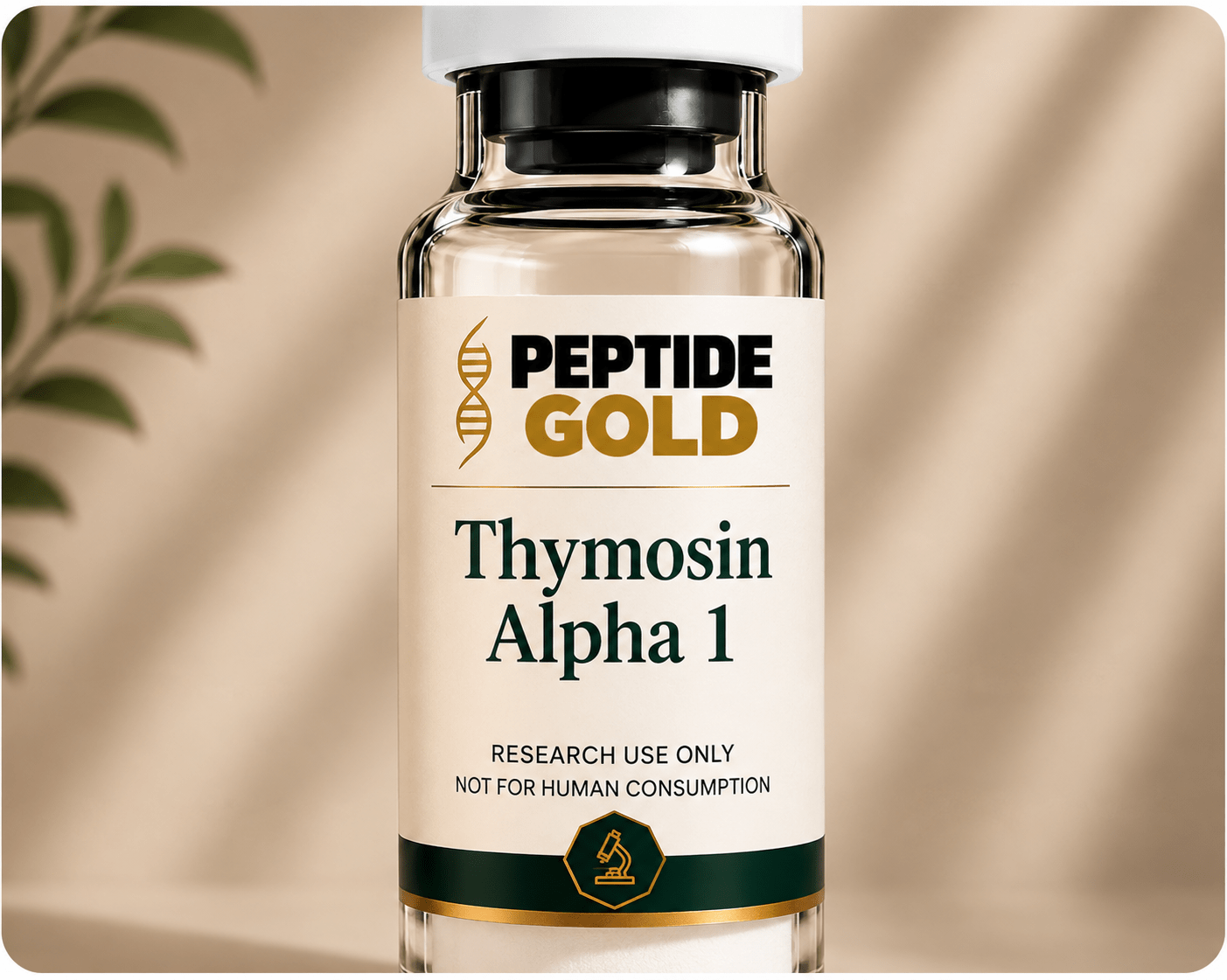
Research-market Tα1 is commonly sold as:
freeze-dried, or lyophilized, powder.
Lyophilization improves peptide stability before reconstitution.
Research Vials
Research suppliers may offer Tα1 in small vials containing specified milligram amounts.
A research vial should not automatically be assumed to be:
sterile
pharmaceutical grade
accurately concentrated
or suitable for human administration.
Compounded Preparations
Some U.S. clinics and pharmacies have offered compounded Thymosin Alpha-1.
However, compounded Tα1 is not equivalent to an FDA-approved drug.
FDA Position on Thymosin Alpha-1
As of 2026, Thymosin Alpha-1 is not FDA approved.
FDA currently lists Tα1 among bulk substances for which compounded preparations may present significant safety concerns.
The agency specifically notes possible:
immunogenicity
peptide-related impurities
and complexity in properly characterizing the active pharmaceutical ingredient.
FDA states that available safety information is inadequate for it to fully characterize potential risks associated with proposed compounded products.
This does not mean Tα1 has never been administered to humans.
It clearly has.
It means FDA does not consider the current U.S. evidence and compounding-quality information sufficient to treat compounded Tα1 as an established, FDA-reviewed therapy.
Why FDA Concerns Differ From the International Literature
This can seem confusing.
Thymosin Alpha-1 has been used internationally and has a relatively large human literature.
At the same time, FDA raises concerns about compounded use.
Both statements can be true.
FDA approval requires much more than evidence that a compound has biological activity.
Regulators consider:
manufacturing consistency
purity
pharmacokinetics
well-controlled efficacy trials
adverse-event characterization
and the exact formulation and indication being proposed.
FDA’s concern also focuses specifically on compounded preparations, where product quality can differ from regulated pharmaceutical thymalfasin used elsewhere.
Potential Side Effects
Compared with many immune-active therapies, Tα1 has generally appeared reasonably well tolerated in published human studies.
Possible reported effects include:
- Injection-site discomfort
- Redness
- Mild swelling
- Headache
- Fatigue
- Nausea
- Flu-like symptoms
The true adverse-event profile depends upon:
dose
disease
co-administered treatments
and product quality.
People receiving Tα1 during cancer therapy, for example, may experience numerous adverse effects from chemotherapy, immunotherapy, or radiation that are difficult to attribute specifically to the peptide.
Immunogenicity
One of FDA’s major concerns involves immunogenicity.
A peptide medication can sometimes cause the immune system to produce antibodies against it.
Risk may increase if the product contains:
aggregated peptide
manufacturing impurities
or incorrectly characterized variants.
This is particularly relevant for compounded and unregulated formulations.
The fact that Tα1 is an immune-modulating peptide does not eliminate the possibility of immune reactions to the product itself.
Thymosin Alpha-1 and Cancer Safety
Because Tα1 stimulates aspects of immune function, it is sometimes described as inherently anticancer.
That is too broad.
Cancer immunology is extremely complex.
Some tumors suppress immune responses, while others manipulate inflammatory signaling.
Tα1 is being studied primarily as an adjunct designed to improve immune competence or support immunotherapy.
It should not be viewed as a replacement for:
chemotherapy
radiation
surgery
targeted therapy
or approved immune checkpoint inhibitors.
Current Research in 2026
Thymosin Alpha-1 remains unusually active in modern research for a peptide discovered decades ago.
Recent investigations focus heavily on:
immune checkpoint inhibitors
radiotherapy
cancer-associated lymphopenia
critical illness
and immune suppression.
A 2026 review concluded that combining Tα1 with immune checkpoint inhibitors is particularly promising because Tα1 may both enhance antitumor immune function and help regulate excessive immune activation.
However, the review emphasized that large randomized studies are still needed.
Sepsis research remains another major field.
The 2025 Phase 3 TESTS trial and subsequent meta-analyses have provided a more nuanced picture: Tα1 may produce measurable immunological effects, but a consistent mortality benefit has not been established in the highest-quality analyses.
This is important because it demonstrates the difference between:
improving immune biomarkers
and
improving survival.
What Research Is Still Needed?
Tα1 already has more human research than most experimental peptides, but major questions remain.
Researchers need larger randomized trials examining specific conditions rather than pooling many unrelated illnesses.
Important future areas include:
which cancer patients benefit most
whether it improves checkpoint inhibitor response
whether it reduces treatment-related lymphopenia
which sepsis phenotypes respond
optimal dose and duration
and long-term safety.
Modern biomarker studies may eventually allow clinicians to identify patients with specific forms of immune suppression who are most likely to respond.
That would move Tα1 from general “immune support” toward true precision immunotherapy.
The Bottom Line
Thymosin Alpha-1 is a 28-amino-acid immune-regulating peptide derived from the naturally occurring precursor prothymosin alpha.
Its primary research role is not muscle building, weight loss, or cosmetic enhancement.
It is an immunomodulator.
Research suggests Tα1 can influence:
T-cell maturation and activity
CD4 and CD8 lymphocytes
dendritic cells
natural killer cells
Toll-like receptor signaling
and broader innate and adaptive immune responses.
Unlike many research peptides, Thymosin Alpha-1 has been studied in substantial numbers of people.
A 2024 review summarized more than 11,000 human participants across over 30 clinical trials, including studies involving infection, cancer, immune disorders, and COVID-19.
Current research is particularly active in cancer immunotherapy.
A 2026 review concluded that combining Tα1 with immune checkpoint inhibitors may improve the tumor immune environment and potentially enhance treatment responses, although larger long-term trials remain necessary.
Recent cancer studies have also shown that short courses of Tα1 can increase circulating T-cell populations in patients receiving radiotherapy and PD-1 inhibitors.
Sepsis research has produced more mixed results.
A 2025 meta-analysis found an overall reduction in 28-day mortality when all randomized studies were pooled, but that advantage disappeared when the analysis was restricted to the highest-quality and multicenter trials.
This makes Tα1 a good example of why immune research needs careful interpretation.
A peptide can clearly affect immune cells without automatically improving every clinical outcome.
International research has frequently used subcutaneous doses such as 1.6 mg, sometimes administered twice weekly, while more intensive clinical protocols have used 1.6 or 3.2 mg daily for limited periods in specific cancer settings.
These are research and international clinical protocols, not a universal dosing recommendation.
In the United States, there is currently:
no FDA-approved Thymosin Alpha-1 medication,
no FDA-approved Tα1 dosage,
no approved general “immune boosting” indication,
and no assurance that research or compounded products are equivalent to pharmaceutical thymalfasin used internationally.
FDA continues to identify concerns involving compounded Tα1, particularly immunogenicity, peptide impurities, and active-ingredient characterization.
Perhaps the most accurate way to describe Thymosin Alpha-1 in 2026 is:
a well-studied experimental and internationally used immunoregulatory peptide with substantial human evidence showing effects on cellular immunity and promising roles in cancer, infection, and immune suppression, but with variable clinical outcome evidence and no FDA-approved U.S. indication.
For researchers, Tα1 is particularly interesting because it may eventually allow the immune system to be modulated rather than simply stimulated or suppressed.
For consumers, the most important distinction is between:
evidence that Thymosin Alpha-1 changes immune function
and
evidence that it reliably prevents infections, treats cancer, improves survival, or provides generalized immune enhancement in otherwise healthy people.
The first has meaningful scientific support.
The second depends heavily on the condition and remains incompletely established.
Educational and research notice: This article is intended for general scientific and educational information only. It is not medical advice or a recommendation for human use of Thymosin Alpha-1. Doses described above are examples from clinical research and international therapeutic protocols and should not be interpreted as personal dosing instructions. Thymosin Alpha-1 is not currently FDA-approved in the United States for cancer, infection, sepsis, immune enhancement, anti-aging, or any other medical indication.