

Peptide Research Glossary: A Complete A–Z Guide to Peptide Terminology
Peptide research has expanded rapidly across fields including molecular biology, endocrinology, metabolism, regenerative medicine, neuroscience, immunology, and pharmaceutical development. Along with that growth has come an increasingly specialized vocabulary.
If you are new to the world of peptides, terms such as agonist, half-life, lyophilization, HPLC, receptor affinity, pharmacokinetics, EC50, reconstitution, and solid-phase peptide synthesis can quickly become confusing.
This A–Z peptide glossary is designed to provide a straightforward reference for understanding the terminology commonly encountered in scientific papers, clinical trials, laboratory reports, Certificates of Analysis, and discussions surrounding research peptides.
A
Amino Acid
Amino acids are the basic building blocks of peptides and proteins. Amino acids connect to one another through peptide bonds to create chains. The specific order of amino acids in that chain determines the peptide’s sequence and contributes greatly to its biological properties.
Amino Acid Sequence
The exact order of amino acids making up a peptide. Changing even a single amino acid can potentially alter receptor binding, stability, biological activity, or resistance to enzymatic degradation.
Agonist
A molecule that binds to a receptor and activates it, producing a biological response.
Some compounds activate one receptor, while newer experimental compounds may activate two or three receptor systems simultaneously.
Antagonist
A molecule that binds to a receptor and blocks or reduces its activation. An antagonist can therefore interfere with the activity of a naturally occurring ligand or another agonist.
Analog
A molecule structurally related to another compound but modified in some way. Researchers frequently create peptide analogs to increase stability, extend half-life, alter receptor selectivity, or investigate structure-activity relationships.
Assay
A laboratory test used to measure a specific property or biological activity. Assays may evaluate receptor activation, enzyme activity, cellular response, concentration, purity, or other characteristics.
B
Bacteriostatic Water (BAC Water)
Sterile water containing a bacteriostatic preservative, typically benzyl alcohol. It is used as a diluent for compatible substances in pharmaceutical and laboratory environments.
Bacteriostatic water should not be confused with sterile water, which does not necessarily contain a preservative.
Binding Affinity
A description of how strongly a molecule binds to another molecule, such as a peptide binding to a receptor.
Binding affinity is commonly quantified using measurements such as the dissociation constant, or Kd.
Bioactivity
The ability of a substance to produce an effect in a biological system.
Bioavailability
The proportion of an administered substance that reaches systemic circulation in an available form.
Bioavailability can vary substantially depending upon the molecule and route of administration.
Biomarker
A measurable biological characteristic used to evaluate a physiological process, disease state, or response to an experimental intervention.
Body Protection Compound
A term associated with the family of compounds from which BPC-157 derives its name. BPC-157 is a synthetic peptide widely encountered in experimental research literature.
C
C-Terminus
One of the two ends of a peptide chain. The C-terminus contains the terminal carboxyl group.
Peptide sequences are conventionally written from the N-terminus toward the C-terminus.
Certificate of Analysis (CoA)
A laboratory document containing analytical information about a particular batch or sample.
A peptide CoA may report:
- HPLC purity
- Mass spectrometry results
- Molecular weight
- Lot or batch number
- Testing date
- Laboratory information
- Additional analytical testing
It is important to understand that a single analytical result does not establish every aspect of product quality. Chemical purity, identity, concentration, sterility, endotoxin status, and biological potency are separate characteristics.
Chain Length
The number of amino-acid residues making up a peptide.
Clinical Endpoint
A measurable outcome used to determine the effect of an intervention in a clinical study.
Clinical Trial
A structured research study involving human participants that evaluates an experimental treatment, intervention, or drug.
Drug development commonly progresses through:
Phase 1: Initial safety, tolerability, pharmacokinetic, and dose-related research.
Phase 2: Preliminary efficacy, dosing, and continued safety evaluation.
Phase 3: Larger studies designed to confirm efficacy and further characterize safety.
Phase 4: Research conducted after regulatory approval.
Compounding Pharmacy
A licensed pharmacy that prepares customized medications according to applicable laws and prescription requirements.
Pharmaceutical compounding is distinct from conventional large-scale pharmaceutical manufacturing.
Concentration
The amount of a substance contained within a particular volume.
For example:
5 mg/mL
means that every milliliter of solution contains 5 milligrams of the substance.
Conjugation
The chemical attachment of a peptide to another molecule.
Researchers may conjugate peptides to fatty acids, polymers, fluorescent molecules, carrier proteins, or other compounds to modify their properties.
Control Group
The comparison group used in an experiment. Comparing an experimental group with an appropriate control helps researchers determine whether observed effects are associated with the experimental intervention.
Counterion
An ion associated with an oppositely charged peptide molecule. Synthetic peptides may be isolated as salts containing counterions such as acetate or trifluoroacetate.
D
Degradation
The chemical or biological breakdown of a peptide.
Factors that may contribute to degradation include temperature, moisture, oxidation, light exposure, enzymes, inappropriate pH, and prolonged storage.
Desalting
A purification process designed to remove salts and other small molecules from a peptide preparation.
Diluent
A liquid used to dissolve or dilute another substance.
Dose Escalation
A research protocol in which progressively higher doses are evaluated.
Dose-escalation studies are frequently used to investigate tolerability, pharmacokinetics, safety, and dose-response relationships.
Dose-Response Relationship
The relationship between the amount or concentration of a compound and the biological effect observed.
DPP-4 (Dipeptidyl Peptidase-4)
An enzyme involved in degrading several biological peptides, including the incretin hormones GLP-1 and GIP.
Resistance to enzymatic degradation is one strategy scientists have used when developing longer-acting peptide analogs.
Dual Agonist
A compound capable of activating two different receptor systems.
Dual agonism has become particularly important in metabolic research, where researchers investigate whether simultaneously targeting multiple signaling pathways can produce different effects from targeting either pathway independently.
E
EC50 (Half-Maximal Effective Concentration)
The concentration of a compound required to produce 50% of its maximum measured effect under defined experimental conditions.
EC50 is commonly used as an indicator of functional potency.
Efficacy
The maximum biological response that a compound can produce under defined experimental conditions.
Efficacy should not be confused with potency. Two compounds may produce similar maximum effects while requiring very different concentrations to achieve them.
Endogenous Peptide
A peptide naturally produced by an organism.
Insulin, oxytocin, GLP-1, GIP, glucagon, and many other signaling molecules are endogenous peptides.
Endotoxin
A component associated primarily with the outer membrane of Gram-negative bacteria that can trigger significant inflammatory responses.
Endotoxin testing is therefore an important consideration when characterizing materials intended for certain biological research applications.
Enzyme
A biological catalyst that accelerates chemical reactions. Enzymes play major roles in peptide synthesis, processing, signaling, and degradation.
Enzymatic Degradation
The breakdown of peptides by enzymes such as proteases and peptidases.
Ex Vivo
Research performed on cells, tissues, or organs removed from an organism while attempting to retain aspects of their natural biological characteristics.
Excipient
A component of a formulation other than the primary active substance. Excipients may function as buffers, stabilizers, preservatives, bulking agents, or other formulation components.
F
FDA (Food and Drug Administration)
The U.S. Food and Drug Administration is the federal agency responsible for regulating drugs, biologics, medical devices, food, and numerous other regulated products.
FDA approval applies to particular products and indications. The approval of one peptide does not mean other peptides—or other uses of the same peptide—are approved.
Formulation
The complete composition in which a peptide or pharmaceutical compound is prepared.
A formulation can contain the active compound along with buffers, preservatives, stabilizers, and other excipients.
Freeze-Drying
Another term for lyophilization, a process used to remove water from frozen material under reduced pressure.
G
GHK-Cu (Copper Peptide)
A naturally occurring copper-binding tripeptide consisting of glycine, histidine, and lysine associated with copper.
GHK-Cu has been investigated in areas including skin biology, tissue remodeling, and wound-related research.
GHRH (Growth Hormone-Releasing Hormone)
A hormone produced by the hypothalamus that signals the pituitary gland to release growth hormone.
Several synthetic peptides have been designed to interact with this signaling pathway.
GHRP (Growth Hormone-Releasing Peptide)
A category of synthetic peptides capable of stimulating growth hormone release, generally through the growth hormone secretagogue receptor.
GHS-R (Growth Hormone Secretagogue Receptor)
The receptor activated by ghrelin and various synthetic growth hormone secretagogues.
GIP (Glucose-Dependent Insulinotropic Polypeptide)
An incretin hormone released in response to nutrient intake. GIP participates in metabolic and insulin-related signaling and has become an important target in modern metabolic research.
GLP-1 (Glucagon-Like Peptide-1)
An endogenous incretin hormone involved in glucose regulation, insulin secretion, appetite signaling, and gastric emptying.
The GLP-1 receptor has become one of the most extensively studied peptide-related targets in modern metabolic research.
GLP-1 Receptor
The receptor activated by endogenous GLP-1 and GLP-1 receptor agonists.
Glucagon Receptor
A receptor involved in glucose and energy metabolism. Experimental compounds combining glucagon receptor activity with GLP-1 and/or GIP receptor activity represent an important area of metabolic research.
H
Half-Life
The time required for the concentration or amount of a substance in a biological system to decline by approximately 50%.
Half-life is an important pharmacokinetic measurement and can influence how frequently a compound needs to be administered in experimental or therapeutic settings.
High-Performance Liquid Chromatography (HPLC)
An analytical technique used to separate and quantify components within a sample.
HPLC is commonly used when evaluating peptide purity.
An important distinction is that HPLC purity does not by itself establish peptide identity, sterility, endotoxin status, concentration, or biological potency.
Complementary analytical methods may therefore be necessary.
Homology
The similarity between biological sequences.
Researchers frequently compare peptide sequences to investigate relationships between naturally occurring peptides and synthetic analogs.
Hormone
A signaling molecule produced by cells or glands that affects biological processes elsewhere in an organism.
Many hormones are peptides or proteins.
I
IC50 (Half-Maximal Inhibitory Concentration)
The concentration of a substance required to inhibit a measured biological process by 50% under specified experimental conditions.
Incretin
A group of gastrointestinal hormones released in response to nutrient intake that can enhance insulin secretion under appropriate conditions.
The two major incretin hormones are GLP-1 and GIP.
In Silico
Research conducted using computational models or computer simulations.
In-silico peptide research may investigate molecular structure, receptor interactions, binding, stability, or potential biological activity.
In Vitro
Research performed outside a living organism.
Cell cultures, isolated receptors, enzymes, and other laboratory systems are commonly used for in-vitro research.
In Vivo
Research conducted within a living organism.
Animal studies and human clinical trials are examples of in-vivo research, although they represent very different levels of evidence.
Insulin Syringe
A syringe commonly calibrated using a unit scale.
For a standard U-100 insulin syringe:
100 units = 1 mL
It is important to recognize that syringe units represent calibrated volume rather than a universal amount of peptide. The actual quantity of dissolved material depends upon the solution’s concentration.
Investigational Drug
A drug or biological compound being evaluated experimentally that has not received regulatory approval for the proposed use.
K
KD (Keyword Difficulty)
An SEO term describing the estimated difficulty of ranking a webpage for a particular search-engine keyword.
Although included in the source glossary, this is not a peptide-science measurement and should not be confused with Kd, the dissociation constant.
Kd (Dissociation Constant)
A quantitative measurement describing the binding affinity between a ligand and its target.
Generally, a lower Kd indicates stronger binding affinity.
Kd and EC50 are related concepts but measure different things. Kd concerns binding affinity, whereas EC50 concerns functional response.
L
LAL Test
Limulus Amebocyte Lysate testing is a method historically used for detecting bacterial endotoxins in pharmaceutical and laboratory samples.
Ligand
A molecule that binds to another molecule, typically a receptor, enzyme, or protein.
Many peptides function as receptor ligands.
Lipophilicity
The tendency of a molecule to associate with fats or nonpolar environments.
Lipophilicity can influence absorption, distribution, membrane interaction, and pharmacokinetic behavior.
Loading Dose
An initial dose intended to achieve a target concentration more rapidly than would occur using maintenance dosing alone.
This is a general pharmacological concept and is not appropriate for every compound.
Lot Number
A unique identifier assigned to a particular manufacturing or production batch.
Lot numbers are important because analytical reports should ideally be traceable to the specific batch being evaluated.
Lyophilization
A freeze-drying process in which water is removed from frozen material under reduced pressure.
Lyophilized
A substance that has undergone lyophilization.
Peptides are frequently supplied as lyophilized material because removing water can improve stability compared with maintaining the same compound in solution.
M
Mass Spectrometry (MS)
An analytical technique that measures molecular ions according to their mass-to-charge ratio.
Mass spectrometry is extremely useful in peptide research because it can help determine whether a sample’s measured molecular mass corresponds with the expected peptide.
MASH (Metabolic Dysfunction-Associated Steatohepatitis)
A progressive metabolic liver disease involving excess liver fat together with inflammation and cellular injury.
MASH has become an important area of pharmaceutical and metabolic research.
MCG / μg (Microgram)
A microgram is one-millionth of a gram.
1 milligram = 1,000 micrograms
or:
1 mg = 1,000 mcg
Because milligrams and micrograms differ by a factor of 1,000, accurate unit notation is particularly important.
Metabolite
A substance produced when another compound is chemically processed by an organism or biological system.
Molecular Formula
A representation showing the types and numbers of atoms contained within a molecule.
Molecular Weight
The molecular mass of a compound, commonly expressed in daltons (Da) or grams per mole (g/mol).
Molecular weight is an important characteristic used when identifying peptides.
Monomer
An individual molecular building block capable of forming a larger structure. Amino acids can be considered the monomeric building blocks of peptides.
N
N-Terminus
The end of a peptide chain containing the terminal amino group.
Peptide sequences are conventionally written beginning at the N-terminus and progressing toward the C-terminus.
NCT Number
The identifying number assigned to a clinical study registered with ClinicalTrials.gov.
NCT identifiers allow researchers and readers to locate information about a particular registered clinical study.
NOAEL (No Observed Adverse Effect Level)
The highest exposure evaluated in a study at which no treatment-related adverse effects are observed under the conditions of that experiment.
O
Off-Label
Use of an approved medication for an indication, population, dosage, or circumstance not included within its approved labeling.
Off-label prescribing should not be confused with the use of an entirely unapproved investigational compound.
Oral Bioavailability
The proportion of an orally administered compound that reaches systemic circulation.
Many peptides have relatively poor oral bioavailability because gastrointestinal enzymes can degrade peptide bonds and the molecules may cross the intestinal barrier inefficiently.
P
Peptidase
An enzyme that cleaves peptide bonds and contributes to peptide degradation.
Peptide
A molecule composed of amino acids joined together by peptide bonds.
Peptides are generally smaller than proteins, although there is no single universally accepted size boundary separating peptides from proteins.
Peptide Analog
A peptide structurally related to another peptide but modified to alter properties such as stability, potency, receptor selectivity, solubility, or half-life.
Peptide Bond
The covalent chemical bond connecting amino acids within a peptide chain.
These bonds form the backbone of peptides and proteins.
Peptide Mapping
An analytical technique used to characterize peptides or proteins by examining fragments produced through controlled enzymatic or chemical cleavage.
Pharmacodynamics (PD)
The study of what a drug does to a biological system.
Pharmacodynamic research includes:
- Receptor activity
- Biological response
- Potency
- Efficacy
- Dose-response relationships
- Downstream signaling
Pharmacokinetics (PK)
The study of what a biological system does to a drug.
Four fundamental pharmacokinetic processes are commonly summarized as ADME:
Absorption – Distribution – Metabolism – Elimination
Placebo
An inactive comparison treatment used in certain controlled clinical studies.
Potency
The amount or concentration of a compound required to produce a specified biological response.
Potency should not be confused with purity.
A substance can demonstrate high chemical purity without necessarily demonstrating the expected biological potency.
Preclinical Research
Research conducted before human clinical trials.
Preclinical investigation may include biochemical assays, cell culture experiments, animal models, pharmacokinetic studies, and toxicology research.
Protease
An enzyme capable of breaking peptide bonds within proteins and peptides.
Protein
A biological macromolecule composed of one or more amino-acid chains that typically folds into a complex functional structure.
Proteins are generally larger than molecules conventionally described as peptides.
Purity
The proportion of a sample represented by the desired chemical compound relative to detectable impurities under a particular analytical method.
A reported 99% HPLC purity, for example, describes the chromatographic result. It does not automatically mean the material is 99% peptide by total vial mass, nor does it independently establish sterility, identity, potency, or endotoxin status.
R
Randomized Controlled Trial (RCT)
A clinical study in which participants are randomly assigned to different interventions or control groups.
Randomization helps reduce bias and confounding and is an important component of high-quality clinical research.
Receptor
A cellular protein capable of recognizing and binding particular molecules.
When a ligand binds to a receptor, it may activate, inhibit, or otherwise modify cellular signaling.
Receptor Affinity
The strength with which a ligand binds to its receptor.
Receptor Selectivity
The degree to which a compound preferentially interacts with one receptor compared with other receptors.
Reconstitution
The process of adding an appropriate liquid to a lyophilized substance to create a solution.
For laboratory research, appropriate reconstitution conditions depend upon the specific compound, experimental application, stability requirements, and validated laboratory protocol.
Recombinant
A substance produced using recombinant DNA technology.
Genetically engineered microorganisms or cells can be used to produce certain peptides and proteins.
Reference Standard
A well-characterized substance used as a comparison during analytical testing.
Research Use Only (RUO)
A designation indicating that a product is intended for laboratory research rather than human therapeutic or diagnostic use.
An RUO designation should not itself be interpreted as proof of purity, quality, safety, or regulatory approval.
Residue
An individual amino-acid unit incorporated into a peptide chain.
A peptide containing 20 amino acids can therefore be described as containing 20 amino-acid residues.
S
Sequence
The precise order of amino acids making up a peptide.
Sequences are conventionally written from the N-terminus to the C-terminus.
Signal Peptide
A short amino-acid sequence that helps direct a newly synthesized protein toward a particular cellular location or secretion pathway.
Signaling Molecule
A molecule that communicates information between or within cells.
Many endogenous peptides function as signaling molecules.
Solid-Phase Peptide Synthesis (SPPS)
One of the most important methods used to manufacture synthetic peptides.
During SPPS, amino acids are added sequentially to a growing peptide chain attached to a solid support. After synthesis is completed, the peptide is cleaved from the support and subsequently purified and characterized.
Solubility
The ability of a compound to dissolve in a particular solvent.
Peptide solubility can depend upon factors such as:
- Amino-acid sequence
- pH
- Temperature
- Concentration
- Ionic strength
- Solvent composition
Stability
The ability of a peptide to maintain its chemical structure and characteristics over time.
Temperature, moisture, oxidation, light, pH, repeated temperature changes, and other environmental conditions can potentially affect peptide stability.
Sterile
Free from viable microorganisms.
Sterility and chemical purity are not the same thing.
A sample can have very high chromatographic purity without having demonstrated sterility.
Sterile Water
Water prepared to meet applicable sterility requirements.
Sterile water should not be considered synonymous with bacteriostatic water because bacteriostatic water contains a preservative.
Structure-Activity Relationship (SAR)
The study of how changes to molecular structure affect biological activity.
Researchers can modify individual amino acids or structural features of a peptide and compare the resulting compounds to determine which features influence receptor binding, potency, stability, or selectivity.
Subcutaneous (SC/SubQ)
A route of administration in which a substance is introduced into the tissue beneath the skin.
The abbreviations SC, SQ, and SubQ may all appear in scientific and clinical literature.
Synthetic Peptide
A peptide produced artificially rather than extracted directly from a natural biological source.
Synthetic peptides may reproduce naturally occurring sequences or incorporate modifications intended to change their properties.
T
Target
The biological molecule with which an experimental compound is intended to interact.
Targets can include receptors, enzymes, proteins, ion channels, or other biological structures.
Terminal Modification
A chemical alteration to the N-terminus or C-terminus of a peptide.
Terminal modifications may influence stability, enzymatic degradation, receptor interaction, or other molecular characteristics.
TFA (Trifluoroacetic Acid)
A chemical reagent frequently encountered during peptide synthesis and purification.
Synthetic peptides produced through SPPS may initially contain trifluoroacetate as a counterion unless additional processing is performed.
Third-Party Testing
Analytical testing conducted by a laboratory independent of the organization manufacturing or supplying the sample.
Independent testing can provide additional verification, although its usefulness depends upon laboratory competence, methodology, sample handling, and traceability.
Titration
The gradual adjustment of dose or exposure according to a defined experimental or clinical protocol.
Toxicology
The scientific study of harmful or potentially harmful effects produced by substances in biological systems.
Triple Agonist
A compound capable of activating three different receptor systems.
One prominent example in metabolic research is the simultaneous targeting of GLP-1, GIP, and glucagon receptors.
U
USP
The United States Pharmacopeia develops recognized quality standards for medicines, pharmaceutical ingredients, and related substances.
USP <797>
A United States Pharmacopeia chapter establishing standards for sterile pharmaceutical compounding.
It addresses areas including facilities, environmental controls, personnel practices, preparation procedures, and contamination control.
Units
A measurement commonly encountered on insulin syringes.
For a standard U-100 syringe:
100 units = 1 mL
50 units = 0.5 mL
10 units = 0.1 mL
A syringe unit is a calibrated volume measurement in this context. It does not represent a universal number of milligrams or micrograms of peptide.
The amount of dissolved material depends upon the concentration of the solution.
V
Vehicle
The medium in which an experimental compound is dissolved or suspended for use in a research study.
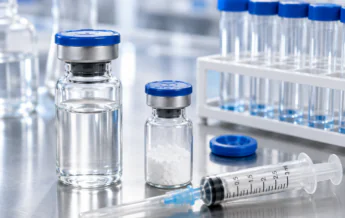
Vial
A small glass or plastic container commonly used for pharmaceutical and laboratory substances.
Lyophilized research materials are frequently packaged in sealed vials to help protect the material during storage and handling.
Additional Essential Peptide Research Terms
ADME
An abbreviation for:
Absorption – Distribution – Metabolism – Elimination
These processes form the foundation of pharmacokinetic research.
Analytical Testing
Laboratory procedures used to characterize a peptide or peptide preparation.
Depending upon the application, testing may investigate identity, purity, molecular weight, concentration, water content, counterions, residual solvents, endotoxin, sterility, or biological activity.
Biological Activity
The measurable effect produced by a substance within a biological system.
Chemical Purity
The proportion of the desired chemical component relative to detectable chemical impurities using a specified analytical technique.
Chemical purity is only one dimension of sample characterization.
Chromatogram
The graphical output produced by chromatography.
A chromatogram displays detected components as peaks and can be used to evaluate separation, retention times, and relative amounts of detected compounds.
Deamidation
A chemical degradation pathway in which certain amino-acid side chains—particularly asparagine and glutamine—undergo modification.
Deamidation can potentially alter peptide structure or activity.
Disulfide Bond
A covalent bond formed between two cysteine residues.
Disulfide bonds can be extremely important for maintaining the three-dimensional structures of certain peptides and proteins.
Elimination
The removal of a compound or its metabolites from a biological system.
Elimination may occur through the kidneys, liver, or other pathways.
Fragment
A shorter portion of a larger peptide or protein.
Researchers may study peptide fragments to identify the region responsible for a particular biological activity.
Full Agonist
An agonist capable of producing the maximum response available through a receptor system under defined experimental conditions.
Partial Agonist
A molecule that activates a receptor but produces a lower maximum response than a full agonist under the same experimental conditions.
LC-MS
Liquid Chromatography-Mass Spectrometry combines chromatographic separation with mass spectrometry.
This provides researchers with complementary information about sample composition and molecular identity.
Maximum Tolerated Dose (MTD)
The highest exposure evaluated in a study that produces an acceptable level of toxicity according to predefined experimental criteria.
Oxidation
A chemical degradation process that can affect certain amino-acid residues within peptides.
Oxidation is one reason storage conditions and environmental exposure can be important when conducting stability research.
Peptide Purity Testing
The analytical characterization of a peptide preparation.
Depending upon the intended research application, comprehensive characterization may investigate:
- Identity
- Chemical purity
- Molecular weight
- Counterion content
- Water content
- Residual solvents
- Endotoxin
- Sterility
- Biological activity
No single analytical test necessarily answers all of these questions.
Primary Structure
The linear amino-acid sequence of a peptide or protein.
Secondary Structure
Local structural arrangements formed by the peptide backbone, including alpha helices and beta sheets.
Tertiary Structure
The overall three-dimensional folding of a peptide or protein.
Stability Study
A controlled experiment designed to determine how a substance changes over time under specified environmental conditions.
Researchers may investigate temperature, light exposure, humidity, formulation, freeze-thaw cycles, or other variables.
Common Peptide Research Abbreviations
BAC — Bacteriostatic
CoA — Certificate of Analysis
Da — Dalton
EC50 — Half-Maximal Effective Concentration
FDA — Food and Drug Administration
GH — Growth Hormone
GHRH — Growth Hormone-Releasing Hormone
GHRP — Growth Hormone-Releasing Peptide
GHS-R — Growth Hormone Secretagogue Receptor
GIP — Glucose-Dependent Insulinotropic Polypeptide
GLP-1 — Glucagon-Like Peptide-1
HPLC — High-Performance Liquid Chromatography
IC50 — Half-Maximal Inhibitory Concentration
IM — Intramuscular
LC-MS — Liquid Chromatography-Mass Spectrometry
MS — Mass Spectrometry
MTD — Maximum Tolerated Dose
PD — Pharmacodynamics
PK — Pharmacokinetics
RCT — Randomized Controlled Trial
RUO — Research Use Only
SAR — Structure-Activity Relationship
SC / SQ / SubQ — Subcutaneous
SPPS — Solid-Phase Peptide Synthesis
TFA — Trifluoroacetic Acid
USP — United States Pharmacopeia
μg / mcg — Microgram
Understanding Commonly Confused Peptide Terms
Several peptide-research terms sound similar but describe very different characteristics.
Purity vs. Potency
Purity describes the proportion of the desired chemical component relative to detectable impurities under a particular analytical method.
Potency describes the amount or concentration required to produce a particular biological effect.
A highly pure sample does not automatically demonstrate high biological potency.
Purity vs. Sterility
These are also completely different characteristics.
A sample could demonstrate very high chemical purity while still not having been demonstrated to be sterile.
HPLC vs. Mass Spectrometry
HPLC separates components of a mixture and is frequently used to estimate chemical purity.
Mass spectrometry provides molecular-mass information that can help establish identity.
Using complementary analytical techniques generally provides substantially more information than relying on one test.
Kd vs. EC50
Kd primarily describes binding affinity.
EC50 describes the concentration required to produce half of the maximum measured functional response.
Strong receptor binding does not necessarily translate directly into an identical functional response.
Half-Life vs. Duration of Action
A compound’s half-life describes how quickly its concentration decreases.
Its duration of action describes how long meaningful biological effects persist.
The two can be related without necessarily being identical.
Endogenous vs. Synthetic
An endogenous peptide is naturally produced by an organism.
A synthetic peptide is manufactured artificially.
Synthetic peptides may reproduce naturally occurring sequences or contain deliberate modifications designed to investigate different biological properties.
In Vitro vs. In Vivo
In vitro research occurs outside a living organism, such as experiments involving cultured cells.
In vivo research occurs within living organisms.
A result demonstrated in vitro should not automatically be assumed to produce the same result in animals or humans.
Why Understanding Peptide Terminology Matters
Peptide science combines concepts from chemistry, molecular biology, endocrinology, pharmacology, analytical chemistry, biotechnology, and clinical research. As a result, even a relatively simple research paper can contain terminology from several scientific disciplines.
Understanding this terminology makes it much easier to evaluate what research actually demonstrates.
For example, instead of simply asking whether a peptide “works,” a more scientifically useful set of questions might include:
What receptor does the peptide interact with? Is it an agonist or antagonist? What is its binding affinity? What does its EC50 tell us? How selective is it for the intended receptor? What is its half-life? How is it metabolized? Has its identity been confirmed analytically? Was the research conducted in vitro, in animals, or in humans? Has it reached randomized controlled clinical trials?
The answers to those questions provide far more information about the state of the evidence.
The same principle applies when interpreting peptide testing. A Certificate of Analysis showing an HPLC result should not automatically be interpreted as proof of every characteristic of the material. Identity, chemical purity, biological activity, sterility, endotoxin levels, water content, and other characteristics can require different analytical procedures.
Learning the language of peptide research therefore does more than make scientific literature easier to read. It gives readers a better framework for evaluating research claims, analytical reports, emerging compounds, and new discoveries throughout the rapidly developing field of peptide science.
Final Thoughts
Peptides occupy a fascinating space between traditional small-molecule chemistry and larger biological proteins. Their ability to act as hormones, signaling molecules, receptor ligands, and biological messengers has made them an increasingly important area of scientific and pharmaceutical research.
As peptide research continues to expand, so will the vocabulary surrounding it.
Terms such as agonist, receptor affinity, EC50, half-life, pharmacokinetics, lyophilization, HPLC, mass spectrometry, peptide sequence, solid-phase peptide synthesis, and structure-activity relationship provide the foundation needed to understand that research.
For newcomers to the world of peptides, there is no need to memorize everything at once. Instead, this glossary can serve as a reference whenever an unfamiliar term appears in a research paper, clinical trial, laboratory report, Certificate of Analysis, or educational article.
Over time, understanding these concepts makes the increasingly complex world of peptide research much easier to navigate.
Educational Disclaimer
This peptide research glossary is provided for educational and informational purposes only. Definitions of administration routes, pharmaceutical terminology, laboratory procedures, or particular classes of compounds should not be interpreted as instructions or recommendations for human use.
Many compounds encountered in peptide research remain investigational and have not been approved by the FDA for therapeutic use. Regulatory status, evidence quality, manufacturing standards, safety data, and clinical evidence vary substantially between compounds.