

Lyophilized Peptides: Understanding Freeze-Drying, the Process, and Its Advantages
Peptides have become an increasingly important area of scientific research, appearing in studies involving metabolism, cellular signaling, tissue repair, immune function, aging, neurological processes, and many other biological systems. However, peptides present researchers and manufacturers with an important challenge: stability.
Many peptides are relatively delicate molecules. When maintained in a liquid solution for extended periods, they can be vulnerable to chemical and physical degradation. Temperature, moisture, oxygen, light, pH, and other environmental conditions can potentially affect their structure and integrity. For this reason, many research peptides are supplied in lyophilized powder form, commonly known as lyophilized powder or freeze-dried form.
Lyophilization transforms a peptide-containing solution into a dry, porous solid or lyophilized powder by removing water under carefully controlled low-temperature and vacuum conditions. The objective is not simply to “dry” the peptide. Instead, lyophilization is designed to remove water while minimizing the heat and other stresses that could damage sensitive molecules.
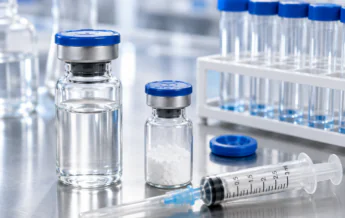
The result is the familiar white or off-white material commonly seen inside vials of research peptides.
What Does “Lyophilized” Mean?
Lyophilization is the scientific term for freeze-drying and turning the liquid into a lyophilized powder.
The FDA describes lyophilization as a process in which a product is frozen and placed under vacuum so that ice can transition directly from the solid state into vapor without first becoming liquid. This transition is called sublimation.
This distinction is important.
Traditional drying methods frequently depend on elevated temperatures to evaporate water. While that approach works well for many materials, excessive heat can be problematic for temperature-sensitive biological molecules.
Freeze-drying takes a different approach.
Rather than attempting to boil or evaporate the water from the peptide solution, the solution is first frozen. The frozen water is subsequently removed primarily through sublimation under reduced pressure.
Research literature generally divides lyophilization into three major stages:
- Freezing
- Primary drying
- Secondary drying
Each stage influences the characteristics and stability of the finished material.
Why Are Peptides Lyophilized?
One of the primary reasons is that peptides can be more difficult to maintain in aqueous solutions.
Water provides an environment in which numerous chemical reactions can occur. Depending upon the particular peptide and formulation, degradation pathways can include oxidation, hydrolysis, aggregation, deamidation, and other chemical or physical changes.
Researchers therefore frequently attempt to reduce molecular mobility and chemical reactions by converting sensitive biological products into a solid state.
Scientific reviews describe stabilization in solid form as a common strategy for improving the chemical and physical stability of peptides.
Lyophilization can be particularly valuable when a peptide needs to be manufactured, tested, packaged, transported, and stored before it is ultimately used in laboratory research.
However, freeze-drying is not automatically beneficial for every peptide. The formulation and freeze-drying cycle must be carefully developed because freezing and dehydration themselves can introduce stress.
How Does a Peptide Become Lyophilized?
The process begins before the freeze dryer is ever turned on.
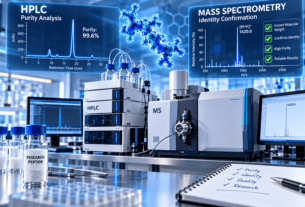
A peptide generally must first be synthesized and purified. Depending upon the manufacturing process, analytical techniques such as high-performance liquid chromatography (HPLC) and mass spectrometry may be used to evaluate identity and purity.
Once an appropriate peptide material has been obtained, it can be prepared as a liquid formulation suitable for freeze-drying.
Step 1: Preparing the Peptide Solution
The purified peptide is dissolved into an appropriate solution at a carefully controlled concentration.
Depending upon the peptide and intended application, the formulation may contain buffers or other excipients designed to control pH, provide structure to the finished lyophilized material, or protect the molecule during freezing and drying.
Formulation development is extremely important.
Certain stabilizers can help protect biological molecules against the stresses created by freezing and dehydration. Scientific literature discusses sugars such as sucrose and trehalose, as well as various amino acids and other excipients, as examples of materials used in some pharmaceutical freeze-dried formulations.
The appropriate formulation, however, depends upon the individual molecule.
Step 2: Filling the Vials
Once the peptide formulation has been prepared, measured quantities of the solution can be dispensed into individual glass vials.
In controlled pharmaceutical manufacturing environments, filling may be performed using specialized equipment designed to maintain accurate fill volumes and appropriate environmental conditions.
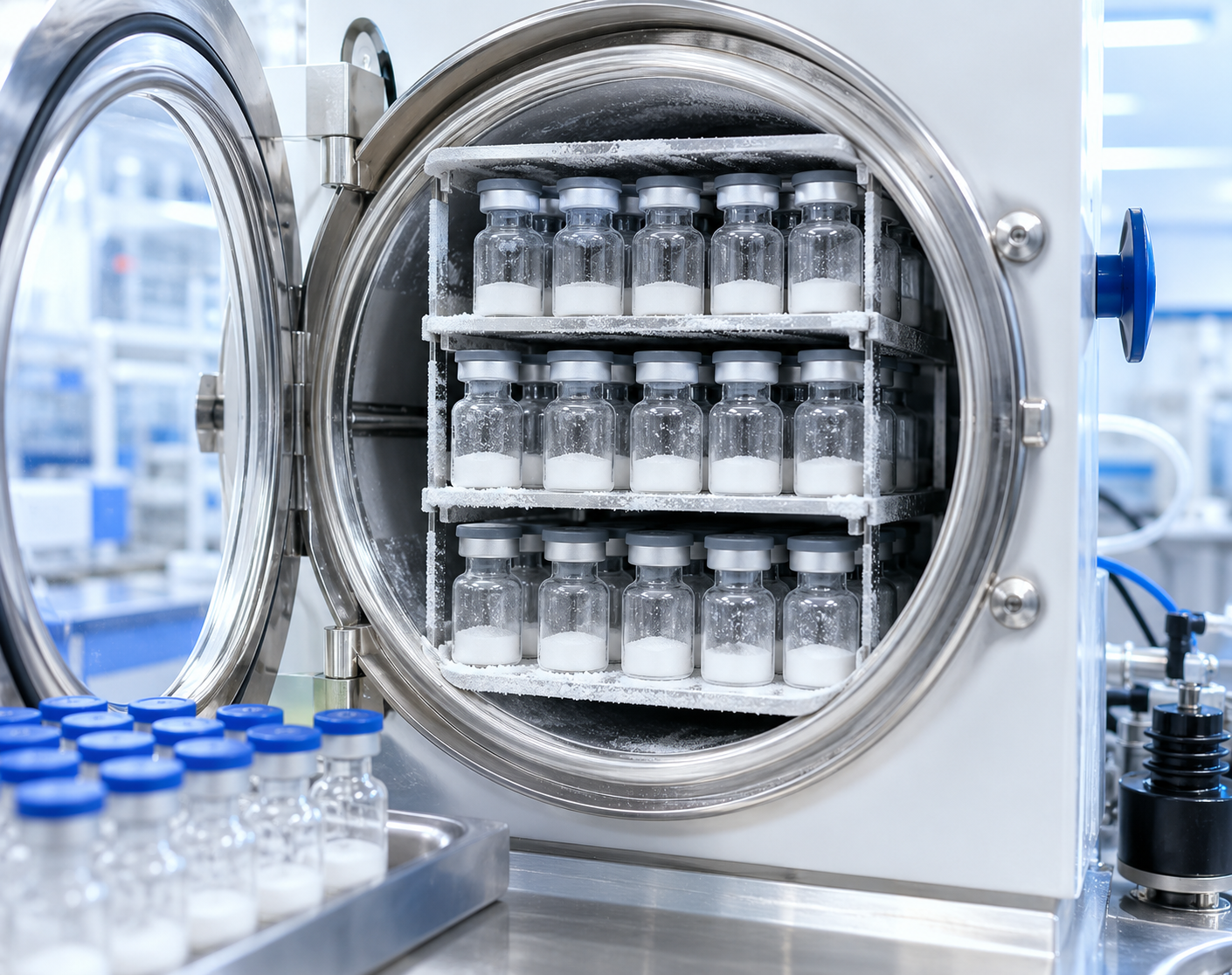
The vials are typically positioned on temperature-controlled shelves inside a lyophilizer.
At this stage, the peptide is still in liquid form.
Step 3: Freezing
The first major stage of lyophilization is freezing.
The temperature of the shelves is lowered until the water within the formulation freezes and ice crystals form.
Although freezing sounds straightforward, it is actually one of the most important parts of the entire process.
The freezing rate and ice-crystal structure can influence characteristics such as pore structure, residual moisture, drying efficiency, product appearance, and reconstitution behavior. Research has therefore emphasized that freezing conditions can significantly affect both process performance and final product quality.
Once properly frozen, the peptide and other formulation components are concentrated within the non-ice portion of the frozen material.
The product is now ready for the stage that gives freeze-drying its unique advantage.
Step 4: Primary Drying — Sublimation
During primary drying, pressure inside the lyophilizer is substantially reduced, creating a vacuum.
Under the appropriate combination of pressure and temperature, the ice contained within the frozen formulation begins to sublimate.
Instead of melting into liquid water, the ice transitions directly from:
Solid ice → water vapor
The resulting water vapor travels away from the product and is typically captured by the lyophilizer’s condenser.
This stage removes the majority of the frozen water.
Careful temperature control is essential. Raising the product temperature too aggressively can potentially cause structural collapse or adversely affect the material. Consequently, commercial lyophilization cycles are developed around the physical properties of the particular formulation rather than simply using one universal temperature and pressure profile.
Primary drying is frequently one of the longest portions of the freeze-drying cycle.
Step 5: Secondary Drying — Removing Residual Moisture
After the visible ice has been removed through sublimation, a small amount of water can remain associated with the dried material.
This residual moisture is addressed during secondary drying.
Temperature is generally increased under controlled vacuum conditions to encourage additional water molecules to desorb from the product.
The goal is to reach an appropriately low residual moisture level without damaging the peptide.
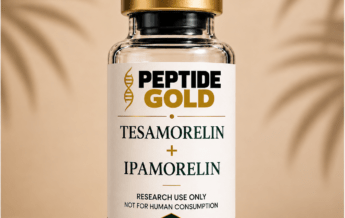
The final material often develops the characteristic porous structure sometimes referred to as lyophilized powder or a lyophilized cake.
Depending upon the formulation, this cake may appear as a compact white mass at the bottom of the vial or as a lighter lyophilized powder-like material.
Step 6: Sealing and Packaging
After drying has been completed, the vials must be protected from moisture in the surrounding environment.
The vial may therefore be stoppered while still inside the controlled environment of the lyophilizer, sometimes following backfilling with an appropriate inert gas.
The stopper and outer seal create a barrier intended to minimize moisture and environmental exposure during storage.
This is especially important because a properly freeze-dried material can readily absorb moisture if improperly packaged.
Major Advantages of Lyophilized Peptides
The popularity of freeze-drying comes from several potential advantages.
Improved Stability
Perhaps the greatest advantage is improved stability.
Removing most of the water from a peptide formulation can substantially reduce molecular mobility and slow many degradation pathways.
Scientific literature reports that freeze-drying can improve the storage stability of proteins and peptides that have limited stability in aqueous solutions.
Reduced Exposure to Heat
Freeze-drying removes water without relying on the high temperatures associated with many conventional drying techniques.
The FDA specifically identifies removal of water without excessive heating as one of the advantages of lyophilization.
This makes the technology particularly useful for many temperature-sensitive biological materials.
Longer Practical Storage Potential
Because degradation reactions can proceed more slowly in an appropriately formulated dry state, lyophilization can make long-term storage more practical.
The exact stability period still depends on the individual peptide, formulation, packaging, residual moisture, temperature, and validated storage conditions. Lyophilization should therefore never be interpreted as making a peptide permanently stable.
Easier Transportation
A properly sealed dry product is generally less vulnerable to some of the physical and chemical stability problems associated with transporting liquid formulations.
This can simplify logistics and provide manufacturers and laboratories with greater flexibility.
Appropriate temperature controls may still be necessary depending upon the specific peptide.
Convenient Reconstitution
Another important characteristic of a properly developed lyophilized formulation is its ability to be returned to solution.
The porous structure created when ice leaves the frozen material provides pathways through which an appropriate laboratory solvent can penetrate the dried material.
The FDA lists rapid and easy dissolution after reconstitution among the potential advantages of properly designed lyophilized products.
Batch Consistency and Inventory Management
Lyophilization also allows manufacturers to prepare standardized quantities of peptide in individual sealed vials.
For research laboratories, this can make inventory management and experimental preparation more convenient while reducing the need to maintain large quantities of peptide continuously in liquid form.
Lyophilization Is Not a Guarantee of Quality
An important distinction must be made: a peptide being lyophilized does not automatically mean it is pure, accurately dosed, sterile, or high quality.
Lyophilization describes the physical processing method used to remove water. It does not independently establish the identity or purity of the material inside the vial.
Quality must be evaluated separately through appropriate manufacturing controls and analytical testing.
Likewise, poorly designed freeze-drying conditions can actually damage biological molecules. Freezing and dehydration can create stresses capable of contributing to conformational changes, aggregation, or loss of activity in some systems.
This is why professional lyophilization involves considerably more science than simply freezing a vial and placing it under vacuum.
Why Lyophilization Remains So Important
Freeze-drying has become an important technology in biotechnology, pharmaceutical development, and peptide research because it addresses one of the fundamental challenges associated with biological molecules: keeping them stable.
The basic concept is remarkably elegant.
A peptide begins in solution. The solution is frozen. Vacuum conditions allow frozen water to escape through sublimation. Additional moisture is removed during secondary drying, leaving behind a dry peptide-containing material that can be sealed and stored.
Yet behind those seemingly simple steps is a sophisticated combination of chemistry, physics, formulation science, temperature control, pressure control, and analytical testing.
The result, when the process is properly developed, can be a peptide formulation that offers significant advantages in stability, storage, transportation, and laboratory handling.
For researchers working with peptides, understanding lyophilization also explains why so many peptide products arrive not as bottles of liquid, but as small sealed vials containing a seemingly unremarkable white powder or cake.
That appearance represents the final stage of an advanced preservation process specifically designed to remove one of the greatest threats to long-term peptide stability: water.
Research-use note: Lyophilization and reconstitution procedures vary by compound and formulation. The presence of lyophilized powder material in a vial does not establish suitability for human use, sterility, purity, potency, or an appropriate reconstitution method.