


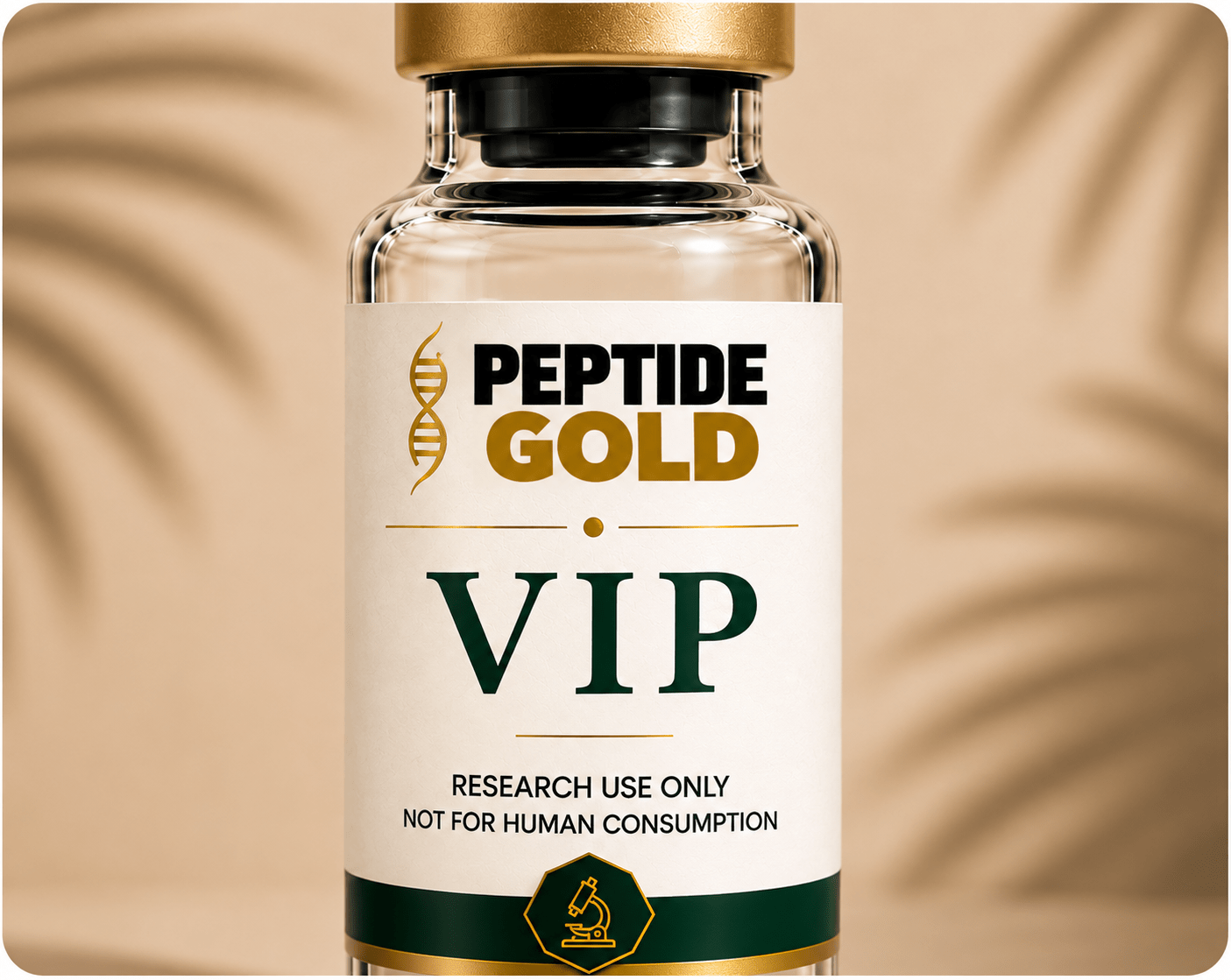
VIP (Vasoactive Intestinal Peptide): A Comprehensive Guide to Uses, Research, Dosing, Forms, and Potential Benefits
VIP, short for vasoactive intestinal peptide, is a naturally occurring 28-amino-acid neuropeptide and hormone involved in a remarkably broad range of physiological processes.
Despite its name, VIP is not limited to the intestines.
It is found throughout the:
gastrointestinal tract
lungs
heart and blood vessels
pancreas
immune system
and central and peripheral nervous systems.
VIP is especially interesting because it can influence several systems at once. Research has examined it for effects involving:
- Vasodilation
- Bronchodilation
- Pulmonary circulation
- Inflammation
- Immune regulation
- Gastrointestinal motility
- Pancreatic hormone release
- Circadian rhythms
- Neuroprotection
- Pulmonary hypertension
- Asthma and COPD
- Acute lung injury
- Metabolic regulation
The peptide has also been developed pharmaceutically under the generic name aviptadil, which is a synthetic form of human VIP.
However, despite decades of research, VIP/aviptadil is not currently an FDA-approved medication in the United States for pulmonary hypertension, respiratory disease, immune disorders, anti-aging, or general wellness.
Its biggest therapeutic challenges are its very short duration of action and broad activity throughout the body, which can make targeted treatment difficult. Reviews of VIP pharmacology consistently identify rapid metabolic degradation and delivery to the desired tissue as major limitations.
What Is VIP?
VIP is a naturally occurring peptide consisting of 28 amino acids.
It was first isolated from intestinal tissue in the early 1970s.
Researchers initially noticed its powerful ability to dilate blood vessels, which explains the term:
vasoactive.
As research expanded, scientists discovered that VIP was actually a widespread neuropeptide and signaling molecule.
It is released by neurons in many areas of the body and participates in both:
neurotransmission
and hormonal signaling.
VIP belongs to the same broad peptide family as:
PACAP
glucagon
secretin
and growth hormone-releasing hormone.
These peptides act through structurally related class B G-protein-coupled receptors.
How Does VIP Work?
VIP primarily acts through two receptors:
VPAC1
and
VPAC2.
Both are G-protein-coupled receptors.
When VIP binds these receptors, it typically increases intracellular:
cyclic AMP, or cAMP.
This activates downstream signaling pathways that influence:
smooth muscle
blood vessels
immune cells
glandular secretion
and neuronal activity.
VIP binds strongly to both VPAC1 and VPAC2, while the related peptide PACAP also interacts with these receptors plus the PAC1 receptor.
Because VIP receptors are distributed throughout many organs, one molecule can produce very different effects depending on the tissue involved.
VIP and Blood Vessels
One of VIP’s strongest physiological actions is vasodilation.
Vasodilation means widening of blood vessels.
When vascular smooth muscle relaxes, the vessel diameter increases.
This can:
increase blood flow
and reduce vascular resistance.
VIP is therefore one of the body’s naturally occurring vasodilatory peptides.
Its vascular effects are particularly important in the:
lungs
heart
and gastrointestinal circulation.
This property has driven much of the research into VIP for pulmonary hypertension.
VIP and the Lungs
VIP is widely distributed throughout the respiratory system.
VIP-containing nerve fibers are found around:
airways
bronchial smooth muscle
and pulmonary blood vessels.
The peptide can produce both:
bronchodilation
and vasodilation.
It also appears to influence:
airway secretions
inflammation
and immune signaling.
These combined effects have made VIP an attractive experimental molecule for several pulmonary diseases. Reviews have examined its potential in:
pulmonary arterial hypertension
COPD
asthma
cystic fibrosis
acute lung injury
ARDS
and pulmonary fibrosis.
VIP and Pulmonary Hypertension
Pulmonary hypertension involves abnormally high pressure in the blood vessels carrying blood through the lungs.
The condition increases the workload on the right side of the heart and can eventually lead to right-heart failure.
VIP attracted attention because it is a potent pulmonary vasodilator.
Early research also suggested that some patients with primary pulmonary hypertension had reduced VIP levels in the lungs and circulation.
A small early study involving eight patients found that VIP administration improved several hemodynamic measurements, including pulmonary artery pressure and cardiac output.
These findings led to additional research using inhaled VIP, particularly the pharmaceutical form aviptadil.
Inhaled Aviptadil in Pulmonary Hypertension
A study involving 20 people with pulmonary hypertension examined a single:
100 microgram inhaled dose of aviptadil.
Researchers observed:
a modest temporary reduction in pulmonary vascular resistance
improved stroke volume
and improved mixed venous oxygen saturation.
The pulmonary vasodilating effect was described as selective but relatively short-lived.
This illustrates both the appeal and the challenge of VIP therapy.
The biological effect is real.
But because VIP is cleared rapidly, maintaining a therapeutic response can be difficult.
VIP and Bronchodilation
VIP can relax airway smooth muscle.
This produces bronchodilation, meaning widening of the bronchial airways.
Because airway narrowing is a major feature of asthma and COPD, researchers have explored VIP-related therapies for both diseases.
VIP is especially interesting because it may theoretically provide several effects simultaneously:
bronchodilation
pulmonary vasodilation
and anti-inflammatory activity.
This combination would be highly attractive for respiratory medicine.
However, early synthetic VIP agonists did not consistently outperform established asthma therapies, and the peptide’s short half-life limited its usefulness.
VIP and Asthma
Asthma involves:
airway constriction
inflammation
mucus production
and hypersensitivity of the respiratory system.
VIP could theoretically address several of these mechanisms.
Experimental findings suggest that it can:
relax bronchial smooth muscle
modulate immune cells
and reduce certain inflammatory responses.
However, VIP itself has not become an established asthma medication.
Modern asthma therapy relies heavily on treatments with much stronger clinical evidence, including:
inhaled corticosteroids
beta-2 agonists
and targeted biologic drugs.
VIP and COPD
COPD involves chronic airflow limitation and inflammation.
Research has found associations between VIP levels and pulmonary vascular abnormalities in COPD.
For example, one study involving 83 patients found higher circulating VIP levels in certain COPD patients with pulmonary hypertension, possibly representing a compensatory response to increased pulmonary vascular pressure.
This demonstrates VIP’s involvement in pulmonary physiology, but it does not establish supplemental VIP as a routine COPD treatment.
VIP and Inflammation
VIP is particularly interesting as an immune-modulating neuropeptide.
It can influence immune cells such as:
T lymphocytes
macrophages
dendritic cells
and other inflammatory cell populations.
Research suggests VIP can reduce production of several pro-inflammatory mediators under certain conditions.
These immunological effects are part of the reason researchers have investigated VIP for:
autoimmune disease
inflammatory bowel disease
lung inflammation
and systemic inflammatory disorders.
However, immune regulation is complex.
Suppressing inflammation is not always beneficial, because inflammation is also important for fighting infections and repairing tissue.
VIP is therefore more accurately described as an immunomodulator than a simple anti-inflammatory drug.
VIP and the Gastrointestinal System
VIP was originally isolated from the intestine, and the gastrointestinal tract remains one of its major physiological sites.
VIP helps regulate:
intestinal smooth-muscle relaxation
water and electrolyte secretion
blood flow
and digestive gland activity.
Its name can therefore be understood quite literally:
it is both vasoactive and active in the intestinal system.
VIP can relax certain gastrointestinal smooth muscles and influence movement through the digestive tract.
Too much VIP activity, however, can produce major gastrointestinal effects.
Excess VIP and Severe Diarrhea
One of the most dramatic examples of VIP physiology occurs in rare tumors called VIPomas.
VIPomas release excessive amounts of VIP.
Patients may develop:
profuse watery diarrhea
low potassium
and metabolic abnormalities.
This syndrome is often called:
WDHA syndrome — watery diarrhea, hypokalemia, and achlorhydria.
This demonstrates something important about VIP:
the peptide can produce powerful systemic effects.
It is not merely a mild wellness or recovery compound.
VIP and the Pancreas
VIP also influences pancreatic function.
Of particular interest is the VPAC2 receptor, which is expressed in pancreatic beta cells.
VIP can enhance glucose-dependent insulin secretion, meaning its insulin-stimulating effect becomes stronger when blood glucose is elevated.
This has generated interest in selective VPAC2 receptor agonists as possible future treatments for type 2 diabetes.
However, native VIP is not an established diabetes medication.
Its short half-life and widespread receptor activity make it poorly suited to this role compared with more selective drug candidates.
VIP and Glucose Regulation
VIP’s metabolic effects are another reason it overlaps with peptide systems such as GLP-1 and GIP.
It can influence:
insulin release
glucagon-related signaling
and gastrointestinal function.
Researchers are therefore interested in whether modified VIP receptor agonists could provide metabolic benefits without causing excessive vasodilation or gastrointestinal effects.
This is an area where receptor-selective drug design may prove more useful than simply administering native VIP.
VIP and Circadian Rhythms
VIP also plays an important role in the brain’s biological clock.
Within the hypothalamus, VIP is produced by neurons in the suprachiasmatic nucleus, or SCN.
The SCN acts as the body’s master circadian clock.
VIP helps synchronize neurons within this region.
This influences:
sleep-wake timing
hormone rhythms
body temperature
and other daily physiological patterns.
The VIP/PACAP receptor system is therefore involved not only in circulation and digestion, but also in neurological timing systems.
Does VIP Improve Sleep?
VIP contributes to the biological systems that regulate circadian rhythms.
That does not mean supplemental VIP has been established as a sleep medication.
There are no strong clinical trials demonstrating that VIP injections or nasal products reliably treat:
insomnia
sleep apnea
or circadian rhythm disorders.
The biological association is real, but the therapeutic application remains speculative.
VIP and the Brain
VIP acts as a neurotransmitter and neuromodulator in the central nervous system.
Research involving VIP and the related peptide PACAP has investigated effects on:
memory
learning
stress responses
brain injury
circadian rhythms
and emotional behavior.
However, VIP is not currently an established cognitive-enhancement or neuroprotective medication.
The widespread distribution of VIP receptors makes designing brain-specific treatment challenging.
VIP and Neuroprotection
Experimental research suggests VIP may influence:
neuronal survival
inflammatory responses in the brain
and cellular stress pathways.
These findings have generated interest in neurological and neurodegenerative disorders.
However, the evidence remains mostly preclinical.
There is no FDA-approved VIP treatment for:
Alzheimer’s disease
Parkinson’s disease
brain injury
or general cognitive decline.
VIP and the Immune System
The immune system and nervous system communicate extensively.
VIP is one of the molecules involved in that communication.
It can be produced by nerve cells near immune tissues and can alter immune-cell behavior through VPAC receptors.
Potential effects include modulation of:
cytokines
T-cell differentiation
macrophage responses
and inflammatory signaling.
This makes VIP particularly interesting as a possible future therapy for diseases where the immune system is excessively activated.
However, the same broad activity makes systemic treatment difficult to control.
VIP and COVID-19 Research
VIP received renewed attention during the COVID-19 pandemic.
Researchers investigated aviptadil because severe COVID could involve:
lung injury
inflammation
ARDS
and impaired oxygenation.
This led to considerable public interest in VIP as an experimental pulmonary therapy.
Reviews published afterward continued to discuss VIP’s potential for pulmonary disease but emphasized that therapeutic limitations remain significant.
VIP/aviptadil did not become an FDA-approved routine COVID-19 treatment.
What Is Aviptadil?
Aviptadil is a synthetic form of human VIP.
The terms are sometimes used almost interchangeably in research discussions.
Aviptadil has been investigated through routes including:
inhalation
and intravenous administration.
Its proposed uses have centered primarily on:
pulmonary hypertension
respiratory failure
and severe pulmonary inflammation.
Aviptadil is not currently a standard FDA-approved therapy in the United States.
VIP Dosing Information
There is no FDA-approved general VIP dosing regimen.
Published doses vary widely because research has examined different:
routes
conditions
and treatment objectives.
For example, one pulmonary hypertension study used a single:
100 microgram inhaled aviptadil dose.
Other historical research used different inhaled or systemic protocols.
These should not be interpreted as general-purpose VIP dosing.
There is no established personal-use dose for:
immune support
anti-aging
brain health
exercise recovery
gut health
or general respiratory wellness.
Why VIP Dosing Is Difficult
VIP has an unusually short plasma duration.
It is quickly broken down by enzymes.
This creates a challenge:
a dose large enough to maintain an effect could potentially create unwanted systemic activity, while smaller doses may disappear too quickly to provide sustained benefit.
Researchers have therefore focused heavily on:
long-acting analogues
selective receptor agonists
and improved drug-delivery systems.
The goal is often not simply to give more VIP.
It is to make VIP-like signaling more targeted and durable.
What Forms Is VIP Offered In?
VIP can be encountered in several research formats.
Aviptadil
This is synthetic VIP used in pharmaceutical research.
Lyophilized VIP
Research suppliers may offer VIP as:
freeze-dried, or lyophilized, powder.
Lyophilization can improve storage stability before experimental reconstitution.
Research Vials
VIP may be packaged into small research vials containing specified amounts of peptide.
These should not automatically be assumed to be:
sterile
pharmaceutical grade
or appropriate for human administration.
Inhaled Formulations
Aviptadil has been investigated as an aerosol because pulmonary delivery may allow more direct action within the lungs.
Intravenous Formulations
IV administration has also been investigated experimentally, particularly in critical-care settings.
There is no general FDA-approved consumer VIP injection, nasal spray, or inhalation product.
Why Inhalation Is Attractive
If the target is the pulmonary circulation, delivering VIP directly into the lungs has a major theoretical advantage.
An inhaled formulation may produce:
local pulmonary vasodilation
while limiting excessive systemic hypotension.
The pulmonary hypertension study using inhaled aviptadil found modest selective pulmonary vasodilation without meaningful systemic blood-pressure effects.
This is a good example of how delivery route can be just as important as the peptide itself.
Potential Side Effects
VIP’s biological actions suggest several possible adverse effects.
Potential effects may include:
- Flushing
- Headache
- Dizziness
- Low blood pressure
- Increased heart rate
- Diarrhea
- Abdominal cramping
- Nausea
- Changes in glucose regulation
The actual side-effect profile depends heavily on:
dose
route
infusion speed
and the health of the person receiving it.
Because VIP is a strong vasodilator, excessive systemic exposure could theoretically cause significant hypotension.
Blood Pressure
The name vasoactive intestinal peptide reflects one of the main safety considerations.
VIP relaxes vascular smooth muscle.
If this occurs systemically, blood pressure may fall.
Symptoms of excessive vasodilation could include:
lightheadedness
weakness
rapid heartbeat
or fainting.
This is one reason pulmonary researchers have investigated inhaled delivery rather than simply administering large systemic doses.
Gastrointestinal Side Effects
VIP strongly influences intestinal secretion and smooth muscle.
Excess exposure can therefore cause:
diarrhea
cramping
and changes in gastrointestinal motility.
VIPoma provides the extreme physiological example of what excessive VIP signaling can do.
VIP and Cancer Biology
VIP’s relationship with cancer is complex.
VIP receptors are expressed in several tumor types.
Research has investigated these receptors both as:
biological signaling pathways
and possible drug-delivery targets.
Some tumors may exploit VIP-related signaling for growth or survival.
A historical clinical review noted associations between VIP receptor overexpression and certain malignancies.
This does not mean VIP itself causes cancer.
It means that chronically stimulating a broadly distributed growth and signaling pathway should not automatically be assumed harmless.
VIP Versus PACAP
VIP and PACAP, or pituitary adenylate cyclase-activating polypeptide, are closely related.
They share substantial sequence similarity.
Both activate:
VPAC1
and VPAC2 receptors.
PACAP additionally has very high affinity for the:
PAC1 receptor.
VIP has much lower affinity for PAC1.
This receptor difference gives the two peptides overlapping but distinct physiological effects.
PACAP has become especially important in modern migraine research, while VIP remains strongly associated with vascular, pulmonary, gastrointestinal, and immune physiology.
VIP Versus GLP-1
Both belong to the same broader peptide-receptor superfamily but have very different modern therapeutic roles.
GLP-1 strongly regulates:
appetite
insulin secretion
and metabolism.
VIP has much broader actions involving:
blood vessels
lungs
intestinal secretion
immune cells
and the nervous system.
That broad activity makes VIP biologically fascinating but also makes therapeutic targeting harder.
VIP Versus Thymosin Alpha-1
Both can influence immune signaling, but they do so through very different pathways.
Thymosin Alpha-1 is primarily associated with:
T-cell maturation
dendritic cells
and immune restoration.
VIP is a neuroimmune peptide that regulates:
cytokines
smooth muscle
vasodilation
and multiple immune-cell pathways.
Neither should be viewed simply as a generic “immune booster.”
VIP Versus BPC-157
VIP and BPC-157 are occasionally grouped together in wellness or peptide discussions, but their evidence bases and mechanisms differ dramatically.
VIP is a naturally occurring human neuropeptide with decades of physiological research.
BPC-157 is an experimental synthetic peptide studied largely in animal tissue-repair models.
VIP primarily affects:
vascular
pulmonary
gastrointestinal
and immune signaling.
BPC-157 is more strongly associated with:
repair
angiogenesis
and gastrointestinal tissue protection.
Is VIP FDA Approved?
Native VIP or aviptadil is not currently FDA-approved in the United States as a routine treatment for pulmonary hypertension, asthma, COPD, immune disorders, anti-aging, or general wellness.
It has undergone extensive experimental development, but several limitations have prevented broad clinical adoption.
The main challenges include:
rapid enzymatic breakdown
short duration of action
widespread receptor distribution
and difficulty delivering enough peptide to the target organ without producing unwanted systemic effects.
Current Research in 2026
Modern VIP research is increasingly focused not simply on administering native VIP but on creating:
longer-acting analogues
VPAC1-selective drugs
VPAC2-selective agonists
and targeted delivery systems.
This is particularly important in metabolic research.
VPAC2-selective agonists are being investigated because they may stimulate glucose-dependent insulin secretion while avoiding some of the unwanted vascular and gastrointestinal effects of native VIP.
Pulmonary research remains another important field.
VIP’s combination of:
vasodilation
bronchodilation
anti-inflammatory effects
and immune regulation continues to make it appealing for diseases such as pulmonary arterial hypertension and inflammatory lung disease.
The problem is still translating these impressive physiological effects into a practical drug.
What Research Is Still Needed?
Several key questions remain.
Researchers need better information regarding:
optimal receptor selectivity
long-acting formulations
human pharmacokinetics
dose-response relationships
inhaled versus systemic delivery
and long-term cardiovascular safety.
For pulmonary hypertension, larger randomized trials would be needed to determine whether VIP-based therapy improves outcomes such as:
exercise capacity
hospitalization
right-heart function
and survival.
For inflammatory disease, researchers need to determine whether immune modulation can be achieved without excessive:
vasodilation
diarrhea
or immune suppression.
For metabolic disease, VPAC2-selective drugs may ultimately be more promising than native VIP itself.
The Bottom Line
VIP, or vasoactive intestinal peptide, is a naturally occurring 28-amino-acid neuropeptide with unusually broad biological activity.
It acts primarily through:
VPAC1
and VPAC2 receptors,
which are found throughout the nervous, cardiovascular, pulmonary, gastrointestinal, endocrine, and immune systems.
VIP can influence:
blood-vessel dilation
bronchodilation
intestinal secretion
pancreatic insulin release
immune regulation
circadian signaling
and neurological function.
Its strongest research areas include pulmonary and inflammatory disease.
Early studies showed that VIP could reduce pulmonary vascular resistance and improve hemodynamics in pulmonary hypertension. In a study of 20 patients, a 100-microgram inhaled dose of aviptadil produced modest, short-lived pulmonary vasodilation and improved several measures of right-heart and pulmonary circulation function.
VIP has also generated interest for:
asthma
COPD
acute lung injury
pulmonary fibrosis
and other respiratory diseases because it combines vasodilatory, bronchodilatory, and anti-inflammatory properties.
Metabolic research is another emerging field.
VIP can stimulate glucose-dependent insulin secretion through VPAC2, which has led to development of selective VPAC2 agonists as possible future diabetes therapies.
However, native VIP has several major pharmaceutical disadvantages.
It is:
rapidly degraded
short acting
and active throughout many different organs.
These characteristics make it difficult to achieve a sustained therapeutic effect without affecting unrelated systems.
There is therefore:
no general FDA-approved VIP medication,
no established wellness or anti-aging dose,
no validated injectable personal-use regimen,
and no approved indication for immune enhancement, pulmonary optimization, cognitive enhancement, or longevity.
Perhaps the most accurate way to describe VIP in 2026 is:
a powerful naturally occurring neuroimmune and vasoregulatory peptide with established physiological roles in blood vessels, lungs, intestines, metabolism, and the nervous system, along with decades of promising therapeutic research—but whose very short half-life and widespread receptor activity have made development into a practical broadly used medication difficult.
For researchers, VIP is especially fascinating because few peptides connect so many physiological systems at once.
For consumers, however, the key distinction is between:
a peptide with powerful and well-established biological activity
and
a peptide with a validated, safe, effective therapeutic regimen for general use.
VIP clearly meets the first definition.
For most proposed uses, it does not yet meet the second.
Educational and research notice: This article is intended for general scientific and educational information only. It is not medical advice or a recommendation for human use of VIP or aviptadil. Published doses described above refer to controlled research protocols and should not be interpreted as personal dosing instructions. VIP/aviptadil is not FDA-approved for general immune support, anti-aging, pulmonary optimization, neurological enhancement, or wellness use.