


SS-31 (Elamipretide): A Comprehensive Guide to Uses, Research, Dosing, Forms, and Potential Benefits
SS-31, better known today as elamipretide, is a mitochondria-targeted tetrapeptide developed to improve the function of the inner mitochondrial membrane.
It is also known historically as:
MTP-131
and Bendavia.
Unlike many peptides that act through hormone receptors or neurotransmitter systems, SS-31 works directly at the level of the mitochondria, particularly by interacting with cardiolipin, a specialized phospholipid that is essential for proper mitochondrial structure and energy production.
This makes SS-31 especially interesting in research involving:
- Mitochondrial disease
- Skeletal muscle weakness
- Barth syndrome
- Mitochondrial bioenergetics
- Oxidative stress
- Cardiomyopathy
- Exercise intolerance
- Age-related mitochondrial dysfunction
- Neurodegenerative research
- Heart and kidney injury
A major change occurred in September 2025: the FDA granted accelerated approval to elamipretide under the brand name Forzinity® for improving muscle strength in adults and children with Barth syndrome who weigh at least 30 kg.
That makes SS-31 very different from many research peptides. It is no longer accurate to describe elamipretide simply as an unapproved experimental molecule.
However, its approval is narrow and specific. It is not FDA-approved for anti-aging, athletic performance, general mitochondrial optimization, fatigue, neurodegenerative disease, or healthy people seeking more energy.
What Is SS-31?
SS-31 is a synthetic four-amino-acid peptide, or tetrapeptide.
Its sequence is commonly described as:
D-Arg-Dmt-Lys-Phe-NH₂
where Dmt refers to 2,6-dimethyltyrosine.
The molecule was engineered to accumulate selectively within mitochondria.
Unlike many compounds that depend heavily on mitochondrial membrane potential for entry, SS-31 has a strong affinity for cardiolipin, which is concentrated in the inner mitochondrial membrane.
This allows the peptide to localize near the molecular machinery responsible for cellular energy production.
What Is Cardiolipin?
Cardiolipin is a unique phospholipid found mainly in the inner mitochondrial membrane.
It is critically important because it helps organize the proteins involved in the electron-transport chain.
These proteins work together to create the electrochemical gradient used to produce:
ATP — adenosine triphosphate.
ATP is the primary energy currency used by cells.
Cardiolipin helps maintain:
mitochondrial membrane structure
electron-transport efficiency
respiratory-chain organization
and proper activity of several mitochondrial enzymes.
When cardiolipin becomes damaged or abnormally remodeled, mitochondrial energy production can deteriorate.
This is especially important in Barth syndrome, where defective cardiolipin metabolism is a defining feature of the disease.
How Does SS-31 Work?
Elamipretide binds to cardiolipin within the inner mitochondrial membrane.
This interaction is believed to help stabilize membrane structure and improve the organization and efficiency of the respiratory chain.
The proposed sequence looks roughly like:
SS-31 → cardiolipin binding → improved inner mitochondrial membrane organization → better electron transport → improved ATP production and reduced oxidative stress
A 2026 review described elamipretide as a cardiolipin-targeted therapy that can stabilize respiratory-chain supercomplexes, improve electron transport, and reduce production of reactive oxygen species.
This mechanism is quite different from simply functioning as an antioxidant.
SS-31 appears to improve the environment in which mitochondrial energy production occurs.
SS-31 and Oxidative Stress
Mitochondria naturally produce reactive oxygen species during energy generation.
Small amounts are normal and participate in cellular signaling.
Problems arise when damaged or inefficient mitochondria allow excessive electron leakage.
This can increase production of reactive oxygen species and damage:
proteins
lipids
DNA
and the mitochondria themselves.
Cardiolipin is particularly vulnerable to oxidative damage.
Because SS-31 binds cardiolipin and may help stabilize mitochondrial membranes, researchers believe it can reduce some of this oxidative stress indirectly by improving electron-transport efficiency.
What Is Barth Syndrome?
Barth syndrome is a rare X-linked mitochondrial disease caused by mutations in the TAZ gene.
The mutation interferes with normal cardiolipin remodeling.
Because cardiolipin is essential for mitochondrial function, affected individuals may experience:
cardiomyopathy
skeletal muscle weakness
exercise intolerance
growth delay
neutropenia
and severe fatigue.
The condition primarily affects males.
Before 2025, there was no FDA-approved therapy specifically targeting the underlying mitochondrial defect in Barth syndrome.
Elamipretide became the first.
FDA Approval of Forzinity
On September 19, 2025, FDA granted accelerated approval to Forzinity, containing elamipretide.
The approved indication is:
to improve muscle strength in adult and pediatric patients with Barth syndrome weighing at least 30 kg.
The approval was based on improvement in knee extensor muscle strength, which FDA considered an intermediate clinical endpoint reasonably likely to predict benefit.
Because this was an accelerated approval, continued approval may depend on confirmation of clinical benefit in an additional trial.
FDA currently requires a randomized confirmatory study to verify that benefit.
How Strong Was the Clinical Evidence?
The evidence is interesting but nuanced.
The main randomized Barth syndrome trial enrolled only 12 participants, which reflects how rare the disease is.
Participants received:
40 mg elamipretide once daily
or placebo in a crossover design.
During the initial randomized portion, the two primary outcomes were:
six-minute walk distance
and a Barth syndrome symptom score.
Neither primary endpoint showed a statistically significant benefit during the blinded phase.
That is important.
However, patients who continued treatment during the open-label extension demonstrated more encouraging longer-term changes.
Long-Term Barth Syndrome Results
Ten participants entered the open-label extension.
Eight continued through approximately 168 weeks.
Over that period, researchers reported an average improvement in the six-minute walk test of approximately:
96 meters.
Fatigue scores also improved, and several measures of cardiac function showed favorable trends.
The longer-term data helped support the argument that mitochondrial remodeling may take time and that short trials may not fully capture the effects of treatment.
Still, because the extension was open-label and involved a tiny patient group, it cannot provide the same level of certainty as a large placebo-controlled trial.
SS-31 Dosing for FDA-Approved Use
The approved Forzinity regimen is:
40 mg subcutaneously once daily
for patients weighing:
30 kg or more.
This is one of the few peptides discussed in research communities that now has a formal FDA-approved dosing regimen.
However, the approved dose applies specifically to:
Barth syndrome
and to the regulated pharmaceutical formulation Forzinity.
It should not automatically be used as a dosing template for:
anti-aging
exercise recovery
general fatigue
mitochondrial optimization
or other off-label research-market purposes.
Renal Impairment
FDA labeling notes that dose reduction is required in adults with severe renal impairment.
This highlights an important point:
even though SS-31 is often marketed online as a simple “mitochondrial peptide,” it is a real pharmacologic drug with organ-function considerations and a formal prescribing label.
What Form Is Forzinity Offered In?
FDA-approved Forzinity is supplied as:
elamipretide injection, 280 mg/3.5 mL
which corresponds to:
80 mg/mL.
It is provided in single-patient-use vials for subcutaneous administration.
This pharmaceutical product has standardized:
identity
purity
concentration
sterility
and manufacturing controls.
It should not be assumed equivalent to a research vial labeled “SS-31.”
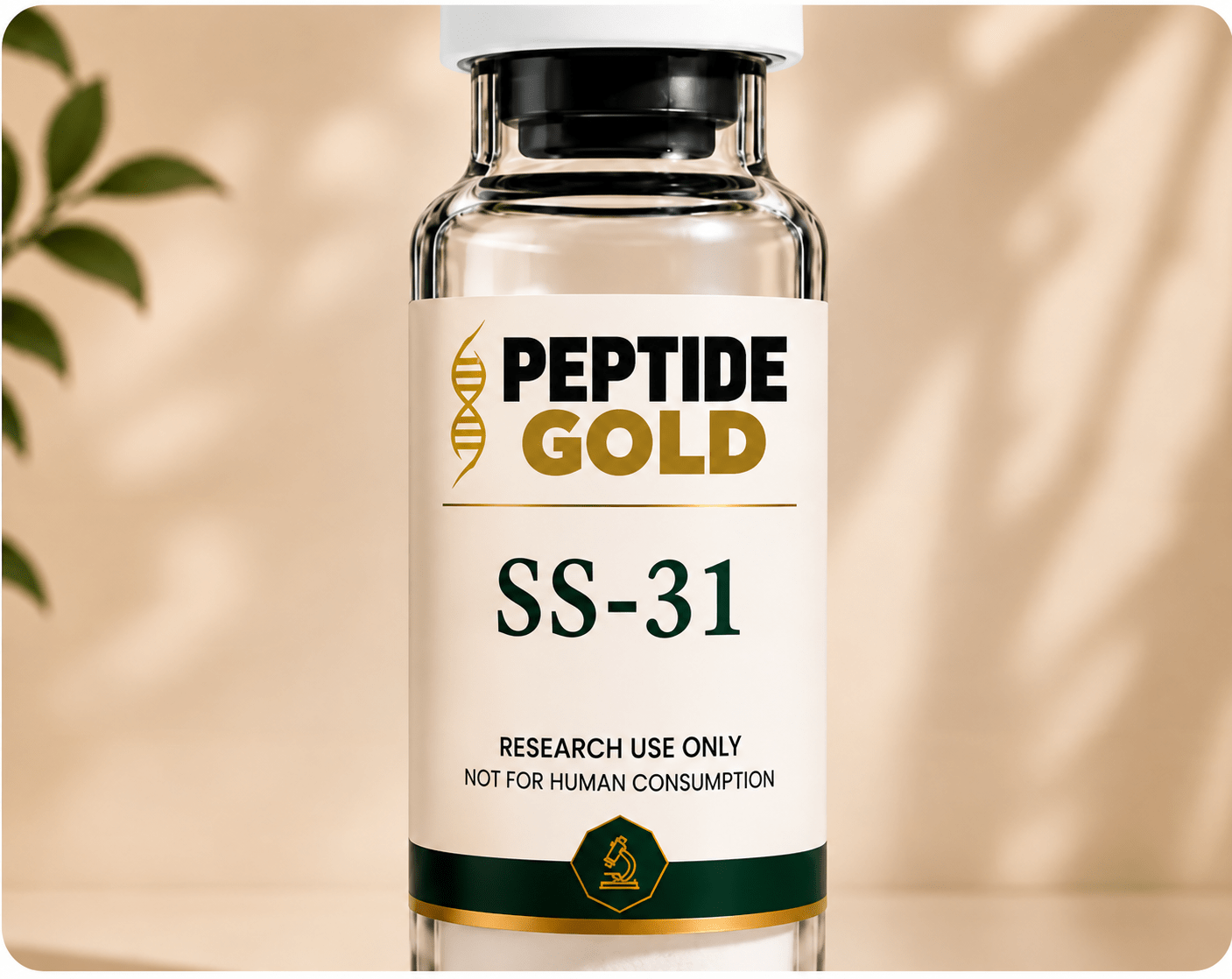
Research-Grade SS-31
Outside the pharmaceutical system, SS-31 may be sold as:
lyophilized powder
or in small research vials.
Research suppliers may use labels such as:
SS-31
elamipretide
or MTP-131.
A research product should not automatically be assumed to have the same:
active ingredient purity
sterility
stability
or dose accuracy as Forzinity.
This distinction is especially important now that a regulated reference product exists.
SS-31 and Exercise Capacity
Because mitochondrial ATP production is central to muscle function, SS-31 has long attracted interest in exercise-related research.
A healthy muscle cell depends heavily on mitochondria for sustained activity.
If mitochondria cannot generate ATP efficiently, fatigue develops more quickly.
In Barth syndrome, this is a major clinical problem.
Long-term elamipretide treatment was associated with improved six-minute walk distance in the open-label extension.
However, there is no evidence that healthy athletes receiving SS-31 achieve major increases in:
strength
speed
VO2 max
or endurance.
Treating pathological mitochondrial dysfunction is very different from enhancing already-normal mitochondrial function.
SS-31 and Muscle Strength
Muscle strength is now the endpoint most directly tied to FDA approval.
Forzinity was approved specifically to improve muscle strength in qualifying Barth syndrome patients.
This does not mean SS-31 is an anabolic muscle-building peptide.
It does not act like:
testosterone
growth hormone
or IGF-1.
The goal is to improve how mitochondria supply energy to diseased muscle.
In someone with severe mitochondrial dysfunction, that can translate into better muscle performance.
In a healthy person, the effect could be completely different—or minimal.
SS-31 and Aging
Mitochondrial decline is strongly associated with aging.
Age-related changes can include:
reduced respiratory efficiency
increased oxidative stress
altered mitochondrial dynamics
and reduced cellular energy availability.
This has made SS-31 extremely attractive to longevity researchers.
Animal studies have examined whether elamipretide can improve mitochondrial performance in aging tissues.
Potential areas include:
skeletal muscle
heart
kidneys
eyes
and the nervous system.
But there is currently no FDA-approved indication for aging, and there is no evidence that SS-31 extends human lifespan.
Is SS-31 a Longevity Peptide?
Calling it a “longevity peptide” is too broad.
A more accurate description is:
a mitochondria-targeted peptide that may improve mitochondrial membrane function under certain disease or stress conditions.
That mechanism is certainly relevant to aging research.
But improving mitochondrial function in an experimental model is not the same as proving longer human lifespan.
No clinical trial has established SS-31 as a life-extension treatment.
SS-31 and the Heart
The heart is one of the most mitochondria-rich organs in the body because it requires enormous amounts of continuous energy.
This is why mitochondrial dysfunction can have major cardiac effects.
Barth syndrome frequently causes:
cardiomyopathy
and impaired cardiac function.
Long-term elamipretide data showed favorable changes in several echocardiographic measures, including left ventricular volumes.
The drug has also been studied experimentally in other forms of cardiac disease and ischemic injury.
However, elamipretide is not currently FDA-approved for heart failure, coronary disease, or general cardiac protection.
SS-31 and Kidney Research
Kidney cells also have very high energy requirements.
The renal tubules contain large numbers of mitochondria because moving electrolytes and other substances across membranes requires substantial ATP.
For this reason, SS-31 has been studied in experimental models involving:
acute kidney injury
ischemia-reperfusion
oxidative stress
and mitochondrial dysfunction.
These remain research applications rather than established clinical indications.
SS-31 and Neurological Research
Neurons are also highly dependent on mitochondria.
Changes in mitochondrial function have been implicated in:
Parkinson’s disease
Alzheimer’s disease
brain injury
and age-related cognitive decline.
This has generated interest in SS-31 as a potential neuroprotective strategy.
The theoretical benefits involve:
better mitochondrial ATP production
less oxidative stress
and preservation of mitochondrial membrane integrity.
However, there is currently no FDA approval for:
Alzheimer’s disease
Parkinson’s disease
cognitive enhancement
or general neuroprotection.
SS-31 and Eye Disease
Retinal cells are metabolically demanding and rich in mitochondria.
Elamipretide has therefore been studied in ophthalmologic conditions involving mitochondrial dysfunction or retinal degeneration.
As with neurological research, the scientific rationale is strong but clinical development has not resulted in broad FDA approval for eye disease.
SS-31 Versus MOTS-c
These two peptides are often grouped together because both involve mitochondria, but their mechanisms are very different.
SS-31 / Elamipretide
Acts directly on the inner mitochondrial membrane, particularly cardiolipin.
It is designed to improve:
membrane organization
electron transport
and mitochondrial bioenergetics.
MOTS-c
Is a naturally encoded mitochondrial-derived signaling peptide.
It appears to influence pathways such as:
AMPK
glucose utilization
and cellular stress responses.
So:
SS-31 primarily targets mitochondrial structure and membrane function.
MOTS-c primarily acts as a metabolic signaling molecule.
Elamipretide now also has the major distinction of being FDA-approved for one specific disease.
SS-31 Versus NAD+
NAD+ is a coenzyme involved directly in energy metabolism and redox reactions.
SS-31 does not simply increase NAD+.
Instead, it targets the physical environment in the inner mitochondrial membrane where oxidative phosphorylation occurs.
The two concepts are therefore different:
NAD+ supports biochemical electron-transfer reactions.
SS-31 supports cardiolipin and membrane organization.
Both ultimately relate to cellular energy, but through separate mechanisms.
SS-31 and Reactive Oxygen Species
One of the appealing features of SS-31 is that it does not simply attempt to eliminate all reactive oxygen species.
ROS play normal biological roles.
Instead, by stabilizing mitochondrial electron transport, elamipretide may reduce excessive electron leakage and abnormal oxidative stress.
This is theoretically more targeted than indiscriminately adding large amounts of antioxidant compounds.
Potential Side Effects
In the Barth syndrome clinical program, the most common adverse events were injection-site reactions.
These may include:
- Redness
- Pain
- Swelling
- Irritation
- Itching
The long-term open-label study described elamipretide as generally well tolerated.
However, the approved population is very small because Barth syndrome is extremely rare.
That means the overall human safety database remains much smaller than for common medications such as semaglutide.
Why Accelerated Approval Matters
Accelerated approval allows FDA to approve a therapy for a serious condition based on a surrogate or intermediate endpoint that is reasonably likely to predict meaningful clinical benefit.
It can provide patients with earlier access to therapy when waiting for very long conventional outcome trials could be impractical.
For Forzinity, approval was based on improved knee extensor muscle strength.
The manufacturer must still conduct a confirmatory trial.
FDA currently lists that postmarketing requirement, with the trial intended to verify clinical benefit in patients with Barth syndrome.
Therefore, approval is meaningful but should not be interpreted as the end of research.
Is SS-31 FDA Approved?
Yes—but only as elamipretide/Forzinity for a very specific indication.
As of 2026, Forzinity is FDA-approved:
to improve muscle strength in adult and pediatric patients with Barth syndrome weighing at least 30 kg.
The approval occurred on:
September 19, 2025.
It is not FDA-approved for:
general fatigue,
anti-aging,
healthy longevity,
exercise enhancement,
bodybuilding,
brain optimization,
or general mitochondrial support.
Current Research in 2026
SS-31 is now in an unusual stage of development.
It has moved from being a purely experimental mitochondrial peptide to becoming the first FDA-approved cardiolipin-directed treatment for Barth syndrome.
A July 2026 review describes elamipretide as a major proof-of-concept for therapeutically targeting mitochondrial structure rather than only downstream metabolic symptoms.
The field continues to investigate whether this approach can be useful in other mitochondrial and age-related disorders.
Research interest includes:
primary mitochondrial myopathies
cardiac disease
renal injury
neurological conditions
age-related mitochondrial decline
and other diseases characterized by defective bioenergetics.
However, none of these currently has the same regulatory status as Barth syndrome.
What Research Is Still Needed?
The most immediate priority is confirming clinical benefit in Barth syndrome.
FDA requires a randomized, double-blind, placebo-controlled confirmatory study in patients age five years and older.
Researchers also need larger studies defining:
long-term safety
cardiac outcomes
exercise capacity
quality of life
optimal duration of therapy
and whether benefits remain stable over many years.
For other diseases, researchers need disease-specific randomized trials rather than assuming that mitochondrial effects seen in Barth syndrome will automatically translate elsewhere.
The Bottom Line
SS-31, now known clinically as elamipretide, is a synthetic mitochondria-targeted tetrapeptide designed to interact with cardiolipin in the inner mitochondrial membrane.
Its mechanism is fundamentally different from most peptides.
Rather than stimulating a hormone receptor or neurotransmitter pathway, SS-31 acts directly on the machinery responsible for cellular energy production.
By binding cardiolipin, elamipretide may:
stabilize mitochondrial membrane structure
improve respiratory-chain organization
improve electron transport
support ATP production
and reduce excessive oxidative stress.
This is especially relevant in Barth syndrome, where abnormal cardiolipin metabolism causes severe mitochondrial dysfunction.
The initial randomized Barth syndrome trial did not meet its two primary endpoints during the blinded phase.
However, longer-term open-label treatment produced encouraging results, including an average improvement of approximately 96 meters in six-minute walk distance at 168 weeks, along with improvements in fatigue and several cardiac parameters.
These and additional muscle-strength data ultimately contributed to FDA accelerated approval.
On September 19, 2025, FDA approved Forzinity (elamipretide) as the first treatment specifically targeting Barth syndrome.
The current approved indication is:
improvement of muscle strength in adults and children with Barth syndrome weighing at least 30 kg.
The approved dosage is:
40 mg subcutaneously once daily.
That makes SS-31 one of the relatively rare compounds discussed in peptide research communities that now has an FDA-reviewed pharmaceutical formulation and established dose.
But those facts should not be generalized beyond the approved disease.
There is currently no FDA approval establishing SS-31 as an:
anti-aging treatment
athletic-performance peptide
general energy enhancer
brain-optimization compound
or healthy-person mitochondrial booster.
Perhaps the most accurate way to describe SS-31 in 2026 is:
a mitochondria-targeted cardiolipin-binding tetrapeptide that has progressed from experimental mitochondrial research to an FDA-approved treatment for muscle weakness in Barth syndrome, providing strong proof that mitochondrial membrane biology can be therapeutically targeted while broader anti-aging, performance, and wellness uses remain unproven.
For researchers, SS-31 is particularly significant because it represents a new therapeutic idea:
instead of treating only the downstream consequences of mitochondrial dysfunction, it attempts to improve the mitochondrial energy-producing membrane itself.
That could eventually have implications far beyond Barth syndrome.
For now, though, those broader applications remain research questions rather than established medical uses.
Educational and medical notice: This article is intended for general scientific and educational information and is not individualized medical advice. The 40 mg once-daily dosage applies specifically to FDA-approved Forzinity for qualifying patients with Barth syndrome and should not be extrapolated to research-grade SS-31 or unapproved anti-aging, performance, or wellness uses.