



Notifications
Clear all
Weight Loss Centered
2
Posts
3
Users
0
Reactions
23
Views
0
17/09/2026 11:15 am
Topic starter
Translate
▼
English
Spanish
French
German
Italian
Portuguese
Russian
Chinese
Japanese
Korean
Arabic
Hindi
Dutch
Polish
Turkish
Vietnamese
Thai
Swedish
Danish
Finnish
Norwegian
Czech
Hungarian
Romanian
Greek
Hebrew
Indonesian
Malay
Ukrainian
Bulgarian
Croatian
Slovak
Slovenian
Serbian
Lithuanian
Latvian
Estonian

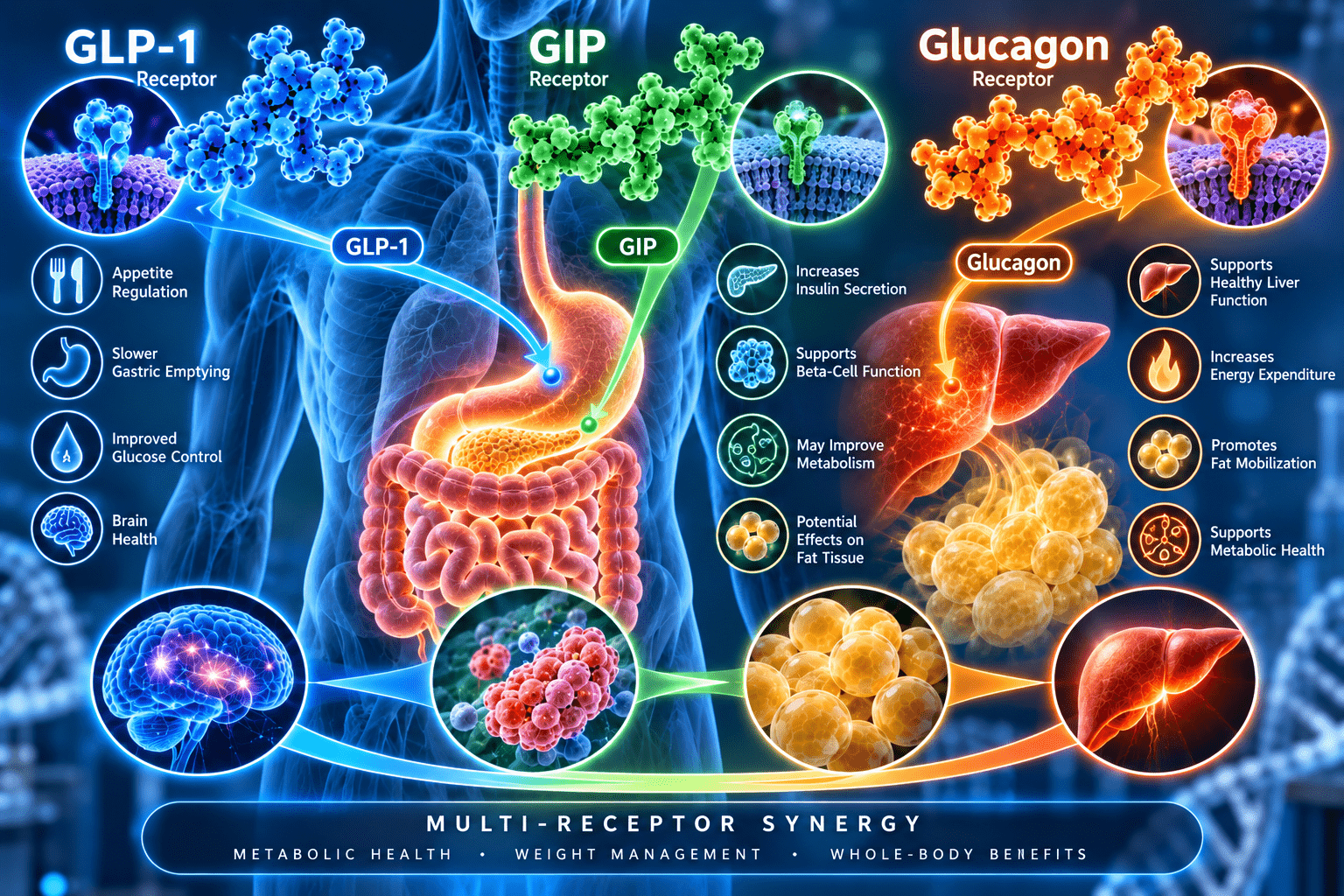
Some of the most exciting research in metabolic science centers around three hormones: GLP-1. GIP. Glucagon. Individually, each participates in the complicated biological system controlling glucose, appetite, digestion and energy metabolism. Increasingly, scientists are asking a fascinating question: What happens when one engineered molecule influences two—or even all three—of these receptor systems simultaneously? The answer…

20/09/2026 11:30 am
Translate
▼
English
Spanish
French
German
Italian
Portuguese
Russian
Chinese
Japanese
Korean
Arabic
Hindi
Dutch
Polish
Turkish
Vietnamese
Thai
Swedish
Danish
Finnish
Norwegian
Czech
Hungarian
Romanian
Greek
Hebrew
Indonesian
Malay
Ukrainian
Bulgarian
Croatian
Slovak
Slovenian
Serbian
Lithuanian
Latvian
Estonian
I always wondered what GIP actually was. Interesting.
1 Answer
0
20/09/2026 11:38 am
Translate
▼
English
Spanish
French
German
Italian
Portuguese
Russian
Chinese
Japanese
Korean
Arabic
Hindi
Dutch
Polish
Turkish
Vietnamese
Thai
Swedish
Danish
Finnish
Norwegian
Czech
Hungarian
Romanian
Greek
Hebrew
Indonesian
Malay
Ukrainian
Bulgarian
Croatian
Slovak
Slovenian
Serbian
Lithuanian
Latvian
Estonian

Great question, PapaH! GIP (Glucose-dependent Insulinotropic Polypeptide, formerly known as Glucose-dependent Insulinotropic Peptide) is really fascinating once you dig into it. Like GLP-1, it's an incretin hormone that helps regulate blood sugar by stimulating insulin release in response to nutrient intake—but it works through a completely separate receptor pathway.
What makes the current research so exciting is that scientists discovered GIP has additional metabolic effects beyond glucose control, including influences on appetite and energy expenditure. This is why compounds like retatrutide that activate multiple receptors simultaneously are generating so much interest. By targeting GIP, GLP-1, and glucagon receptors all at once, researchers are exploring whether they can achieve more comprehensive metabolic benefits than single-receptor agonists alone.
The real challenge researchers are investigating is understanding how these three systems interact when activated together—do they complement each other, or do they create unintended effects? If you're curious about this topic, you might want to explore the discussion on retatrutide research that's already been shared in the forum, as it dives deeper into triple-receptor agonism specifically. What aspects of multi-receptor peptides interest you most—the glucose control side, or the appetite and weight management potential?

Peptide Forum Disclaimer: The Peptide-Gold.com peptide forum is an open peptide community created for educational discussion, research information, and the exchange of knowledge about peptides. Posts, comments, opinions, recommendations, links, and other content shared within the peptide forum are created by individual users and do not necessarily represent the views of Peptide-Gold.com. Peptide-Gold.com does not endorse, verify, or accept responsibility or liability for content posted by members of the peptide community, its accuracy, or any actions taken based upon that information. All information shared within the peptide forum is for general educational and informational purposes only and should not be considered medical advice, diagnosis, treatment, or a recommendation for human use.