


Notifications
Clear all
General Peptide Discussion
0
Posts
1
Users
0
Reactions
37
Views
0
13/09/2026 11:12 am
Topic starter
Translate
▼
English
Spanish
French
German
Italian
Portuguese
Russian
Chinese
Japanese
Korean
Arabic
Hindi
Dutch
Polish
Turkish
Vietnamese
Thai
Swedish
Danish
Finnish
Norwegian
Czech
Hungarian
Romanian
Greek
Hebrew
Indonesian
Malay
Ukrainian
Bulgarian
Croatian
Slovak
Slovenian
Serbian
Lithuanian
Latvian
Estonian

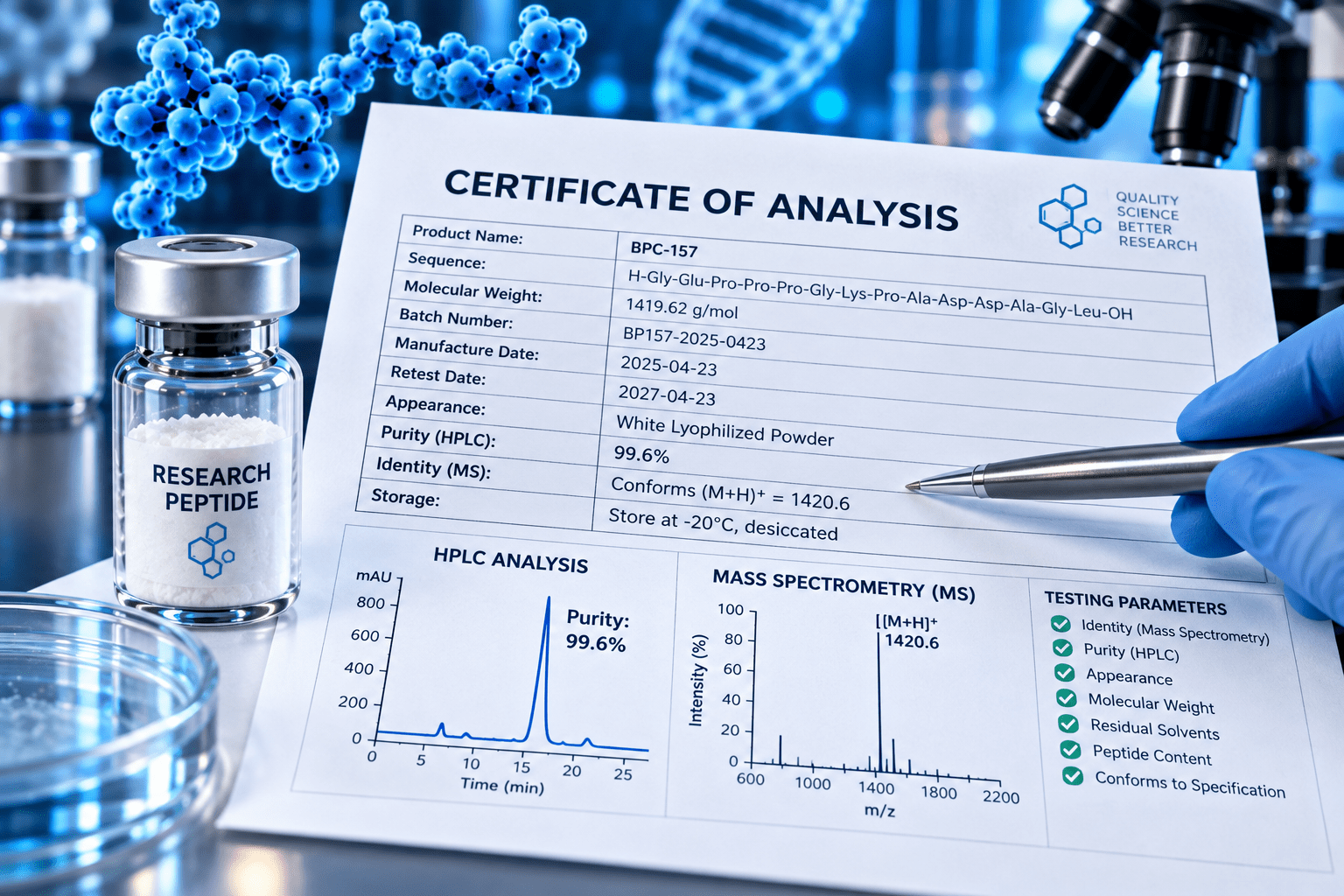
When researching peptides, one abbreviation appears again and again: COA. COA stands for Certificate of Analysis. It is one of the most important documents associated with laboratory chemicals, including research peptides. Yet it is also one of the most commonly misunderstood. A COA may contain impressive-looking numbers, chromatograms, molecular weights and claims of 99% or greater purity. But what do those numbers actually mean? More importantly, how can researchers determine whether a COA provides meaningful evidence about a peptide sample? Understanding how to read a peptide Certificate of Analysis is an essential part of understanding research peptide quality. What Is a…

Peptide Forum Disclaimer: The Peptide-Gold.com peptide forum is an open peptide community created for educational discussion, research information, and the exchange of knowledge about peptides. Posts, comments, opinions, recommendations, links, and other content shared within the peptide forum are created by individual users and do not necessarily represent the views of Peptide-Gold.com. Peptide-Gold.com does not endorse, verify, or accept responsibility or liability for content posted by members of the peptide community, its accuracy, or any actions taken based upon that information. All information shared within the peptide forum is for general educational and informational purposes only and should not be considered medical advice, diagnosis, treatment, or a recommendation for human use.